It feels like yesterday when Hidizs launched the AP80 PRO-X, their then-flagship and one of the most minute players on the market, but that was in 2023. The company is now back with another portable player: it’s called the Hidizs AP80 PRO MAX (ultra mega super…) and it is slightly larger for better readability and usability, while still being very small and pocketable. Hidizs has launched a few different versions of this player; the one they sent me is the Pure Copper Edition, which is limited to 999 units and uses copper for the body in place of aluminium. This is, however, the only difference, so the devices are the same in all respects independently of the material used for the chassis. Whichever you choose, the AP80 PRO MAX is a competent and fun little player with quite a bit of power on tap.
Disclaimer: I received a free unit from Hidizs, whom I sincerely thank. The AP80 PRO MAX retails for $239 in the aluminium version and $299 in the copper version. Additional information on the official product page.
TL;DR: recap
| Pros |
Cons |
| + Great build quality and unique materials
+ Very small and portable + Easy and intuitive operating system + Lots of options and features + Bidirectional Bluetooth, including LDAC + Streaming using WiFi! |
– Low power output
– Imprecise volume wheel |
Rating: 8/10
Packaging & Accessories
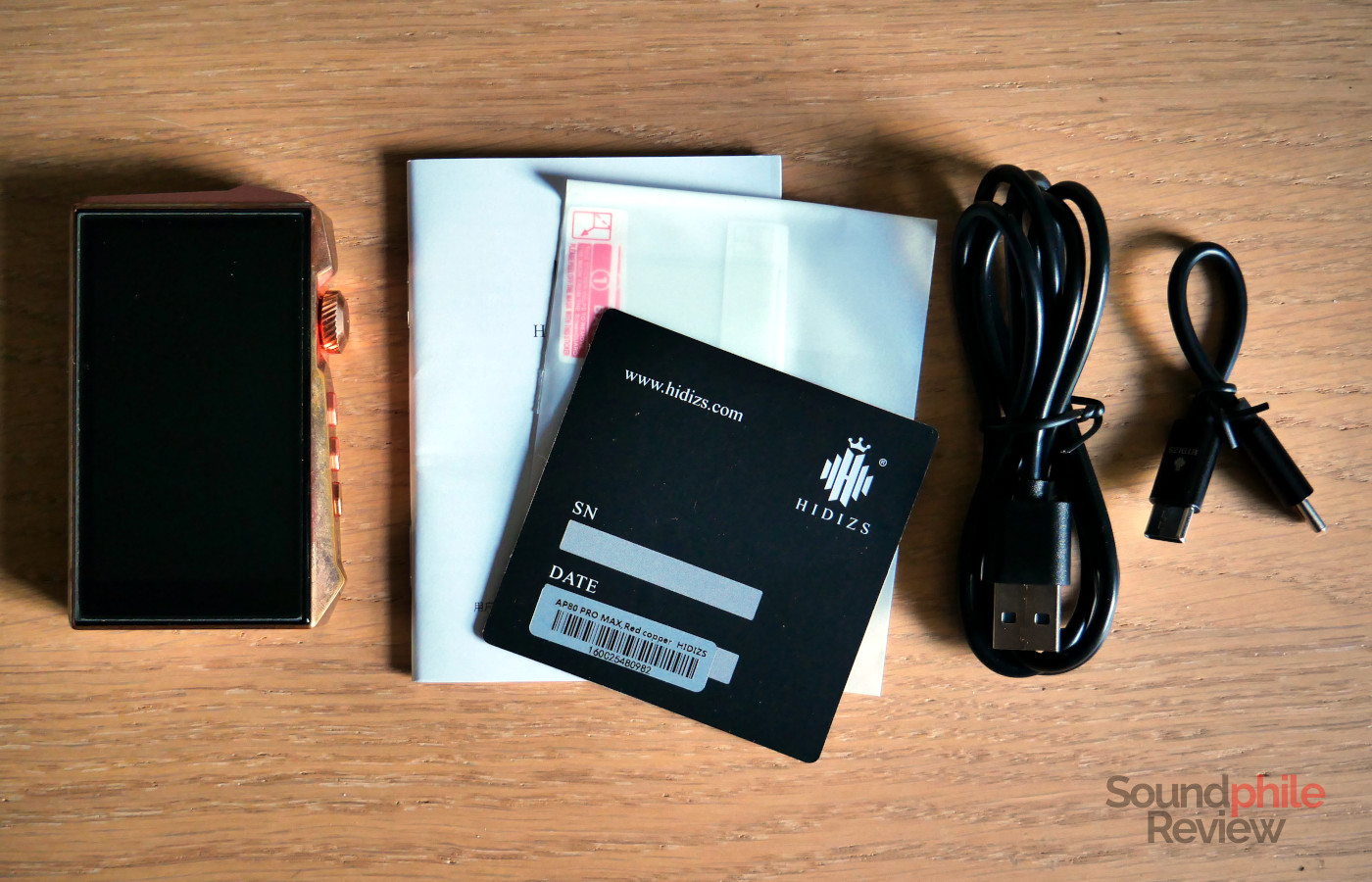
The box contains the device itself, a USB to USB-C cable, a USB-C to USB-C cable, a replacement screen protector, a user manual and a warranty card.
Design & Build
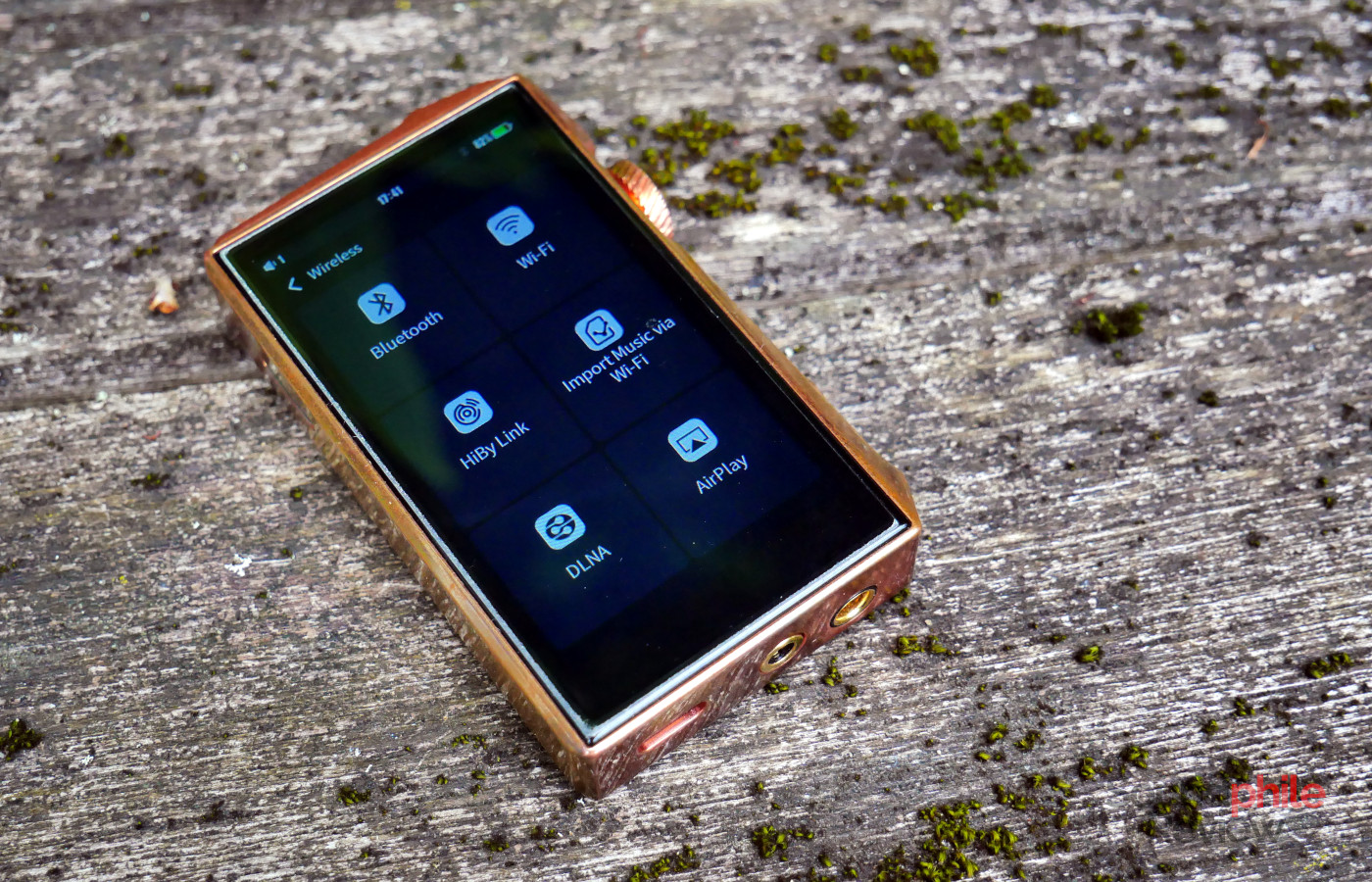
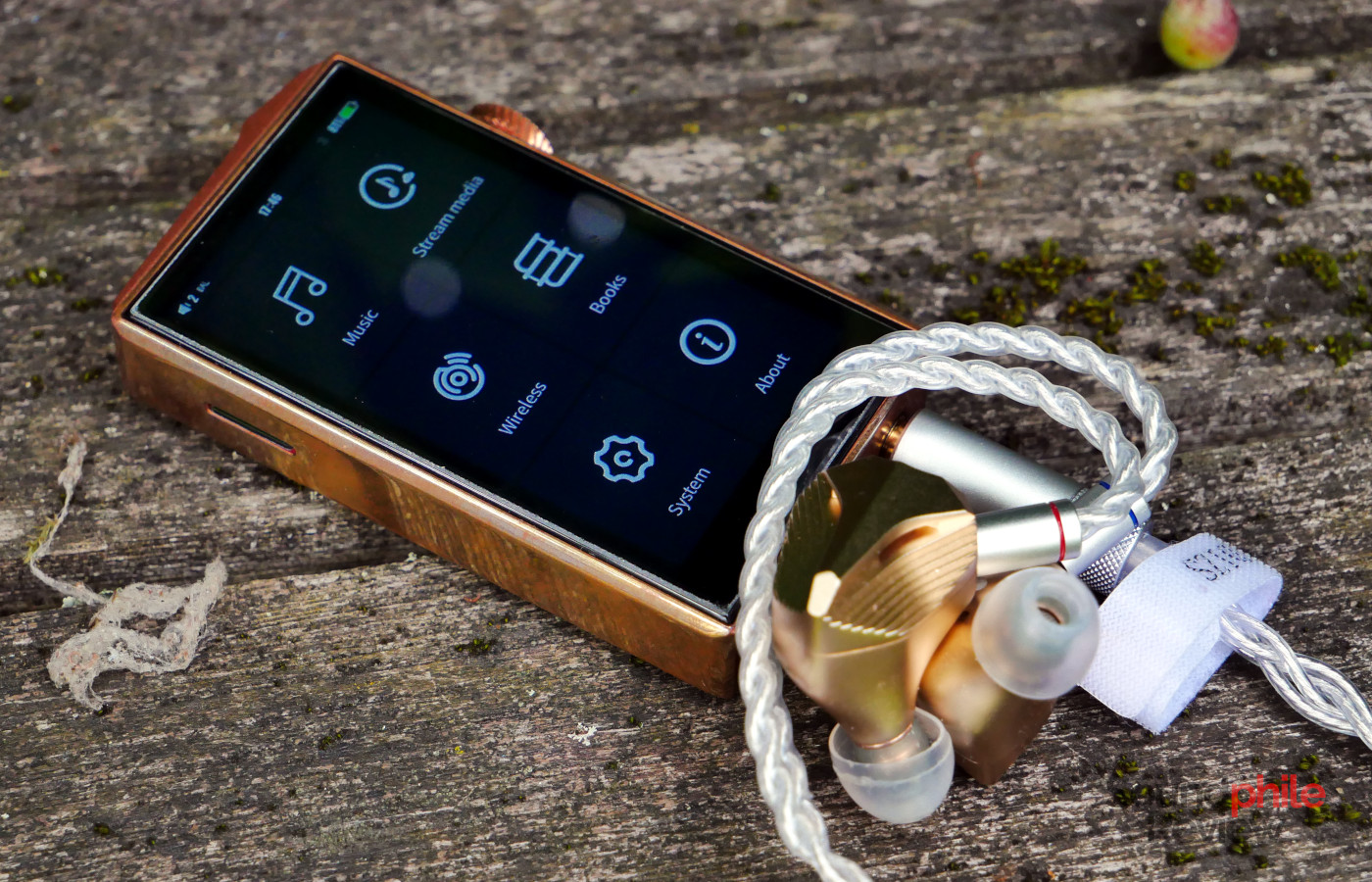
At just 82.8 x 51 x 15.5 mm, the Hidizs AP80 PRO MAX is small. It’s small enough that it’s smaller than my Palm Pre 2, a phone which was famous at the time for being tiny. This makes the AP80 PRO MAX extremely portable and pocketable, which is undoubtedly a net positive. In the case of the unit I received, the chassis is made of a single block of pure copper, which gives the player a characteristic reddish-pinkish hue.
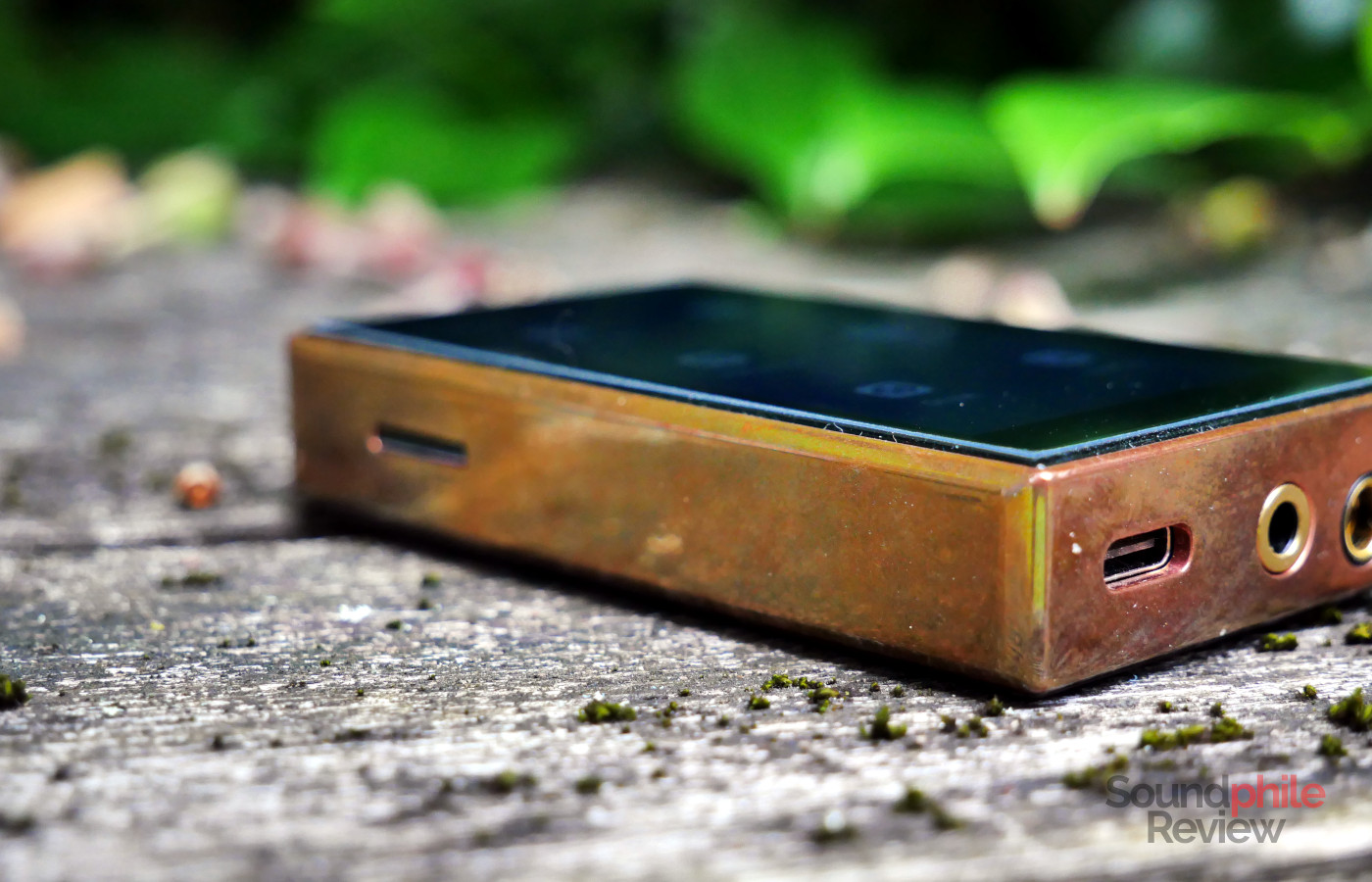
The front and back are covered in glass, with the back having a copper-coloured diamond pattern as well; the top is made of plastic, to prevent issues with wireless signals, and is again copper-coloured. There’s a bit of contrast going on, as the various copper colours are not exactly the same hue; this becomes especially true after you have used the player for a while, as the metal reacts with both the oxygen in the air and the compounds from your hands (sweat, etc) and gets a darker, greenish tone that’s unique to each unit. The original tonality can be restored by using any copper cleaning products.
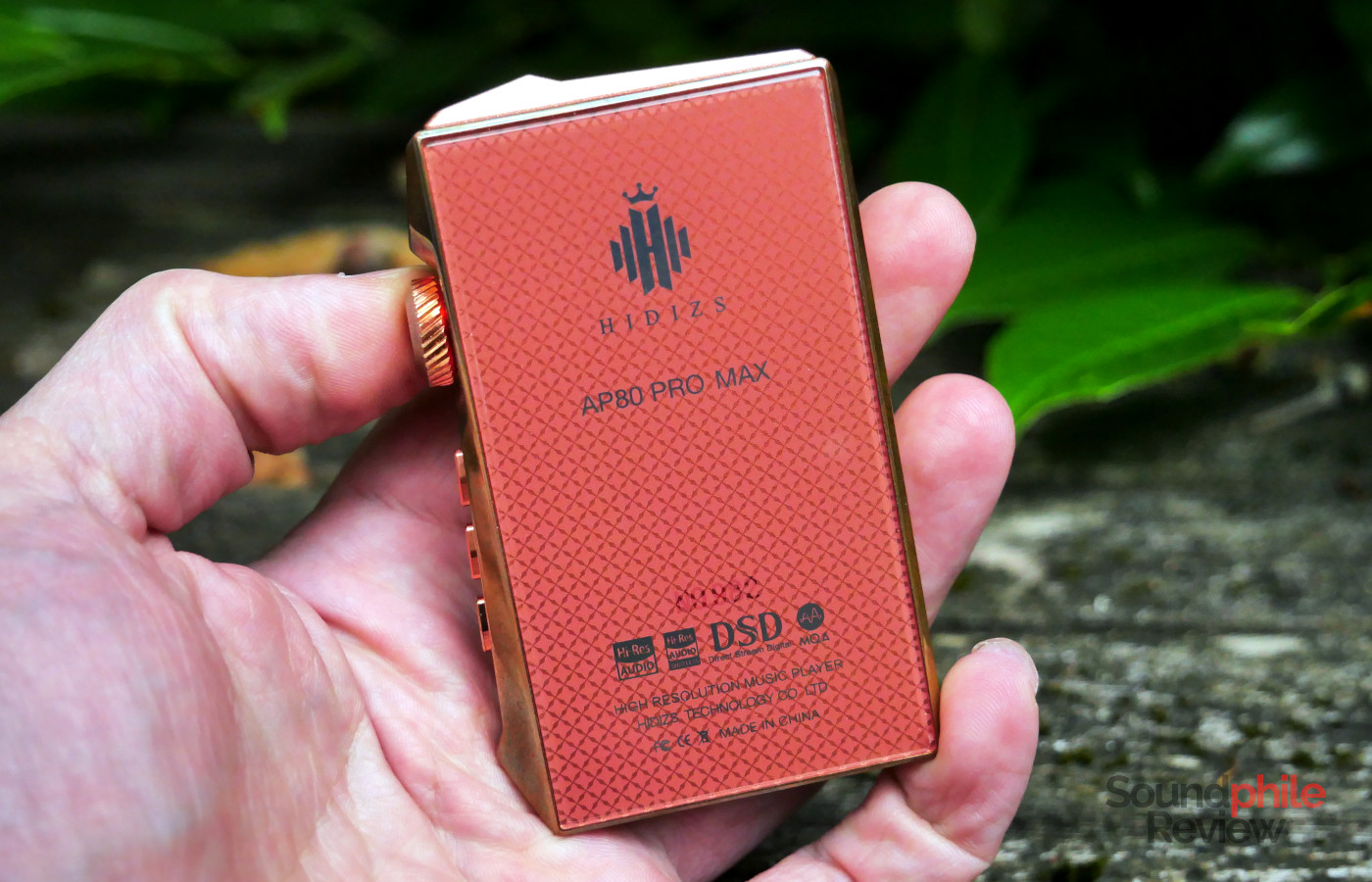
While copper looks great and is definitely unique, I’m not entirely sure that I can get behind this usage given that we’re very quickly running out of it worldwide and that it is getting more and more expensive, however this is something that each will have to weigh on their own. It should also be kept in mind that changing the material of the device’s shell has no bearing on its acoustic performance and therefore does not give any practical advantage over aluminium.
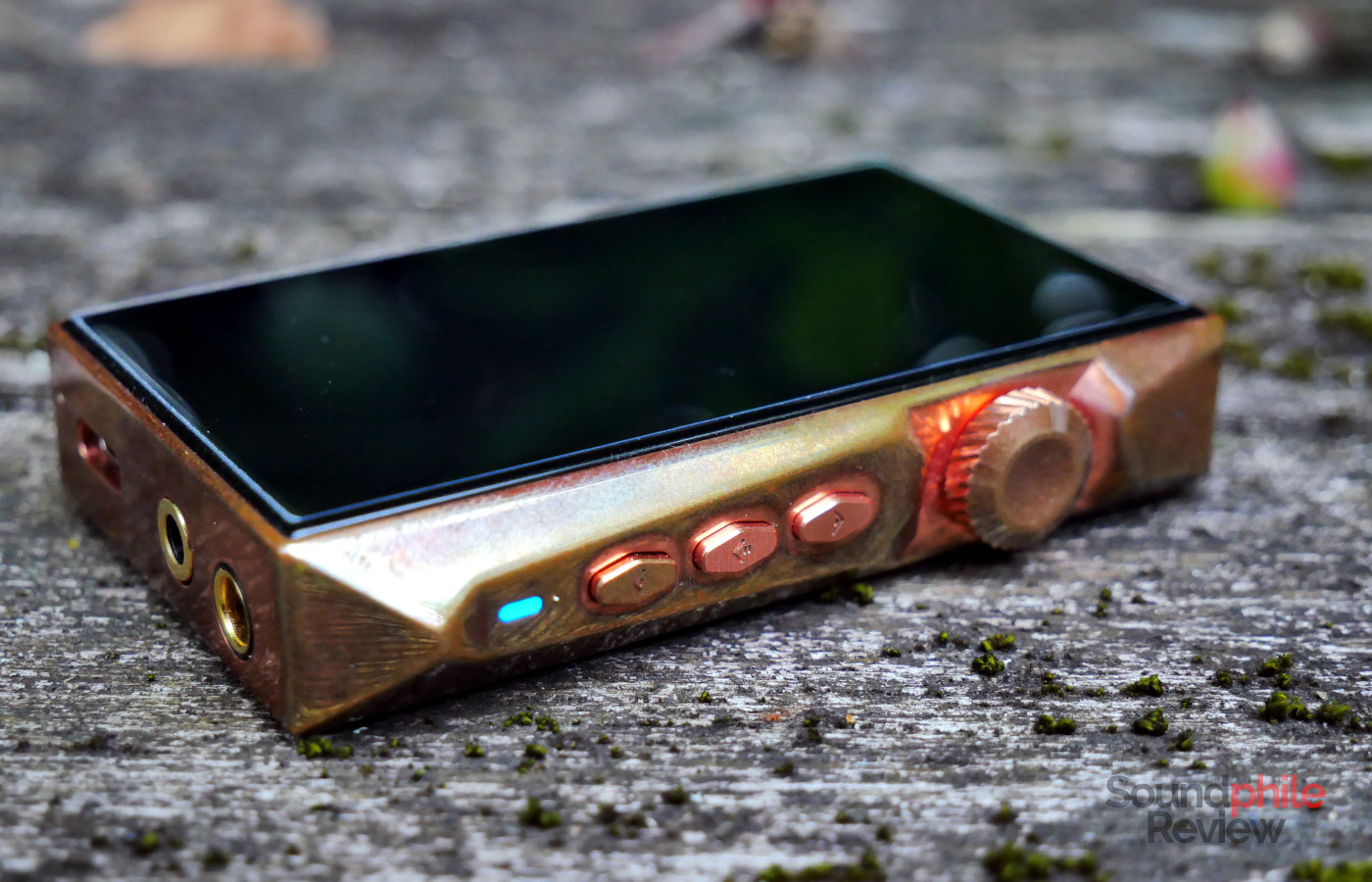
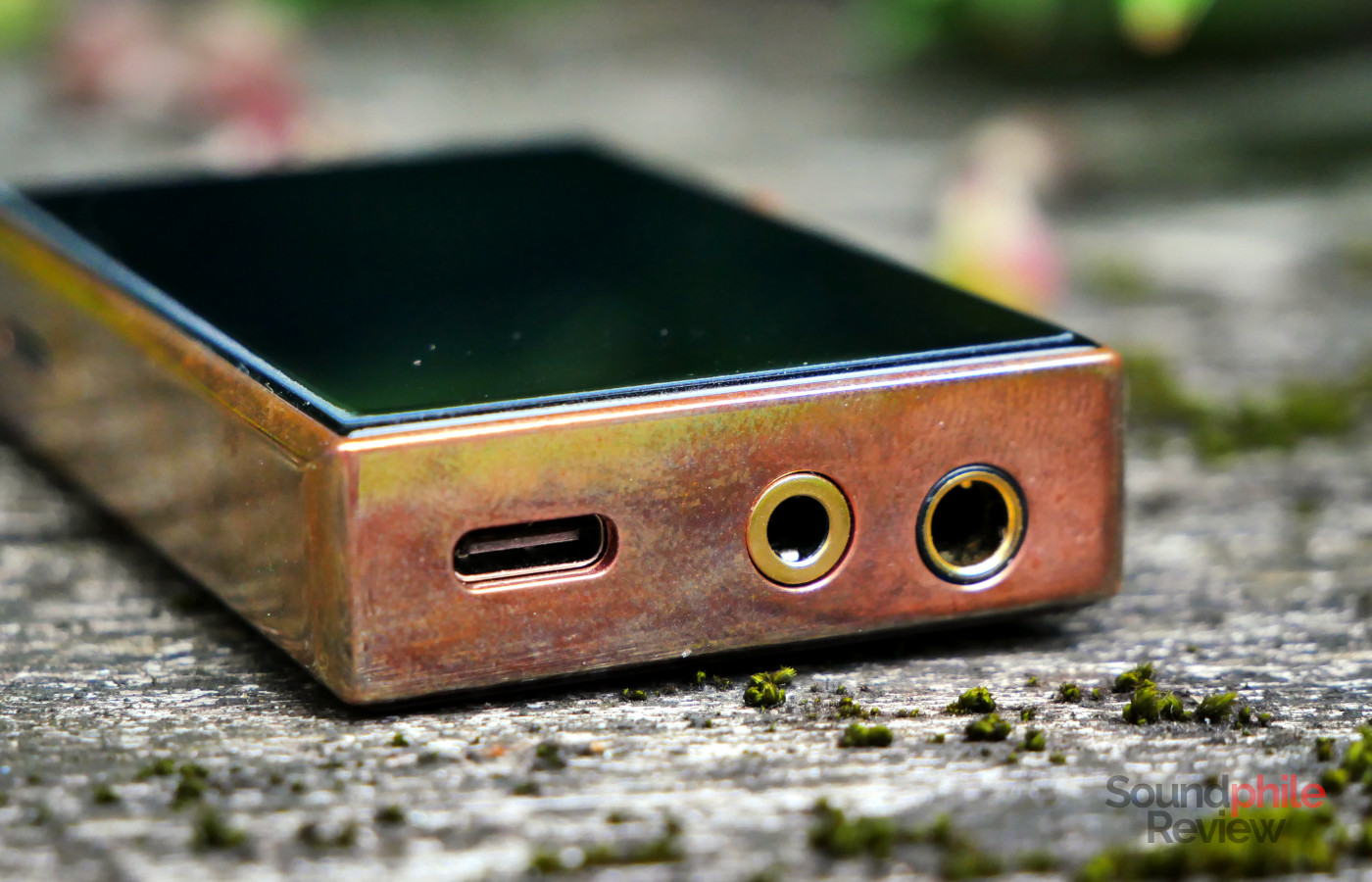
In terms of shape and actual design, the AP80 PRO MAX is decidedly in the same family as the other AP80 devices, with clear-cut angles and a very modern look. It is in particular the right hand side, where all the controls are, that shows these clear-cut shapes. Speaking of controls, there is a volume wheel which also acts as the power button if you press it, as well as previous track, play/pause and next track buttons right under it. Further down there is a status LED, which changes colour based on the resolution of the media being played. On the left hand side there is only the microSD slot, while the bottom hosts a USB-C port, as well as a 3.5 mm and a 4.4 mm jack sockets.
The screen is larger than previous AP80 iterations, but it’s still small: it’s just 2.95 inches, which makes it just a quarter of my phone’s. Its resolution of 360 x 640 is, however, enough to make it crispy. Brightness is high enough to make it legible even in broad daylight.
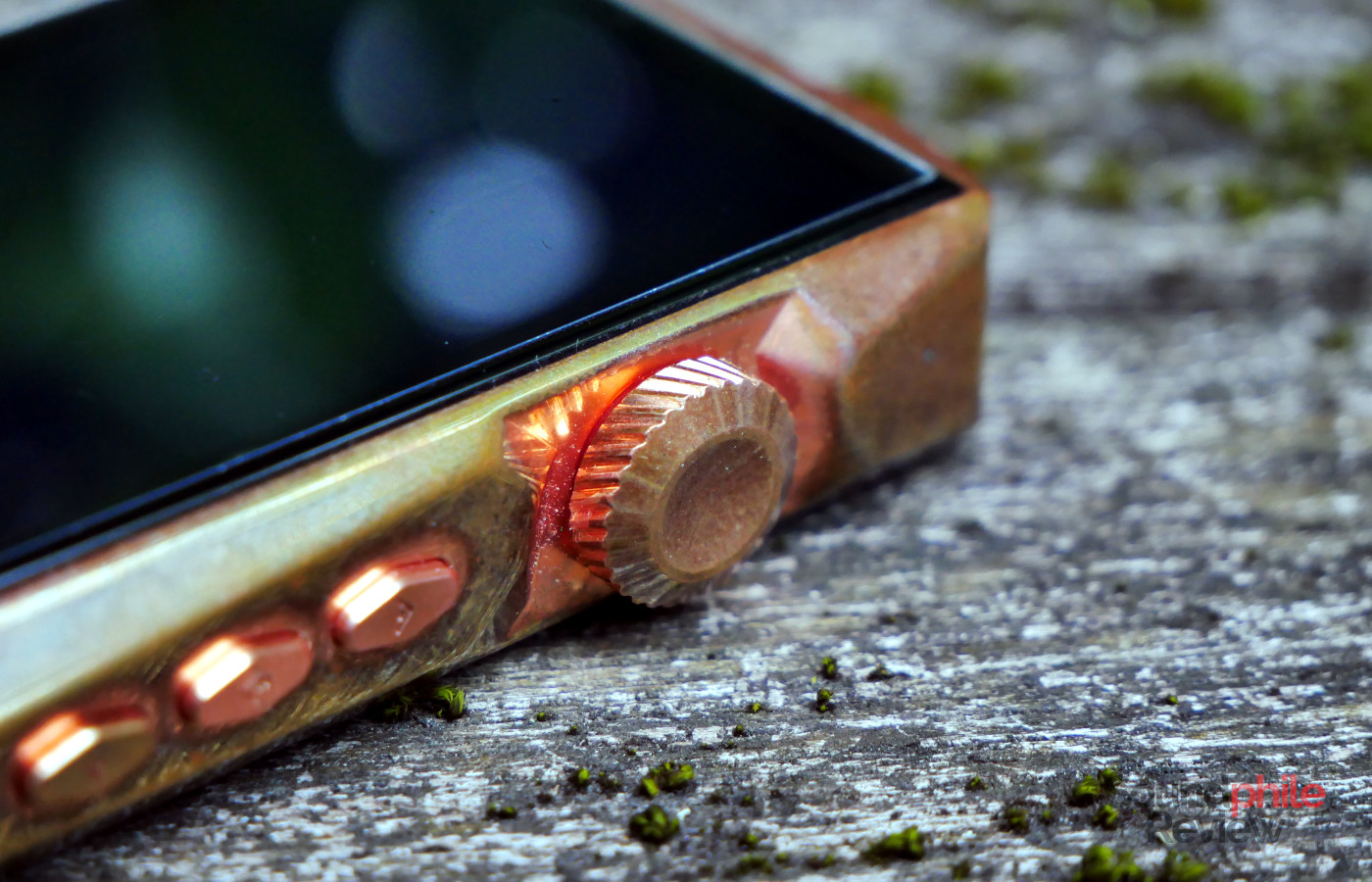
The volume wheel is a stepped actuator, so you can feel a sort of “click” or bump when you turn it. It is quite responsive, but not super-precise: it often happens that you feel a single bump, but the volume moves by two or even three steps. Additionally, when pressing it it gives very little tactile feedback unless you press it exactly in the middle.
Specifications
Hidizs AP80 PRO MAX |
| DAC chip | 2x ESS ES9219C |
| Amp chip | N/A |
| Suitable headphones impedance | 8 – 200 Ω |
| Output impedance | N/A |
| Maximum output power | Single-ended:
Balanced:
|
| THD+N (@1 kHz) | 0.0007% (single-ended) 0.0005% (balanced) |
| SNR | 119 dB (single-ended) 120 dB (balanced) |
| Operating System | HiBy OS |
| Supported formats | PCM up to 32 bit / 384 kHz DSD up to DSD256 MQA |
The Hidizs AP80 PRO MAX uses two ESS ES9219C DACs, which operate in a truly balanced configuration and also perform the amplification. This explains why the output power is so limited, at just 70 mW @ 32 Ω in single-ended mode or 190 mW in balanced mode. Compared to the AP80 PRO-X, there are some relatively minor upgrades: the player now has an Ingenic X1600E CPU (vs X1000), it is compatible with Bluetooth 5.1, has WiFi connectivity, and has slightly better audio specs.
Another upgrade is in the microSD reader, which now accepts cards up to 2 TB. The Bluetooth connection is bi-directional, meaning you can use the AP80 PRO MAX as a receiver as well; it supports SBC, AAC, aptX (output only), LDAC and HiBy UAT codecs. The connection is quite stable and offers good enough range.
The big novelty of the AP80 PRO MAX is that it offers WiFi connectivity as well; it should be noted that WiFi is only compatible with 2.4 GHz networks, which limits transfer speed but isn’t an issue due to the limited amount of data that needs to be dealt with when streaming music.
Battery Life
The Hidizs AP80 PRO MAX uses a 1300 mAh battery which, according to the manufacturer, should provide up to 12 hours of playback in single-ended more or 10 hours in balanced mode. In reality, I found that in balanced mode the unit is able to provide a bit more than 8 hours of playback. The company promises up to 60 days of standby, but this doesn’t seem to be true as I found that the player runs out of battery after about 5 days.
Software
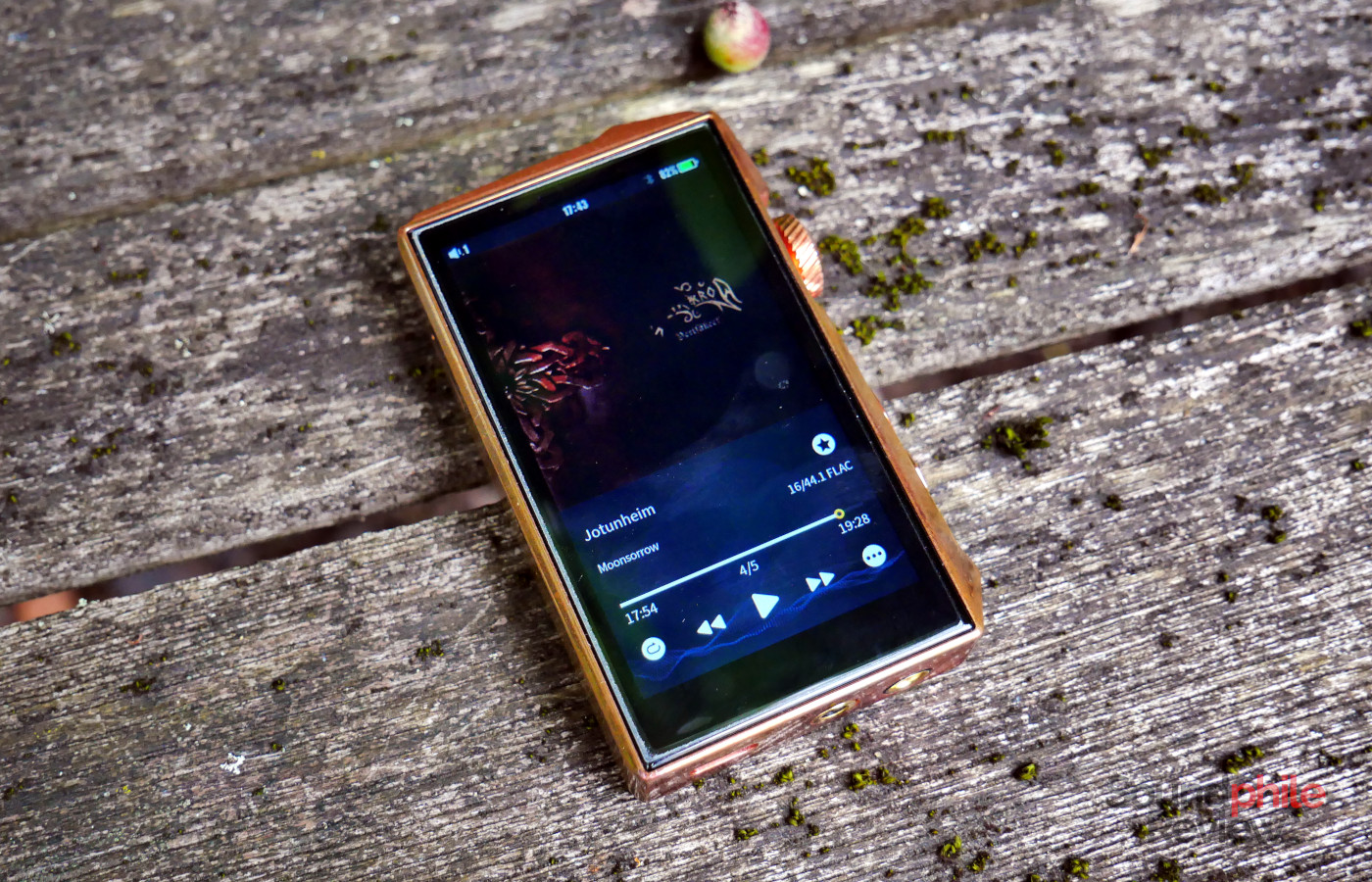
Once again, Hidizs has partnered with HiBy to use their software as the OS for its player. Compared to the previous model, however, there are some differences due to different form factor as well as the presence of WiFi connectivity. If you are familiar with HiBy software, even just the player application for smartphones, you will see the connection here as the structure is exactly the same. The UI makes ample use of gestures for navigation: swiping to the right goes back to the previous screen, while in nearly every screen (with the exception of settings and a few others) swiping to the left brings up the player interface showing the currently-playing track and controls. Swiping up from the top brings up a screen with controls for brightness, connectivity, gain (low or high), DLNA sharing, line output, HiByLink, as well as playback. It’s a very simple UI that works well and is highly reactive and surprisingly smooth. It’s a definite step forward compared to previous generations, which sometimes were not as responsive.
The home screen has been revisited and now hosts six large icons on a single page: “music”, “stream media”, “wireless”, “books”, “system” and “about”. Music management is the same as in previous models and includes the possibility to either set up a catalogue of all tracks stored on the microSD card or connected USB storage, or to browse the files directly. The catalogue can take half an hour to build for a 512 GB microSD card, so you will need to be patient. Once it is done, it allows you to browse your library by song (which is weirdly titled “all”), album, artist, genre or album artist.
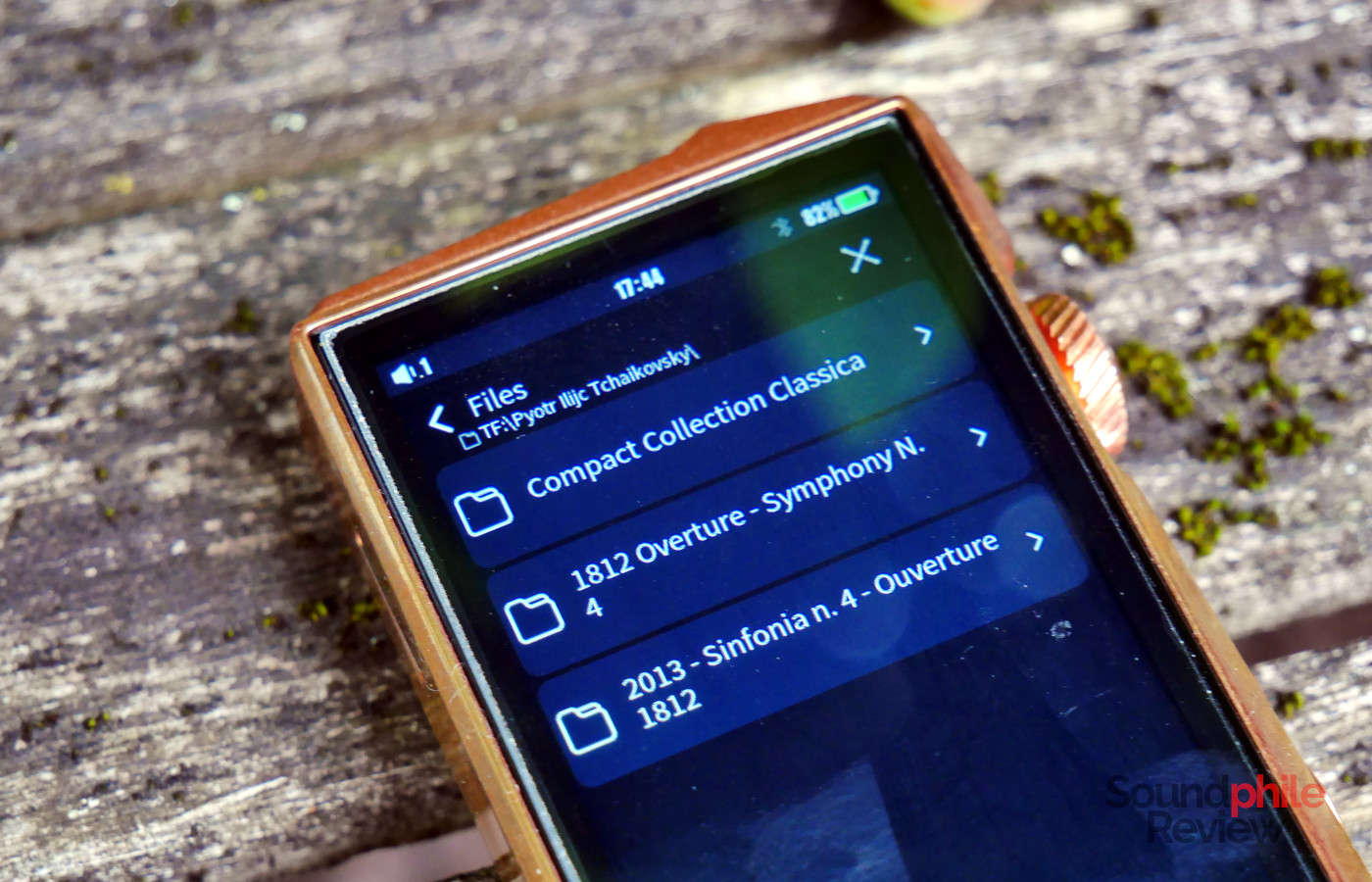
The “Music” section screen has a small cog icon in the top right corner which leads you to all settings related to managing the music library as well as playback: not only can you update the database and set whether to do so automatically or manually, but you also get all sorts of settings for playback from equalisation to DSD gain compensation, from soundstage enlarging to volume levels. It’s a very complete set of settings which makes it possible to really customise your experience to your liking with very few limits. There are even settings to play through folders and albums, to adjust playback speed and to set whether the player interface should show when you start playing a track (rather than staying in whatever view you are).
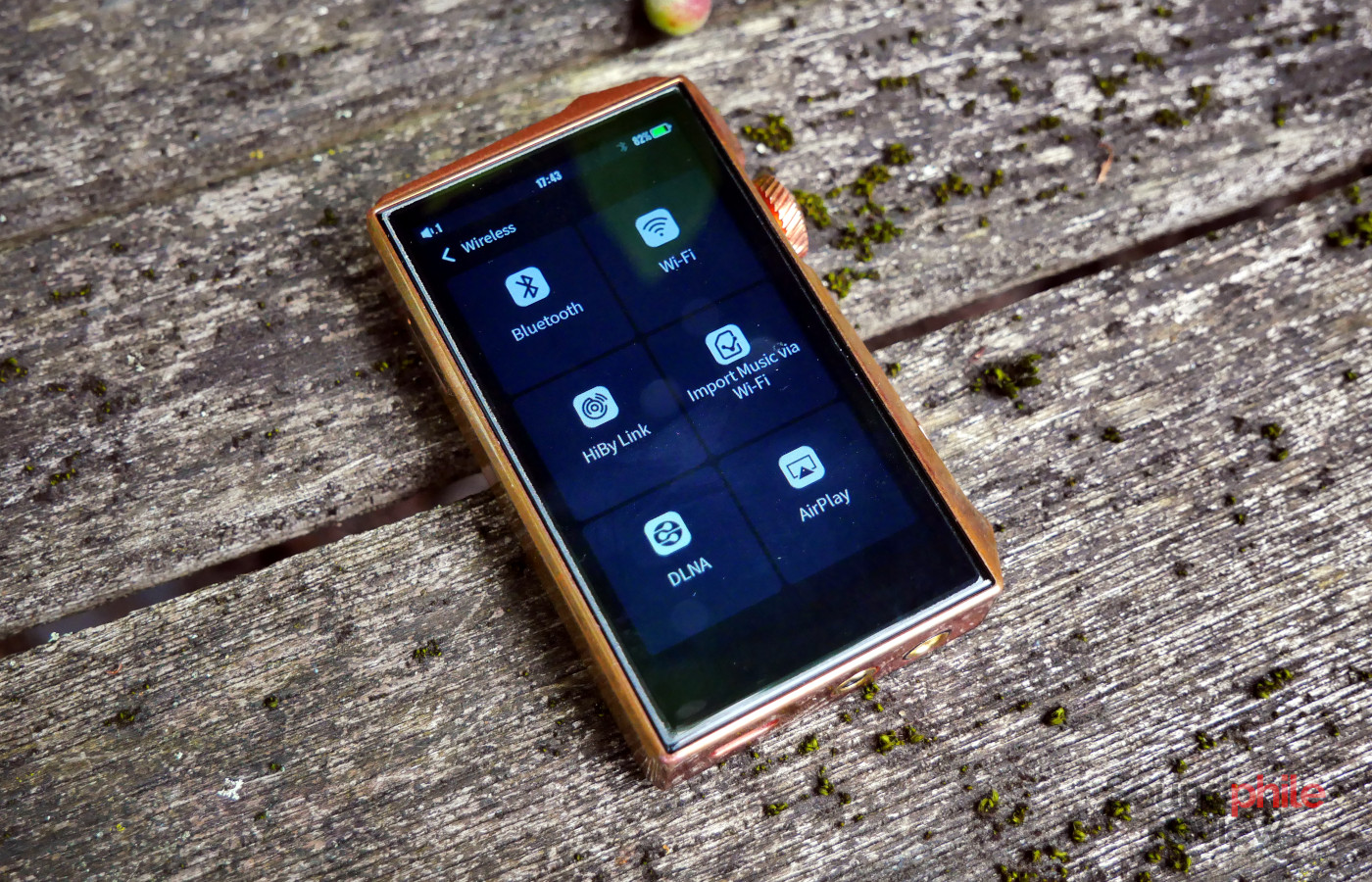
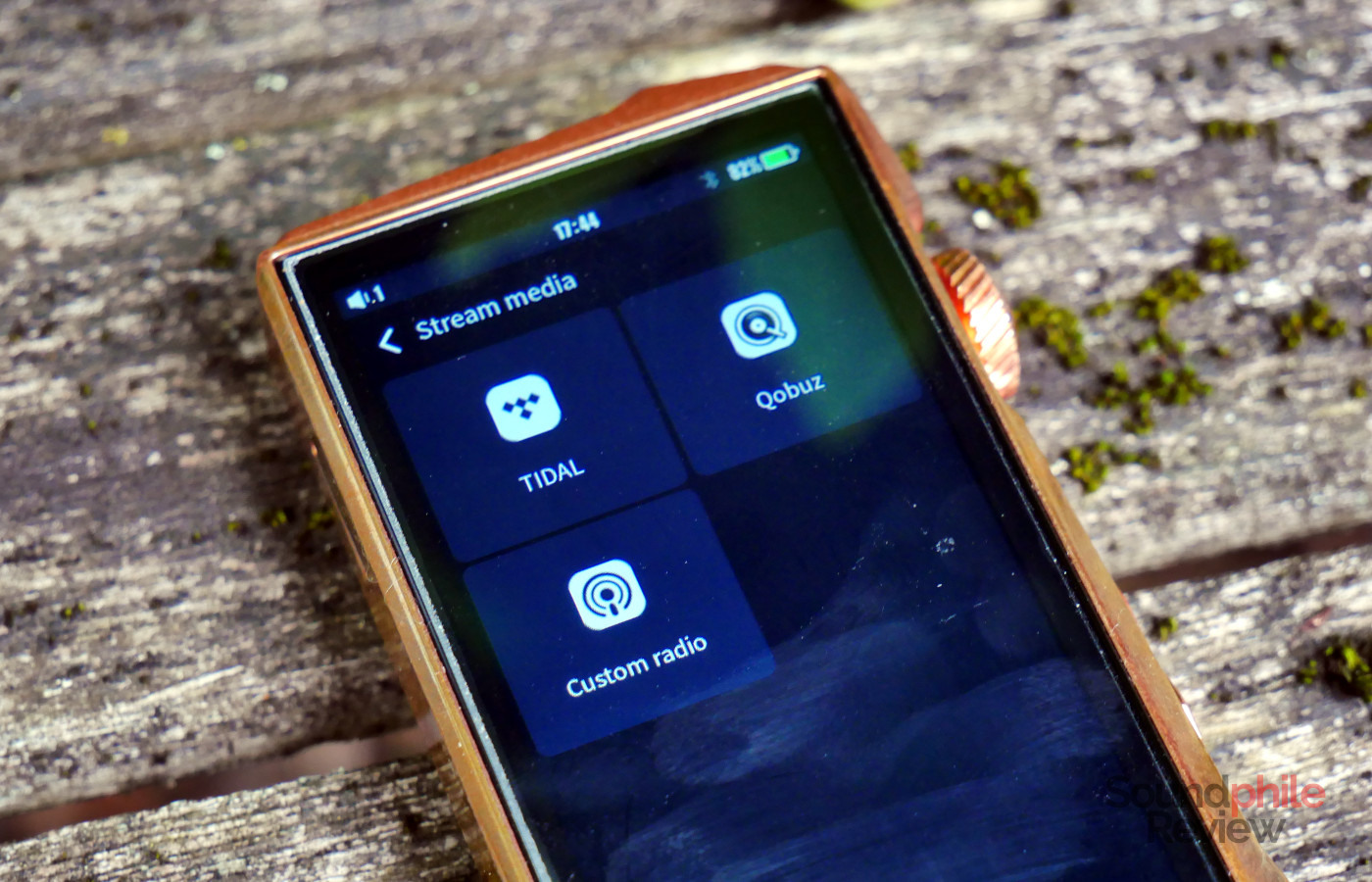
The real novelty is the inclusion of WiFi and the ability to stream music. This can happen either through Tidal or Qobuz when it comes to streaming services. From what I have been able to see, you cannot stream from local sources (e.g. if you have a music server like Plex, Jellyfin or Navidrome). You can, however, make your player visible on your local network through DLNA, so you can access it from DLNA-compatible devices (e.g. the Lindemann Limetree Network or the Arylic S50 Pro+). The player also allows transferring files directly to it through WiFi, so you don’t have to plug it into your computer using a USB cable. As part of the wireless features, you can use HiBy Link to control the player from your phone using the HiBy Player app installed there; this works through either Bluetooth or WiFi. Finally, the AP80 PRO MAX is compatible with AirPlay.
One of the weirdest features of the device is the fact that it can read ebooks; you can manage them much like your music, so with a database or manual file selection. I question the usefulness of the feature, given the screen is less than 3 inches. The step counter feature which was present in previous iterations is gone and isn’t missed.
The USB-C port can be used bi-directionally for USB DAC functionality, meaning you can connect external DACs to it and use the AP80 PRO MAX as a USB DAC; in both cases it works flawlessly. It should work without drivers with all major operating systems, including Linux (which is the OS I’ve tried it with).
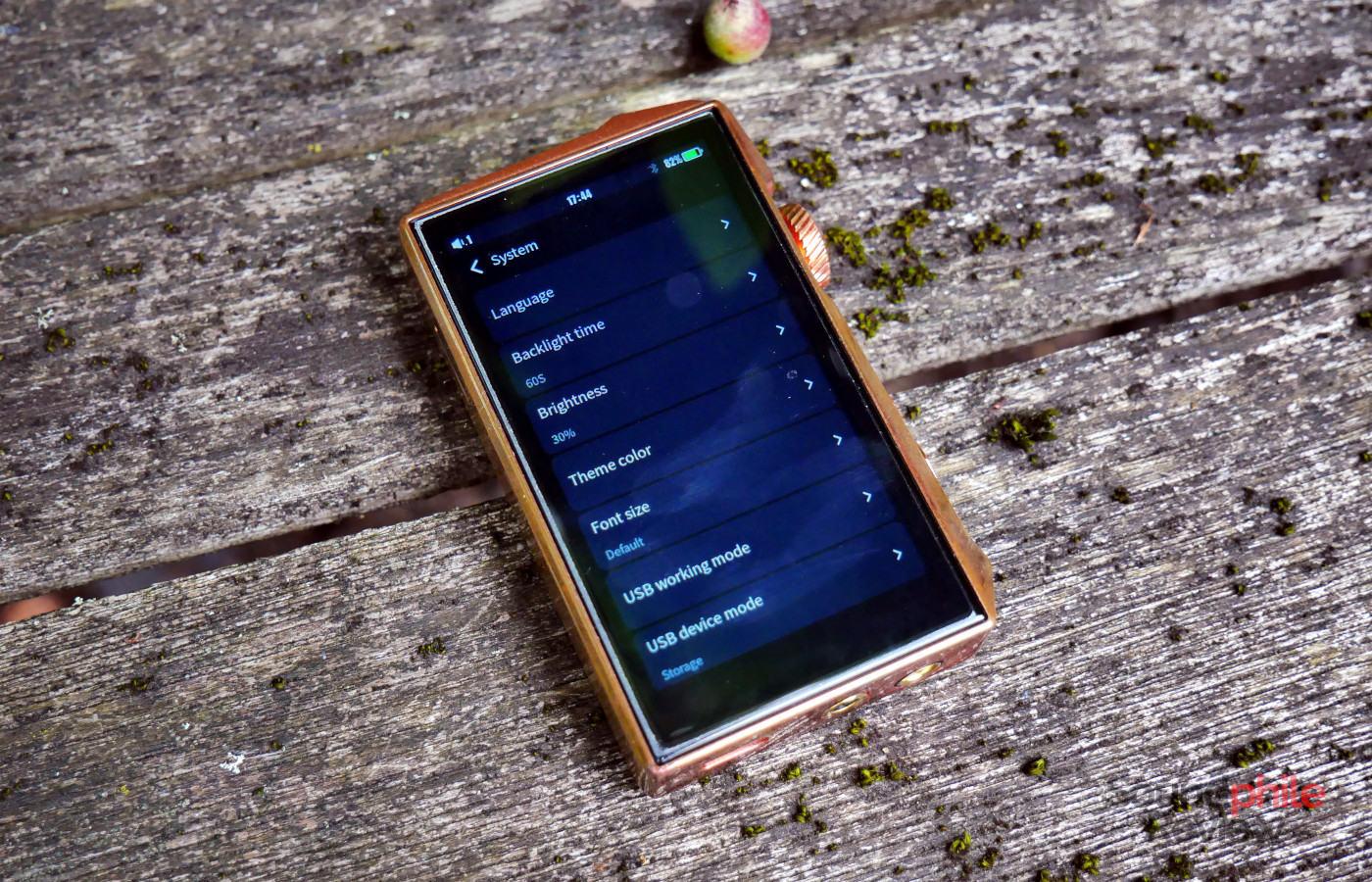
In the settings section we find a wealth of options:
- language
- screen timeout
- brightness
- theme colour
- font size
- USB mode (storage or DAC, both input or output)
- USB current limit (to prevent USB devices from drawing too much power)
- USB DAC feedback ()
- time/date
- idle shutdown timer (with a maximum of 10 minutes, which I find way too short)
- sleep timer (which automatically turns off the device at a given time with a maximum of 2 hours)
- battery percentage display
- sleep
- options to enable or disable the LED indicator on the device’s side, as well as the buttons and the volume wheel when the screen is off
- options to customise the buttons in the pull-down shade (which can also be set to pull-up!)
- screensaver (can be set to album cover or “dynamic cover”, which draws from pictures you need to put on the microSD card)
- factory reset
- firmware update
The OTA firmware update feature has never worked for me, as it always returns an error. On the other hand the offline method, which requires you to download the update file from Hidizs’ download centre, worked without a hitch.
Sound
I tested the Hidizs AP80 PRO MAX with a variety of earphones and headphones, including the Hidizs MP145 Pro, the Sennheiser HD 6XX and the HiFiMAN Edition XV.
There is little to say about the AP80 PRO MAX’s sound… and that’s a good thing! That’s because it is perfectly neutral, and it sounds like any other solid-state source. One caveat to this is that it depends on the impedance of your headphones: using flat and/or low-impedance models like the Edition XV or the MP145 Pro you won’t hear any difference between the AP80 PRO MAX and other sources; with high-impedance headphones like the Sennheiser HD 6XX (which have a nominal impedance of 300 Ω, but swing up as high as 500 Ω in the bass area) you can hear that the AP80 PRO MAX can struggle driving them correctly with effects such as reduced and slower bass. In general, however, the player delivers a detailed sound with decently fast transients.
Final Thoughts
The Hidizs AP80 PRO MAX is a nice little player that continues Hidizs’ tradition of creating small players with lots of features. It takes the AP80 line to the next level not just with a bigger screen (which makes it much easier to use!), but also with better features and an overall smoother and better user experience.
In many ways, the Hidizs AP80 PRO MAX is a minor upgrade over the AP80 PRO-X. It uses the same DAC and has the same power output, which was one of the weak spots of the previous model; the major changes are in the introduction of WiFi and in better battery life, as well as in the larger screen. The rest, however, is the same or has only seen minor adjustments. Given this, it makes sense for the company to have named this device the AP80 PRO MAX rather than going for a new name like AP90. The fact that there hasn’t been much change is this player’s Achilles’ heel, as flaws of the previous models such as the low power output and the imprecise volume wheel (you’d think they’d fix that in a new model!) are still there.
All in all, the Hidizs AP80 PRO MAX is a valid device which offers a solid experience in all regards. Its flaws are overall minor and are overshadowed by its many pros. With all devices getting bigger and bigger, it is refreshing to see a company still betting on small sizes. As the Italian saying goes, “the good wine is in the small cask” – good things come in small packages – and that’s true here as well.