iFi Audio’s ZEN line-up has expanded over time to include various devices. Headphone amplifiers have been there from the very beginning, however, and they are now in the third generation. The iFi ZEN CAN 3 brings to the table pure analogue amplification with a few of iFi’s own additions like XBass+ and XSpace, as well as new ones like a movie mode and a gaming one. There are quite a few additions compared to the previous version, the original ZEN CAN, which range from improved specifications to added functionality.
Disclaimer: I received a unit on loan from iFi. The ZEN CAN 3 sells for £/$229. Additional information on the official product page.
TL;DR: recap
| Pros |
Cons |
| + All-metal build with uniquely retro design
+ Very nice volume knob + Plenty of power on tap + Balanced input and output + XBass+ and XSpace are a fun addition |
– Too much power for sensitive/low-impedance headphones and IEMs |
Rating: 8.5/10
Packaging & Accessories
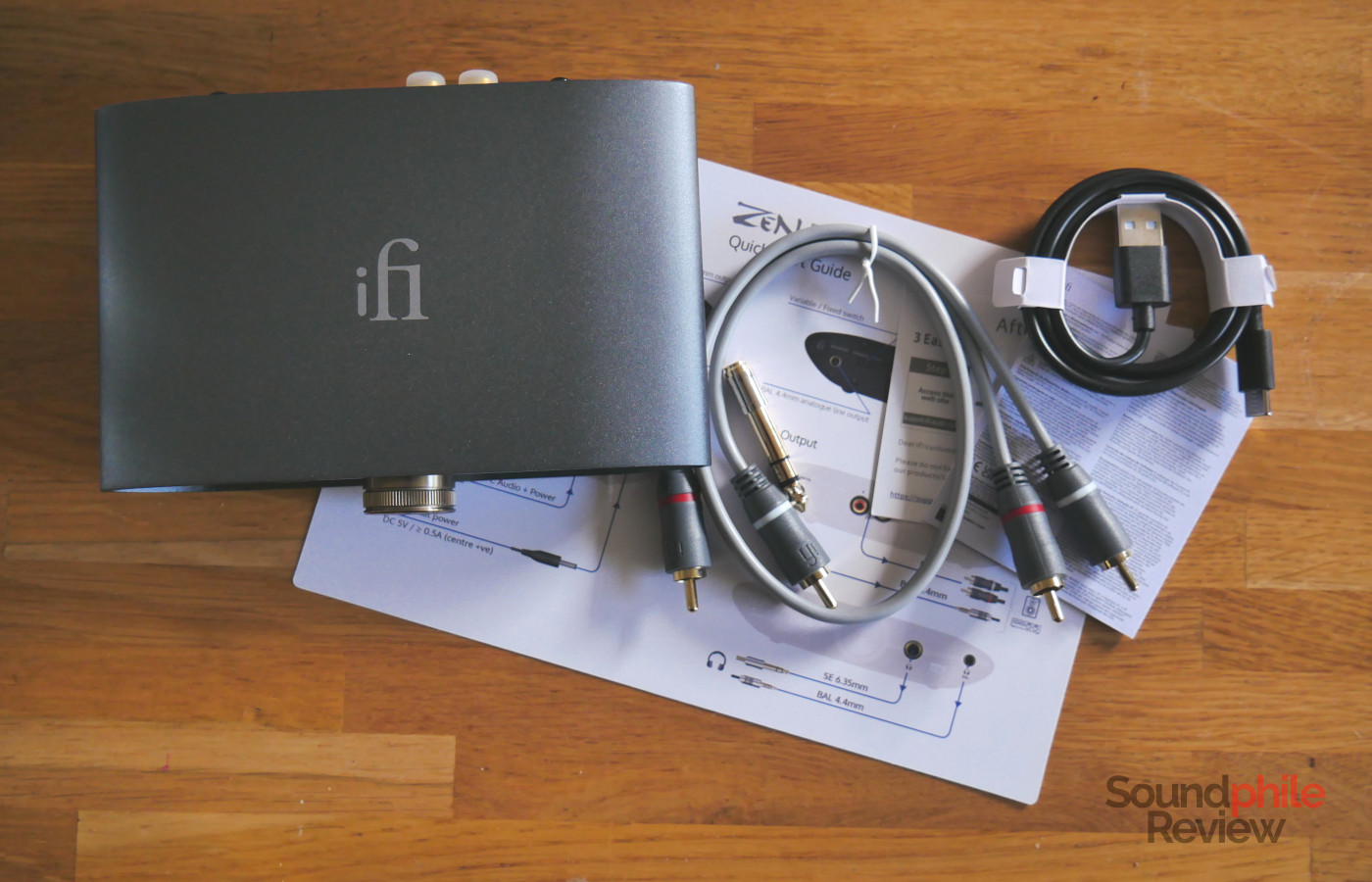
The iFi ZEN CAN 3 comes with a power supply, a 0.5 m stereo RCA cable, a manual and a 3.5 mm to 6.3 mm jack adapter. The addition of the RCA cable is very welcome as it allows you to start using the amplifier immediately.
Design & Build
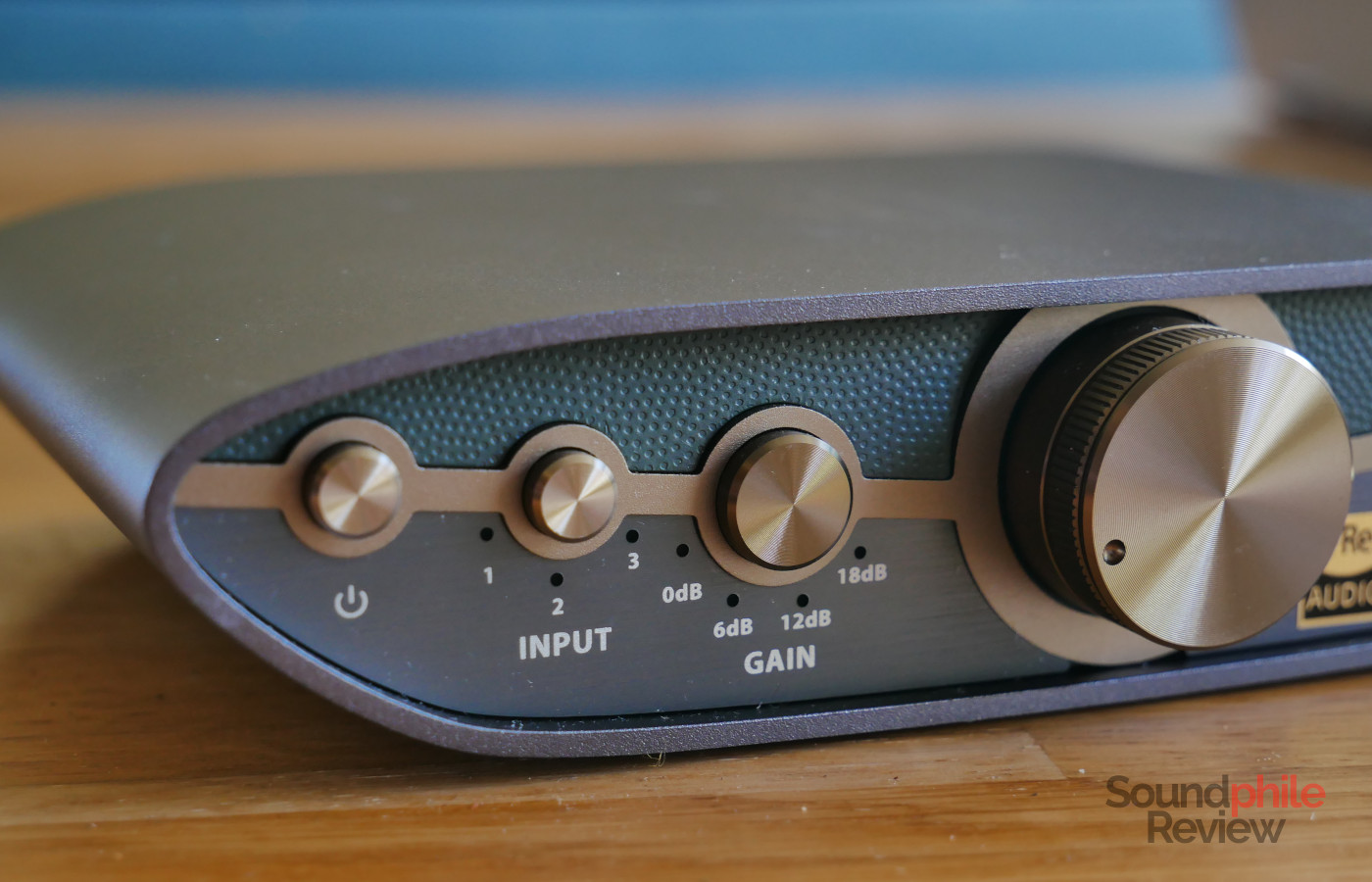
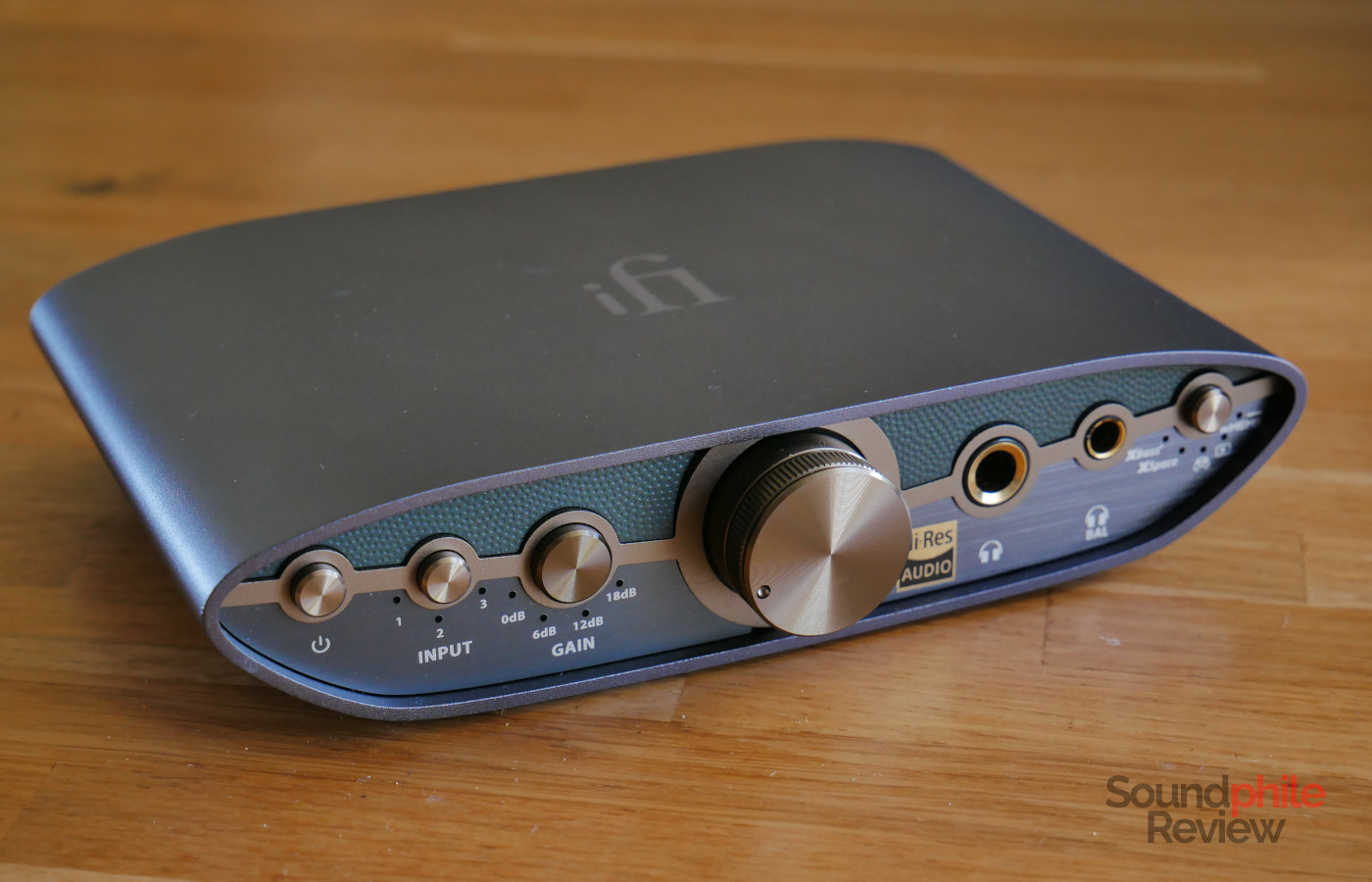
The iFi ZEN CAN 3 adopts the same design as the other ZEN devices: an inverted trapezoid with curved edges that looks straight out of the 1950s and early 1960s. This distinctive design both stands out and blends in anywhere at the same time, as the aluminium used for the shell is a blueish-grey colour which mutes the eclectic shape.
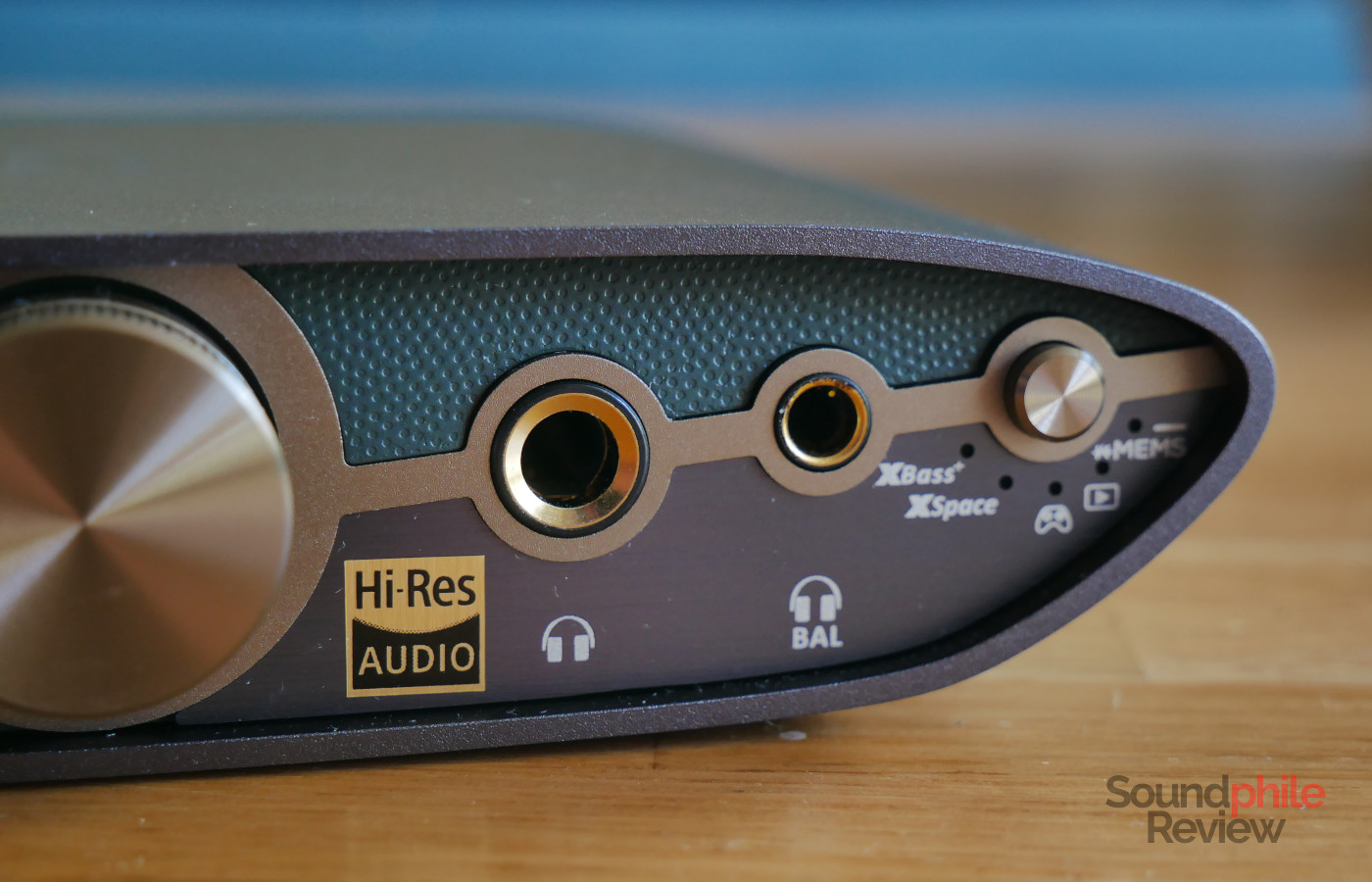
Much like the ZEN DAC 3, the ZEN CAN 3 has seen some major changes compared to the previous generation: the front uses more muted colours now, with a two-tone plate divided by a dark bronze line which encompasses all buttons and jack outputs as well as the volume knob. iFi paid a lot of attention to the design of the device and it shows: everything is laid out so that it is symmetrical, and the buttons are the same size as the jack outputs to enforce this symmetry.
The back hosts a variety of input and output ports: here we find three different inputs (4.4 mm balanced, 3.5 mm unbalanced, RCA) as well as 4.4 mm balanced output, and the barrel jack socket for the power adapter.
As usual with iFi, build quality is excellent and the ZEN CAN 3 is built like a tank.
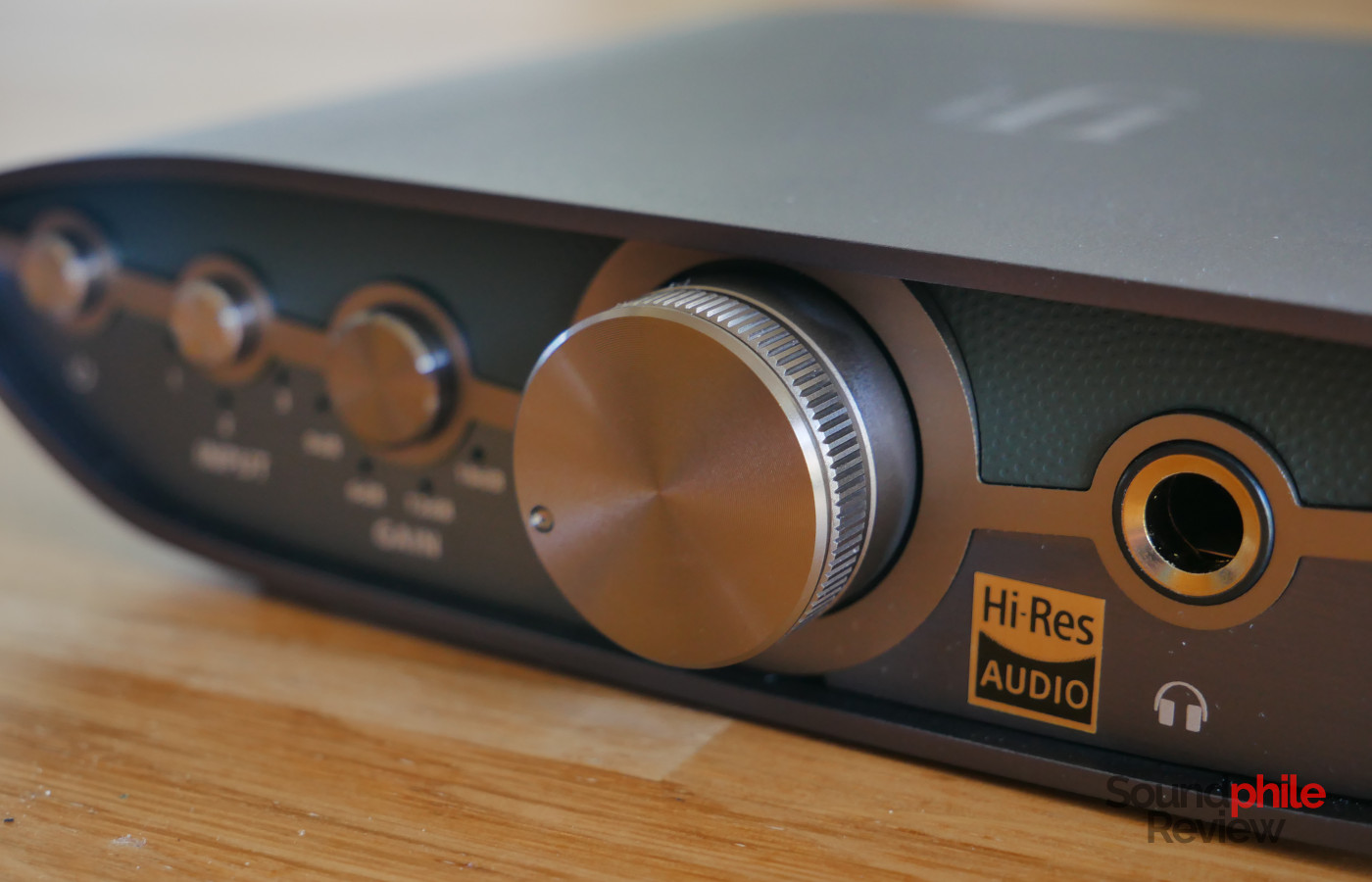
The volume knob is made of metal, too, and it has ridges on the side to help with grip. It has good weight to it that makes precise adjustments easy without being neither too hard nor too freely spinning. It has a small imbalance zone which goes from the start at about 7 o’clock to about 8 o’clock.
Features & Specs
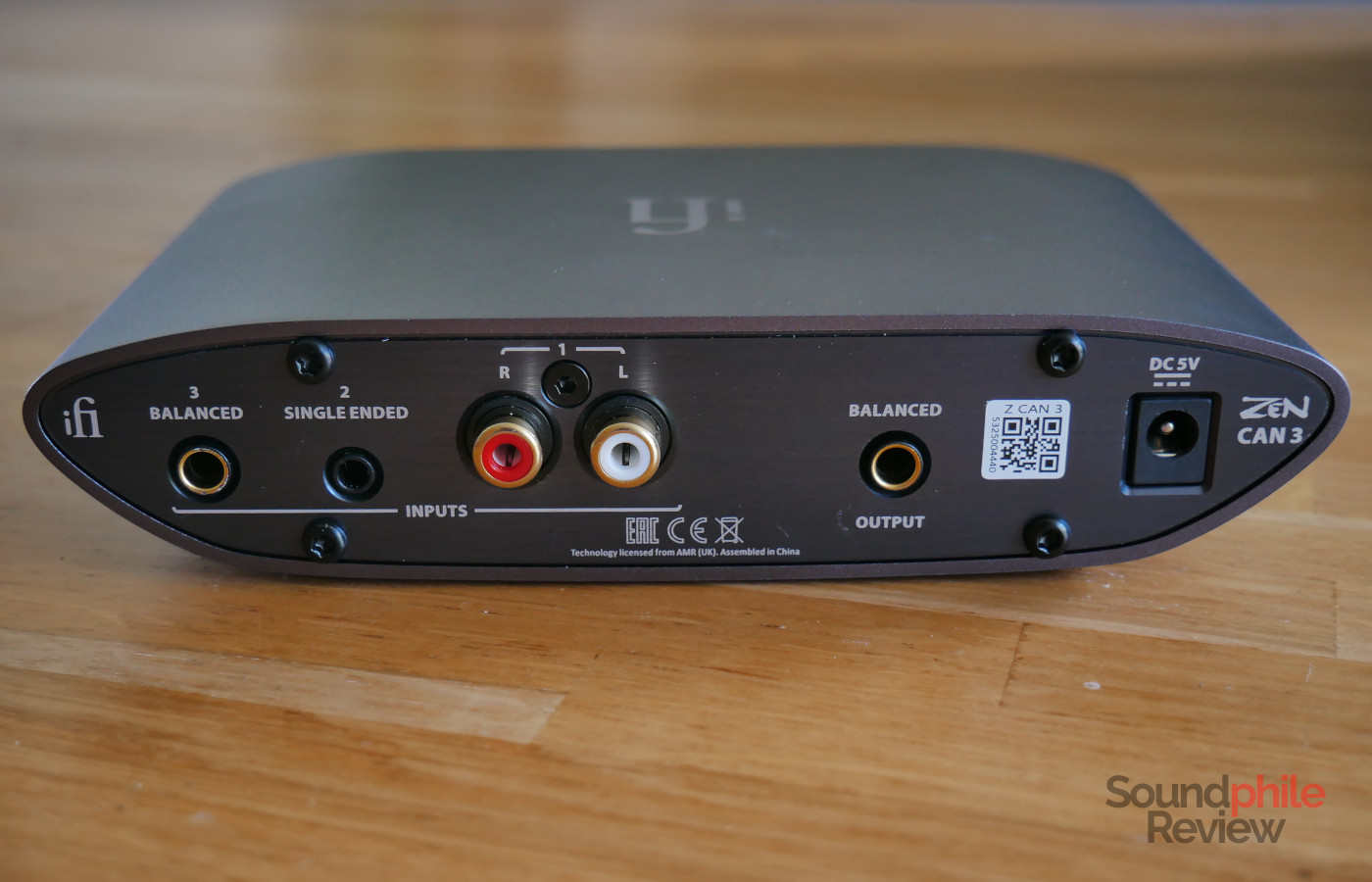
The iFi ZEN CAN 3 is quite a versatile device, thanks to its variety of inputs and outputs: not only can it work as a headphone amplifier, it can also work as a preamplifier when using the 4.4 mm output on the back.
In case you really want to blow your eardrums out, as there is ample power on tap with standard gain, there are three more gain levels in addition to the standard one (marked as “0 dB”): there are 6 dB, 12 dB and 18 dB, which make sure that your headphones will always be loud enough.
The ZEN CAN 3 offers various effects and features: on top of the iFi classics, XBass+ and XSpace, there are also two additional modes: gaming and movies. There is also a special operating mode for xMEMS drivers.
iFi ZEN CAN 3 |
| Input | RCA, 4.4 mm jack, 3.5 mm jack |
| Suitable headphones impedance | Not declared |
| Output impedance | < 1 Ω (3.5 mm)
< 2 Ω (4.4 mm) |
| Maximum output power | Single-ended (3.5 mm):
Balanced (4.4 mm):
|
| Frequency response | 10 Hz – 200 kHz (-3 dB) |
| THD+N (@1 kHz) | < 0.006% |
| SNR | > 125 dB |
| Crosstalk | Not declared |
The ZEN CAN 3 outputs a decently large 1.6 W of power at 32 Ω, which is more than enough to power anything you throw at it. In fact, it is often too much, as I mentioned previously; low-impedance headphones will be too loud with the ZEN CAN 3 and will require an IEMatch in order to be usable, especially if your DAC does not offer variable output so you can reduce the volume at the source. Adding an IEMatch mode, like the one that the micro iDSD Pro Black Label and the rest of the i-series used to offer, would be a great idea for the next generation.
On the other hand, the very low output impedance means that the ZEN CAN 3 can be used without issues with both low-impedance headphones/earphones and planar ones which require a lot of current, especially when using the single-ended output.
One thing to note is that, due to its use of Class A amplification, the ZEN CAN 3 gets a bit warm; in my environment, which is the chilly Scottish spring, it never gets more than lukewarm to the touch, however I can see how it could get decently warm in hotter climates.
Sound
I tested the ZEN CAN 3 with various headphones, including the Sennheiser HD6XX and the HiFiMAN Edition XV, and connecting it to a ZEN DAC 3.
The ZEN CAN 3 is perfectly neutral in its frequency response and won’t therefore colour your music by adding its own contribution unless you enable one of its effects; this is a very positive feature as it means you can enjoy music as it is and without a colouration which you can’t control, leaving you free to add colour through EQ if you so wish.
While testing the ZEN CAN 3, I had a feeling that the ZEN CAN 3 did add something of its own when comparing it to other devices, as it seemed to make the sound warmer and fuzzier. I have then tried connecting it to an SMSL DO300 to exclude any influence from the ZEN DAC 3 and I pit it up against an SMSL DO400 (which I used as a neutral reference); the result is that the ZEN CAN 3 sounds absolutely identical and I couldn’t hear any differences. It’s totally transparent! It is exactly as I expected it to be, and this means that you can couple it with any DAC and it won’t alter the sound unless you want to.
The efficacy of the XBass+ and XSpace features seem to be highly dependent on the headphones you are using. With the HD 6XX and the Edition XV, their effect is limited but noticeable. XBass+ does boost bass, but it does so relatively gently, which is very appreciated as it adds some rumble without making it invasive nor sounding forced or contrived. It offers the greatest boost in the sub-bass area and then tapers off gently and progressively, which works very well with headphones which are neutral or lacking bass. XSpace, on the other hand, really changes the spatial presentation of music and makes it sound like it’s in a much bigger space. What’s more, it appears to move instruments in the space and give them depth which otherwise isn’t there; whereas my perception of the HD6XX with tracks like Snarky Puppy’s Xavi is of a relatively two-dimensional presentation, with XSpace it becomes a lot more three-dimensional as it extends in a full semi-circle from left to right, rather than on a plane that cuts through my skull between my ears. Interestingly, since the XSpace feature shifts many frequencies up and therefore makes many tracks sound a bit thin, you can enable both XSpace and XBass+ at the same time so that the shift is (at least partially) compensated.
The gaming mode shifts everything up dramatically and puts a lot of emphasis on the upper midrange and lower treble while also decreasing lower midrange and increasing bass; this should help in competitive FPS gaming to hear footsteps, but is otherwise not useful for other games. The movie mode is a more extreme version of XSpace, with emphasis on the middle and upper areas of midrange to help hearing speech. Interestingly enough, movie mode also boosts spatial cues significantly and thus gives you a much more holographic presentation at the expense of tonal accuracy, which is why I would not use it for music as it alters the tonality significantly.
Final Thoughts
I’ve always loved the design of iFi’s ZEN line-up of devices; it is just whimsical (in a very positive way!) and unique. The iFi ZEN CAN 3 takes this design to another level by making it more organic and coherent than previous incarnations. But what’s most important is that it is a very competent amplifier, capable of driving virtually anything under the Sun without a hitch. It is perfectly neutral and also offers interesting additions in the form of the very well-made XBass+ and XSpace, which allow you to truly add something to your music without taking anything away from it.
The only drawback of the ZEN CAN 3 is that it is too powerful: low-impedance headphones and earphones are simply too loud to be usable on a daily basis. iFi has added gain levels up to 18dB, however I feel that adding options for -6 dB (or even lower) would have been better as it would have allowed for a wider range of headphones to be usable with it. Now, compared to the competition, the ZEN CAN 3 sits in a weird spot: there are other options, such as the Topping A50 III, which offer better specs for a lower price. And that’s the main issue with the ZEN CAN 3: while on its own it is a great piece of kit, it costs more than the competition despite having worse specifications. Whether the added features like XBass+ are worth the premium is entirely up to you, my dear reader.