The basic building block of iFi’s best-selling ZEN line-up is undoubtedly the all-in-one DAC and amp combo: now in its third generation, the iFi ZEN DAC 3, this nifty little device is pitched as a one-stop shop for your desktop audio needs, thanks to both headphone outputs on the front and line out on the back. And it’s all packaged in a very nicely designed chassis. There are, however, some issues as well. Let’s find out how this device fares and how it’s changed from its predecessors.
Disclaimer: I received a unit on loan from iFi Audio directly. The ZEN DAC 3 sells for $/£229. Additional information on iFi’s website.
TL;DR: recap
| Pros |
Cons |
| + All-metal build with unique, retro design
+ Very nice volume knob |
– Hissing noise when plugged in
– Hiss and hum in the headphone output – Low output power for its price point – Only USB input – Higher price than previous generations without significant differences |
Rating: 5.5/10
Packaging & Accessories
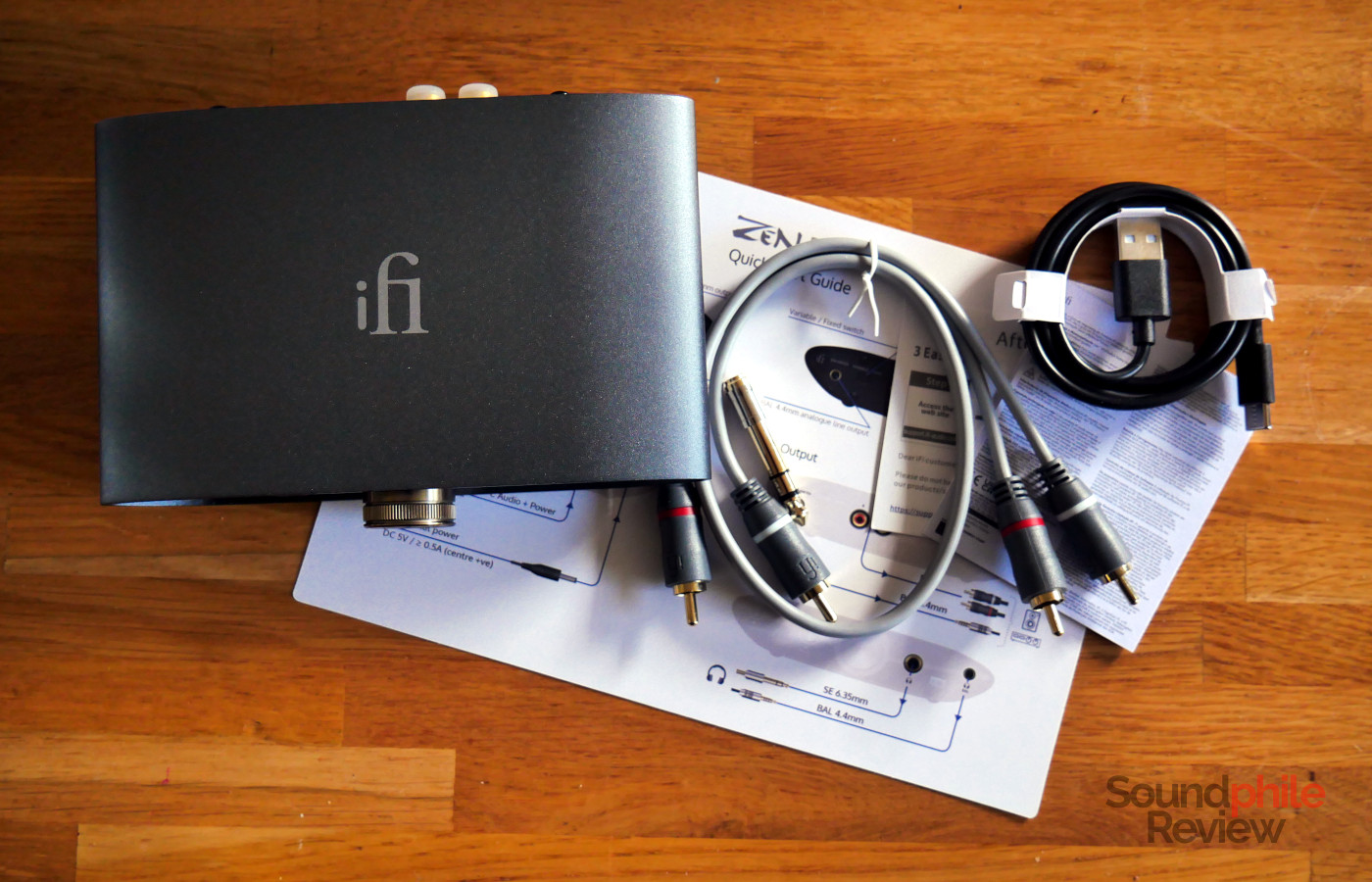
The package contains the ZEN DAC 3 itself, a USB to USB-C cable, an RCA to RCA cable and a manual.
Design & Build
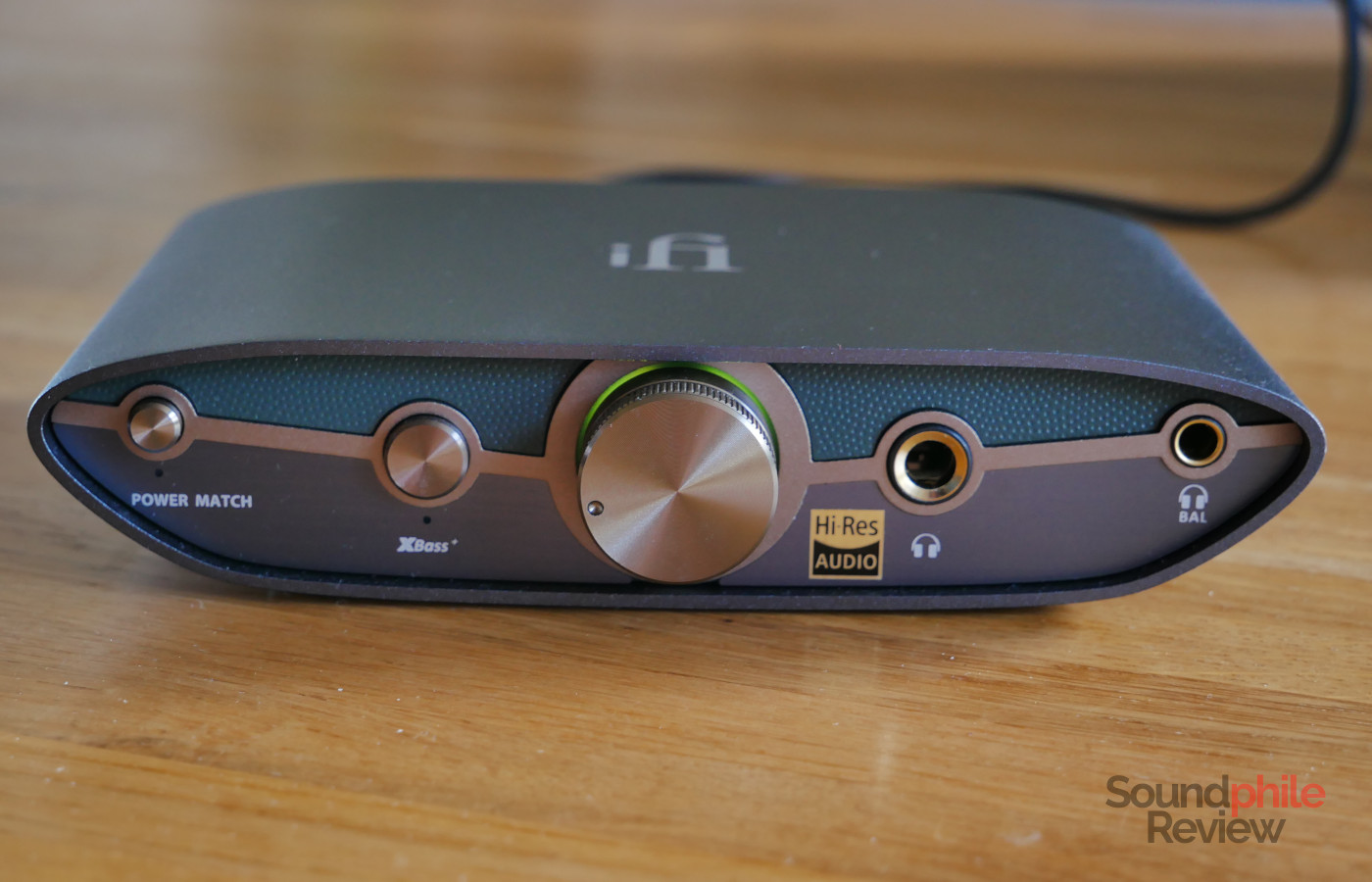
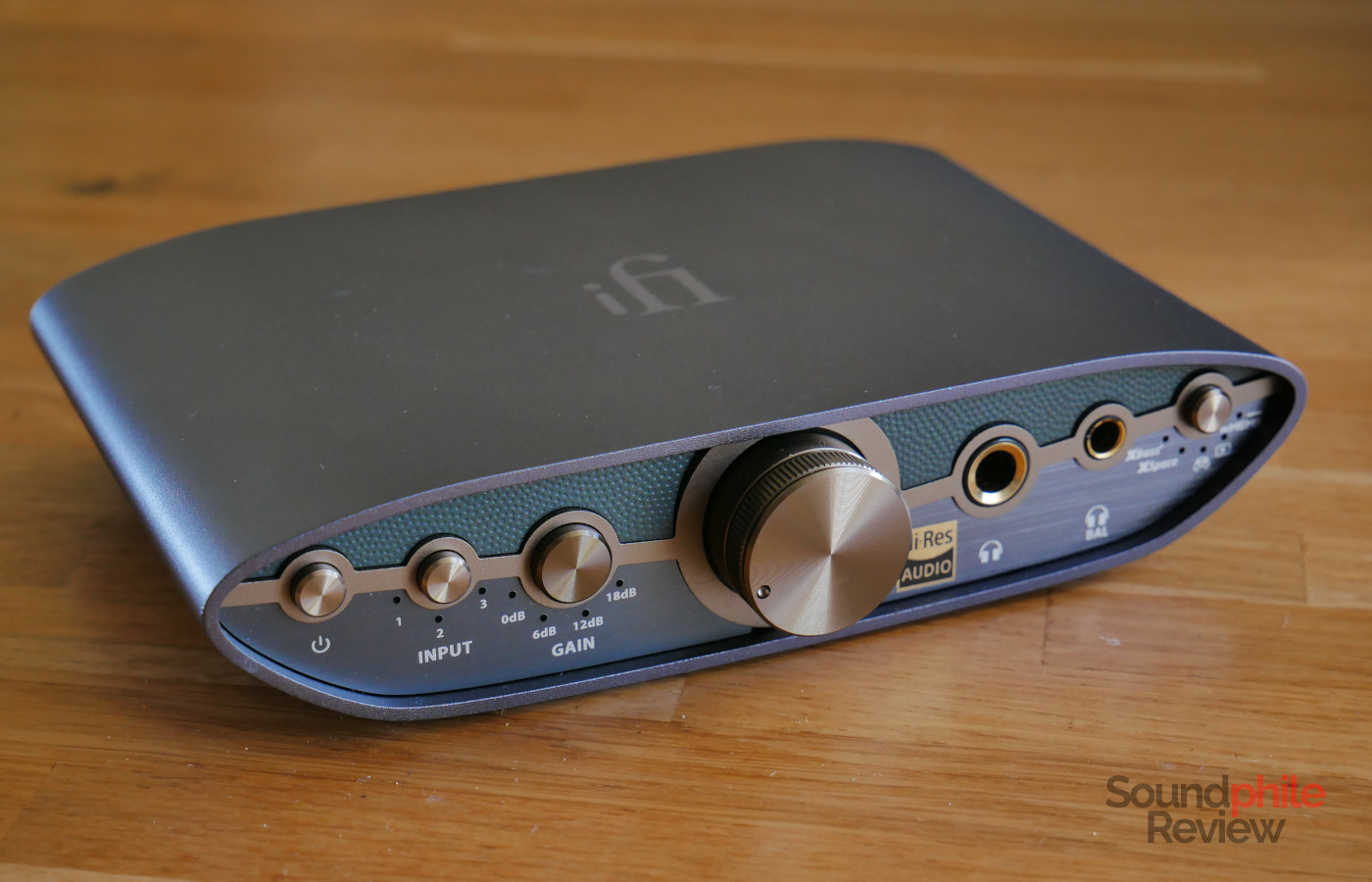
The first-generation iFi ZEN DAC was quite a game changer when it comes to design: it offered something entirely new on the scene, as the vast majority of products on the market was still using the classic squared, boxy shape. The ZEN DAC 3 adopts the same design as that first generation, with some changes which are mainly in the front. The chassis keeps its retro, ’50s-esque design which is very charming and never looks out of place.
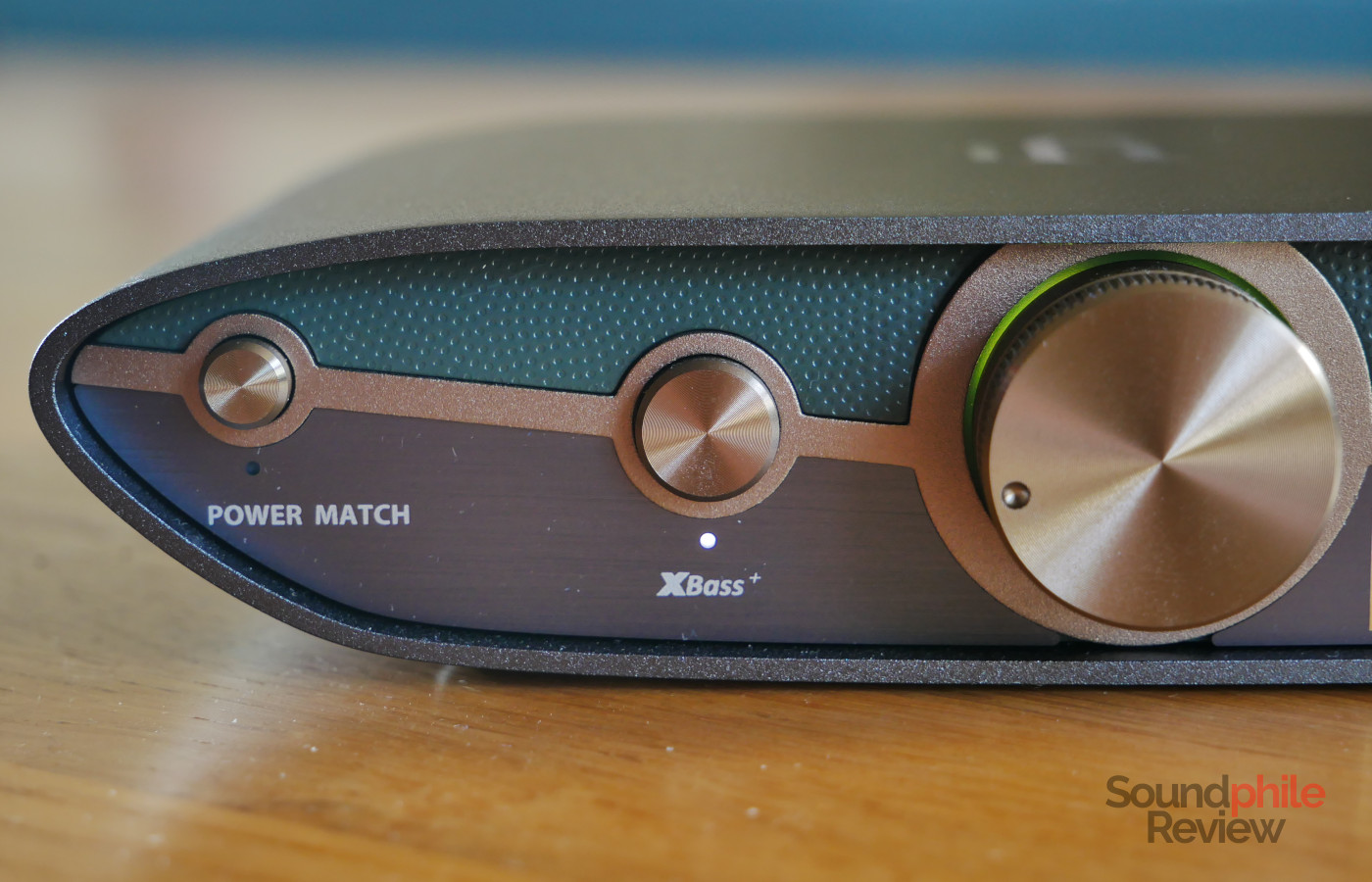
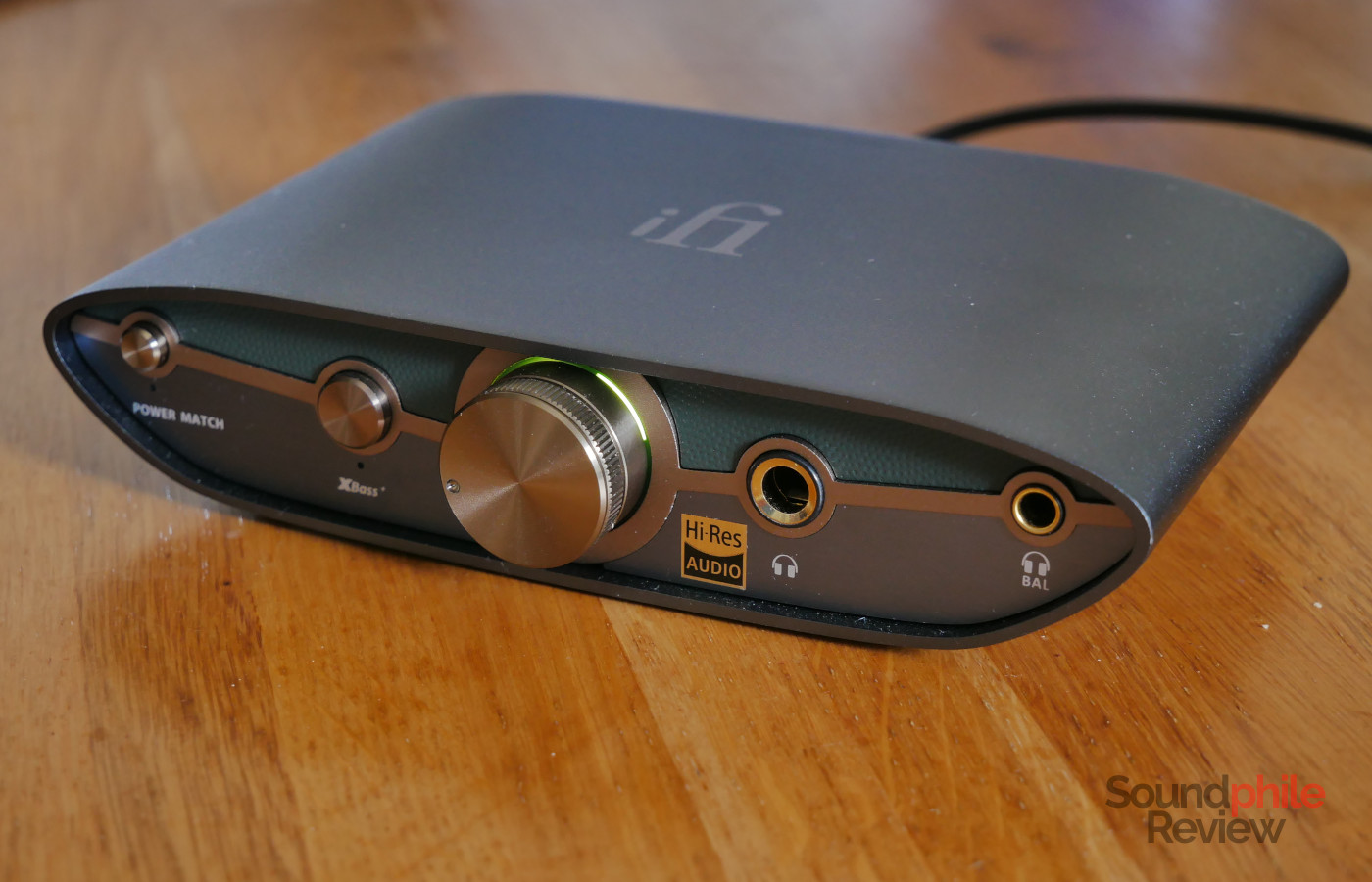
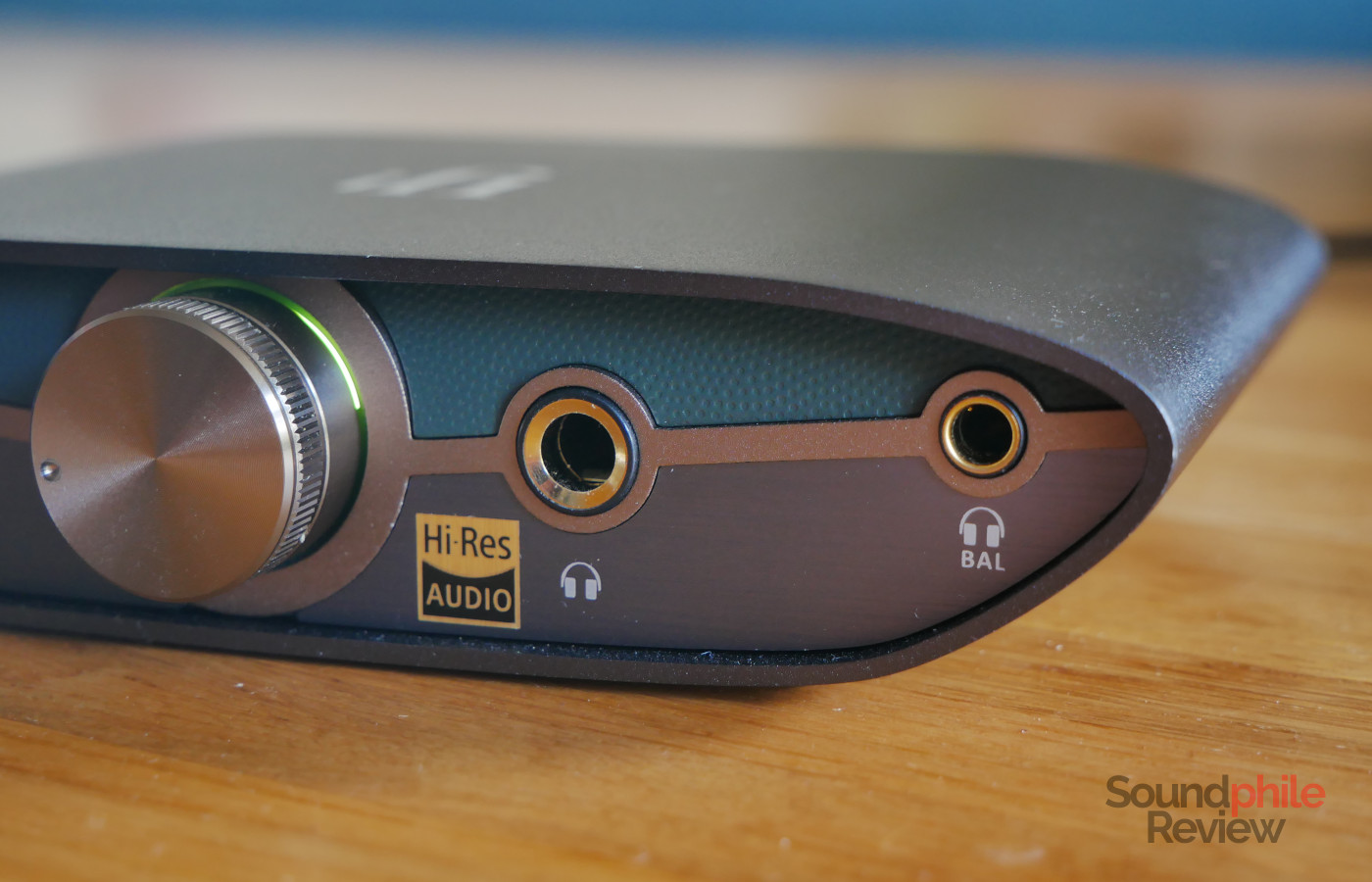
The buttons and the outputs are placed symmetrically on the front: there is a bronze-coloured metal band that goes from one side to the other, with circles around the “power match” and XBass+ buttons on the left hand side, as well as around the volume knob in the centre (which has the same colour) and the 6.3 mm and 4.4 mm jack outputs on the right hand side. The volume knob has a light behind it which takes on different colours based on the input.
The entire chassis is made of metal with a dark, gunmetal sort of colour, while the front has a two-tone colouration that includes a bluish background and brownish/bronze-ish details (including the volume knob). As usual with iFi Audio products, the ZEN DAC 3 is very well built and leaves nothing to be desired on this front.
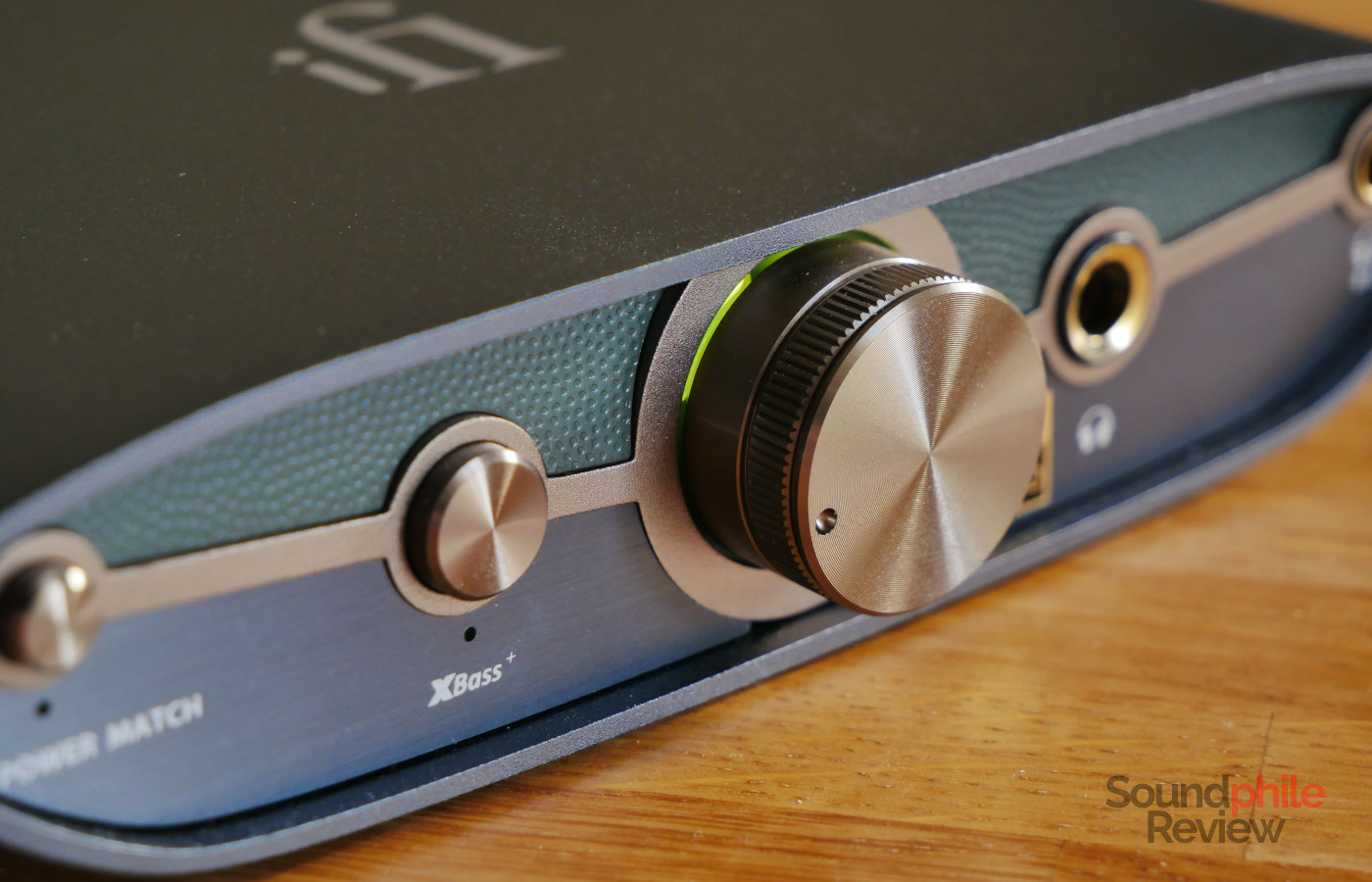
The volume knob has some ridging on the side which helps with grip. It spins very smoothly and it has a very nice weight to it: this makes turning it quite an intentional act as well as a controlled one (as small adjustments still need quite a bit of force and it’s therefore easier to make them). The imbalance zone is quite small; volume is null at about 7 o’clock and the signal has no channel imbalance around 8 o’clock.
Features & Specs
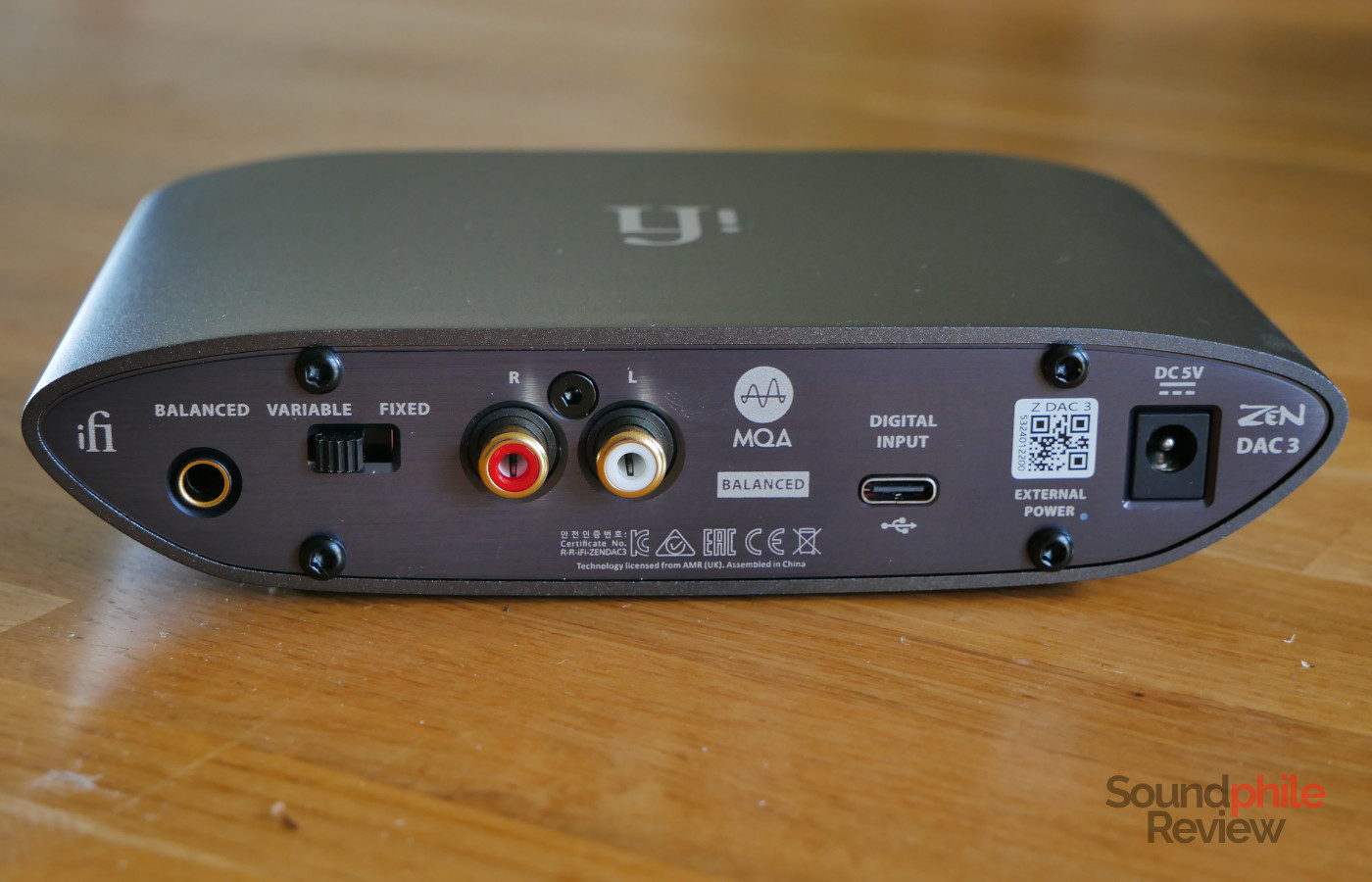
Much like its predecessors, the ZEN DAC 3 only supports USB connections. It doesn’t have optical, coaxial or any other form of connectivity, so it is a device meant to be only used at your desk with your computer or with a console. As it is compatible with Linux, it is also compatible with the Steam Deck and other similar handhelds, and it is compatible with the PlayStation 5 and the Nintendo Switch as well.
It supports two different output modes: fixed, which only outputs at line level and does not allow to adjust the volume, and variable, which does allow you to regulate the volume to your liking.
One thing that’s missing on the iFi ZEN DAC 3 is a power button. The device appears to automatically turn itself off when you turn off or suspend your computer, or at least the volume knob’s light does. In any case, it never gets more than lukewarm to the touch (also because iFi says it sips 2.5 W of power).
iFi ZEN DAC 3 |
| Input | USB (up to 32 bit / 768 kHz, up to DSD512, DXD 768 kHz, MQA decoder) |
| Suitable headphones impedance | N/A |
| Output impedance | ≤ 1 Ω (headphones out) 100 Ω (line out, RCA) 200 Ω (line out, 4.4 mm) |
| Maximum output power | 300 mW (32 Ω, balanced) 70 mW (600 Ω, balanced) 210 mW (32 Ω, single-ended) 18 mw (600 Ω, single-ended) |
| Frequency response | 5 – 90,000 Hz |
| THD+N (@1 kHz) | < 0.005% (balanced headphones out) < 0.013% (single-ended headphones out) |
| SNR | 109 dB (headphones out) 113 dB (line out) |
| Crosstalk | N/A |
iFi does not disclose the actual chip that they use on the ZEN DAC 3, as they only say that it is a Burr-Brown DAC – which might very well be the same as they used on the first-generation ZEN DAC. All the specs are virtually identical to that first-generation device; in fact, in some cases they end up being worse (looking at the maximum power output, as an example), with the only clear change being support for higher-resolution content (768 Hz PCM and DSD512).
One thing to note is that the ZEN DAC 3 seems to have distortion that’s around two orders of magnitude worse than its competitors. If we look at similarly-priced devices, we find that they offer significantly better specs: the Fosi Audio ZH3 has a THD of 0.00024% on single-ended (more than 50 times lower!), while the SMSL C200 Pro has a THD of 0.00006% (over 200 times lower!). This spec needs to be put into context: you won’t hear a difference if you are using IEMs or easy-to-drive headphones and keeping the volume low; if you crank it up when using hard-to-drive headphones, though, you will raise the distortion and there is a chance that you will start hearing it audibly, depending on your hearing and on what you are using (headphones with, say, 3% distortion will mask anything below that level coming from the amplifier). This is because a relatively high starting distortion level means that there isn’t that much headroom before you hit single-percentage distortion, which becomes audible. Now, remember that, at the start of the paragraph, I wrote “seems”: that’s because the THD+N value includes noise (that’s the “+N”), which is probably what is vitiating the measurement. As we’ll see in the next section, the ZEN DAC 3 has a high level of very audible noise, so I’m going to go out on a limb and say that this is what is really responsible for this high value, rather than actual distortion.
Sound
I tested the iFi ZEN DAC 3 with a variety of headphones, including the Sennheiser HD6XX, the HiFiMAN Edition XV and the Hidizs MK10 ArcSonics.
The ZEN DAC 3 emits a constant hiss, both through the headphones output and more generally in the environment. When I connect the device to my computer using the provided USB cable, it starts emitting a high-pitched hiss that never goes away. They always play a relatively loud hissing sound through all the earphones and headphones I have tried, unless they have high impedance. This is always present and slightly increases in volume when the volume goes up; it does not seem to be related to grounding issues or computer-specific issues, as the ZEN DAC 3 exhibits the same hiss when attaching it to a different laptop on battery power. I have also tested it using iFi’s own separate power supply unit (borrowed from the ZEN CAN 3), and the issue is still there. I asked iFi and they agreed that it looks like the hiss is picked up by sensitive headphones and earphones; to counter this they sent me an iFi IEMatch 4.4. Although that fixed the issue, this is a flaw in the design which should be corrected without the need for additional equipment.
In terms of the actual sound, I find the ZEN DAC 3 to sound almost perfectly neutral and therefore quite close to most other DACs with headphone output. There are, however, some considerations to make. Compared to an SMSL DO400 (which is in a completely different price bracket, but which I’m using as a point of comparison as a perfectly neutral device), I can hear some small differences: the sound as a whole is somewhat warmer, but at the same time bass is less abundant, and treble is less forward in the mix. It is almost like there is a veil on the sound; it sounds fuzzy and analogue-like. Mind you, these are small differences, but they are audible to me. They can be a good addition, if that is what you are looking for, too; if you are looking for perfect neutrality, however, the ZEN DAC 3 does not seem to offer it.
The “power match” feature is not related at all to the IEMatch line of devices and, in fact, it adds power – it is basically a “high gain” switch with a different name. The XBass+ effect, on the other hand, adds a lot of bass, but it’s very loose and boomy and I find it simply excessive, although other people might like it. It is, after all, a feature made to add fun, so de gustibus non disputandum est.
Final Thoughts
The iFi ZEN DAC 3 is a device with many good attributes: its design is very elegant, it offers 4.4 mm balanced output for both headphones and line out, and it also allows to boost bass through iFi’s own XBass+ analogue processing technology. It has limitations, however: it offers limited power output, it hisses both in and out of the headphones out, and it has very high minimum volume – and these two things together make it unsuitable for IEMs and low-impedance headphones. Overall, it is a product which offers everything you need and, although it has a few limitations, it does everything it is supposed to.
There is one big issue, however, and that is price. The iFi ZEN DAC 3 is priced at £/$229, which is more than its predecessors while not offering significant improvements in any area. This pricing also puts it directly at odds with products such as the xDuoo XA-02 or the SMSL C200 Pro; the thing is that the competitors win on all fronts (input and output options, specs, no hiss…) while also costing less money. I think that the ZEN DAC 3 would be much better placed if it costed £/$150, as the competitors simply offer more for less. It is overall a decent device and a direct continuation of the first ZEN DAC, which at the time was a good option; the reason why I cannot recommend the ZEN DAC 3 is not that it isn’t good, but rather that it has stayed the same as its predecessors while the market has improved a lot overall.