The musical genius of Wolfgang Amadeus Mozart is still celebrated to this day, 270 years after his birth. It is exactly this ever-lasting legacy of extraordinary music that has compelled Noble to dedicate their latest true wireless earphones to the Austrian composer: the Noble FoKus Amadeus are well-balanced earphones with lots of features which are superbly designed and manufactured, while also having some limitations around noise reduction.
Disclaimer: I received a free sample from Noble’s distributor in the UK, KS Distribution. The FoKus Amadeus retail for $320. Additional information on the official website.
TL;DR: recap
| Pros |
Cons |
| + Superb design and build quality
+ Good comfort + High-quality codecs + Great battery life + Audiodo custom tuning |
– The app’s UI is confusing
– Very high minimum volume – No passive isolation – Low ANC effectiveness – Stock signature requires a bit of EQ – Pricey |
Rating: 7/10
Packaging & Accessories
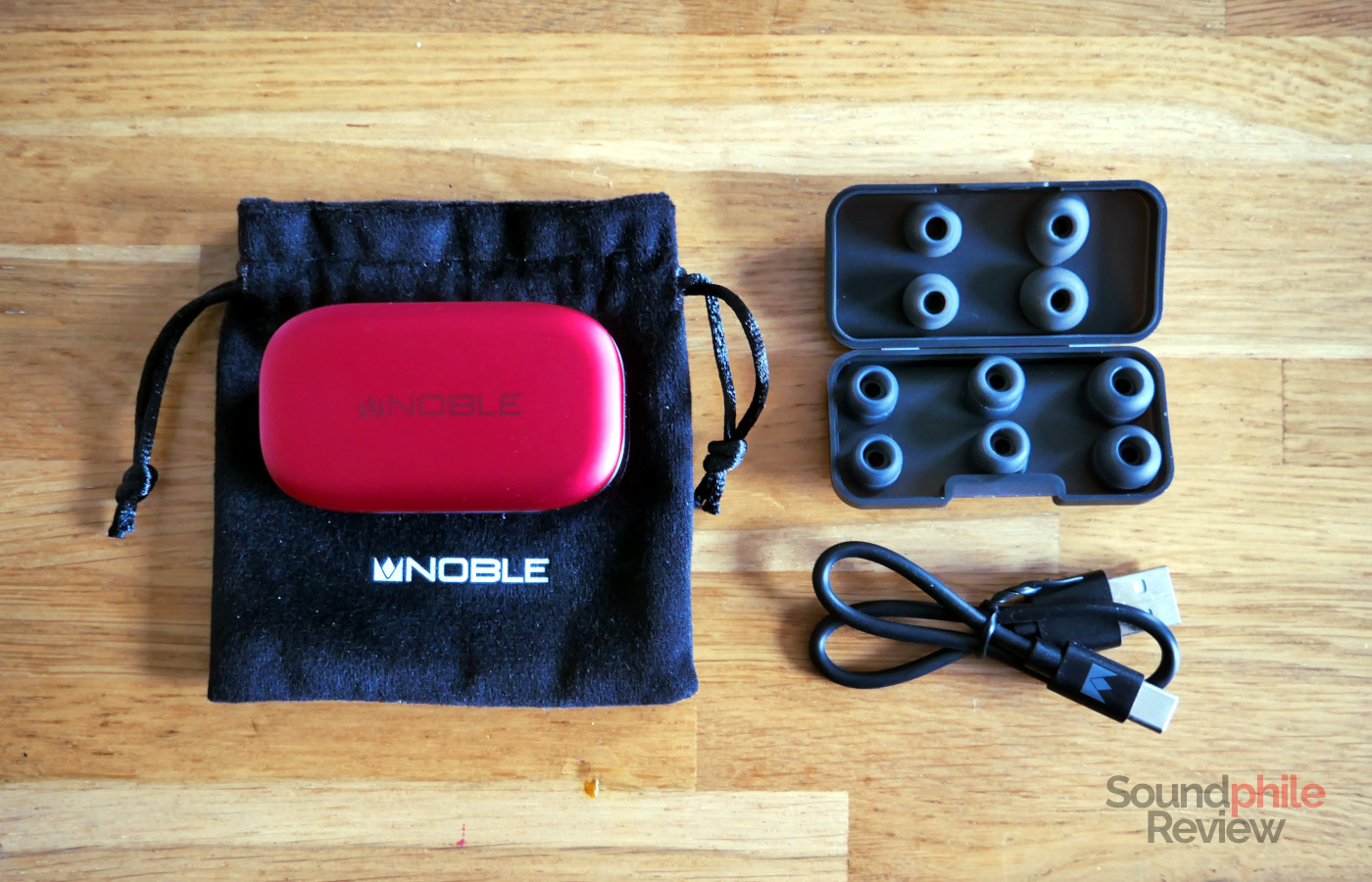
The Noble FoKus Amadeus comes with two sets of silicone eartips (one single-flange and one double-flange) in three sizes, a USB to USB-C cable, and a drawstring pouch.
Design & Comfort
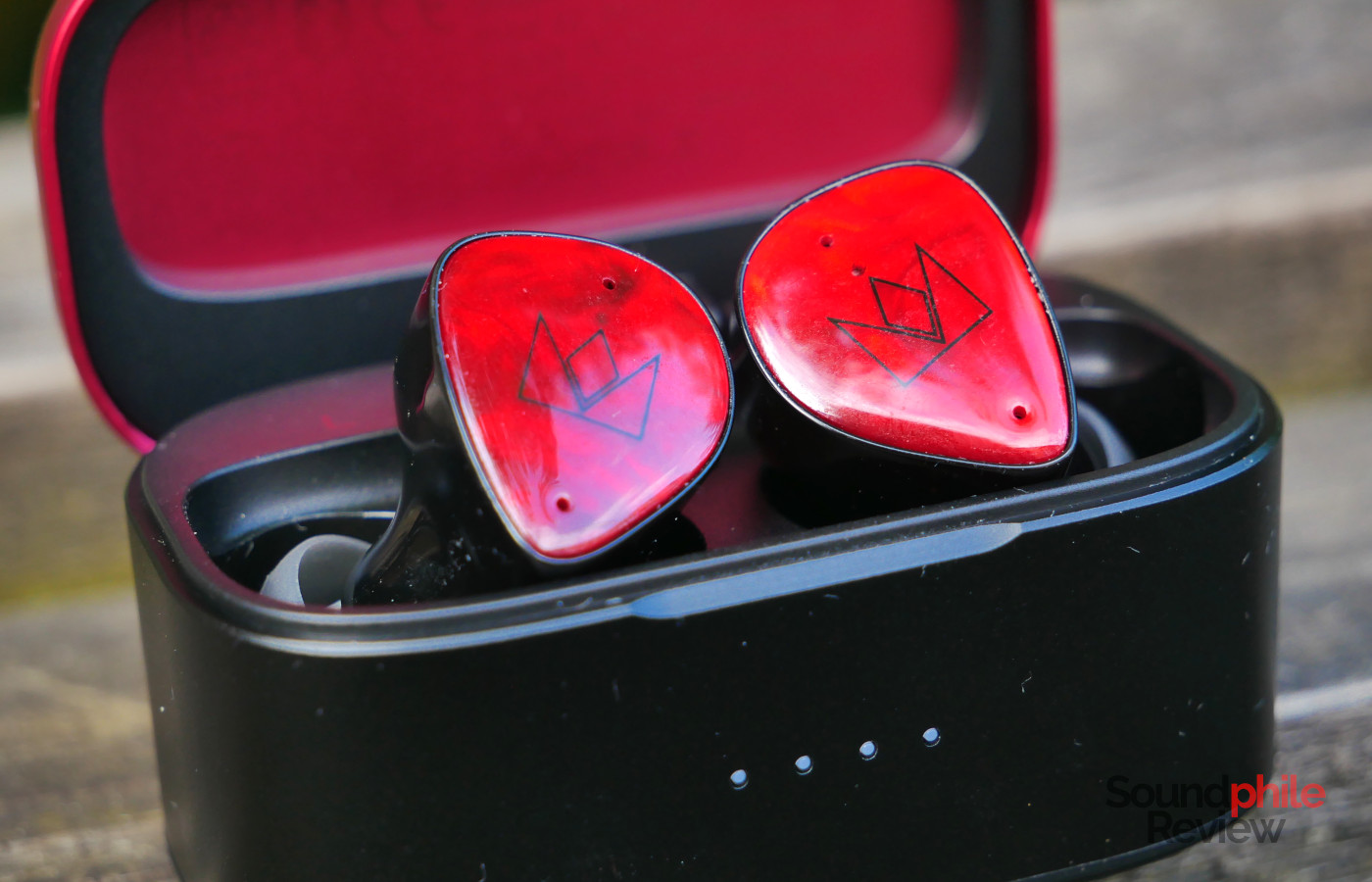
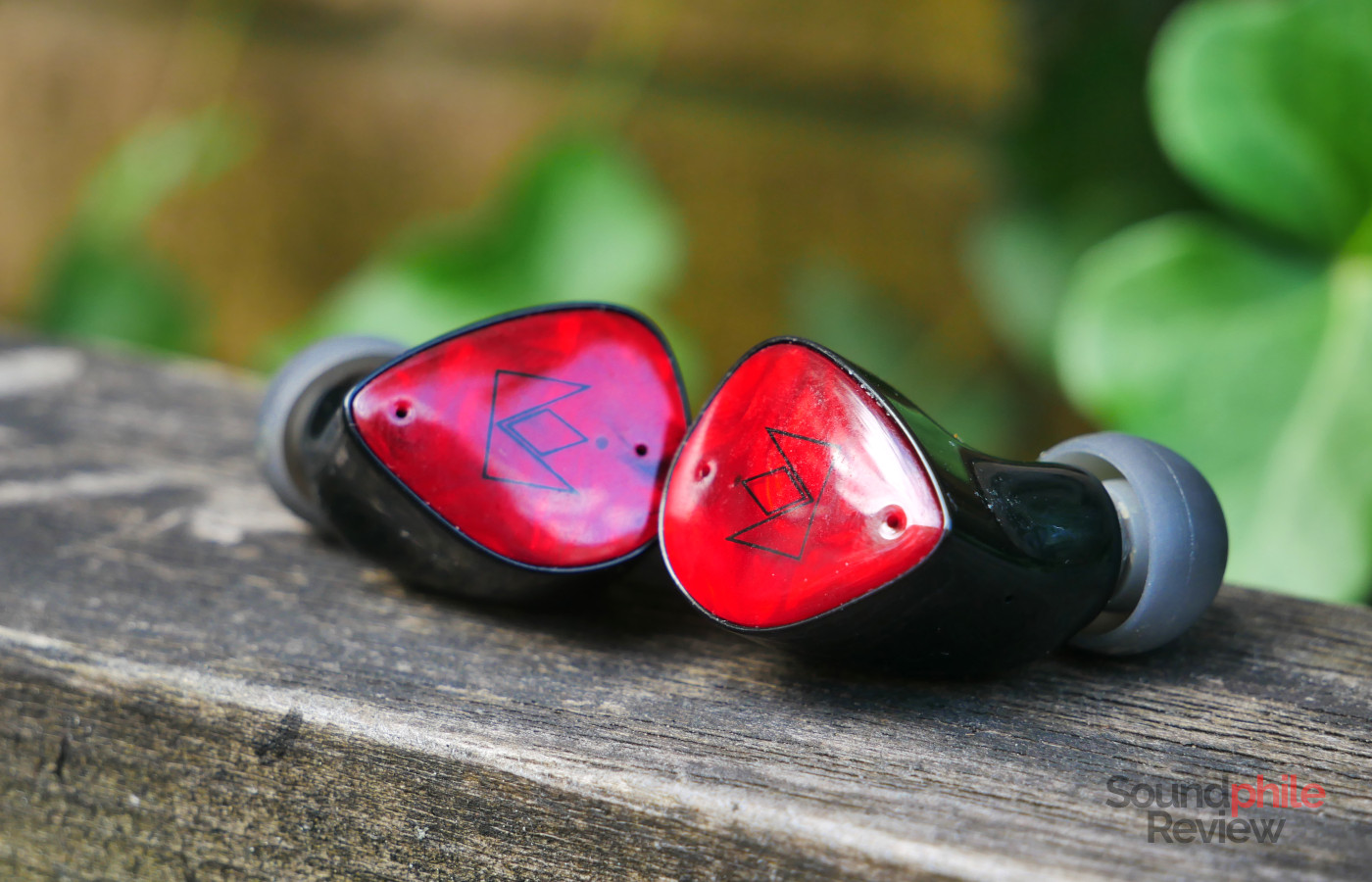
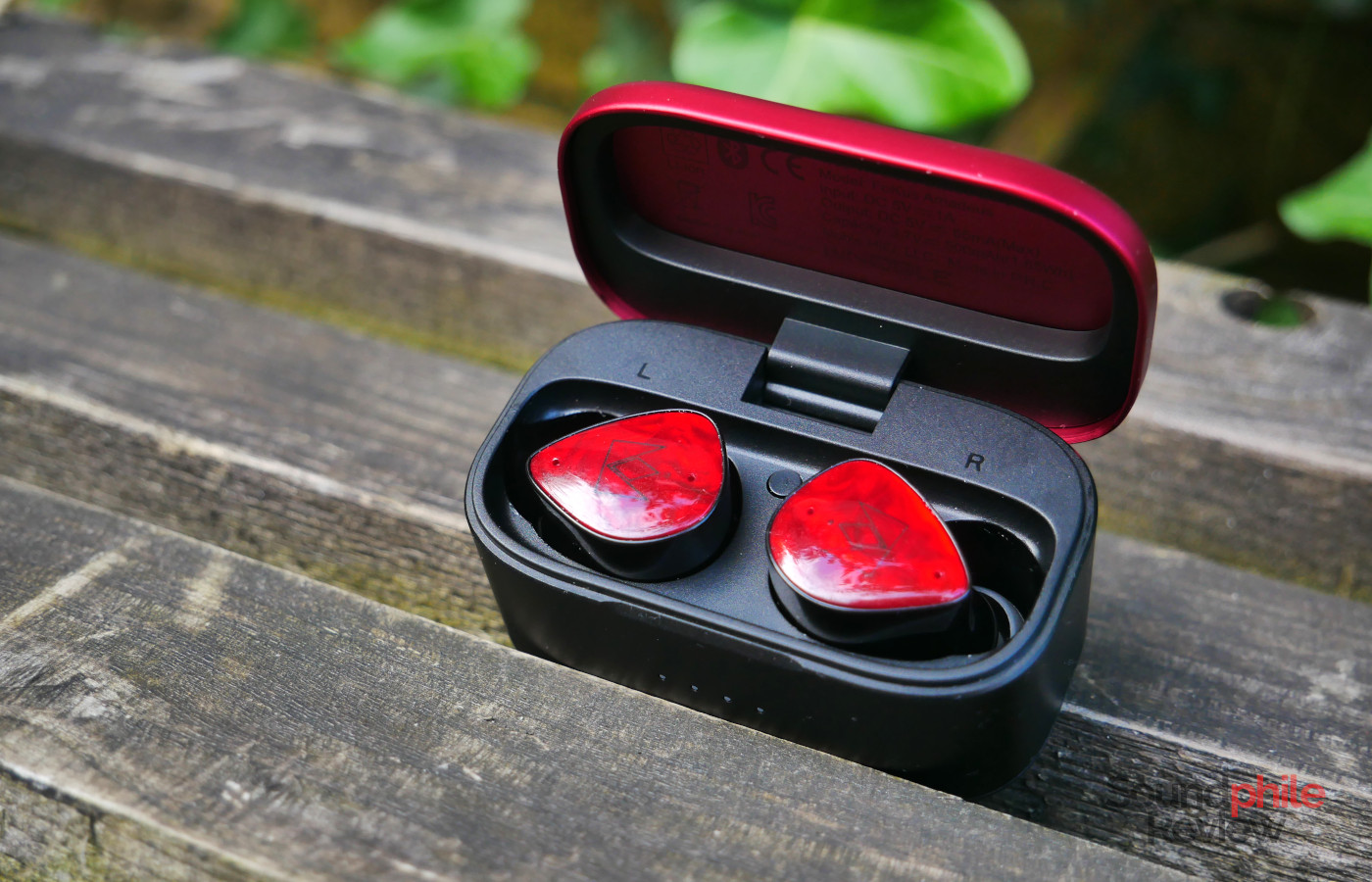
My first reaction when I opened the box and I saw the earphones for the first time was “wow!”. The faceplates on the earpieces are coloured red and have a mother of pearl-like pattern, or a smoky waves one if you prefer, which makes them really stunning. They look like jewels and have a refined aesthetic that I find simply gorgeous and elegant. The Noble logo is thin and black, so it is not too noticeable despite being relatively large – which I find a significant pro, given how pretty the background is. In real life it looks a lot more subdued than it does in these pictures!
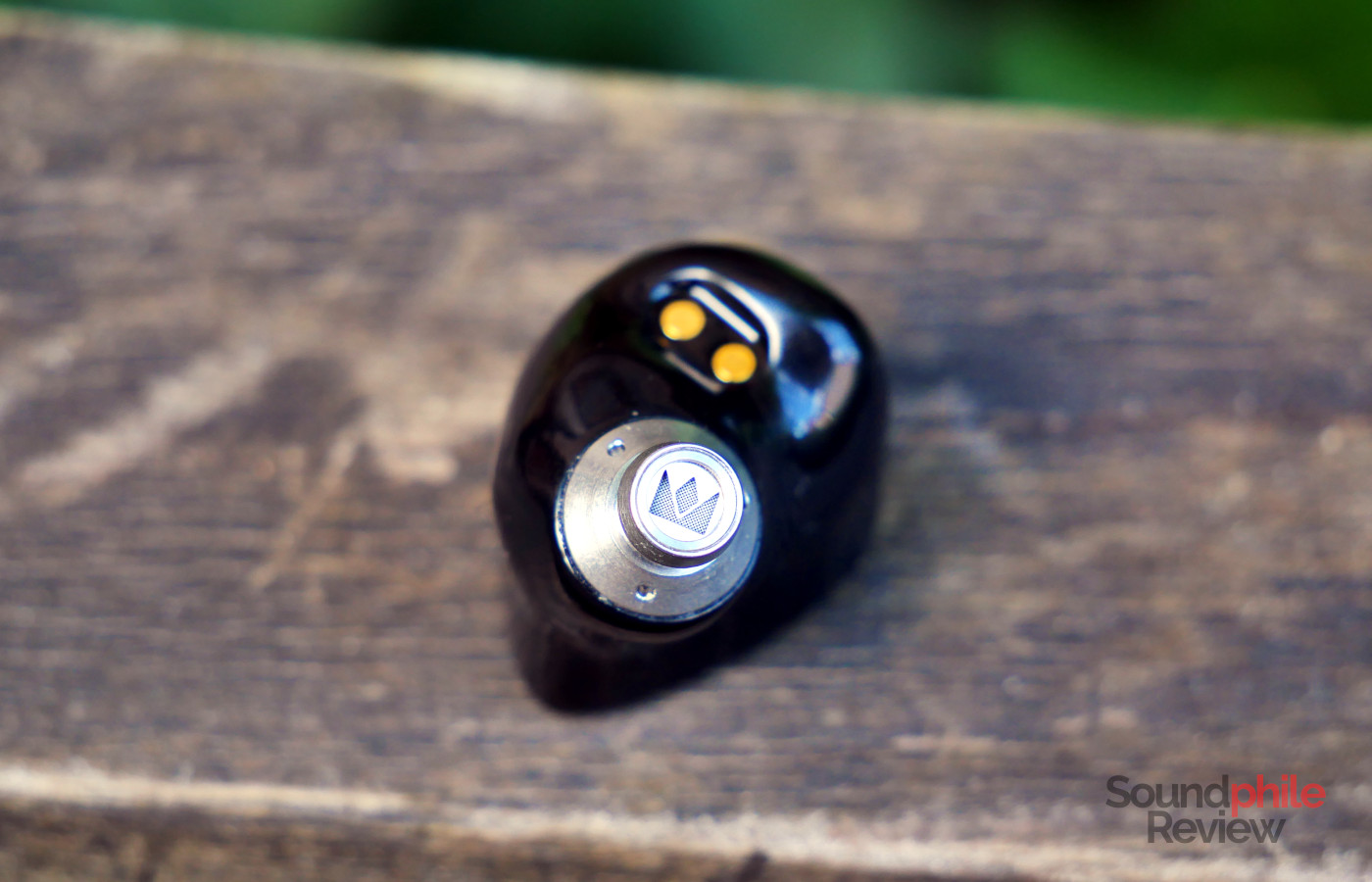
The earpieces themselves are shaped like perfect drops, with the tip pointing downwards. There are two small holes at each end, which allow the microphones to pick up the sounds from the outside (both for your voice and for ANC). The rest of the shell is made of glossy black plastic (which, despite being glossy, is not a total fingerprint magnet!). There is a third hole on the bottom, which probably serves as a vent for the driver. A further element is a status LED, which sits right above the central point of the crown in Noble’s logo.
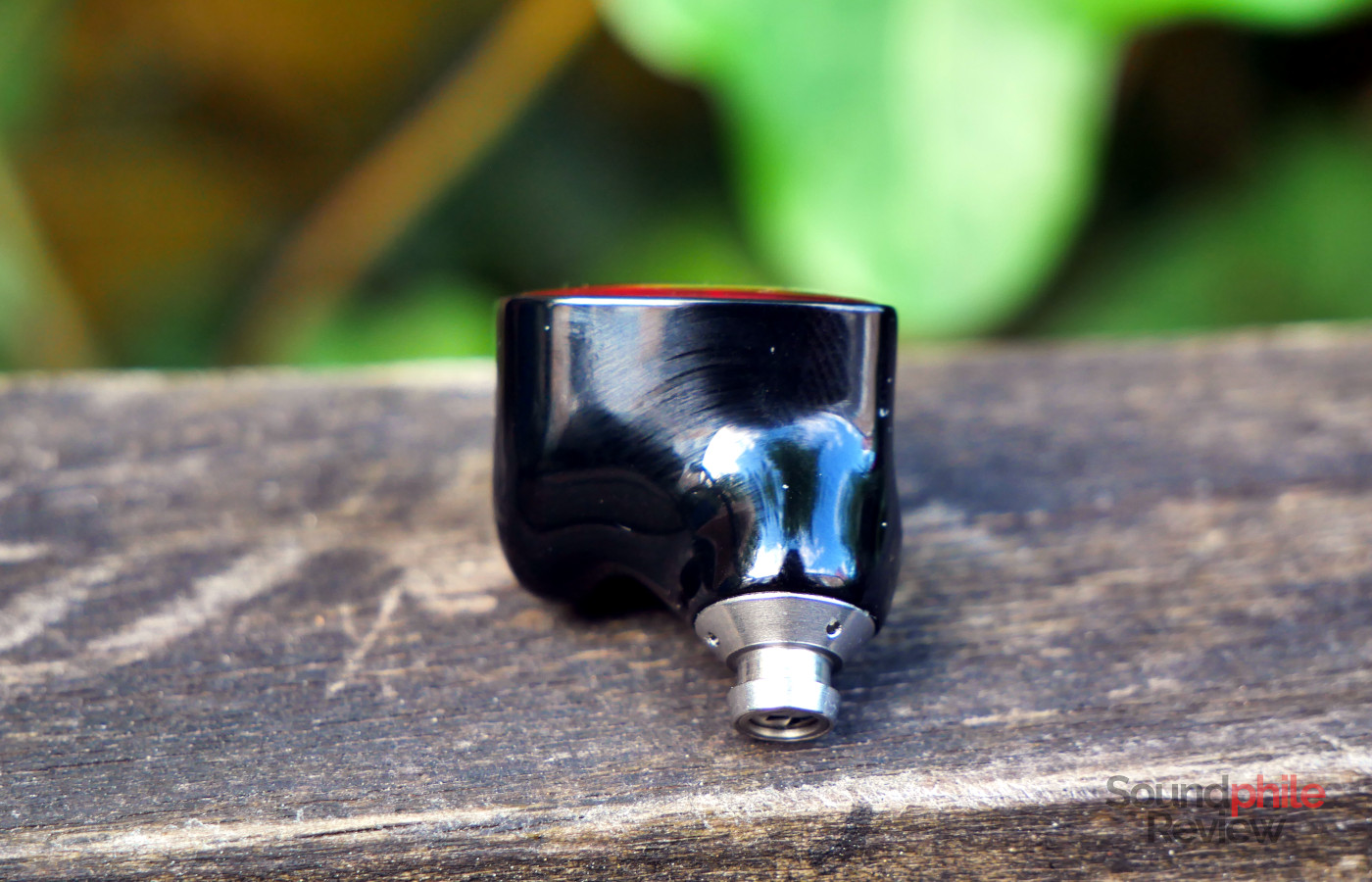
Overall, Noble has done a fantastic job here, as they’ve managed to maintain the earpieces small and lightweight (7 g each, excluding the eartips) while making them an elegant design statement as well. Build quality is fantastic – and, to be honest, there’s not much to see in terms of component: the shells are just one single piece of plastic with the faceplate on one side and a metal nozzle on the other.
I found the FoKus Amadeus to be very comfortable, even for longer listening sessions. They are relatively large, but their shape makes it so that they adapt to my ears almost perfectly. They have a medium-depth insert, too, which I find really comfortable.
In terms of passive isolation, the Noble FoKus Amadeus are severely lacklustre, to the point where there is virtually no difference between wearing them and not. This happens regardless of which eartips I choose: neither the single-flange nor the double-flange ones make a significant dent on the noise that comes in, nor do third-party tips like the SpinFit ones.. This, coupled with the poor ANC performance (more on that later), means that you will have to increase the volume so that music is louder than surrounding noise, which appears to defeat the point of having ANC in the first place.
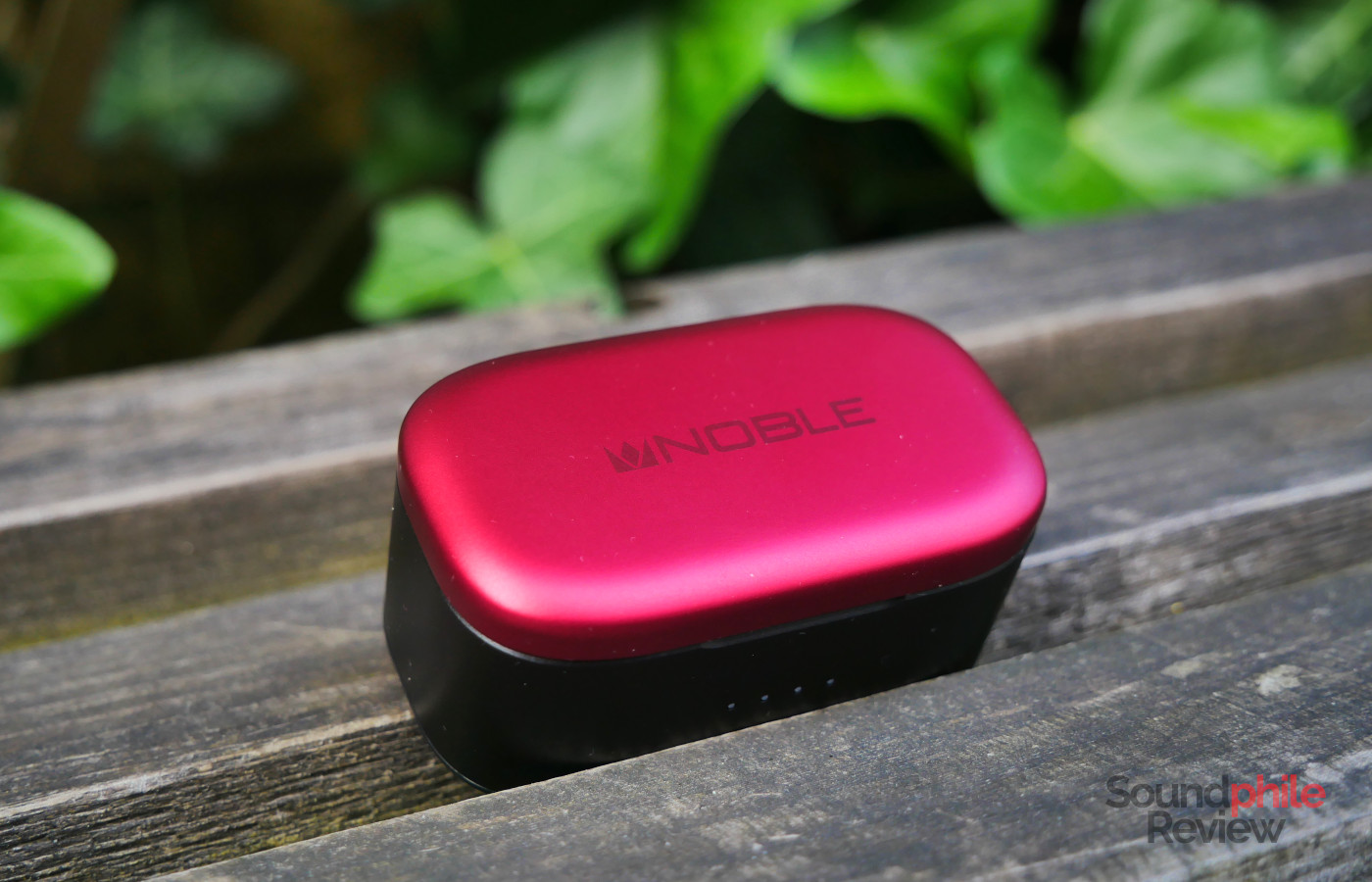
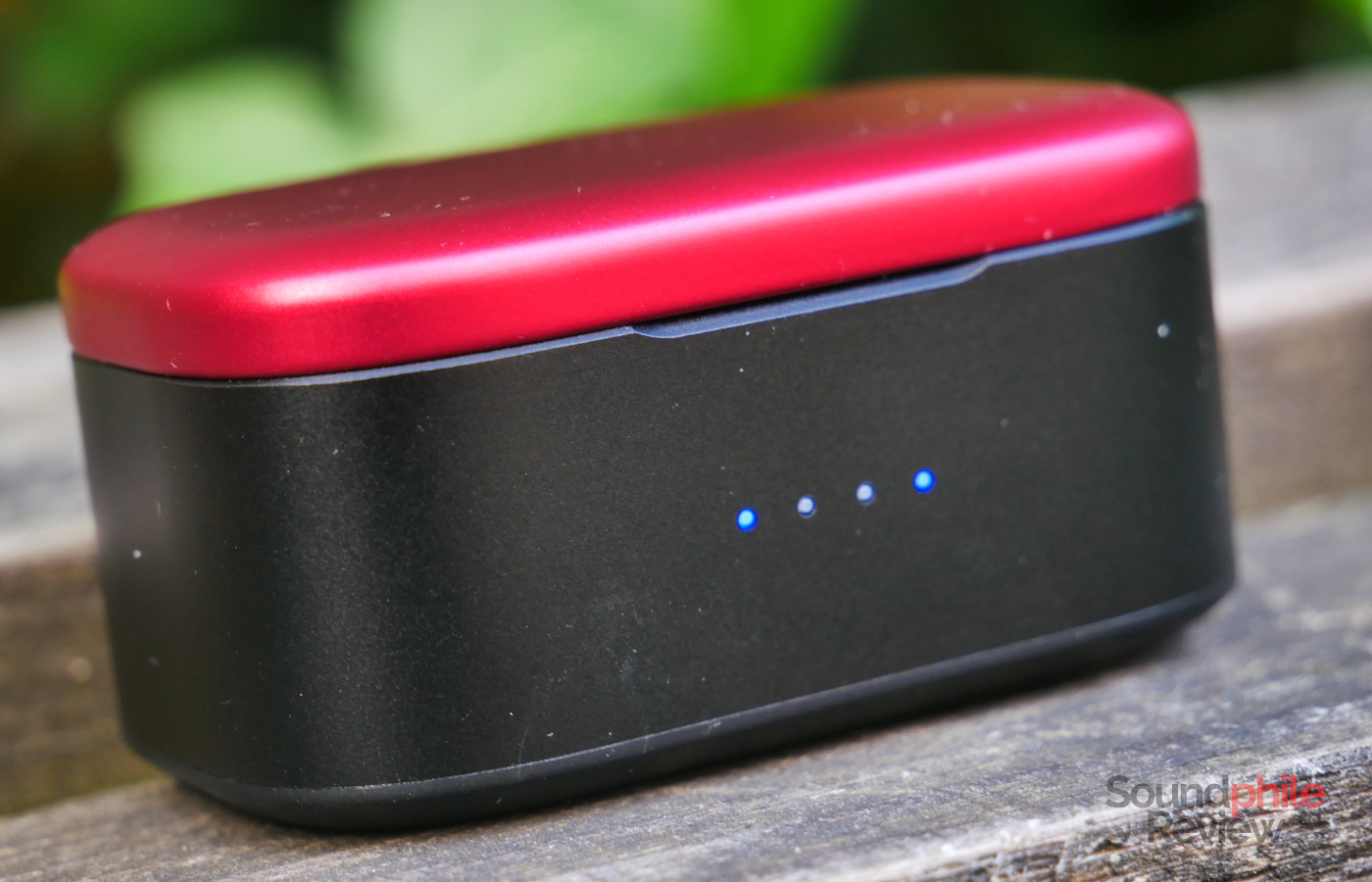
The case is made of milled metal for both the main body and the lid, which is coloured in the same bright red as the faceplates – a nice design touch. The outside of the case is very clean, with just the Noble logo on top, a series of four blue status LEDs on the front and a USB-C port on the back. Inside there is the cradle where the earphones rest (which has enough space to fit normal eartips, so you have full choice here to use what you like), as well as a button to reset them. The case continues with the same theme of looking like a precious object, which reinforces the positioning of the Noble FoKus Amadeus as a premium product. The only blemish on this otherwise flawless design is that the lid is too close to the main body and ends up scraping against it when you open and close it.
Extra Features & Battery Life
The Noble FoKus Amadeus are compatible with the Bluetooth 5.4 standard and support the SBC, AAC, aptX Adaptive and LDAC codecs.
You can connect two sources at a time, like a smartphone and a computer, which is quite handy as you can use one to manage your media and the other to take calls, as an example. Surprisingly, you can have LDAC enabled on both sources, so you don’t have to choose between sound quality and convenience like it normally happens. The earphones take several seconds to switch from one source to the other, however; this means that if you are listening to music on your computer, a notification from your phone will interrupt the music for about 5 seconds. The music will keep on playing on the computer, but the earphones won’t be actually reproducing it.
The efficacy of the ANC function is very limited. On top of lacking passive isolation, which means that there is no generalised reduction of noise coming from the outside, the FoKus Amadeus fail to significantly reduce the volume of sounds coming from the outside. As I am typing these lines I am sat on a train and cycling between ANC on and off only has a very small impact on the sounds I hear, including those which should be most affected by ANC – lows. The difference is so subtle it is almost imperceptible. This makes ANC way less useful than it could be, as well as trailing virtually any recently-launched earphones – including cheap ones.
Even when set to the minimum, volume is still incredibly high. To give you a perspective on how high it is, I had to reduce the volume on the music player to 25% while it was already at minimum level on the earphones. This is something that needs rectifying, possibly through a firmware update, as it is simply too high.
Battery life is very long, so much so that I never ended up with the earphones needing charging as they simply lasted longer than my endurance to listening to music. I would estimate about 12 hours of music playback without ANC and 8 with ANC when using LDAC, which is very significant and way above what most competitors offer. The case offers two full charges (plus a little bit more); what I found interesting is that the charge lasts for weeks if you don’t use the earphones.
One thing to note about the case is that its LEDs could be more helpful in how they display an empty battery. When I put the earpieces back in the case, they all flash together and it is easy to mistake this as indicating that the case’s battery is full, although it’s actually completely empty. The LEDs actually are fixed when there is any remaining charge, and they go from right to left to indicate the reduction of the charge. Maybe Noble could update the firmware so that only the leftmost light flashes – something that’s quite common across different electronic devices and would therefore maybe be less confusing.
Software
The Noble FoKus Amadeus come with a companion app called Noble FoKus, which is available for both Android and iOS. This includes a variety of settings and options to customise your earphones. The main screen shows a picture of the earphones together with the model name, offers access to various settings and has controls for music playback at the bottom.
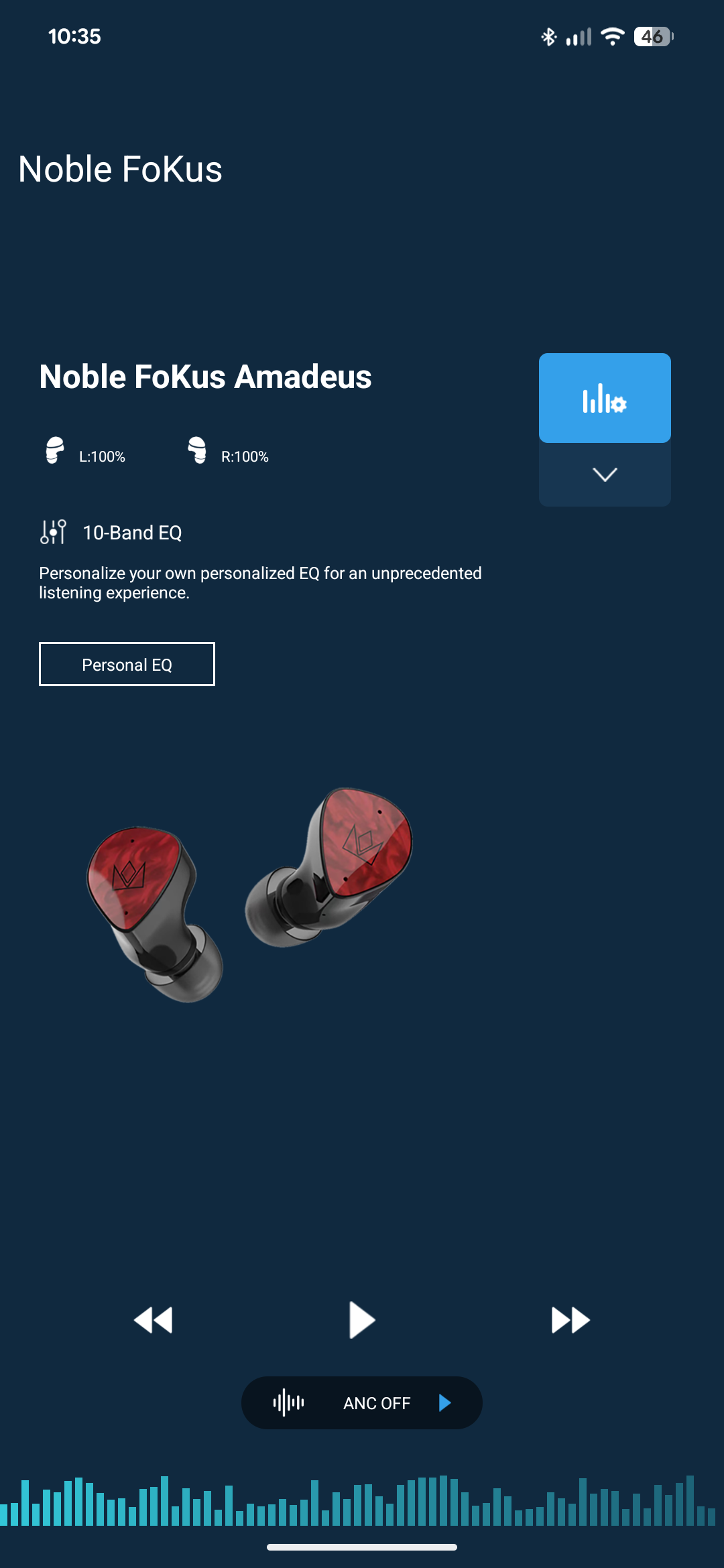
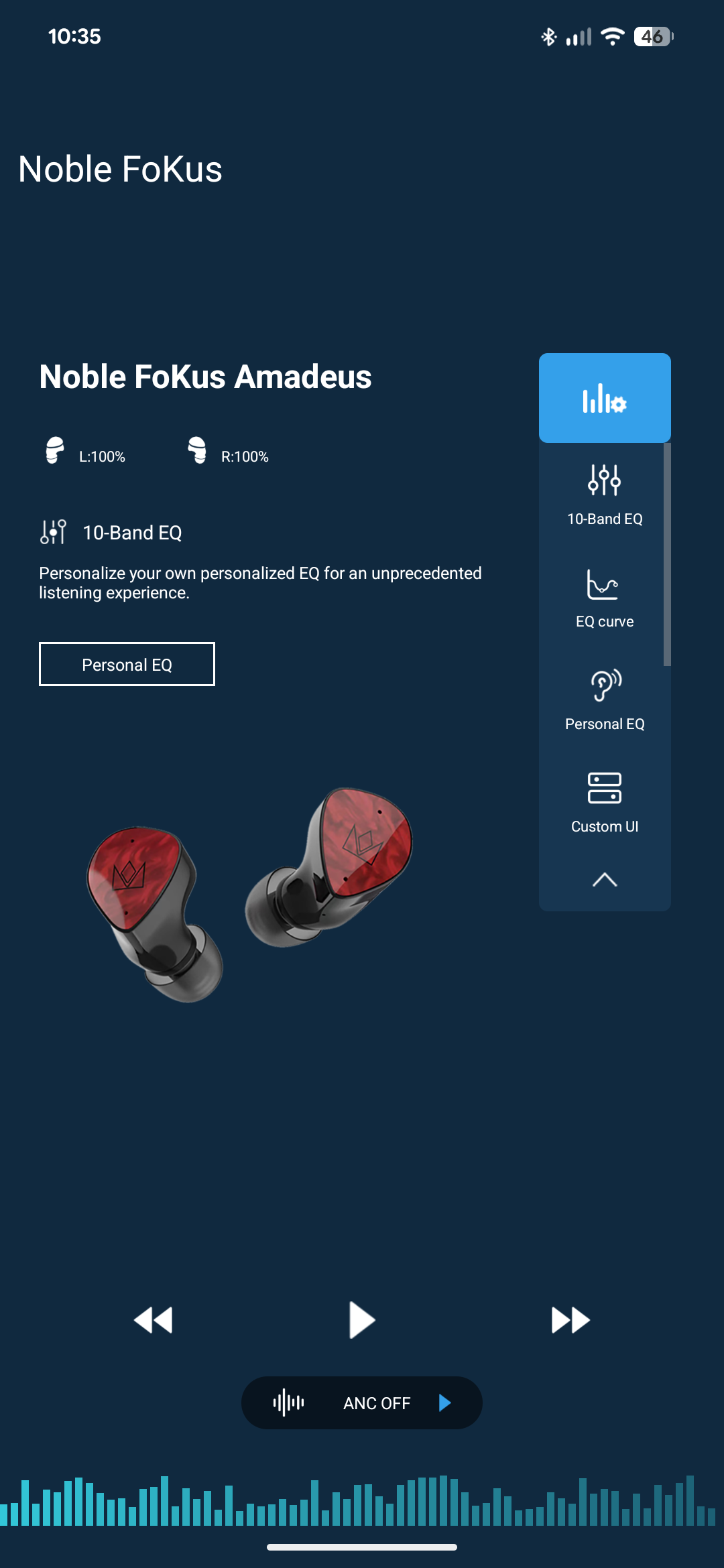


The UI is certainly unique, in that it is quite cramped and not immediately intuitive. There is a bright blue thing (it looks like a button, but you can’t interact with it) in the top right corner; clicking on the arrow below it allows you to access all options, which include a 10-band equaliser, a simplified equaliser, a personalised equaliser which uses technology by Audiodo, what Noble calls “custom UI” (which really means “custom touch controls”), settings (which includes things like volume, the ability to disable touch controls entirely, and language for the app), and a firmware update utility. There is also a shortcut to the personalised EQ settings above the earphones’ picture on the left hand side, which feels like unnecessary duplication.
The app is quite confusing and would certainly benefit from a reworked UI which makes actual usage of the space available and presents options more clearly and cleanly. Some options are not clear in their meaning (as an example, “ANC Display” under “settings”, which shows ANC controls in the main screen) and, in general, it seems like it tries to hide functionality rather than make it easily accessible, which makes little sense. A rework to make things immediately accessible, instead of tucked away behind an unclear button, would certainly help in making things clearer and easier to use.
The 10-band equaliser is easy to use and offers the ability to increase or decrease the volume of 10 frequencies (31, 62, 125, 250, 500 Hz, and 1, 2, 4, 8 and 16 kHz) by ±10 dB. Interestingly, the volume decreases across the board whenever you use any preset that’s not the default one. The EQ setting is saved on the earphones themselves and is therefore independent from the device you’re using as source, and this applies to the Audiodo feature as well.
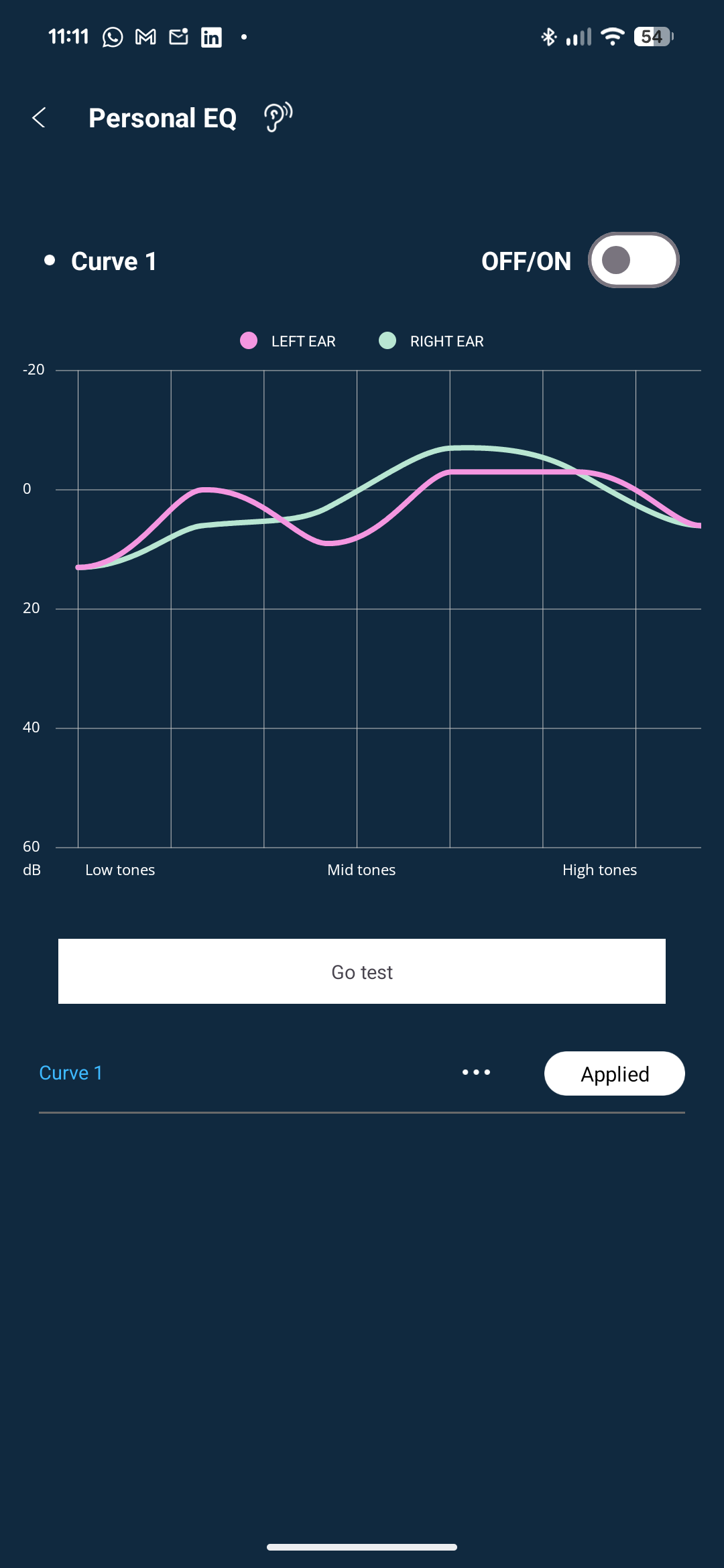
Speaking of which, the personalised equalisation relies on technology by Audiodo and tests your hearing to then apply a correction to the frequency response which compensates any variation from the ideal standard; this includes not only an increase for frequencies you don’t hear well, but also decreases for those you are very sensitive to. The feature works by testing six frequencies for both ears; each frequency is played five times at progressively lower volume levels and you have to touch either “tone” (if you hear it) or “silence” (if you don’t). At the end of the process, the application generates a personalised equaliser preset based on what you have heard during the test. The technology is very interesting and works really well, with a process that’s dead simple and super intuitive. The final result, however, is not necessarily an improvement over the stock tuning: in my case, it made treble even more aggressive than I was already perceiving it as. You can still use the 10-band equaliser to do any further adjustments, however, so it does give you more flexibility overall.
Sound & Specs
I tested the Noble FoKus Amadeus with a few different sources, including my laptop running Linux and my Google Pixel 7 Pro smartphone.
Noble FoKus Amadeus |
| Frequency response | 20 – 20,000 Hz |
| Impedance | 37 Ω |
| Sensitivity | 113 dB |
| Bluetooth version | 5.4 |
| Codecs | SBC, AAC, aptX, LDAC |
Soundstage is quite narrow and sounds like the music is playing right next to your ears, inside a small room inside which the sound reverberates. Notably, it has no depth. Imaging places instruments accurately on the stage, giving each a precise location across the whole left-right spectrum. Instrument separation is very good as it allows you to distinguish between instruments even in complex tracks.
The tuning of the FoKus Amadeus is probably going to be quite polarising. Bass is quite prominent and makes the sound signature as a whole relatively warm. It is most prominent in the mid-bass area, around the 100 Hz mark; it goes down relatively quickly towards sub-bass, whereas the slope towards the mids is relatively slow. This is what gives the sound its warmth, as the added emphasis spills into the lower midrange and makes most tracks sound fuller. The downside is that it also often steals the spot from the mids and makes the sound more congested and “closed”. As an example, in La Femme d’Argent by Air, the bass line is preponderant and it often dominates over the higher-pitched synthesiser. On the positive side, however, there is a great level of detail.
Mids are tuned in a way that makes them easily reachable despite being behind both bass and treble. In general, Noble has gone for quite a bright tuning of the midrange, which privileges the upper area while the lower and especially the middle one are left further back. Female vocals are somewhat emphasised and are more “breathy” than ideal: as an example, in Air’s All I Need, Beth Hirsch’s voice has additional emphasis placed on its “breathing” component (which is already present, but which is further inflated). Male vocals see the lowest component take over, as you can hear in Tony Joe White’s The Gift, but overall sound balanced enough. Noble has done a great job with speed and physicality, as tracks like Rodrigo y Gabriela’s Diablo Rojo showcase the ability of the driver to offer fast transients with a great level of physicality: the hits on the guitars’ bodies sound impressively physical.
Treble alternates between being relaxed and subdued and being quite prominent and harsh. This is due to it being relatively recessed in the lower section at the border with upper midrange, and then having several peaks in the middle area which are often clearly audible in the cymbals and crashes, which become aggressive and take the spotlight. The harshness is very uneven, as it really depends on the specific instrument that is being played and on how it is played, too; as an example, at the very beginning and near the end (around the 6:00 mark) of Snarky Puppy’s The Good Man Deliver And The Best Is Blessed, the cymbal that’s normally barely audible becomes piercing and fatiguing; more generally, cymbals are emphasised in the whole track, but not as fatiguingly as in the first and last minute.
Final Thoughts
I’ve never been a real fan of true wireless earphones as they always seem to need some compromise, whether on functionality or sound or battery life. The Noble FoKus Amadeus seem to make some different compromises from the rest: they sport loads of features, overall very good sound, and great battery life. Overall, I would say that the FoKus Amadeus are well-rounded earphones which can be a good option for a lot of people.
There are a few “buts”, however: ANC has limited effectiveness, sound requires some adjustments, the app could do with a redesign, minimum volume is way too high, and there is virtually no passive isolation. Price is another factor: at $320. the FoKus Amadeus are expensive, there’s no denying that. What you get in return is an overall good product, however, especially if you are serious about your sound quality on the go.