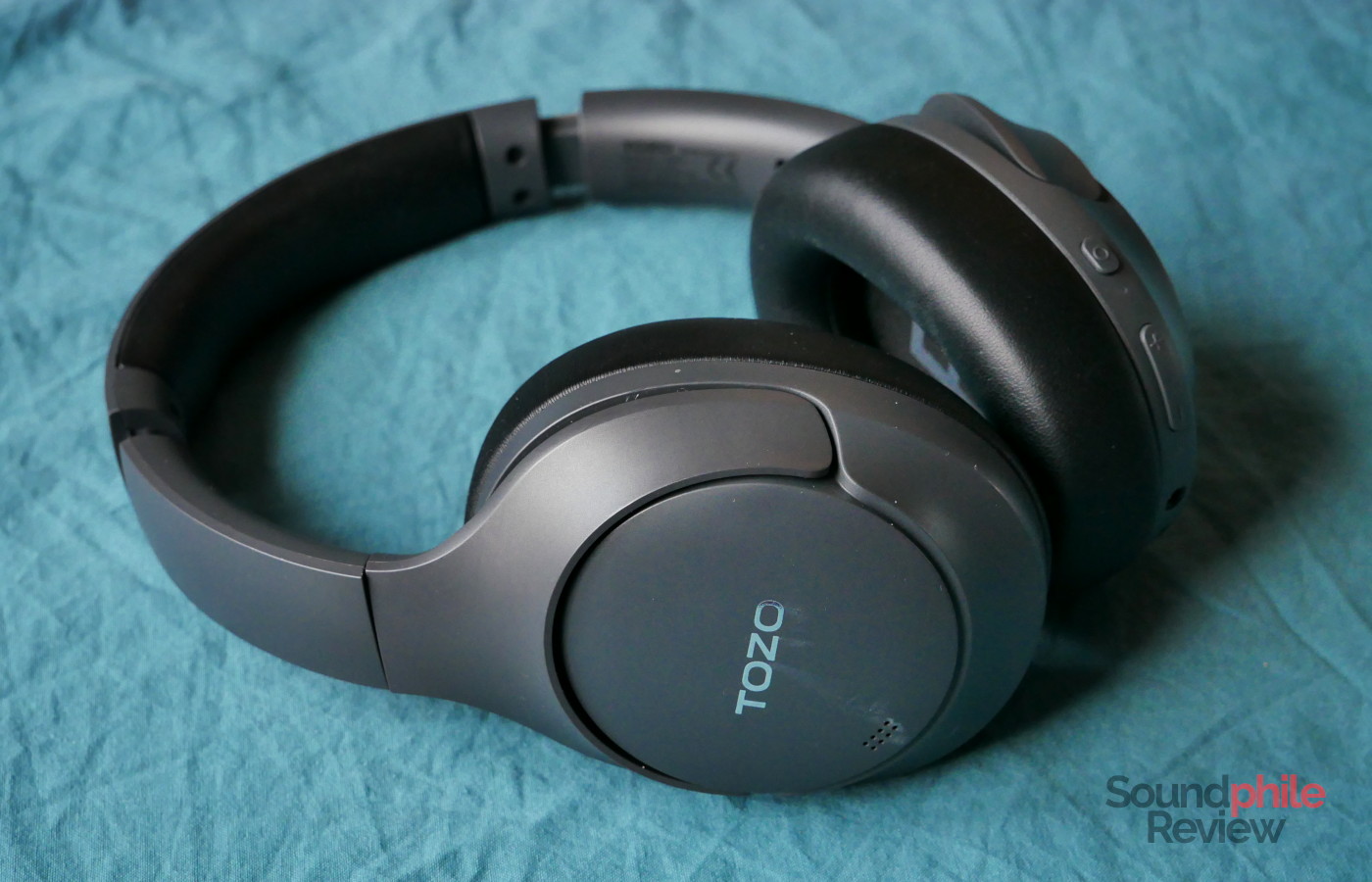
Cancelling out noise is important in many situations. I know that, as I am sitting on a plane with children screaming around me as I write this. Noise cancelling was once confined to costlier headphones, but it is now widespread and available to everyone; headphone like the Tozo HT3 are an example of the latest wave of ANC-equipped headphones which offer capable features while keeping the price accessible to everyone.
Disclaimer: I received a free unit from Tozo directly. The HT3 retail for $37.99 in the black version. Additional information on the official website.
TL;DR: recap
| Pros |
Cons |
| + Discrete build quality
+ Companion app + Effective ANC + Works wired when powered off! |
– Very high minimum volume
– Background hiss – Low-volume sounds are cut off entirely – No passive isolation – Overwhelming bass and no treble with stock tuning |
Rating: 7/10
Packaging & Accessories
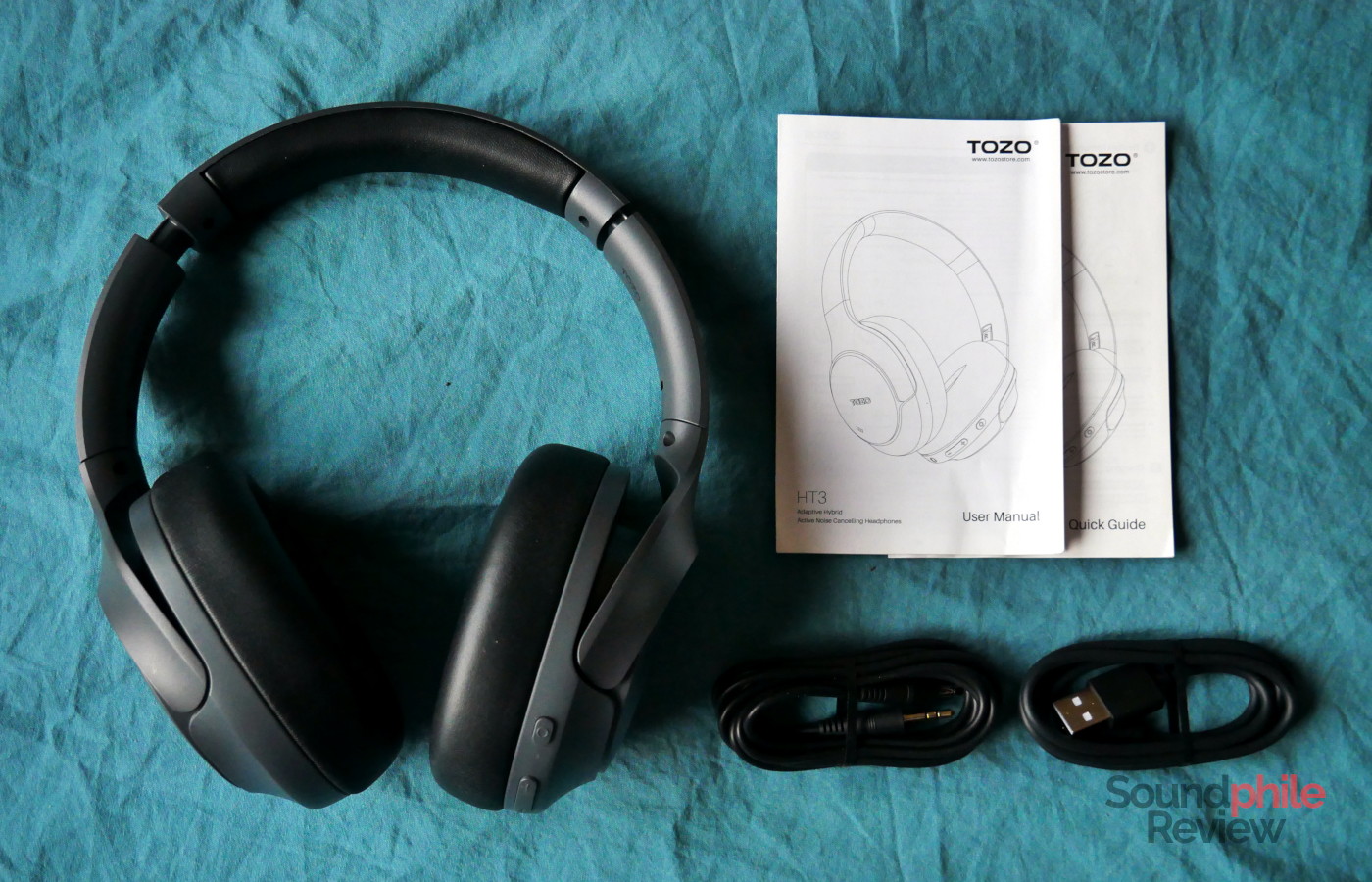
The Tozo HT3 comes with a USB to USB-C cable, an audio cable with 3.5 mm jacks at both ends, as well as an aeroplane adaptor.
Design & Comfort
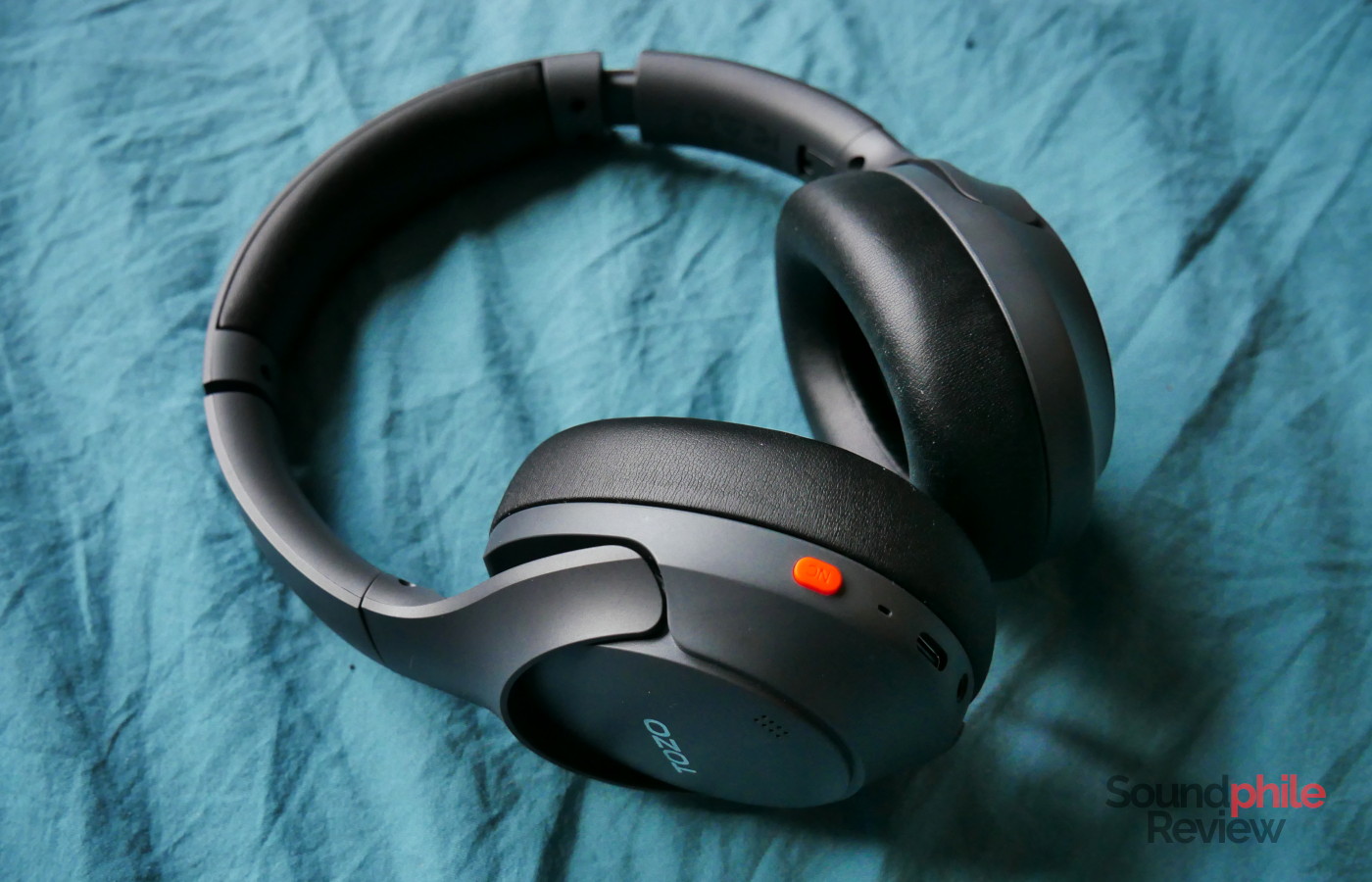
Purely in terms of design, the Tozo HT3 look like most other recent over-ear headphones: they’re made of grey plastic which creates an uninterrupted surface from one earcup to the other, with gently curving lines. The Tozo logo stands out in silver on the earcups.
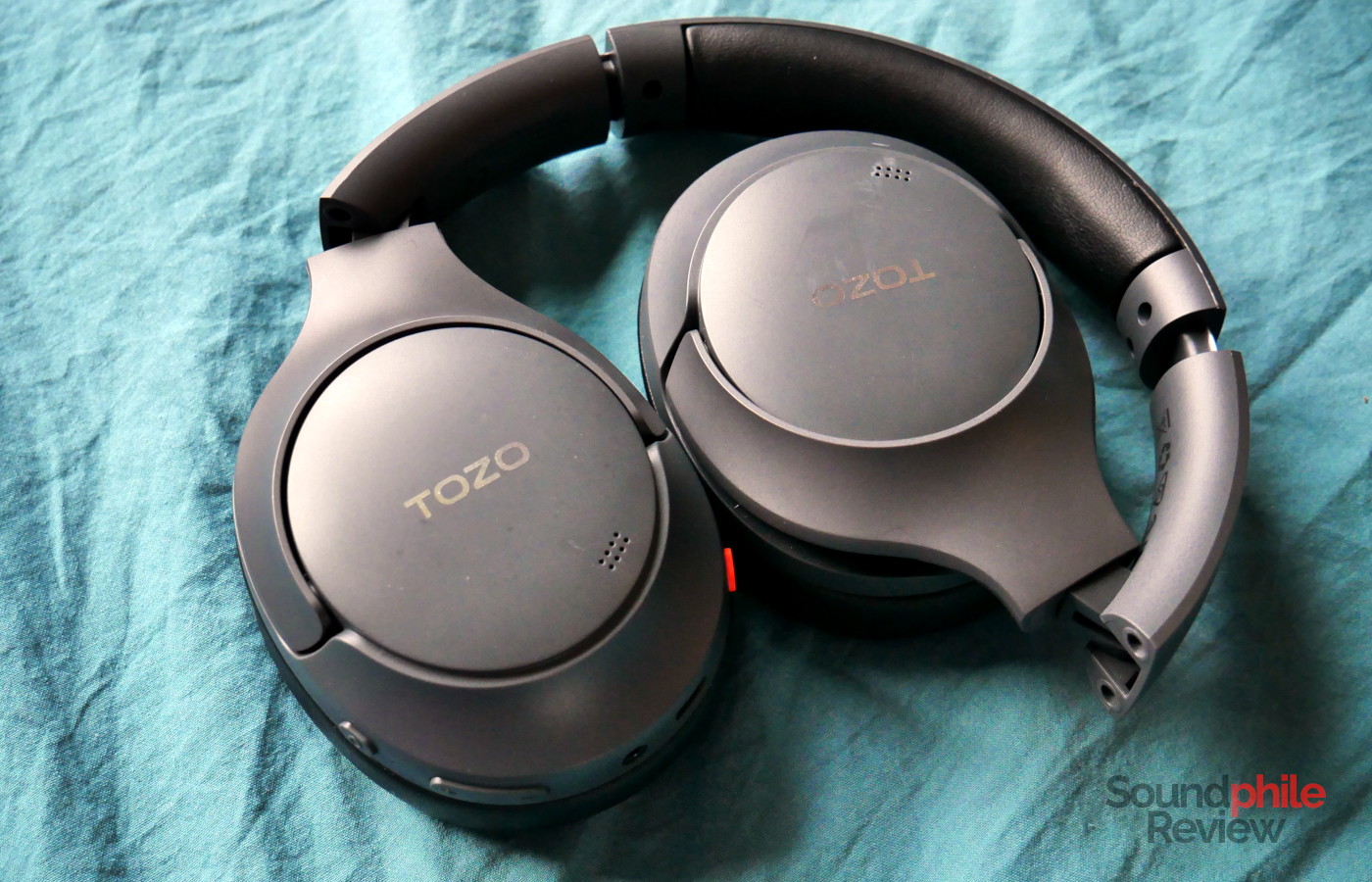
The headphones fold thanks to hinges on both sides, in a way that makes them about 1/3 smaller. The earcups rotate 90 degrees so that the earpads rest against your chest if you wear the headphones on your neck.
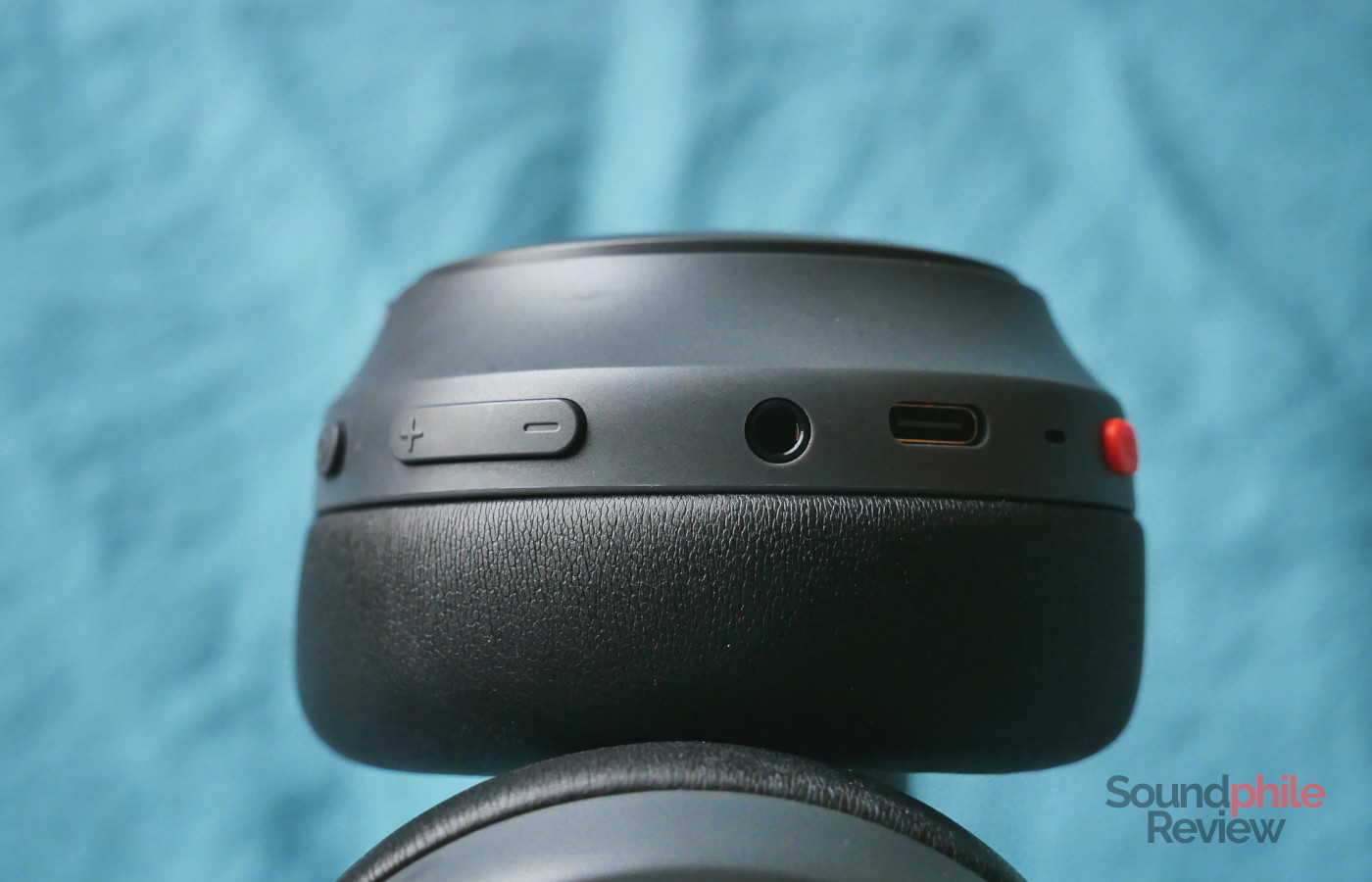
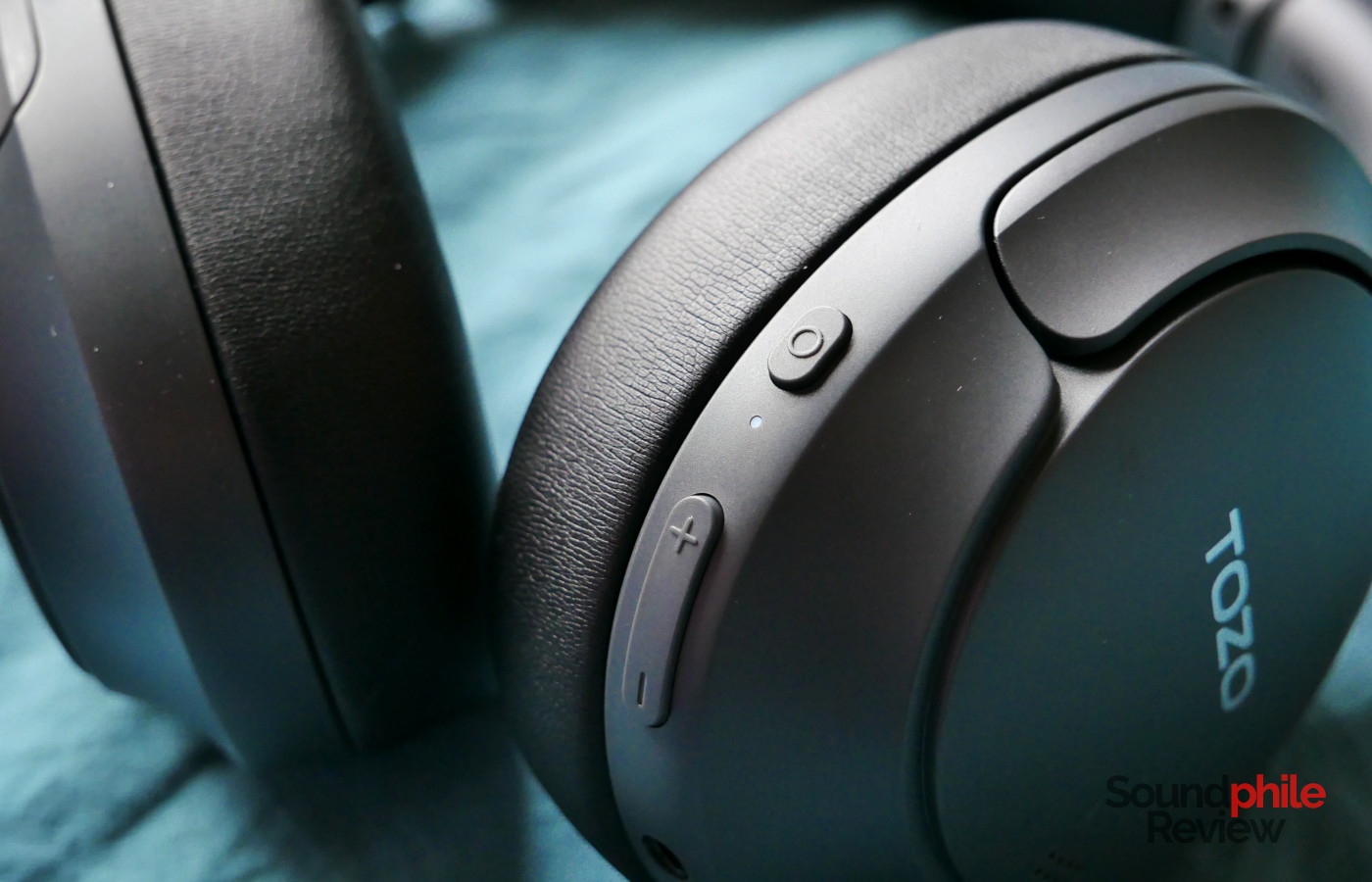
All the controls are on the cup on the right hand side: there we find the power button (which also controls playback), a status LED, a volume rocker, a 3.5 mm jack input, USB-C as well as a button to control ANC, which faces forward and is therefore easy to distinguish from the others.
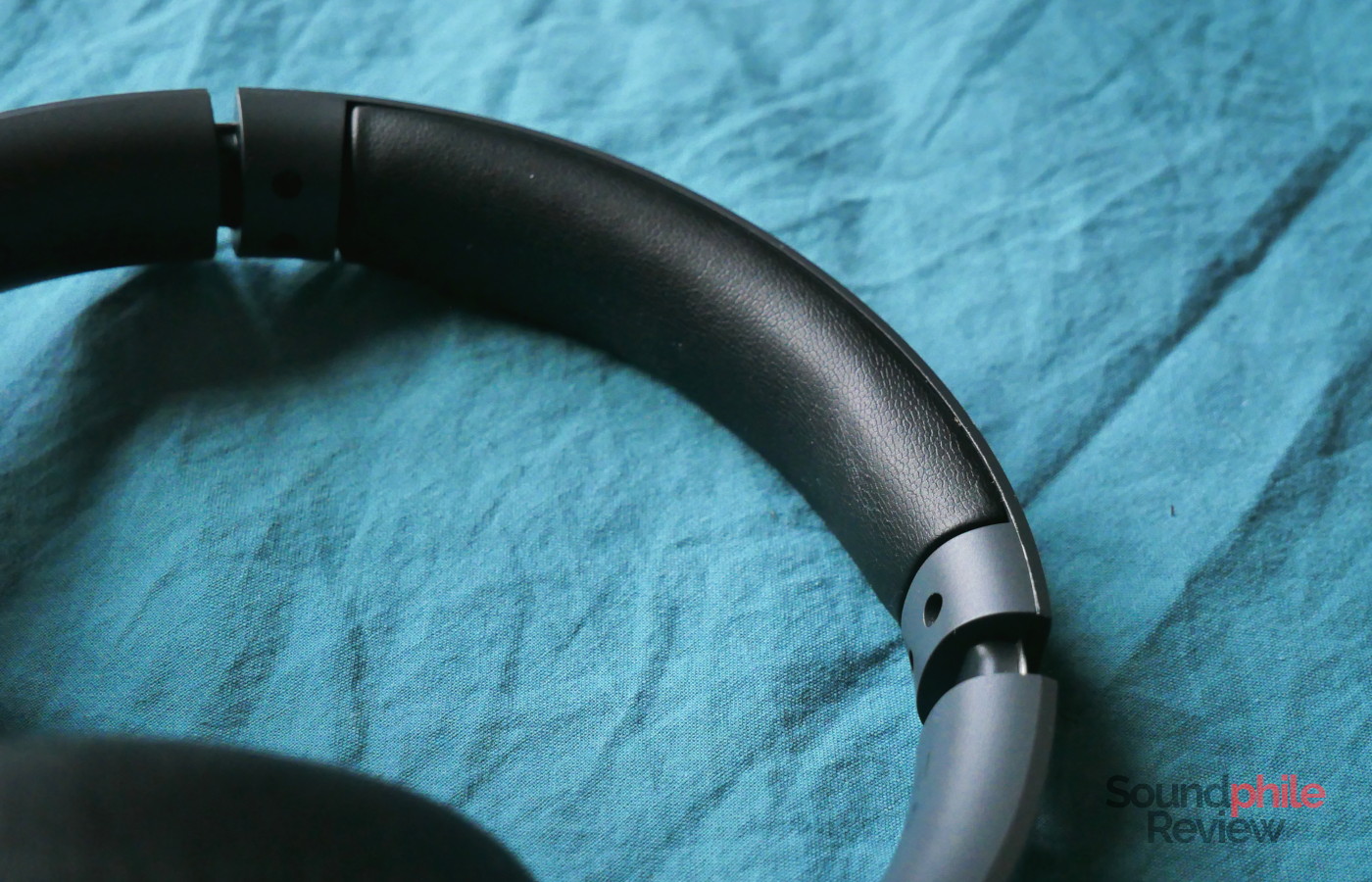
The Tozo HT3 are put together well and use high-quality materials. I have to report, however, that the plastic is quite prone to scratching: I have taken the Tozo HT3 with me on a couple of flights and, as you can see in the pictures, they ended up being scuffed and scratched just due to being put in my backpack.
Passive isolation on the Tozo HT3 is almost non-existent, as it does not really reduce the volume of sounds from around you. People talking, as an example, are clearly audible, just like the sound of my keyboard as I type this.
Comfort is decent as the padding in the earpads is generous and very soft; the padding on the headband is less abundant, but still sufficient to give you good overall comfort. I can wear these for an hour without feeling them, which is a good result considering my hyper-sensitive scalp.
Extra Features & Battery Life
The Tozo HT3 are compatible with the Bluetooth 6.0 standard and only support the SBC and AAC codecs – no fancy high-quality codecs here. The connection has good range, but I found that it is not always rock-solid in terms of stability, as there were random drop-outs.
The controls are fairly intuitive: press the power button once to play or pause music playback, and then double press to invoke “Tozo AI”, which is basically a voice command system through which you can control the headphones.
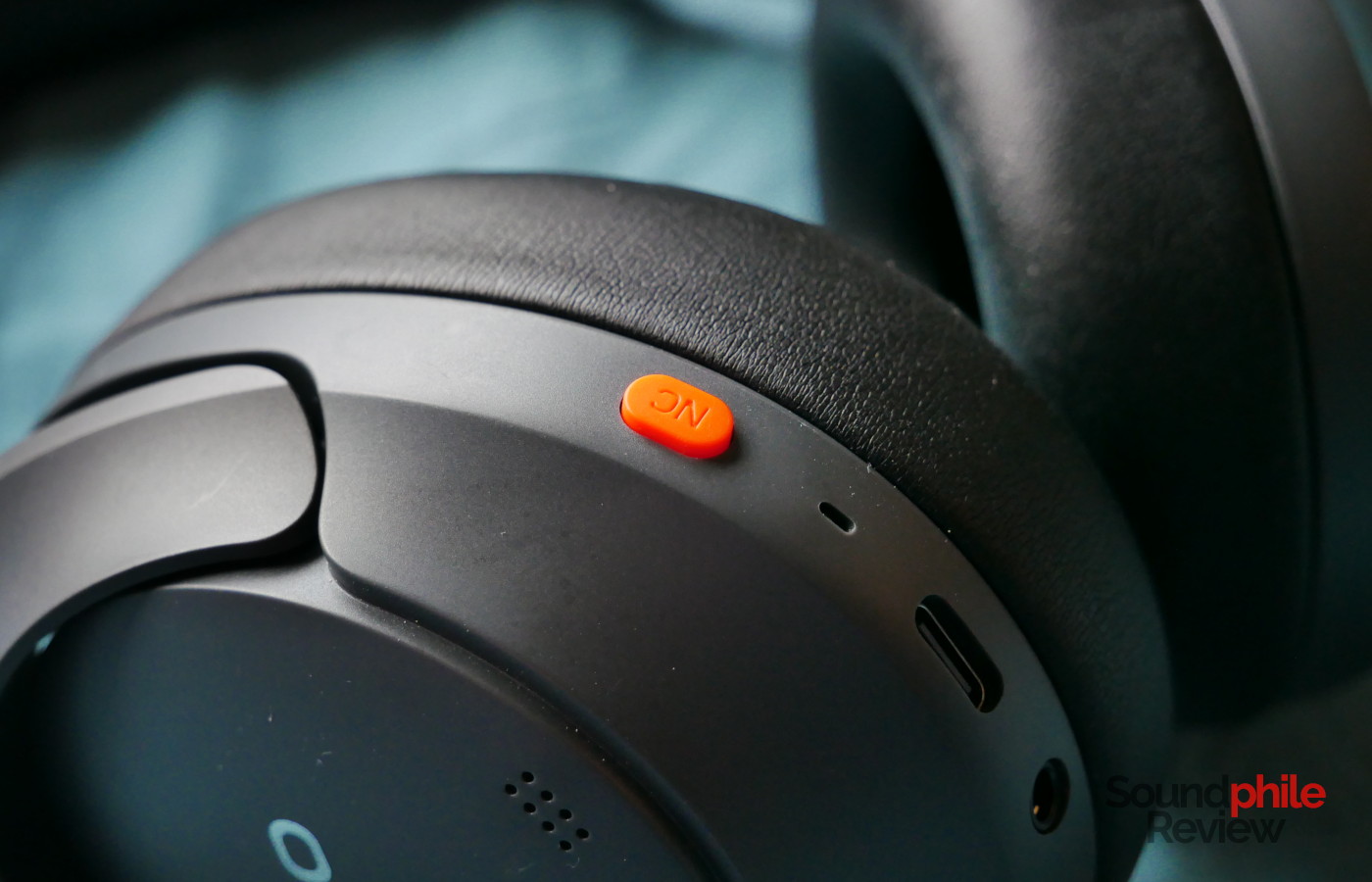
ANC on the Tozo HT3 works decently well, as it removes most of the roar of a plane’s engine and other low-frequency sounds to the point they’re reduced to a whisper. However, the effect of ANC is limited to low frequencies: it is not really effective at removing anything else and this, coupled with the low passive isolation, means that you will hear most noises around you quite clearly, including people’s voices and the higher-pitched component of an aeroplane’s engine. Wearing glasses like I do will (significantly) further increase the amount of noise that you will hear.
Interestingly, the headphones work when powered off if you connect them using a jack, so you can still use them even when the battery’s flat. Even more interestingly, it looks like Tozo has applied a lot of equalisation, as the sound improves significantly when using the headphones this way.
The volume is very loud, even when set to the minimum possible level. This makes it very difficult to listen to music at a comfortable level which you can listen to for longer periods of time. The only way to reduce the volume to an acceptable level is to do so via software, which is however not necessarily possible on smartphones and tablets.
The microphone works decently well, at least in environments without too much noise, and it allows you to take calls with good enough clarity.
On top of this, the headphones will not reproduce sounds under a certain volume threshold, and they will simply cut it away. This is clearly audible as the hiss will completely cease and you will hear a muted “pop”. As an example, in the track Secunda from the soundtrack to The Elder Scrolls V: Skyrim, the very last bit (after 1:40) is completely silent when listened to on the Tozo HT3 at the lowest volume. This is audible in a number of other tracks where the volume decreases. In other terms, the HT3 lack the ability to correctly reproduce any track which exhibits a modicum of dynamics.
Software
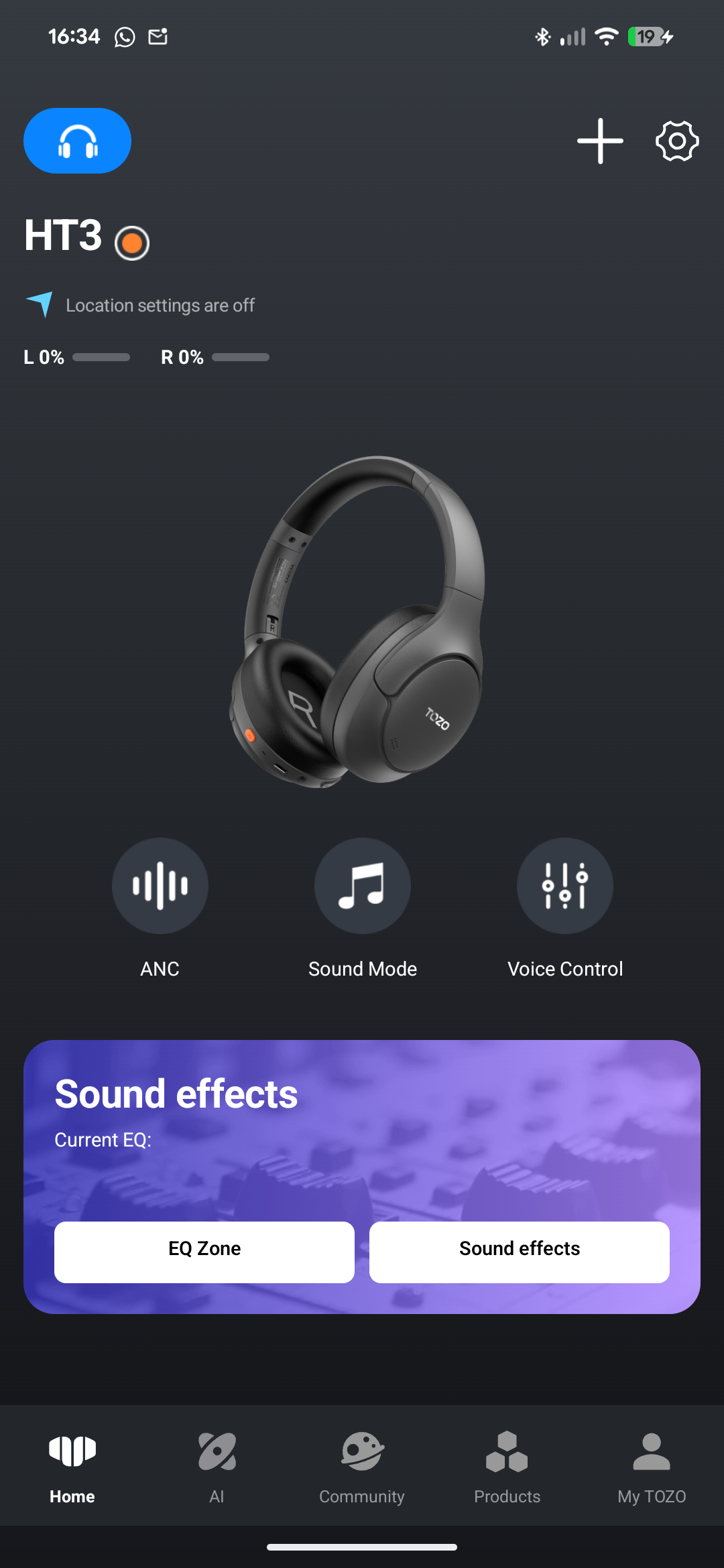
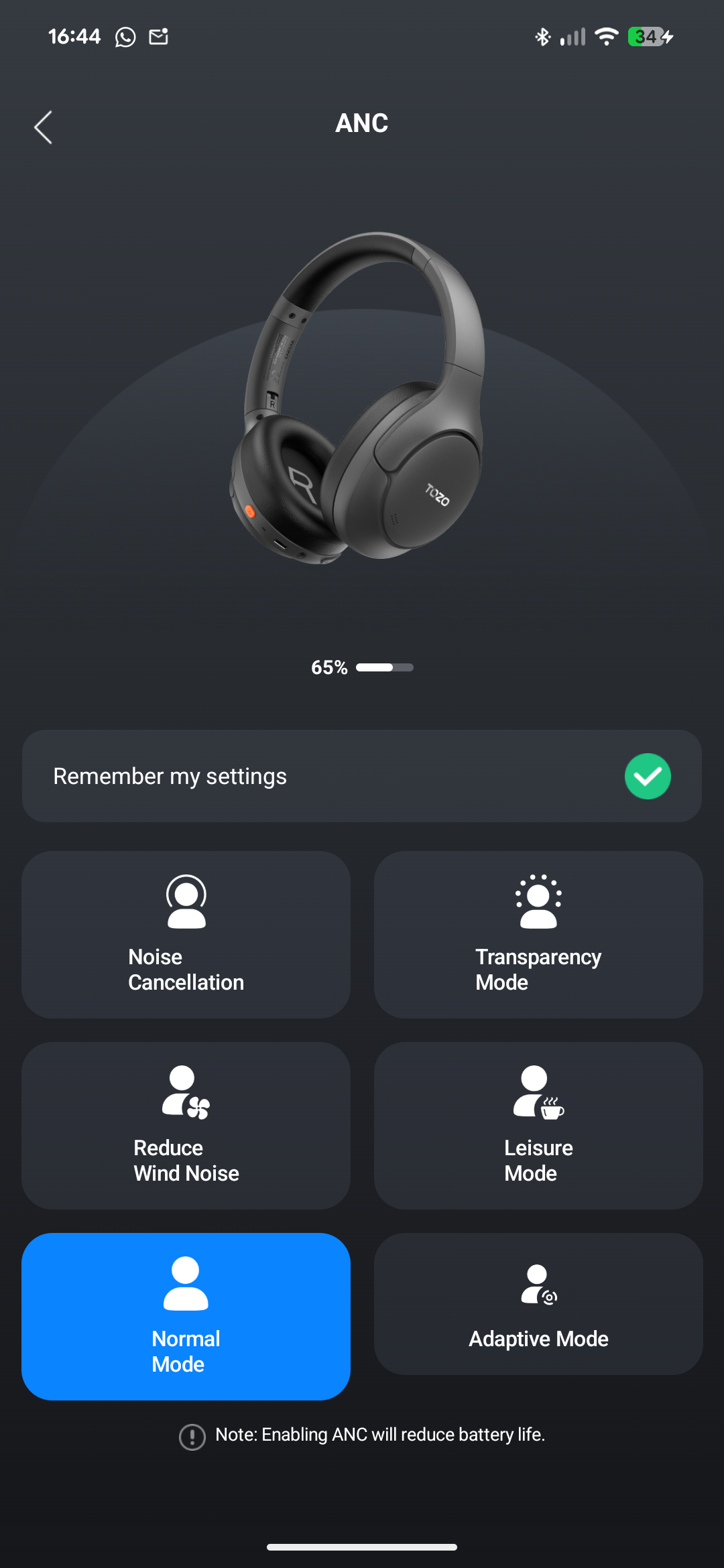
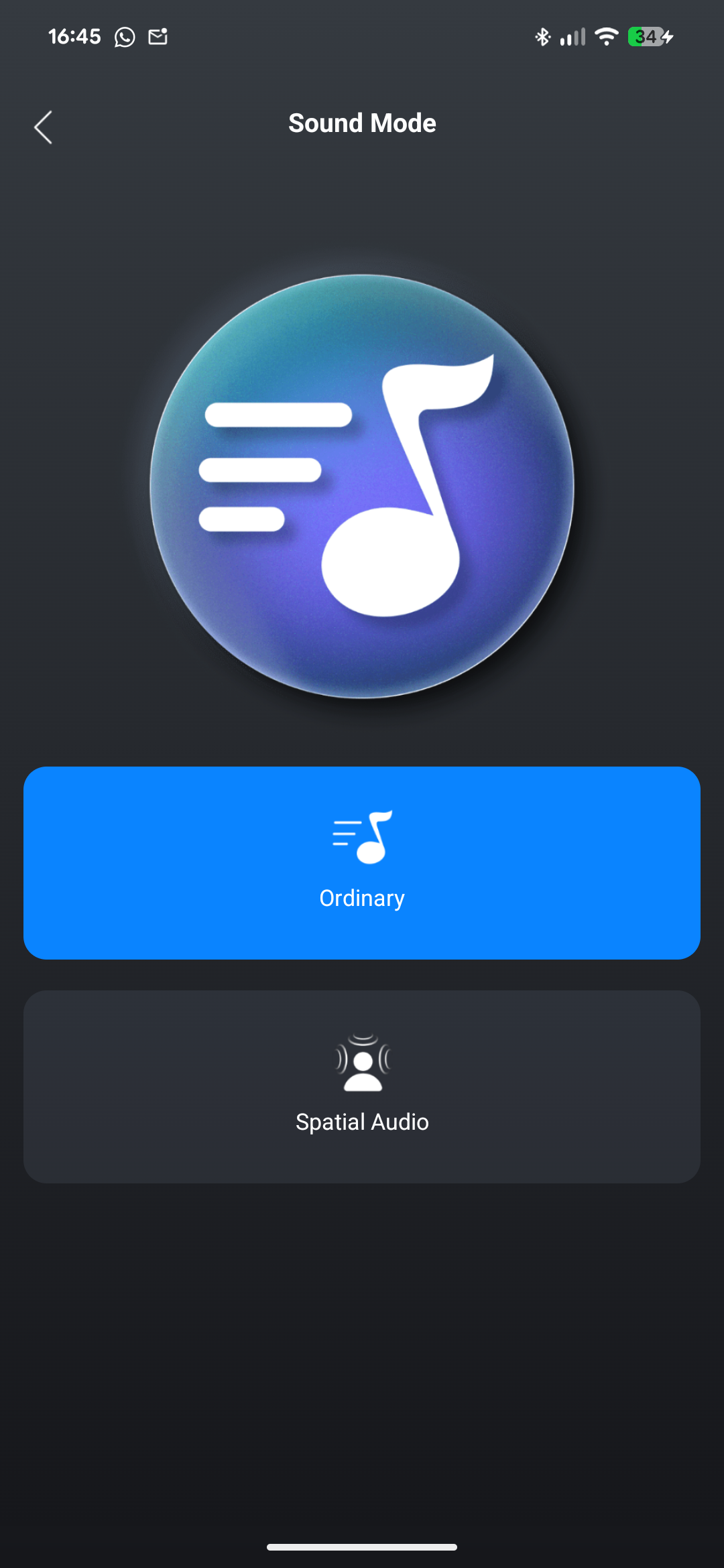
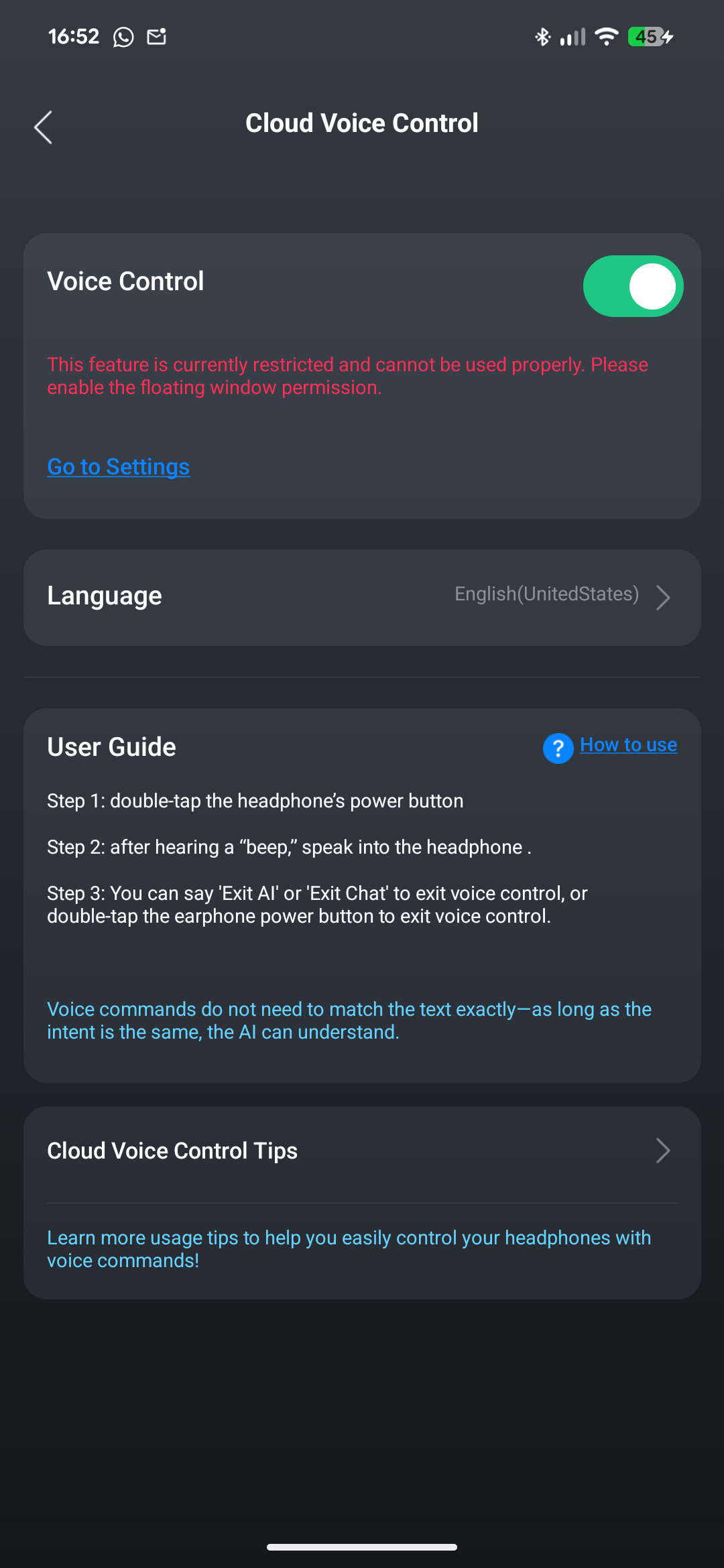
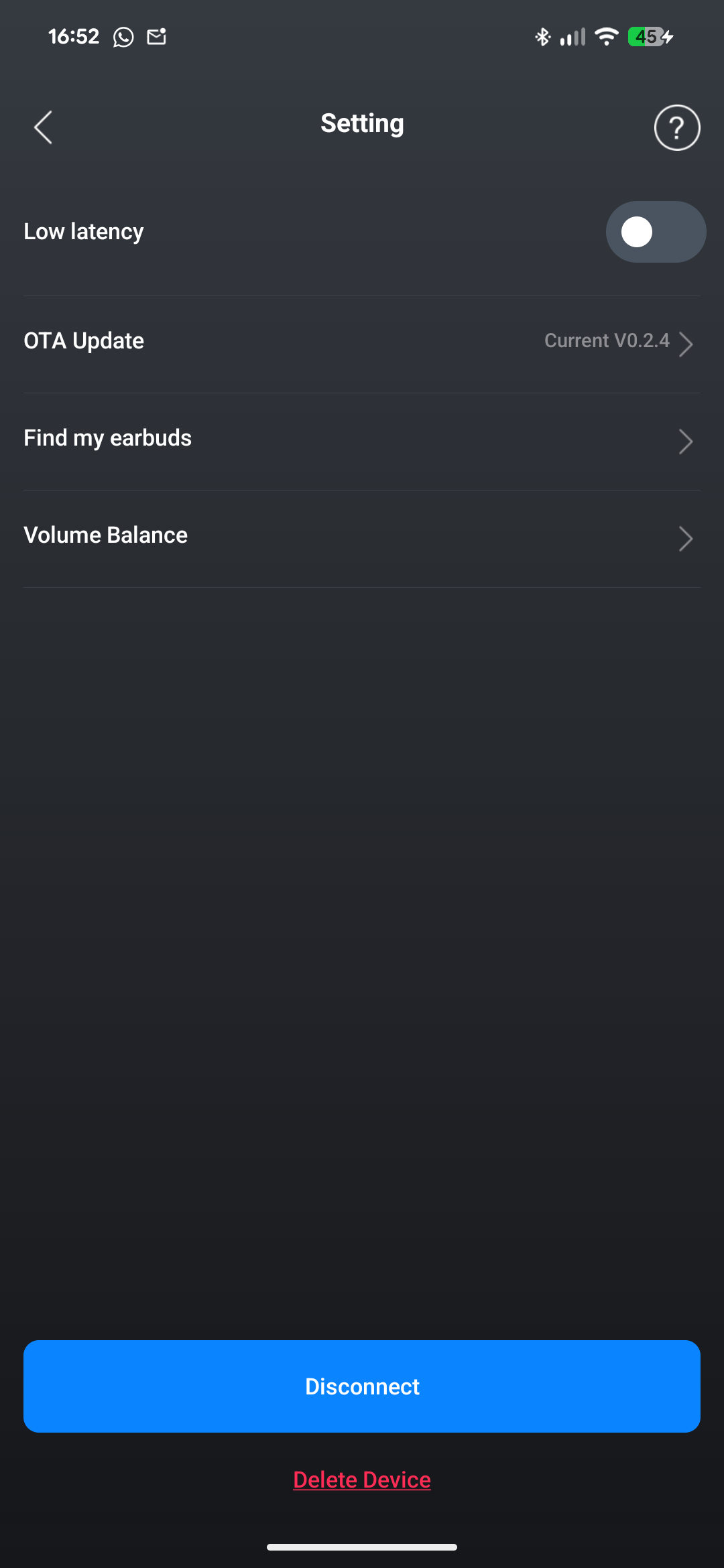
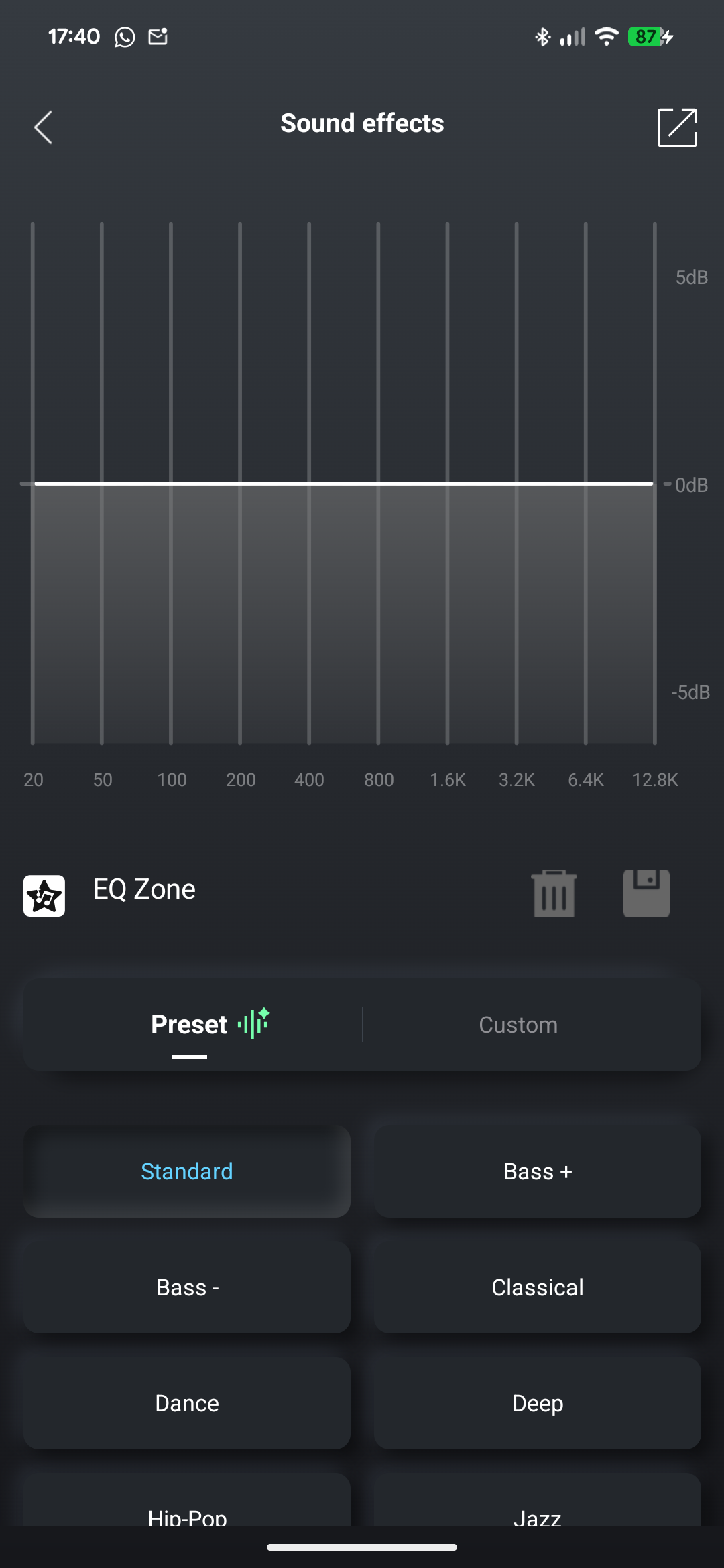
Tozo’s companion application is available for both Android and iOS. It allows you to access various controls for the headphones, from equalisation to spatial audio, from noise cancelling modes to real-time AI translation. The interface is clear and clean enough to make it easy to use the app to a wide public. Some features, like the AI features or access to equalisation presets, are dependent on registration, which is free.
The equaliser gives you 10 bands between 20 and 12.8 kHz with the ability to adjust them ±5 dB; the profile is saved on the headphones and is therefore carried over to other devices. ANC can be configured to be active/full, in wind reduction mode, in “leisure mode” (which reduces noise in a limited manner, enough to give you pause from the environment but not enough to exclude it entirely), transparency mode and adaptive mode (which automatically selects the amount of cancellation based on the intensity of the noise). The spatial audio feature is actually a “soundstage enhancer”, as it makes the sound feel like it’s in a much bigger space.
The app also allows you to update the firmware, to enable low-latency mode and to use a “find my earbuds” feature which plays a high-volume sound to allow you to locate your headphones (and it warns you before playing the sound, so you don’t accidentally make yourself deaf).
Sound & Specs
I tested the Tozo HT3 using my laptop as well as my Google Pixel Pro 7 as sources.
Tozo HT3 |
| Frequency response | 20 – 20,000 Hz |
| Impedance | 37 Ω |
| Sensitivity | 113 dB |
| Bluetooth version | 6.0 |
| Codecs | SBC, AAC |
There is a strong background hiss which is always present whenever the headphones are reproducing any sounds. You can clearly hear this in quieter tracks like GoGo Penguin’s Last Words, especially if you keep the headphones at a low volume: whenever the piano plays at the beginning, the hiss increases in volume and is clearly audible.
As you would legitimately expect from wireless, closed-back headphones, the Tozo HT3 offer a relatively narrow soundstage, which feels like all the instruments are right next to your ears, with no depth whatsoever. Imaging is limited to placing instruments in the left, centre and right positions, with very little in-between, though interestingly I get the feeling with instruments on the far left or right that they’re slightly behind me. Instrument separation is heavily influenced by the sound signature, which means that it makes it difficult to distinguish instruments in crowded tracks; bass often overpowers everything else and makes it difficult to distinguish anything beyond the basics.
The Tozo HT3 target a mainstream audience and they adopt a decidedly mainstream tuning – but with a twist, which means that they feature heavily emphasised bass in an L shape. Bass is, in fact, heavily emphasised, to the point where it is the predominant element in the tuning: as an example, in GoGo Penguin’s Seven Sons of Björn, the contrabass is coming in front of everything else; in tracks where there is more bass (like, say, Röyksopp’s Skulls) it simply becomes the overwhelming, crushing dominator of the scene. While this can be fun with the right track, it is generally quite problematic as it tends to completely suffocate the lower mids, especially as the mid-bass area is (by far!) the most prominent and it naturally tends to overlap the lower mids. Transients are relatively slow, and this contributes to that difficulty in separating the instruments that I mentioned previously.
As midrange is heavily dominated by bass, it has a weird signature: it tends to be quite warm and muted, as there is some presence in the middle area but relatively little in the upper one, which leads to instruments lacking liveliness and sounding like they’re dampened and lacking liveliness. They also tend to sound overly warm (see the piano in GoGo Penguin’s Fanfares as an example, or the guitar in Vàli’s Naar Vinden Graater), which in turn means that higher-pitched instruments will sound muted and less present. The level of detail is acceptable, but the limits in instrument separation mean that following instruments in heavily layered tracks will be difficult.
Treble is quite recessed, except for a couple of peaks that make it actually audible. If you’re sensitive to treble, the Tozo HT3 will fit the bill very nicely as their upper range is very muted. This is quite surprising, given the prevalence of V-shaped signatures in this space. While it will be welcome by treble-sensitive folks, the result is that many instruments appear muted or are absent entirely. The level of detail is sufficient, but that’s limited to what’s there.
Using the “Original” equalisation preset significantly alters the sound, and makes the HT3 behave more like they do when they are powered off. This lifts both the mids and treble while also reducing bass, which makes for a much more balanced presentation which is a lot better at reproducing a variety of genres.
Final Thoughts
The Tozo HT3 offer a full set of functionality that will certainly please those who look at headphones like a practical tool in their lives to provide them with some music while also adding convenience in the form of ANC, calls and voice commands. As a utilitarian tool, the Tozo HT3 work quite well and are decently comfortable, too. If you are looking for something more, however, the HT3 show some limits. Their sound signature is not what I would call “high fidelity” and, in fact, it deviates significantly from that target – though I find it very interesting that it improves significantly when the headphones are powered off. You can achieve a similar tuning by using the “original” equalisation preset in the app, which makes a world of difference and opens up the sound significantly.
That said, there’s something else to consider, which is price. As they’re selling for less than $40 as I write this, it is very difficult to fault the Tozo HT3. They’re just so inexpensive that many of their flaws become minor, especially in regards to the frequency response. Others, like the inability to play low-volume sounds, are more serious, though they can probably be fixed through a firmware update (I can’t recommend getting them on the basis that an update might come, however). All in all, I think that the Tozo HT3 can be a good option if you’re not too fussy about sound and simply want affordable, functional headphones that just work.