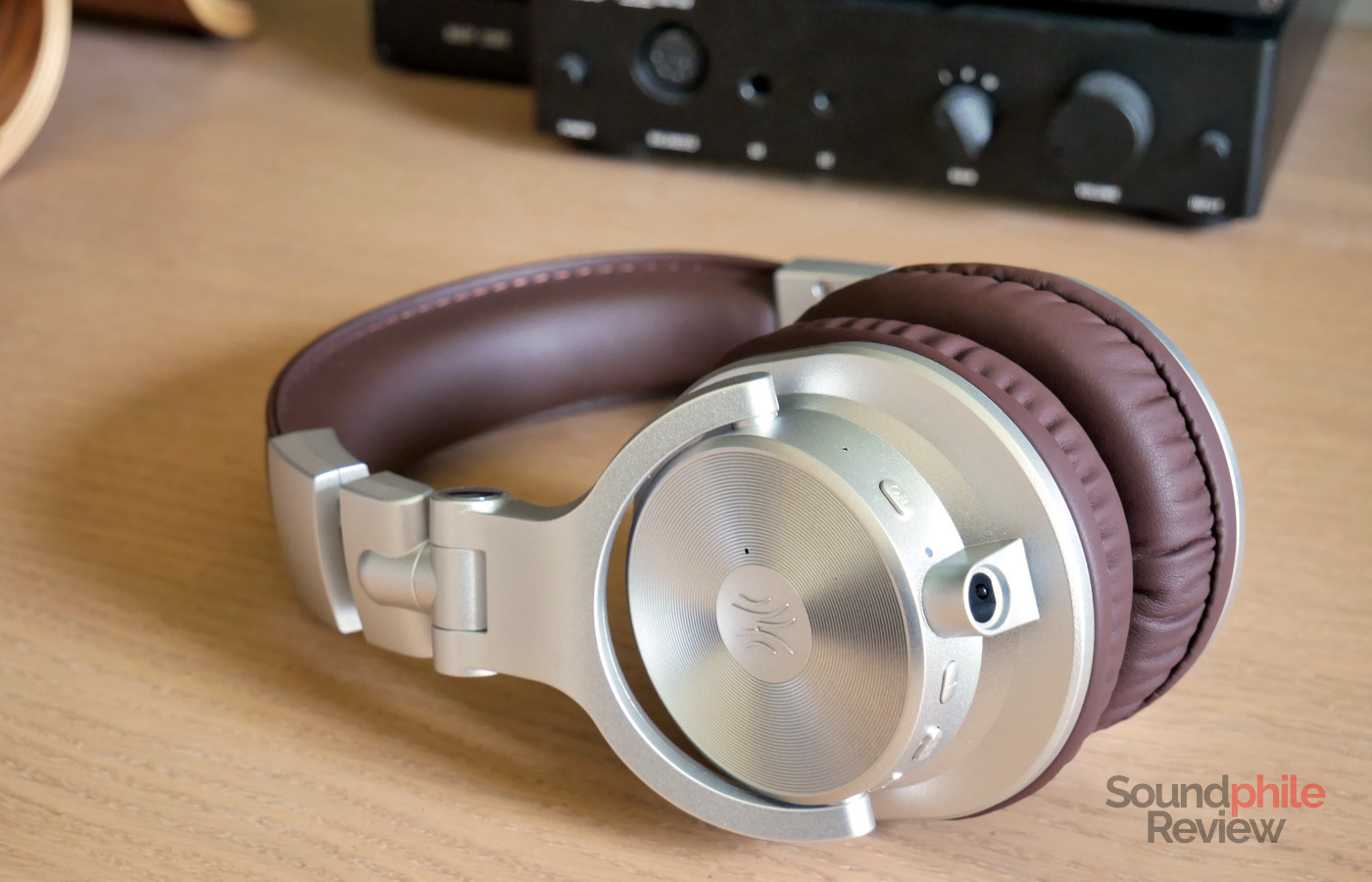
What’s in a name? Well, we might debate about rose varieties here, as the OneOdio A70 Gen 2 are actually very different from the first generation in the same way that roses might appear similar, but smell differently. OneOdio has made some significant changes compared to the previous model, many of which quite positive, while also keeping or even strengthening some of its points of strength.
Disclaimer: I received this unit free of charge directly from OneOdio. The A70 Gen 2 retail for $59.99. The official website offers additional information.
OneOdio A70 Gen 2 At A Glance
| Pros |
Cons |
| + Light weight
+ Much more balanced tuning than previous models + Incredibly long battery life + Very affordable |
– Ridiculously high minimum volume
– Limited technical ability – Tuning is still imbalanced – No passive isolation – Strong background noise |
Rating: 6.5/10
Packaging & Accessories
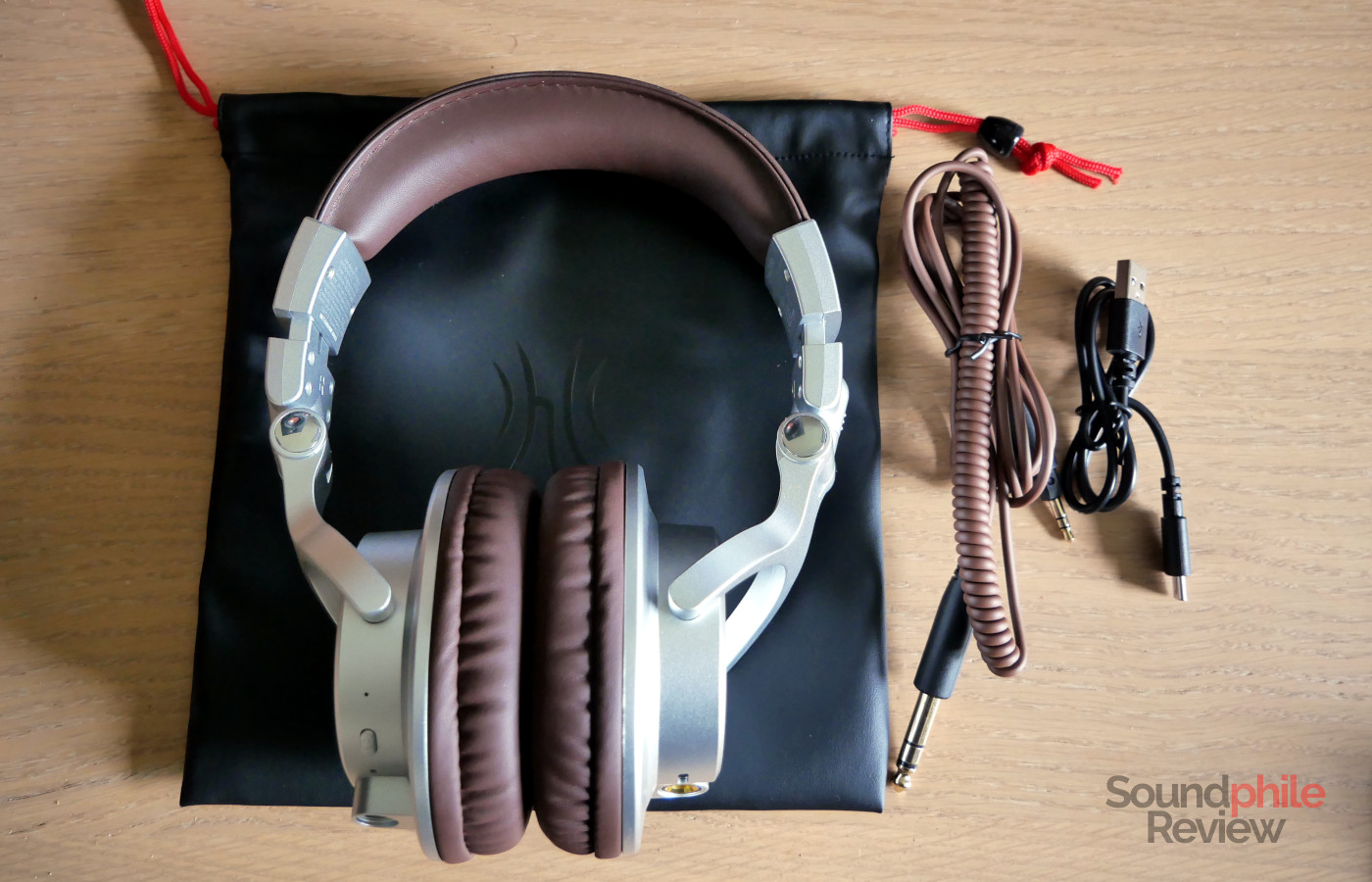
As in OneOdio’s tradition, the package includes the headphones themselves, a 1.8-m cable with a coiled section (which, when extended, should bring the length to 3 metres), a 3.5 mm to 6.3 mm jack adapter, a USB to USB-C cable and a drawstring pouch to keep everything tidy, together with a manual.
Design & Comfort
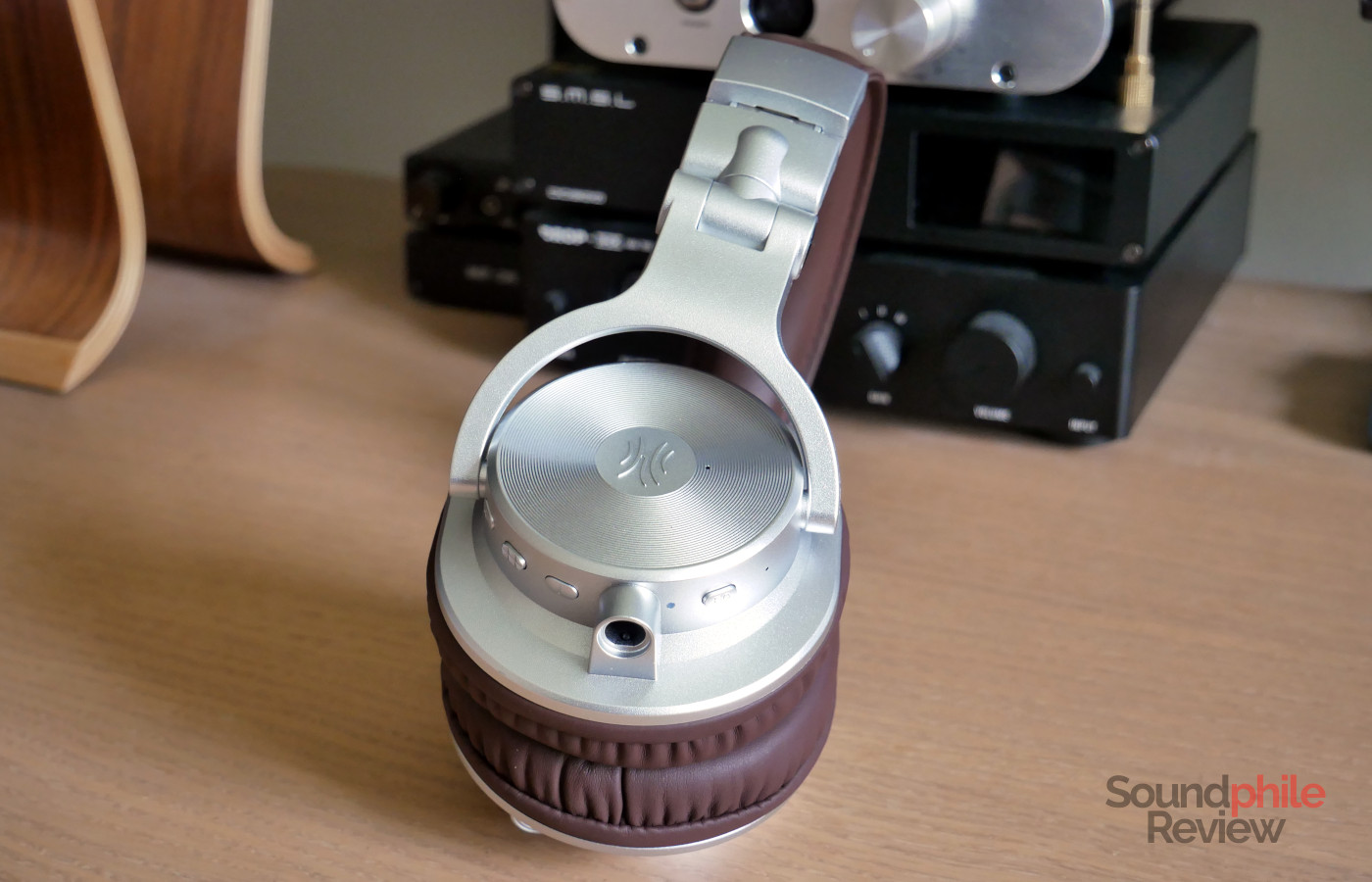
The OneOdio A70 Gen 2 are very similar to the first-generation OneOdio A70, with minor differences in the earcups. In fact, the biggest difference is the fact that the sockets for the cable now protrude from the earcup, rather than being integrated in it. This also has the unintended consequence of hiding the status LED when holding the headphones – you need to purposefully rotate them so that the front faces you in order to see the LED. The other difference is that the OneOdio logo is now impressed on the earcups – everything else is exactly the same.
This means that the A70 Gen 2 feature modern design in line with all other OneOdio headphones. The A70 Gen 2 are made of matte plastic with faux leather padding, with three colour choices: either silver and brown, like in the case of my sample, or fully black, or black with red headband padding. The silver and brown version looks rather elegant.
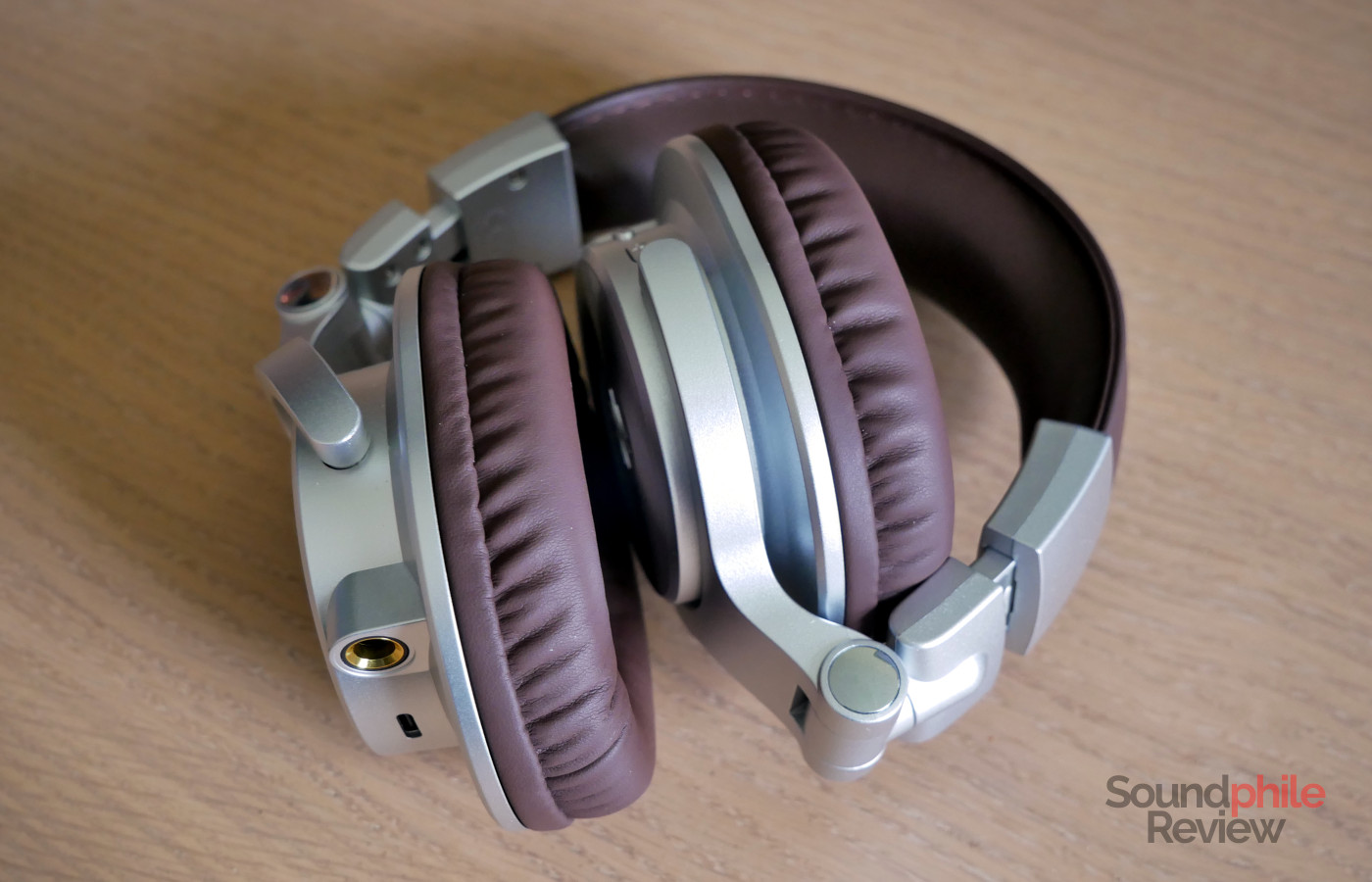
The headband has two gimbals that rotate 90 degrees and allow the headphones to be folded, so you can more easily carry them (though the reduction in space occupation is minimal). Both earcups have a jack socket: as in OneOdio’s tradition, you can use the headphones with both a 3.5 mm and a 6.3 mm jack, depending on what your source needs (or what cable you have available). The left earcup has the 6.3 mm jack socket and a USB-C port for charging, while the right hand side has the 3.5 mm jack socket, the power/play/pause button, two volume buttons, the status LED and a button to switch between equalisation profiles.
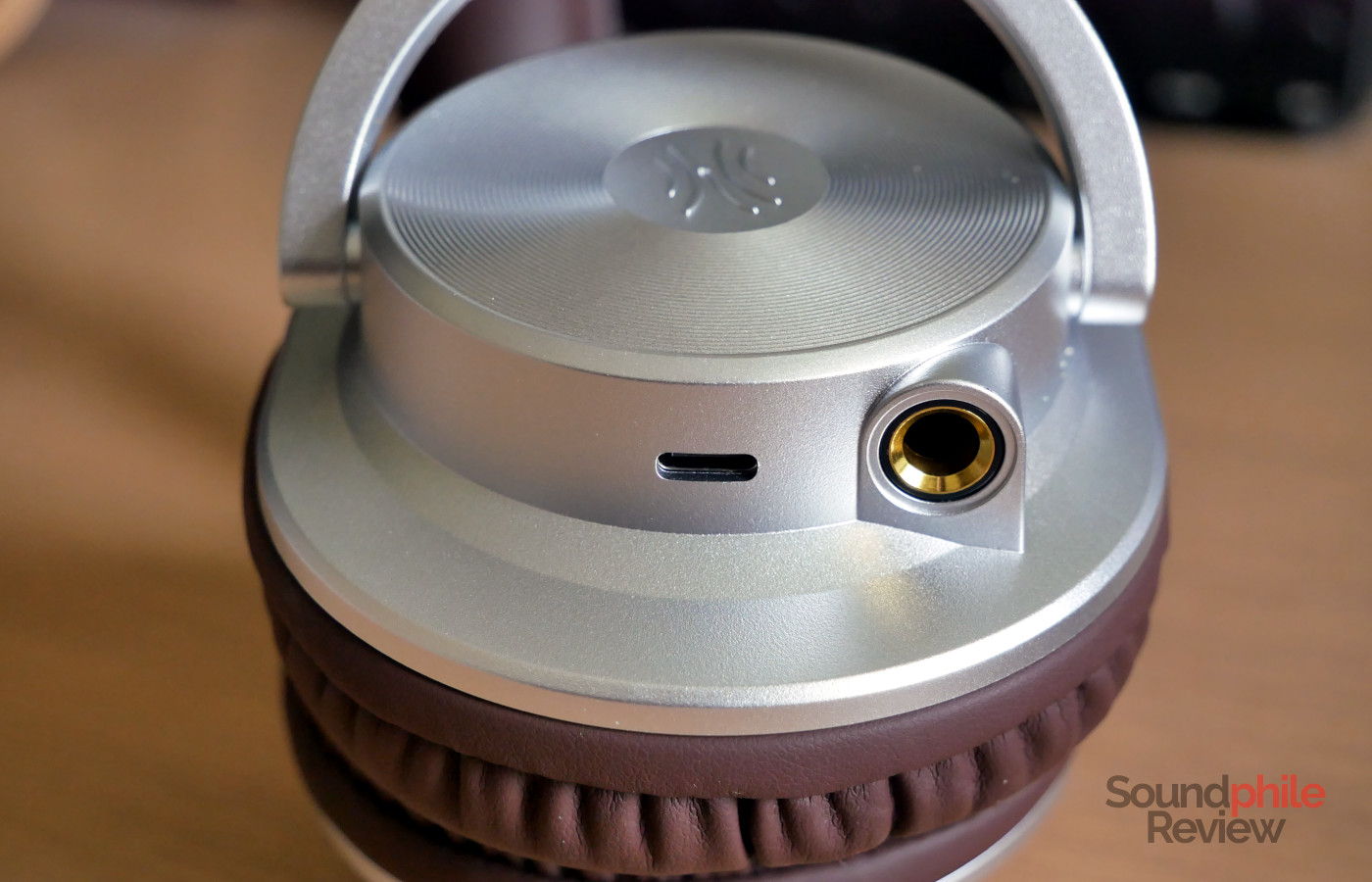
Overall, build quality is decent and the headphones look reasonably durable, although they do creak and squeak when you turn the earcups. It is evident that these are entry-level headphones when you look at the finish, as the seams between the different parts are clearly visible, as are pieces of glue emerging from them.
Another change that’s not aesthetic, but functional, is the locking mechanism for the 3.5 mm jack, which is now relatively easier to use. Rather than requiring you to twist the cable, it employs a small sphere to lock the cable in place. This is less secure, but easier to use. On the other hand, however, you need to align the cable correctly, which I found impossible to do unless I was looking at it; the previous design, on the other hand, did not care about alignment.
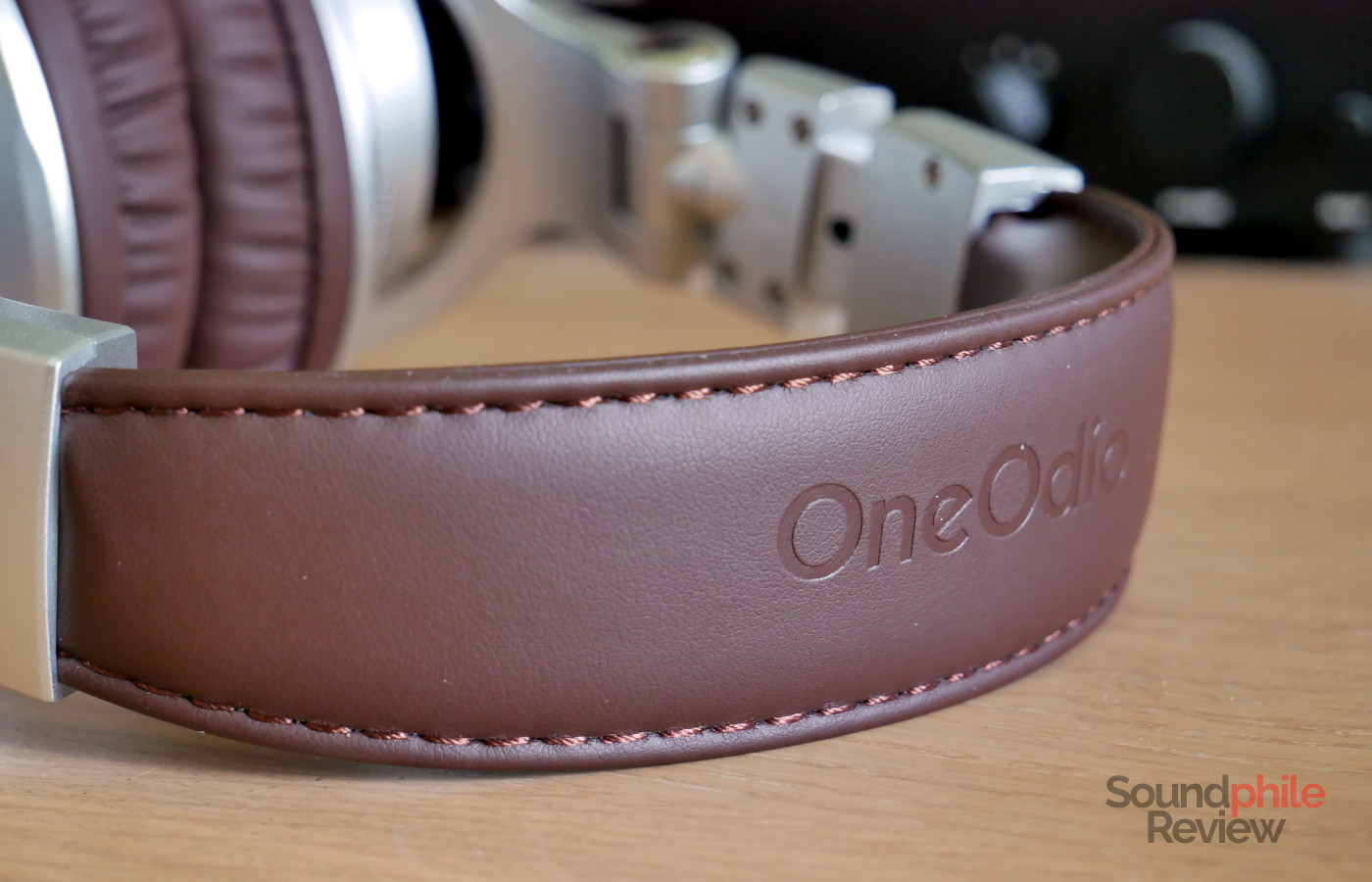
The OneOdio A70 Gen 2 are surprisingly light, at just [] g, and this is clearly felt when wearing them as I could barely feel them on my head, even for prolonged listening sessions. The padding in both the earpads and the headband is soft and generous enough that you don’t really feel the headphones on your head.
Passive isolation is non-existent. There simply isn’t much of a difference between wearing the headphones and not when it comes to hearing noises from the outside world. Light traffic while walking around is enough to cover your music entirely. I would therefore not recommend these headphones for live DJing or for anything where you want good isolation.
The cable is basic and simple, with a plastic sleeve that’s sufficiently flexible but which retains memory – i.e. it tends to kink and coil. It serves its purpose really well and it feels like the plastic sleeving is quite durable.
Extra Features & Battery life
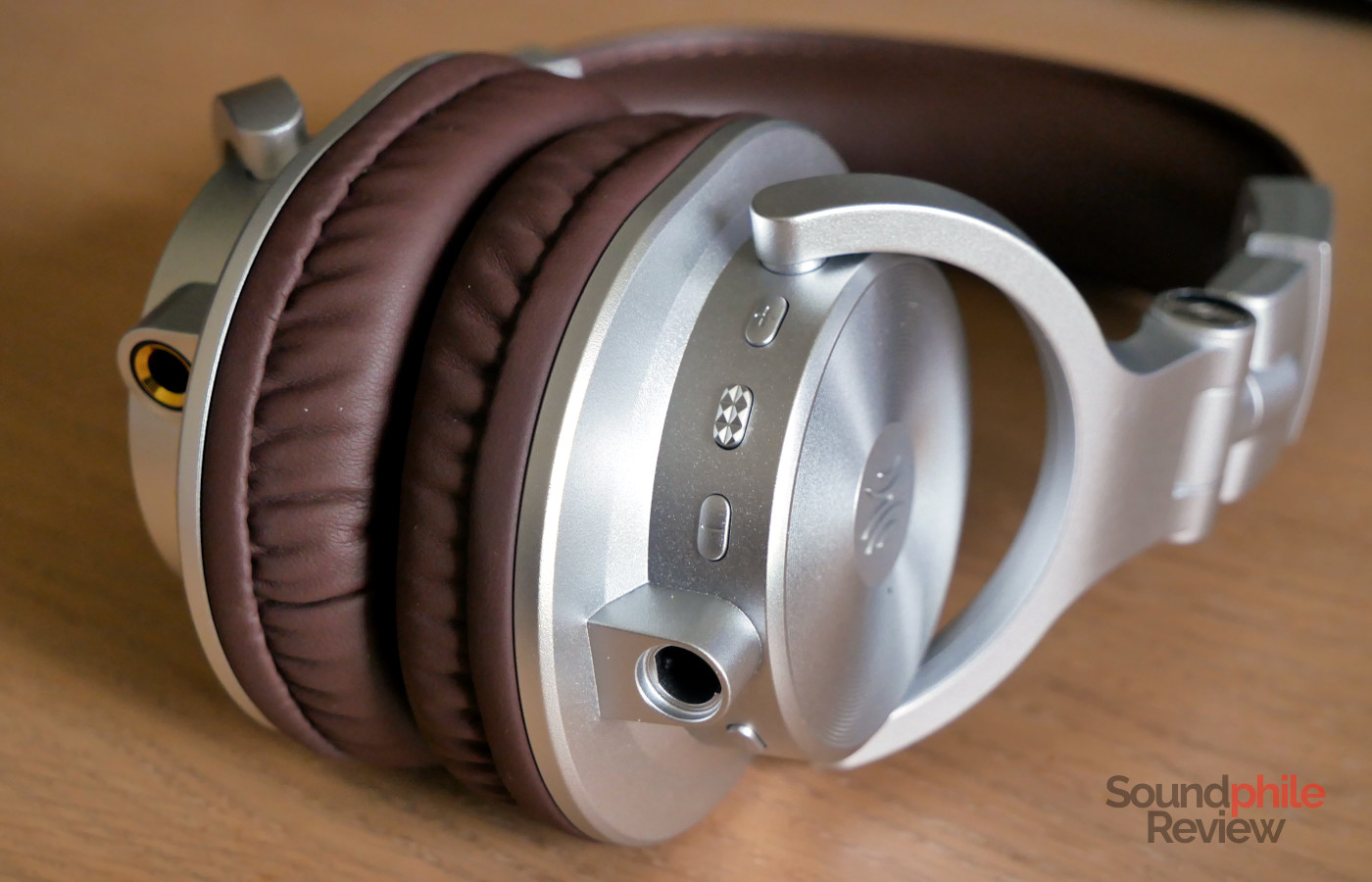
The OneOdio A70 Gen 2 offers Bluetooth 6.0 connectivity with SBC, AAC and LDAC codecs. It can connect to two devices at the same time, but enabling LDAC removes that ability to connect to multiple devices. When connecting more than one device, one is limited to the headset profile, meaning that it cannot be used to stream music, but only to take calls. The connection is stable and the range is excellent.
Even when set to the minimum, volume is still way too high to be comfortable. It is, in fact, higher than the maximum volume I normally listen to music at, which gives you an idea of just how ridiculously high it is.
The microphone is very limited; people whom I’ve spoken to over the phone while using the headphones told me that I sounded very distant and garbled, even though I was in a quiet environment with no ambient noise.
Battery life is practically eternal; the company touts an astounding 72 hours and I haven’t been able to confirm it – after multiple days of usage, the headphones are still playing. I think it’s safe to say that they’ll play for a very long time without needing a charge.
Software
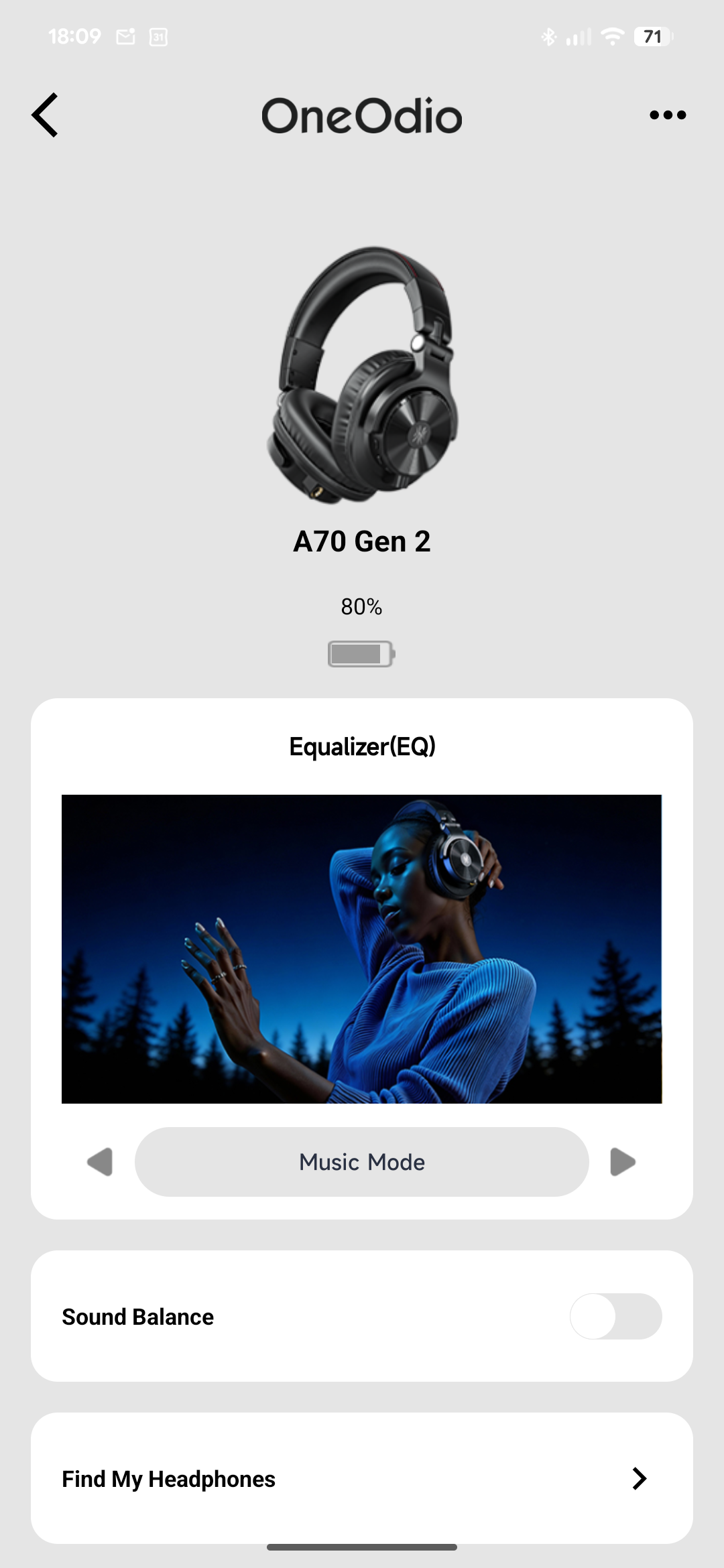
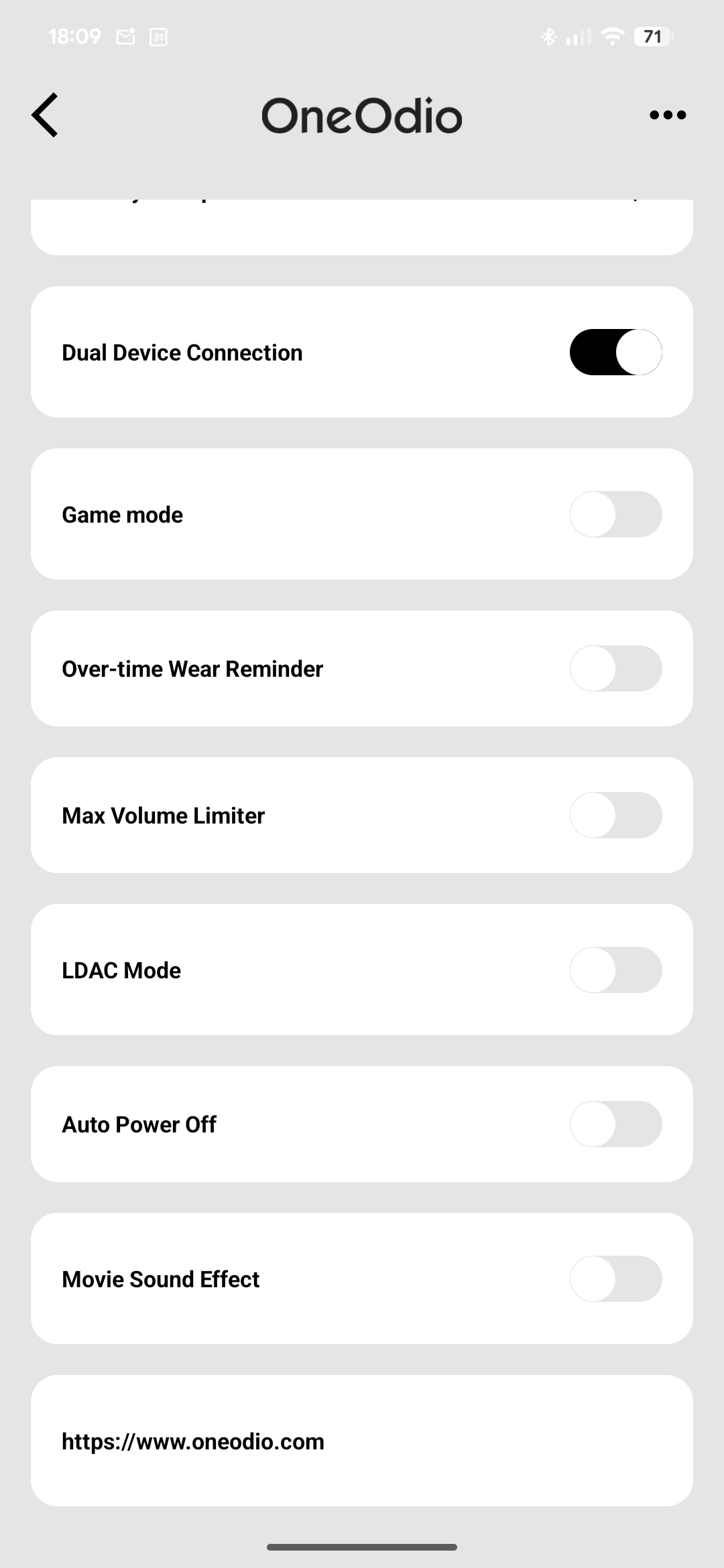

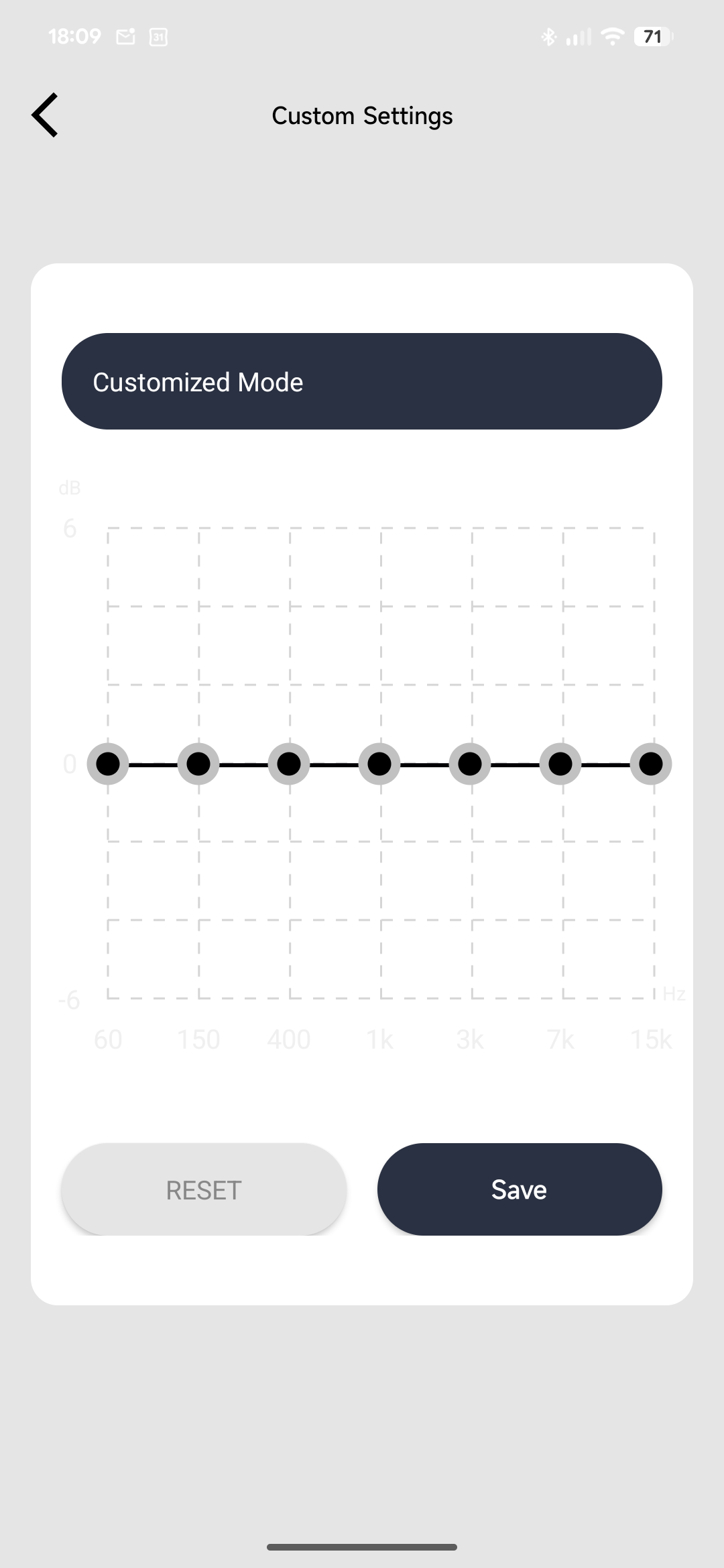
You can customise the OneOdio A70 Gen 2’s sound and settings by using the OneOdio application, available for both Android and iOS. Don’t let the poor ratings on the Play Store fool you, as the app is actually quite well made: it offers a lot of options in a clear and accessible way. Among those, it allows you to rename the device, upgrade the firmware, adjust channel balance, find your headphones (they emit a very loud sound), and then enable or disable a variety of settings: dual device connectivity, game mode (which reduces latency), whether to issue a reminder to remove your headphones after a given amount of time (configurable between 30 minutes and 4 hours), limit maximum volume, LDAC codec, auto power off, and movie sound effect (which is supposed to give you a more three-dimensional sound).
Sound & Specs
I tested the OneOdio A70 Gen 2 wirelessly using both my computer and my Google Pixel 7 Pro smartphone, and wired with an SMSL DO400.
There is a constant buzz-like sound playing whenever the headphones are reproducing any sounds, which is audible even when music is playing and especially with quieter music. It stops after about 5 seconds of not reproducing anything. It is quite fatiguing, at least to me.
The A70 Gen 2 come with four modes: Bass, Monitoring, Music and Custom. Bass emphasises… well, bass, whereas monitoring mode tries to offer a more balanced profile by reducing bass presence (to the point it’s almost not there, actually), and Music sits in-between the two and is probably the most enjoyable tuning among them as; although it’s still not balanced in absolute terms, it’s the most balanced among the presets. In fact, it’s the only one I can recommend using!
Soundstage is quite limited and it’s evident that you’re wearing a pair of headphones by the way the stage is presented, as everything sounds pretty much in or next to your ears. Imaging is limited to the three main placements (left, centre, right) with very little in-between. Instrument separation is limited to only the main instruments, as there is a tendency to mash up more complex and layered tracks (e.g. Weapons for Children by Perturbator).
As with most OneOdio headphones, the A70 Gen 2 feature a very different tuning than what OneOdio has got us used to. Bass is not overpowering everything else as in previous models, and it seems like OneOdio finally found a tuning where bass is emphasised without being overbearing. It is abundant, but moderately so, in a way that makes it more present in the mix without becoming the only thing you hear. There isn’t a lot of depth, especially if you break the seal with glasses, and detail is very limited, especially when multiple instruments overlap. There is good physicality, however, as bass notes carry a weight to them that’s palpable – quite literally.
Interestingly, the A70 Gen 2 are actually mid-centric headphones. Even in bass mode, midrange gets ahead of everything else and is the star of the show. Upper midrange especially is emphasised, with a significant bump above 1.5 kHz that continues up to the treble region. This makes the sound as a whole quite shouty and “in your face”. Tonality is therefore less accurate than it could be, even when you use the monitoring mode which reduces bass significantly. As with bass, there is little in terms of separation between instruments, especially in layered tracks, though surprisingly transients are reasonably fast. There is very little detail, however. It often feels almost like there is a wet towel in front of the driver blocking the sound, as everything is softened and fuzzed up.
Treble depends very heavily on the equalisation mode you select. In bass mode it is almost absent; it is mono-dimensional and offers very little in terms of texture and detail. On the positive side, it is good for people who are sensitive to the upper frequencies as there is very little of them. In Music mode it is a lot more lively, although its extension is still limited. Detail, like with the rest of the sound, is limited.
Final Thoughts
OneOdio has made quite significant progress in tuning its headphones with the A70 Gen 2. It is the first model by the company that has a relatively balanced sound signature out of the box. The Music mode gives you a tuning that is still fun, but does not exceed in any direction and is therefore quite versatile – and, more importantly, enjoyable. From a functional perspective, OneOdio has kept its quirky double input, while also adding a button to select the equalisation profile – all things that make the A70 Gen 2 quite versatile. The Bluetooth connectivity is rock-solid and supports multiple devices as well as the LDAC codec, though you have to choose between the two. To top off the good things about these headphones, battery life is simply extreme and connection is super-strong and reliable.
The OneOdio A70 Gen 2 aren’t free of criticism, however, as their technical ability is severely limited and their tuning has some quirks that make the headphones less appealing to a wider audience. The minimum volume level is also ridiculously high, which is a real issue. They also offer no passive isolation, which means that you will need that high volume to hear anything as soon as you step outside a quiet environment. There is also a very annoying background noise that quickly becomes fatiguing.
Overall, I feel like the OneOdio A70 Gen 2 are a step in the right direction for the company. They’re quite a departure from previous headphones, which is a very welcome change. Still, they’re quite limited in terms of acoustic performance, which is what influenced my final score of 6.5 the most. That said, if you are looking for a pair of very affordable headphones where sound quality doesn’t matter too much and you instead value battery life and comfort more, the A70 Gen 2 are a decent option to consider.