If you have multiple headphones, multiple amplifiers, or both, you have probably had to manage different cables, one per headphone – and sometimes more. Adapters are always very useful, but they’re not always convenient. Being able to simply swap out the termination on a cable would be much better, and that’s the idea behind the Dekoni Ensemble line-up. It is a modular cable system which is made of two halves: one that connects to the amplifier and the other that connects to the headphones. An elegant solution for a small practical problem.
Disclaimer: I got two complete cables, made of four modules, from Dekoni’s PR agency in the UK. The Ensemble cables have prices ranging from $39.99/£31 for the nylon and SPC versions to $79.99/£62 for the PCUHD copper. Additional information on Dekoni’s website.
Dekoni Ensemble cables at a glance
| Pros |
Cons |
| + Great modular system
+ Lots of connectors available + Excellent building quality + Super soft and malleable with no kinks nor coiling |
– The copper version is a bit expensive |
Rating: 8/10
Packaging & Accessories
Each cable module comes in its own box, which is comically larger than the cable module itself.
Design & Build
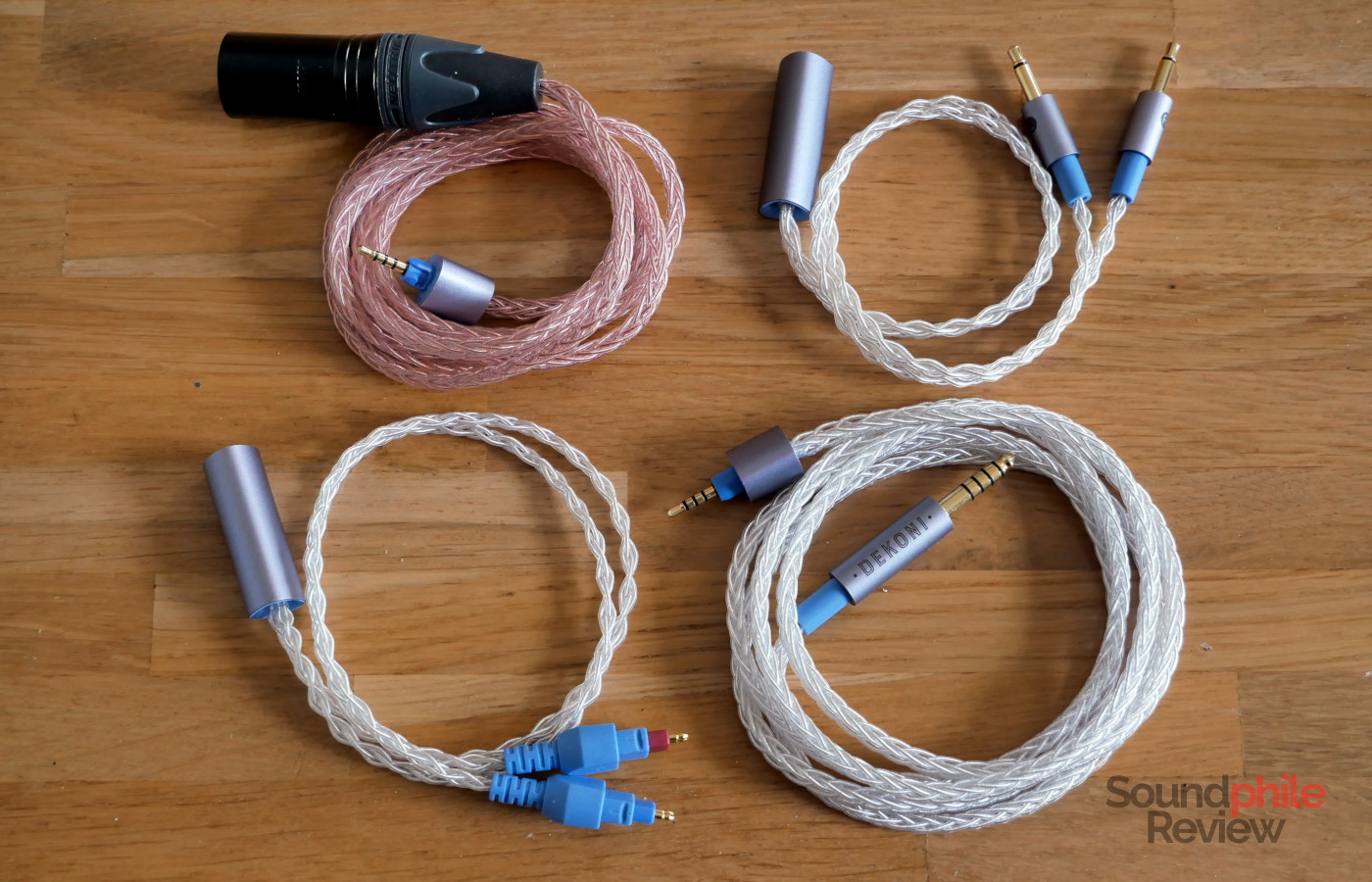
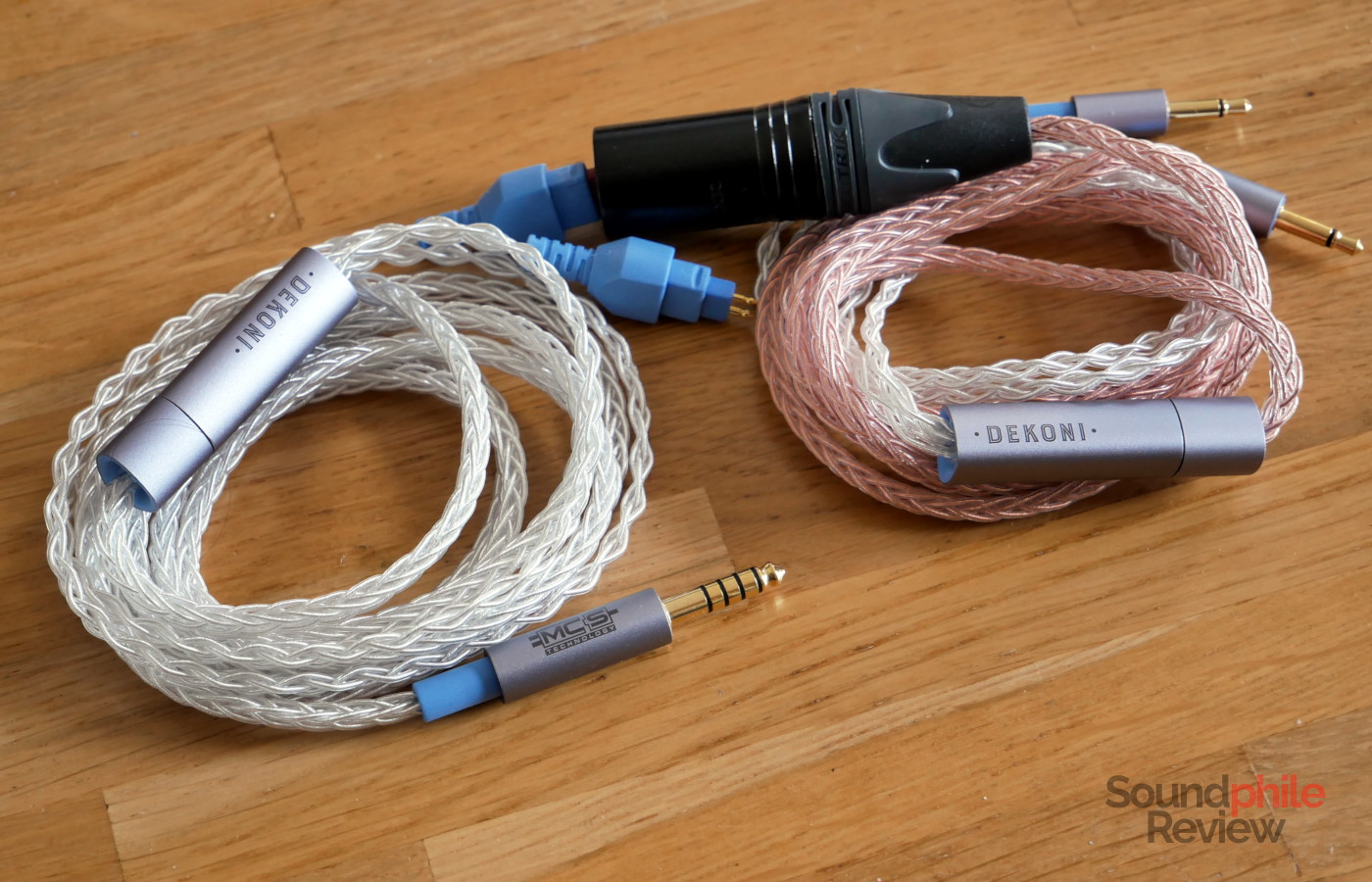
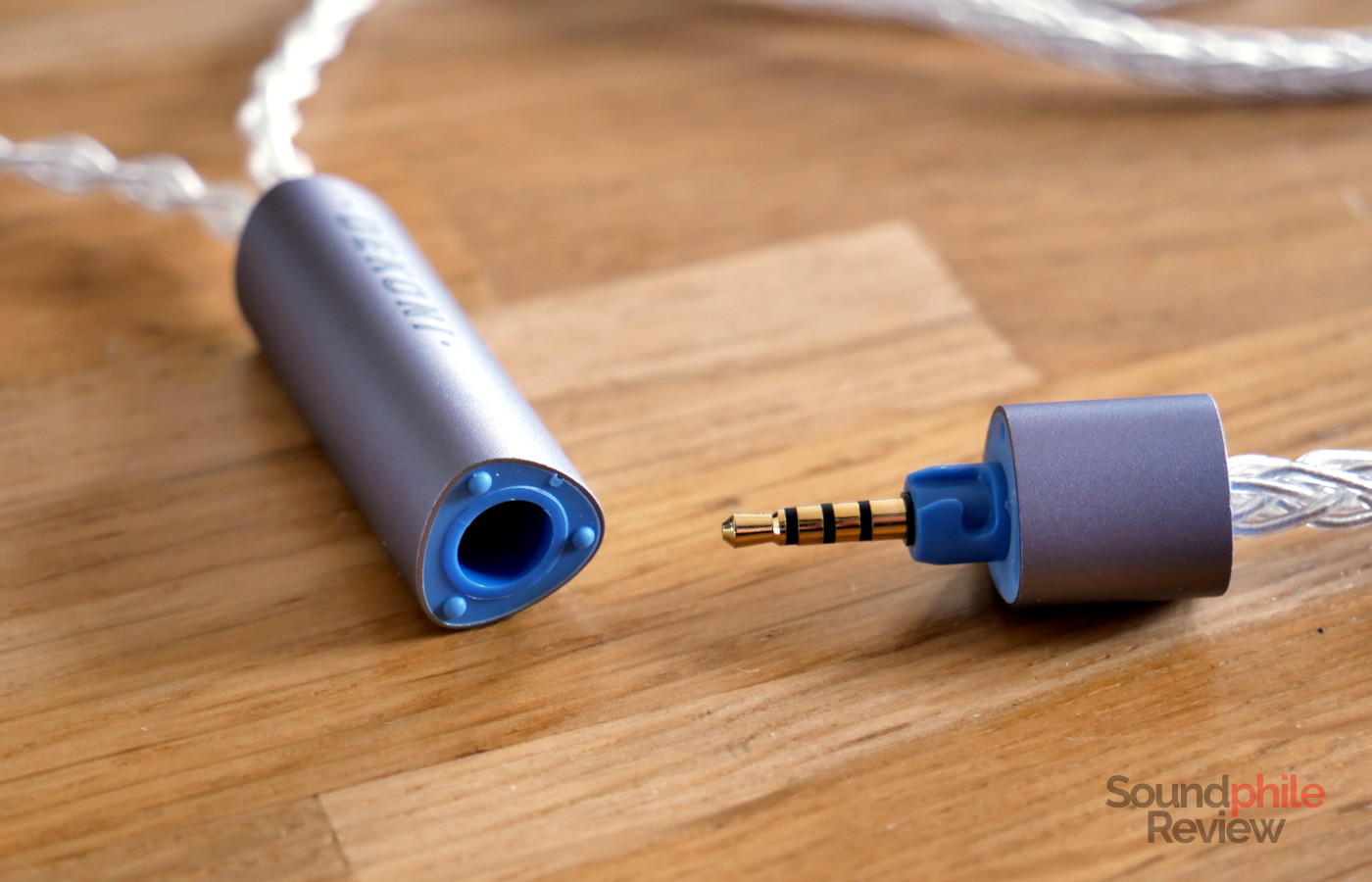
The Ensemble cable system is made of two parts: one that you plug into your amplifier (or DAP, or whatever else), and one that you connect to your headphones. Dekoni helpfully calls them “pre-split” (between the amplifier and the Y-split) and “post-split” (between the Y-split and the headphones), and I’ll adopt the same terminology. These two parts connect to each other through a 2.5 mm jack and socket in the Y-split, with a mechanism that makes the two parts lock together so that you don’t accidentally separate them. You simply plug the jack in and then twist until the two parts are locked in place. It’s a very effective system, and one that feels very durable as the lock is achieved through a screw-like mechanical action rather than through friction alone like on so many modular cables (which then tend to age and lose the friction).
The pre-split modules come in two sizes: either 1.3 metres (52 inches) or 1.6 metres (64 inches), which give you flexibility in case your amplifier is more distant than the usual 1.5 m. The post-split modules are about 30 cm and bring the total length of the cable to 1.7 m or 2 m.
The cables themselves come in different options: silver-plated copper, pure oxygen-free copper (the company calls it “Pure Copper Ultra High Drawability Copper”, or PCUHD copper), as well as silver tinsel with a nylon jacket. The choice of which type of cable to buy lies not just on personal preference, but also on the type of termination that you need, as each type has different available terminations. To sum them up:
| Pre-split | Post-split | |
| Nylon jack | 3.5 mm jack, 4.4 mm jack, 6.3 mm jack | 3.5 mm jacks, Sennheiser HD6xx, single 3-pin mini-XLR, single 2.5 mm jack |
| Silver-plated copper | 3.5 mm jack, 4.4 mm jack, 6.3 mm jack, 4-pin XLR | 3.5 mm jacks, Sennheiser HD6xx, 2pin IEM, MMCX, single 3-pin mini-XLR, double four-pin mini-XLR, single 2.5 mm jack |
| PCUHD copper | 6.3 mm jack, 4-pin XLR | 2-pin IEM, MMCX, LEMO plug, Hirose connector |
Most of these connectors are very widespread, though some are specific to some brands: the single 3-pin mini-XLR is used by AKG and Beyerdynamic, the single 2.5 mm jack is used by Audio-Technica, the LEMO plugs are used on the Focal Utopia and the Hirose connectors are used on Dan Clark Audio headphones.
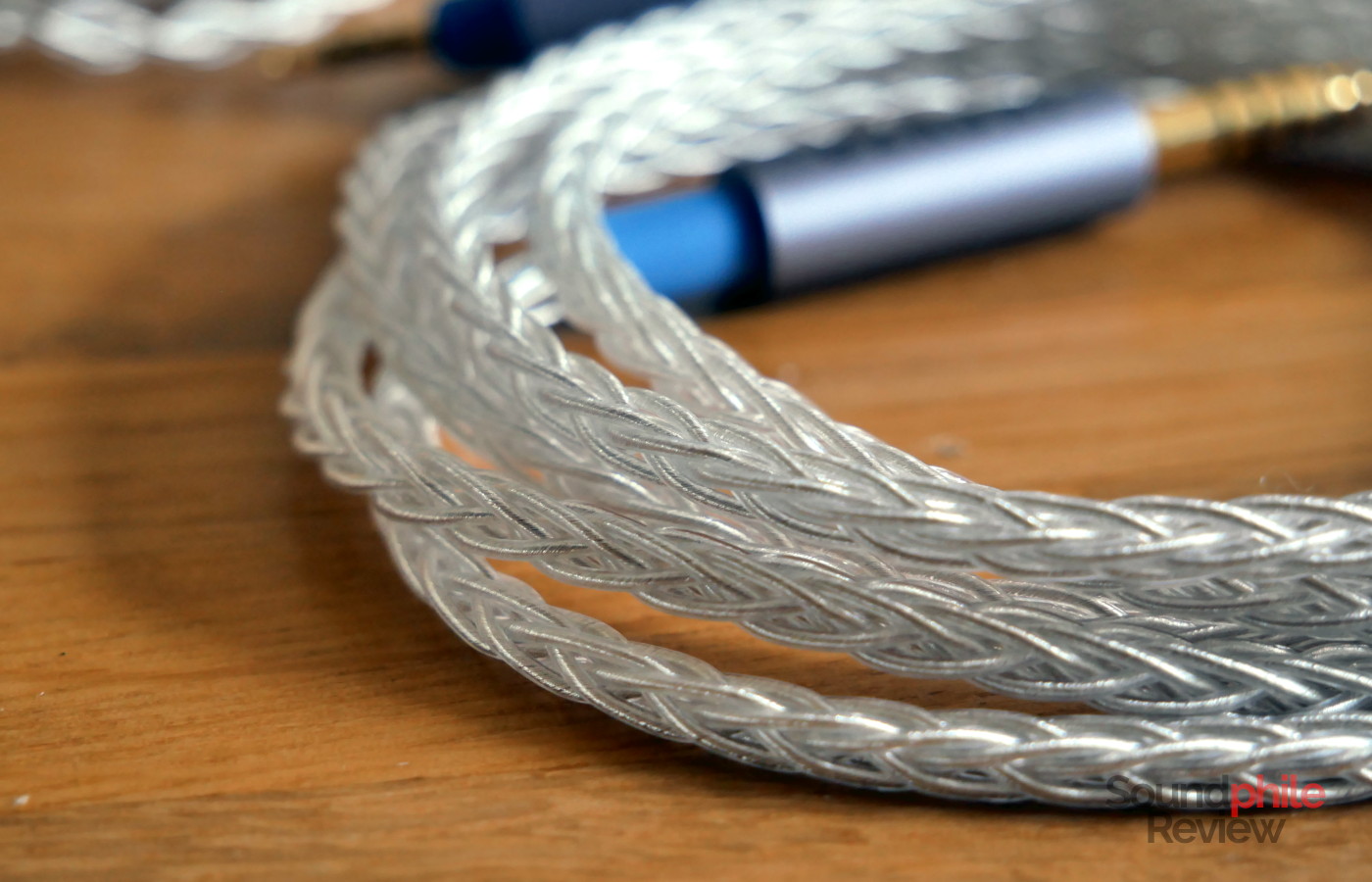
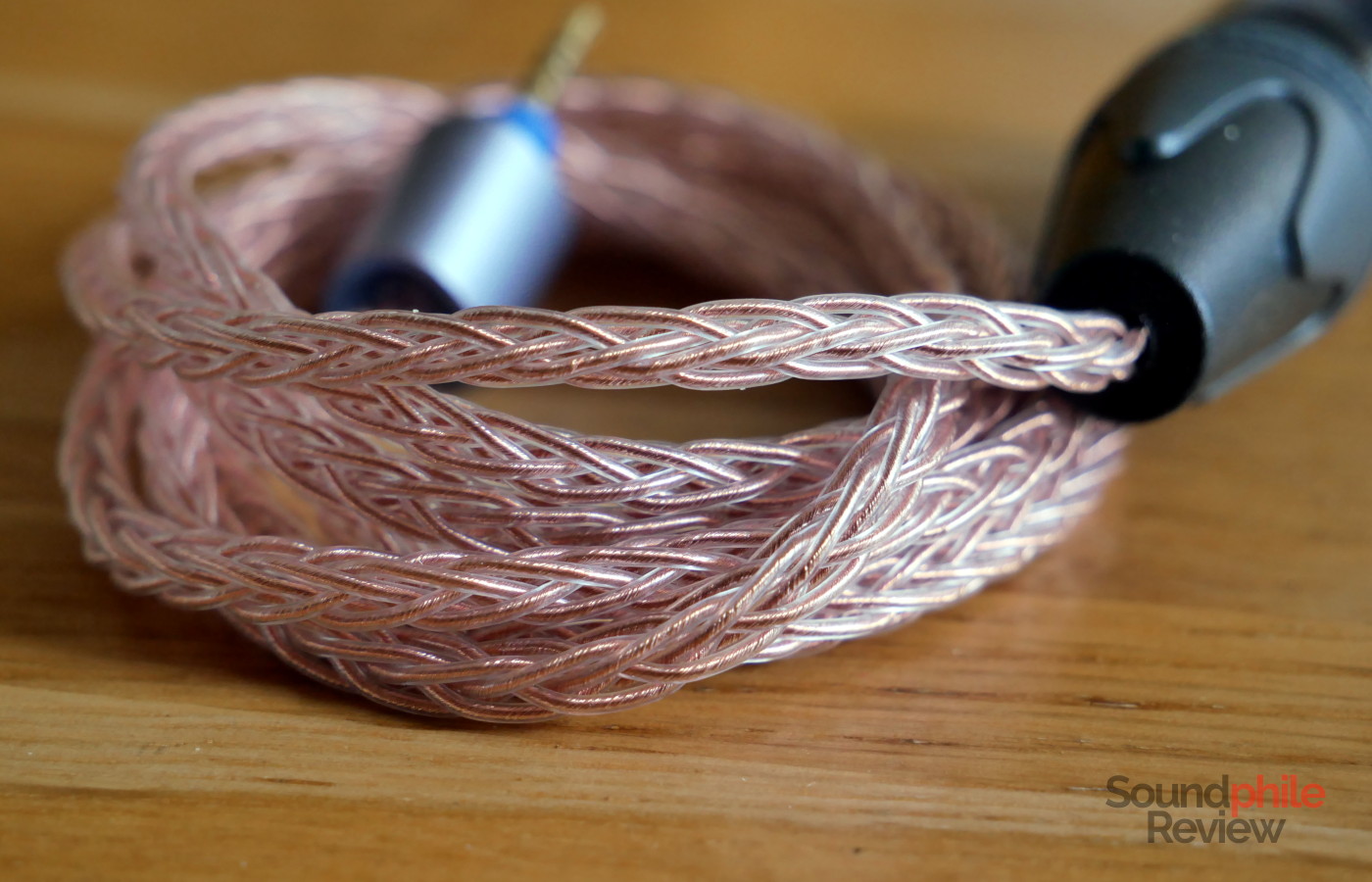
The pre-split cables use 8 cores (in the SPC and PCUHD copper versions, an undisclosed number in the nylon jack version), braided to form a tubular structure. The post-split modules have 4 cores for each channel (except where only one cable is present, in which case there are 8 cores).
The cables are extremely soft and malleable, much more so than I would have expected given their thickness. There is no memory whatsoever, meaning that the cables do not kink and do not coil at all.
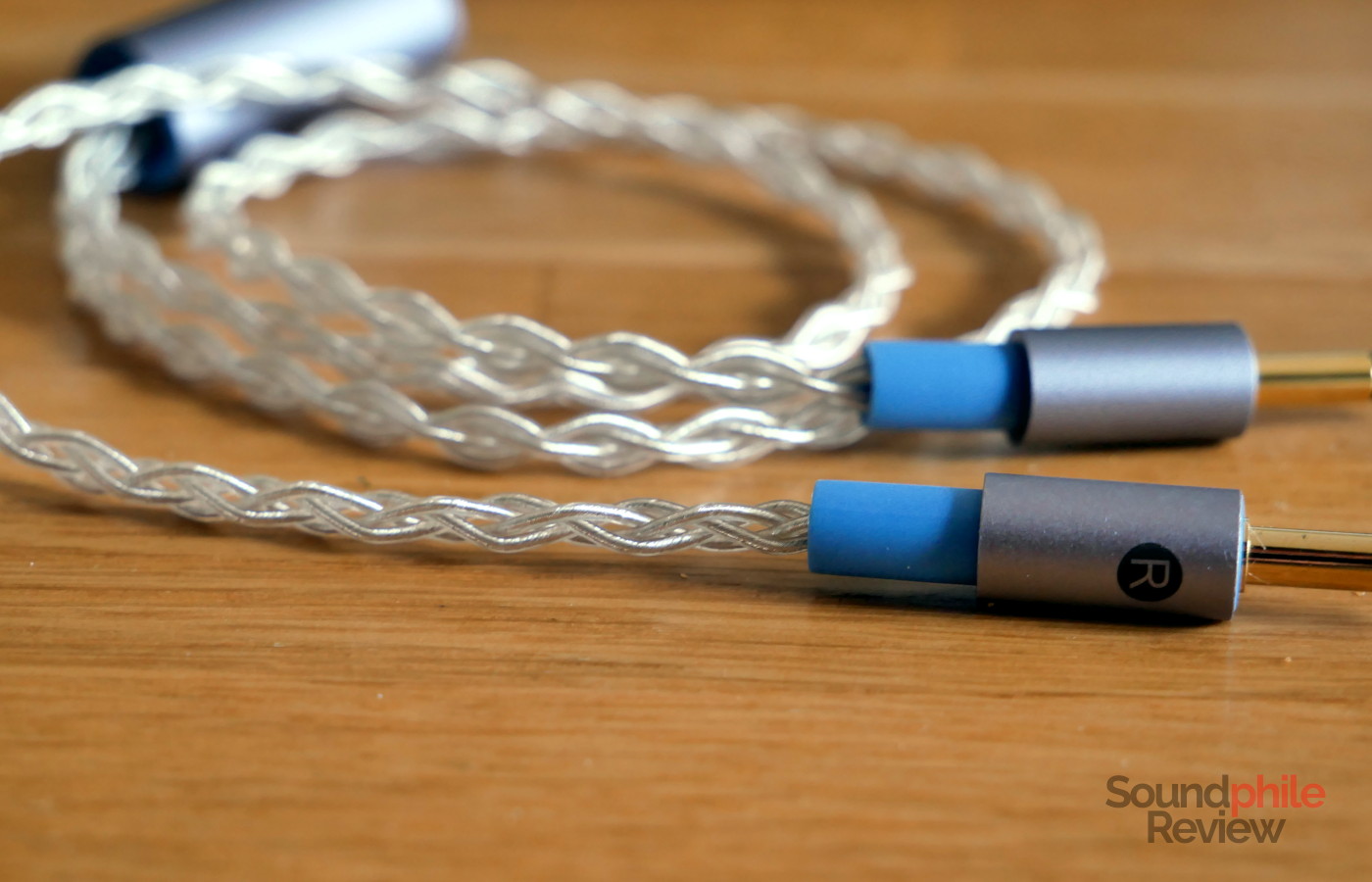
All the casings are made of smooth machined aluminium, which gives a premium appearance and feel to the cables. The pre-split modules feature a soft rubber strain relief on the termination side, just like the post-split modules on the headphone side. The only exception to this rule is the XLR4 connector, which does not feature a strain relief. There is no strain relief on the Y-split itself.
Build quality appears exceptionally high, with every element carefully crafted with quality materials. Thanks to the cables being so soft, they also offer no microphonics whatsoever.
I received two pre-split and two post-split modules: a PCUHD copper 4-pin XLR and an SPC 4.4 mm jack pre-split modules, as well as SPC 3.5 mm jacks and Sennheiser HD6XX modules. This highlights the strength of the Dekoni Ensemble system: it is easy to mix and match based on your needs, and to build a cable system which works with your specific equipment. In my case, I wanted to be able to connect both my Sennheiser HD 6XX and my HiFiMAN headphones to the same amplifier, an SMSL DO400, which offers XLR4 and 4.4 mm outputs, as well as to other devices which offer a 4.4 mm output such as a Hidizs AP80 PRO MAX. I was previously relying on cables with a 2.5 mm jack and then using adapters to convert that to whatever connector I needed, but that system meant that I had to keep different adapters on hand (and I can’t count the times I misplaced one and spent half an hour looking for it!), and then I had use different cables for each headphone, with some of those being prone to kinking and coiling, or feeling very flimsy. The Dekoni Ensemble system is an elegant solution to this issue, as it allows me to have a single cable system that’s high-quality and reliable.
Final Thoughts
The Dekoni Ensemble modular cable system is one of those products that might sound like a bit of a gimmick, but actually solves a real issue in a very elegant way. It’s a smart solution to the problem of dealing with adapters, by embedding the adapter inside the cable itself. The cables are evidently made with quality materials and are assembled with care, and they’re among the softest and most malleable I’ve found so far.
In my experience with the SPC and PCUHD copper variants, the Dekoni Ensemble cables have proved themselves very useful and reliable, as well as being simply gorgeous to look at. The PCUHD copper cables are possibly the nicest among the line-up in terms of look and feel (though that’s subjective), but they are also the most expensive. At $80/£62 per module, a full cable ends up being pretty spenny at $160/£124. The SPC variant is cheaper, at $40/£31 per module or $80/£62 for a complete cable, although it only trades the amazing looks of the pure copper for this – in every other respect, they’re practically identical. The choice also depends on what connectors you need, so sometimes there is no alternative.
The Dekoni Ensemble cables are not the cheapest on the market, but this buys you a modular system that’s meant to last and to be compatible with all your needs – and the very fact that it is modular makes it easy to swap any modules that should break, or to buy a new module to make your cable compatible with new headphones. In short, I really like these cables as they’re practical, beautiful and comfortable and I definitely recommend them.