
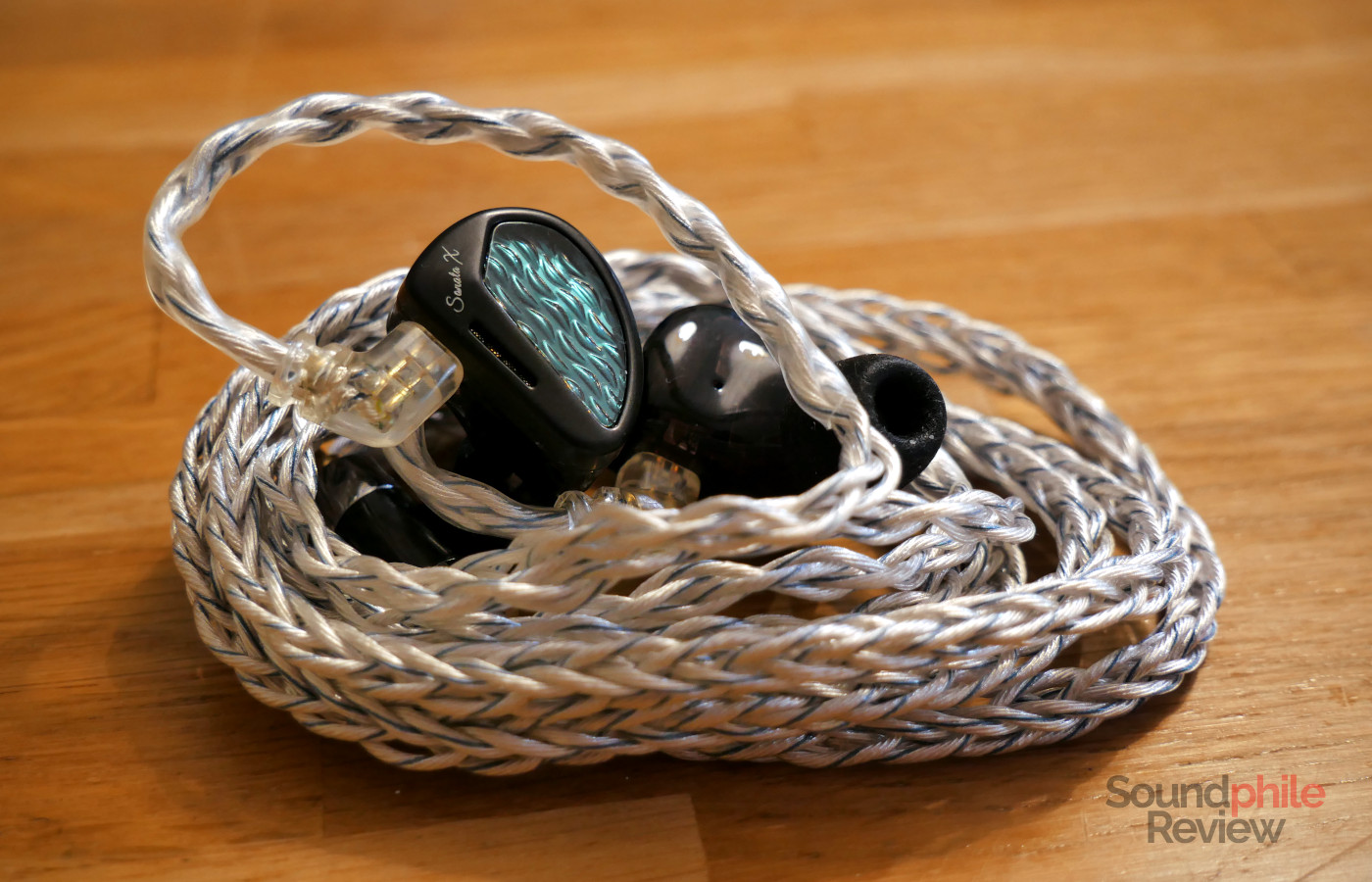
KZ first made a splash over a decade ago, with earphones that revolutionised the market thanks to good sound quality paired with an impossibly low price. The company has evolved over time and the new KZ Sonata X are the greatest example of that: they are refined multi-driver earphones offering balanced tuning which, however, you can alter using on-board switches.
Disclaimer: KZ provided a free unit for the purpose of this review. The Sonata X retail for $179.99. Additional information on the official website.
KZ Sonata X At A Glance
| Pros |
Cons |
| + Original design
+ Decent passive isolation + Almost-neutral tuning + Good technicalities |
– Switches only have a minor effect on sound
– Can become uncomfortable |
Rating: 8/10
Packaging & Accessories
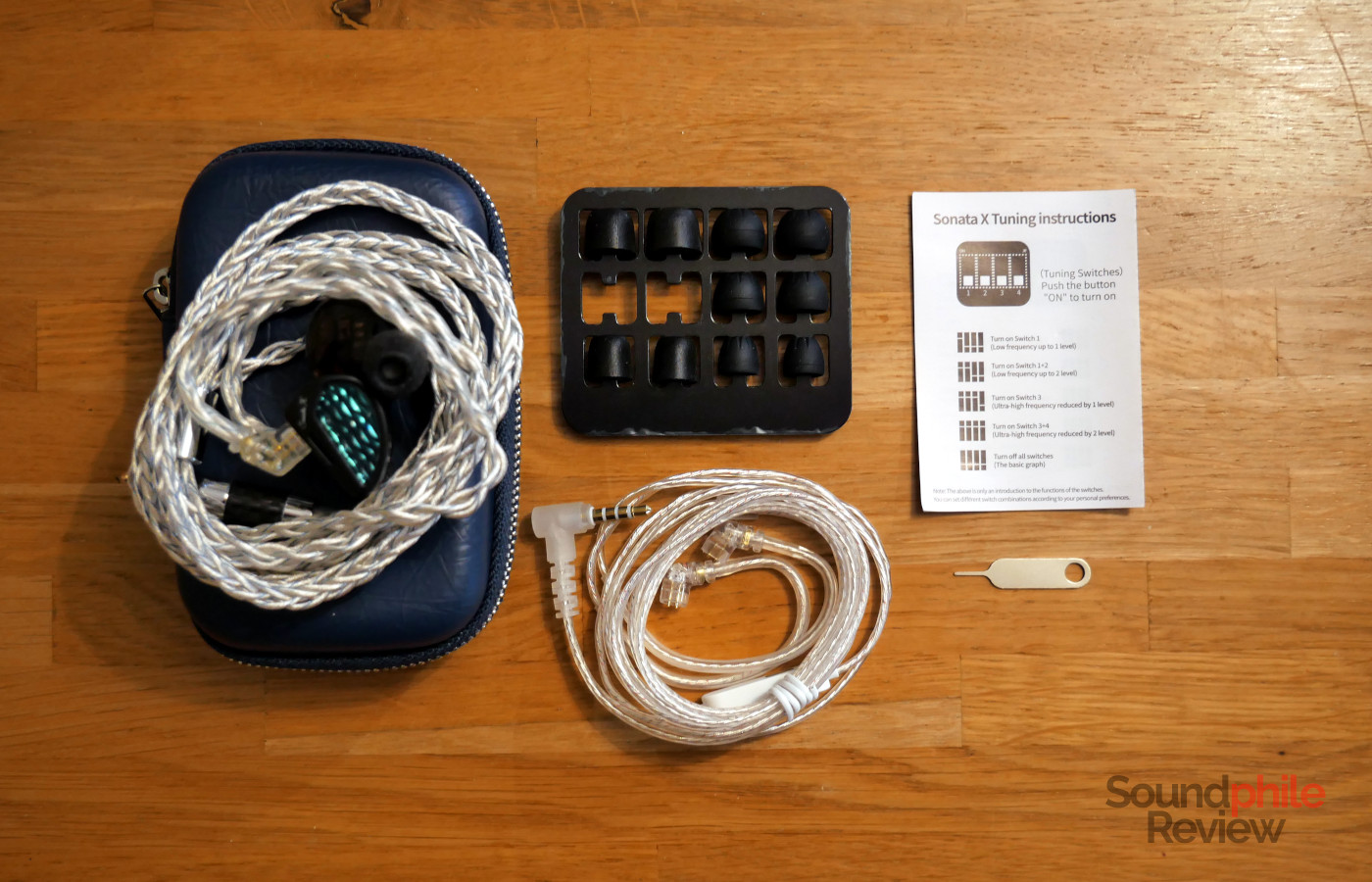
The KZ Sonata X comes with quite a few accessories in tow. The box contains a hard carrying case in faux leather, a braided silver cable, a cable with an inline microphone, a set of silicone eartips and one of foam eartips, both in three sizes, as well as a metal tool to adjust the switches and a small manual.
Design & Comfort
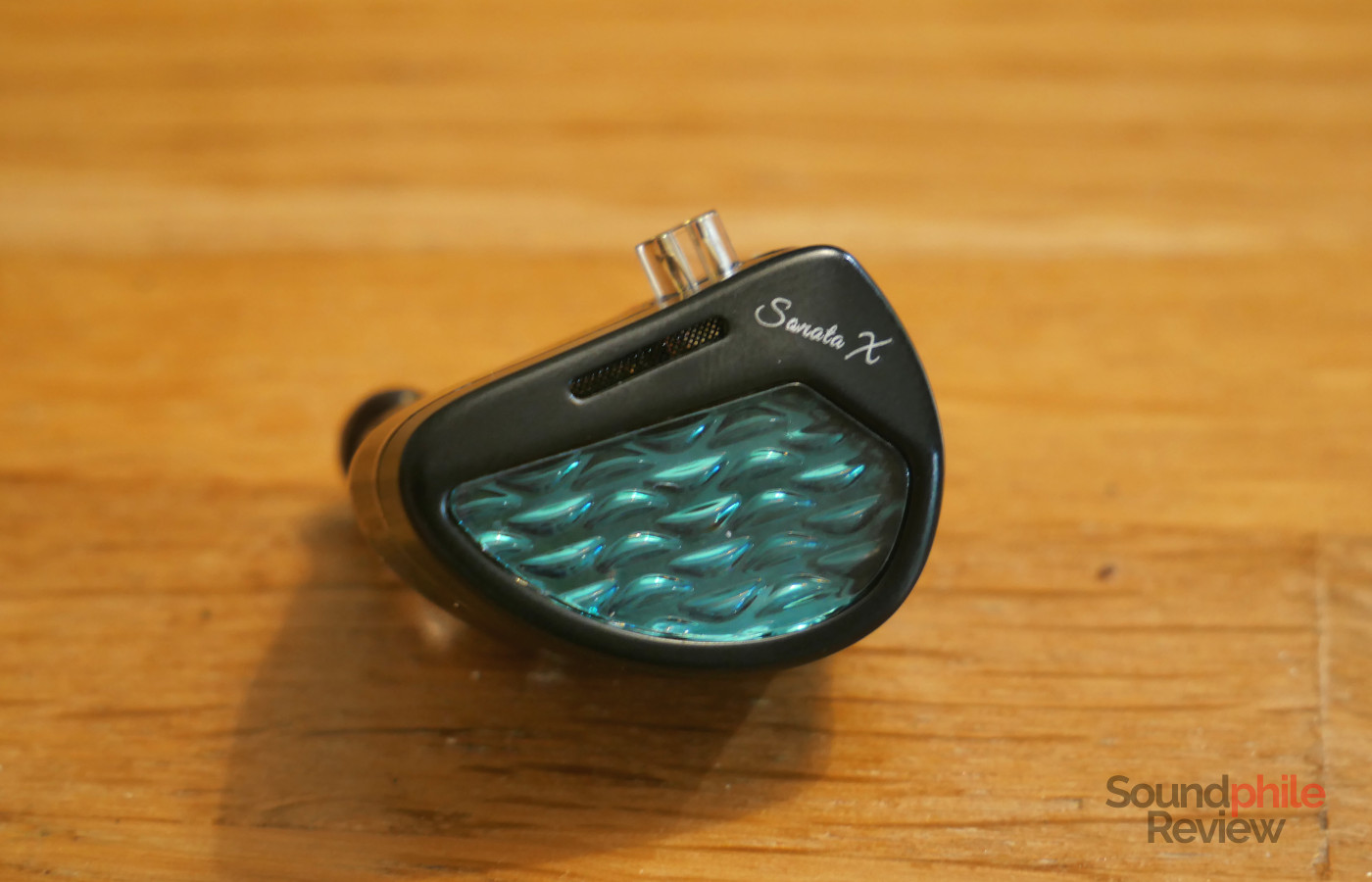
The KZ Sonata X sport a rather distinctive design which makes them stand out both in KZ’s line-up and more broadly in the market. The shells are made of solid resin which is moulded around the balanced armature drivers, while the faceplate is made of metal and has a plastic window showing a blue-green metal plate with alternating triangular bumps on it. It is certainly a different approach to crafting a faceplate, and one that makes the Sonata X stand out. The result is a very modern, stylish look.
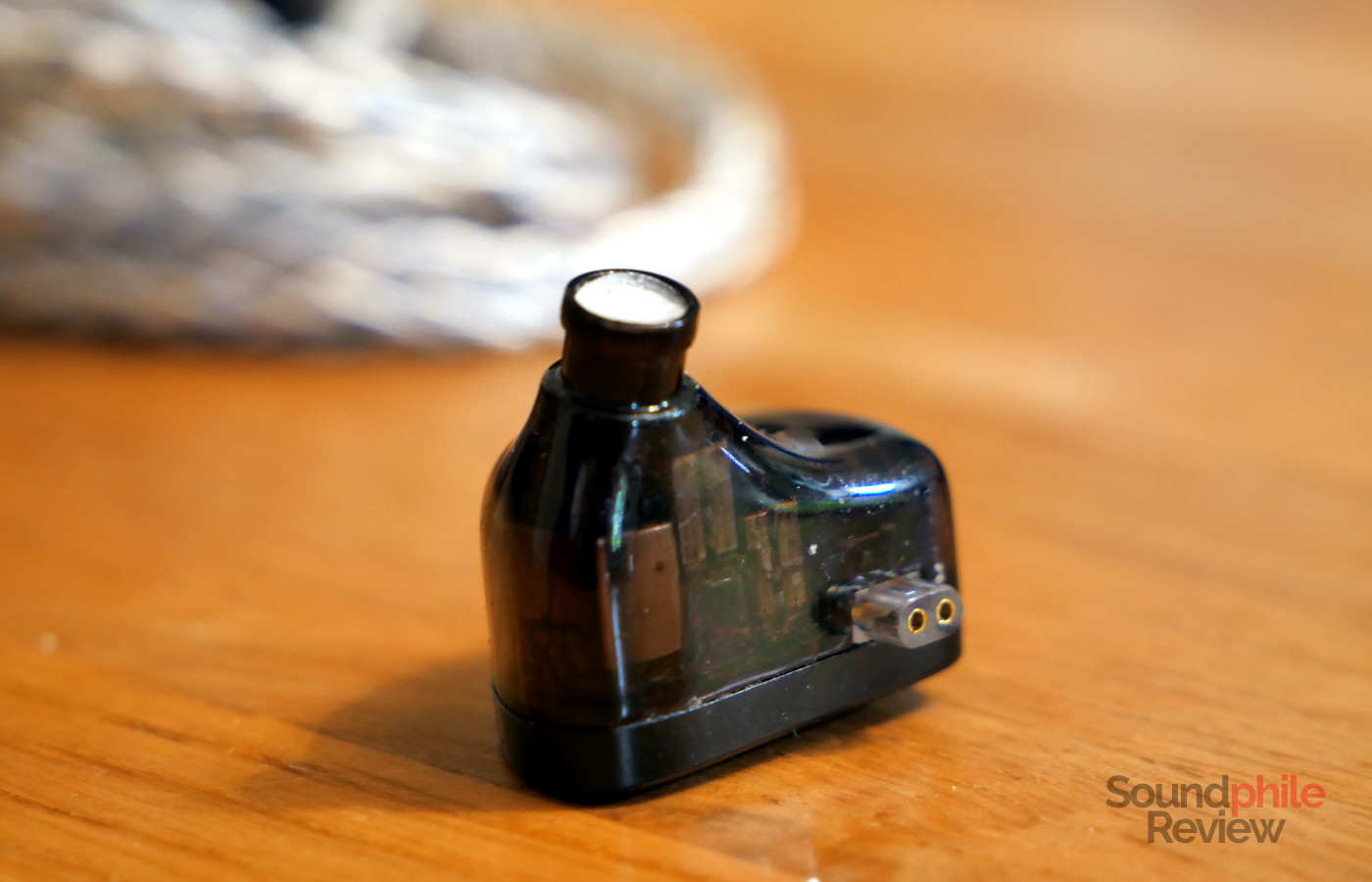
The top of the earpiece hosts four small switches which allow you to change the tuning of the earphones. There are also multiple venting holes: one is on one side of the faceplate, while another is on above the nozzle (which is contiguous with the shell and therefore made of resin).
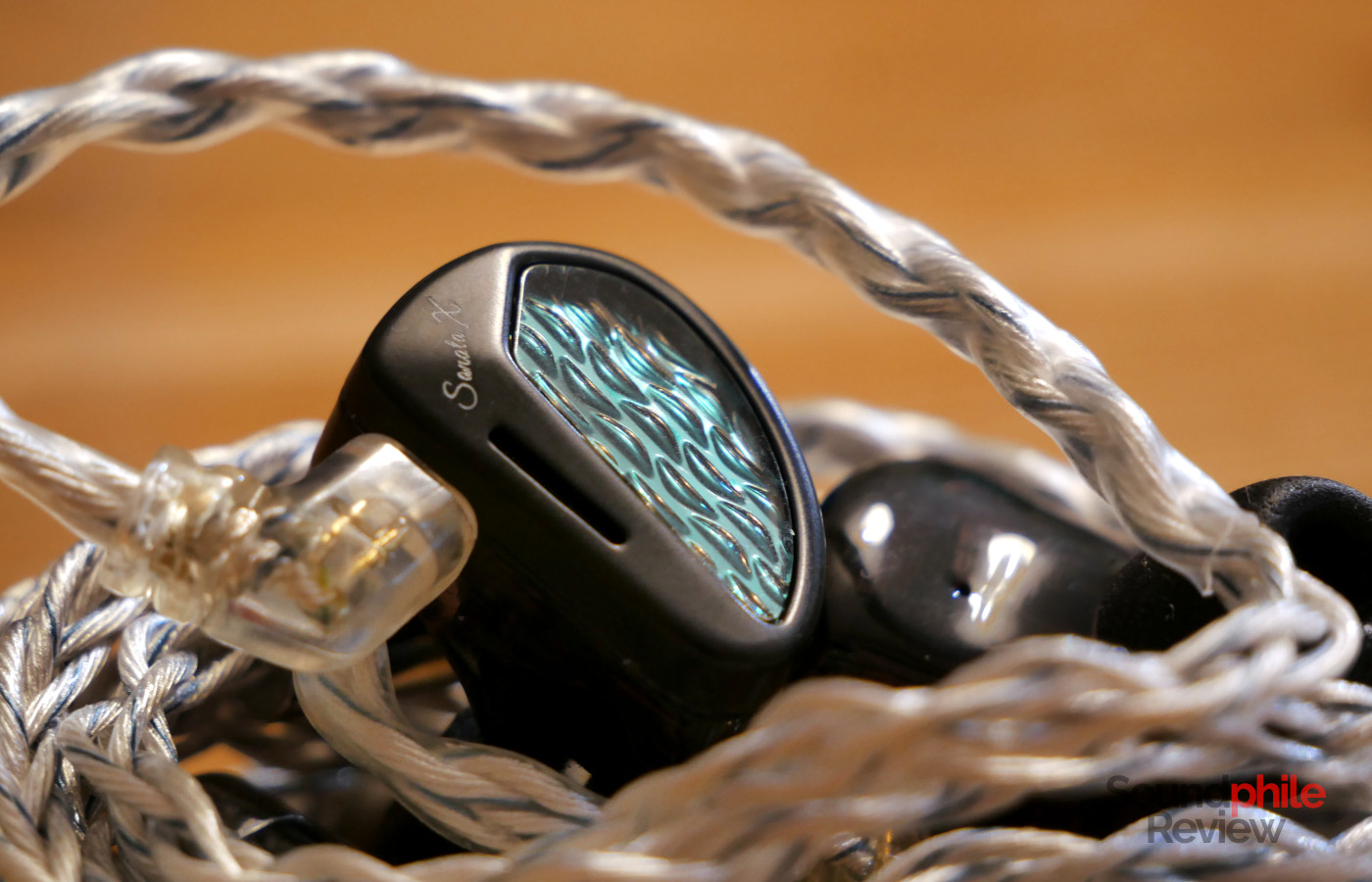
As the shells are filled with resin, they’re heavier than most other earphones are, although they’re still very light overall at just 7.65 g each (without the cable nor the eartips). They’re very well assembled with quality materials and show no apparent flaws.
In terms of comfort, I found the KZ Sonata X to be a mixed bag: while they are rounded, so that they don’t cause discomfort with corners pressing against your ears, they are quite big and therefore become uncomfortable over longer listening sessions. More than the earphones themselves, however, I found that it was the cable that was uncomfortable: the combination of weight and pressure applied on the pinna results in a wearing experience which quickly becomes fatiguing.
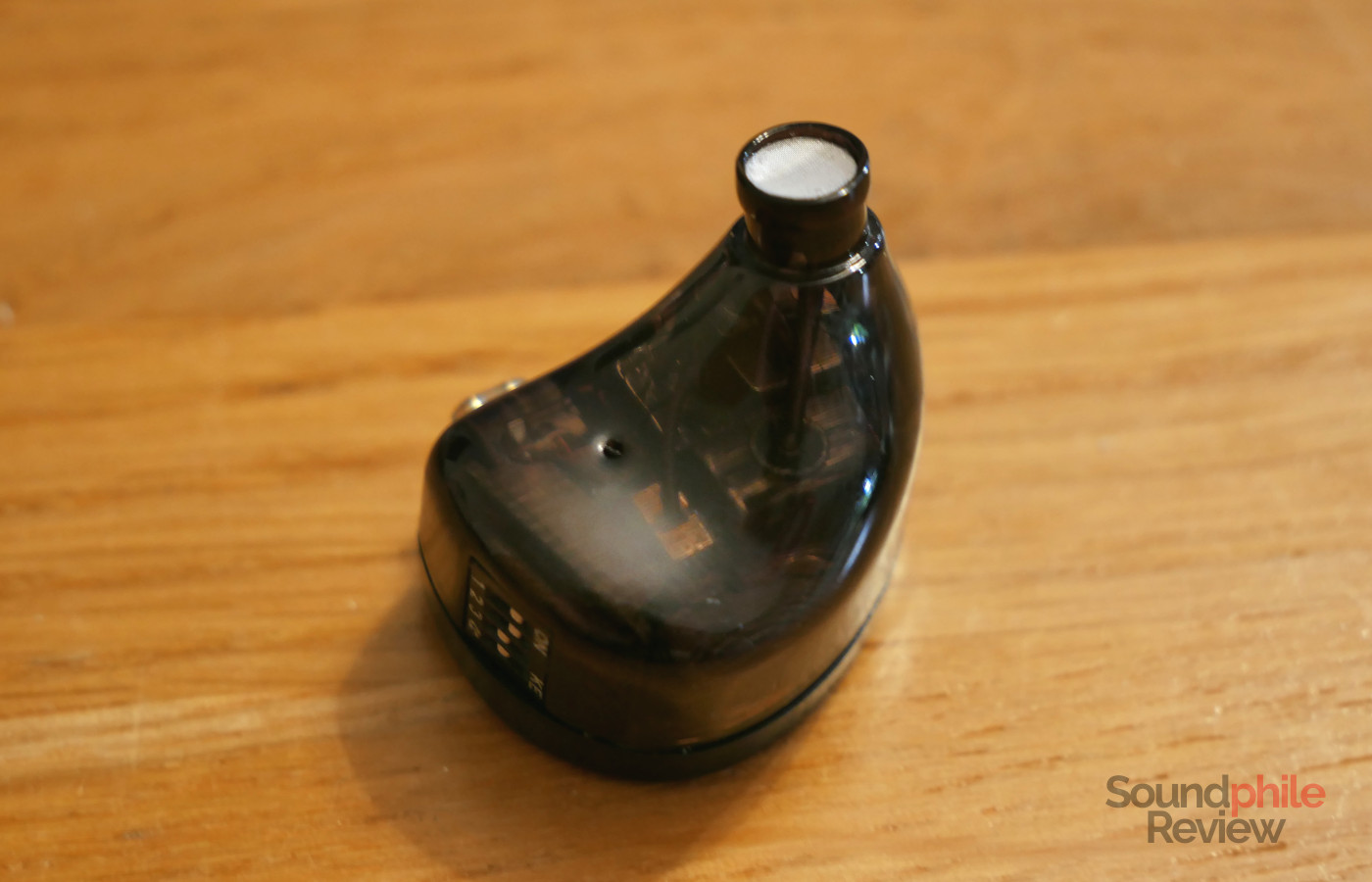
Passive isolation is sufficient, especially when using the foam eartips. As I am typing this, I can barely hear the sound of the keyboard despite it being relatively loud; that said, louder sounds are not stopped by the earphones and will require you to raise the volume.
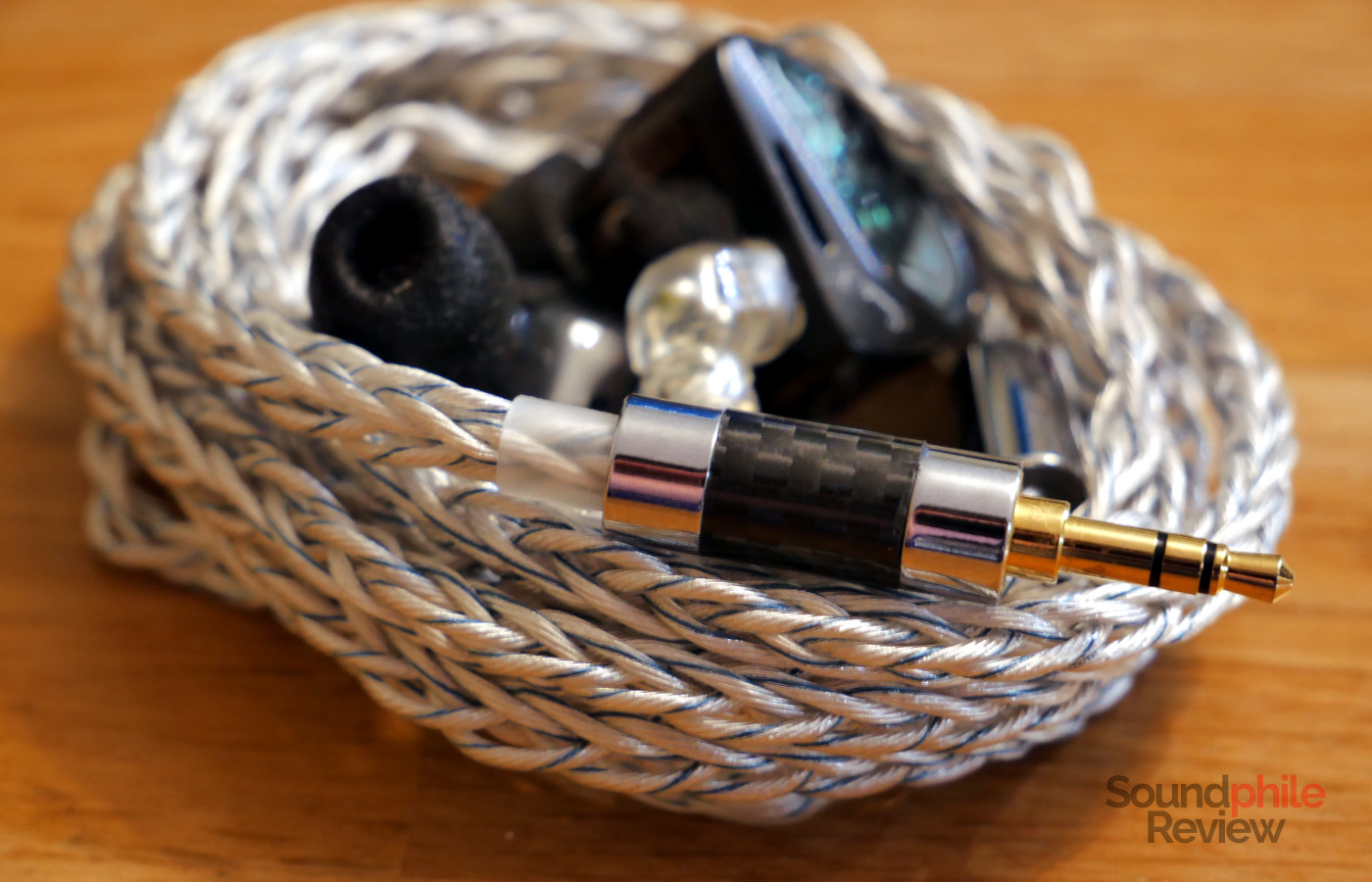
There are two cables to choose from: a thicker one which is only for listening, and a thinner one which includes an in-line remote with a microphone. The thicker one is made with 8 cores composed of silver-plated copper strands, with a single strand coloured blue; the cores are braided, and divide in two groups of four after the Y-split. All casings are made of metal, except for those around the QDC 2-pin connectors which are made of transparent plastic. It is a well-made cable, in fact better than I would expect at this price point, although it is also rather heavy. The thinner one, on the other hand, sports a single core which is quite flimsy but also rather light, and is overall more comfortable than the other.
Sound & Specs
I tested the KZ Sonata X using a few sources, including a Hidizs AP80 PRO MAX.
KZ Sonata X |
| Frequency response | 20 – 40,000 Hz |
| Impedance | 24-28 Ω |
| Sensitivity | 111 dB |
With an impedance of 24-28 Ω and a sensitivity of 111 dB, the Sonata X are very easy to drive and do not require an amplifier.
The four switches found on top of each earpiece are used to alter the behaviour of the electronic crossover, which allows for some level of control over the frequency response. There are fourteen balanced armatures per side: one 22955 that takes care of bass, two 29689 that reproduces lower midrange, one 30019 that reproduces upper midrange and lower treble, and ten 31736 (divided in five couples) that are in charge of treble.
The soundstage is relatively wide, extending from the extreme left to the extreme right, and with a sensation of space that makes you feel like you’re in a large room with the instruments placed near you and the space extending around you. There is, however, almost no depth, so that instruments are placed on a plane running between your ears. Imaging places the instruments on the full left-right spectrum, although it is limited by the lack of depth. Instrument separation is excellent as instruments are very easy to single out in the mix.
The following analysis is based on the stock configuration with all switches set to “disabled”; the effect of each switch will be detailed at the end of this section.
Bass is quite reserved and is in line with a neutral representation. It is therefore quite tame and only has a modicum of emphasis on the lowest frequencies, below 50 Hz, which give the sound a bit of “oomph” in the sub-bass area (evident in tracks like The Prodigy’s Smack My Bitch Up) while keeping the rest relatively reserved. There is a surprisingly smooth line that goes from 20 Hz up towards the midrange, without bumps nor dips, which gives bass a very clean and clear-cut appearance. Thanks to the use of balanced armatures, bass is very fast and reproduces transients very convincingly. As a side effect, details are abundant and very clearly presented. On the other hand, however, there is almost no physicality.
Midrange is the only area which presents some deviation from what I would consider an otherwise almost perfectly neutral tuning: there is, in fact, a small bump around the 3 kHz mark which lends some brightness and added presence to many instruments, especially brass ones like trumpets. They sound more vivid and further forward than what ideal neutrality would dictate, though this effect is limited and does not alter the overall tonality. Midrange often sounds front and centre in the mix, especially the middle region, which makes most instruments (pianos, guitars, human voices) appear as the unquestioned stars of the show. Just like with bass, midrange offers remarkable speed in its presentation of transients, with an excellent level of detail in tow, though with very little physicality.
Treble is present in the mix and clearly audible, but I find it to never be fatiguing. It manages to straddle that very fine line between “too little” and “too much” so that it adds air to the sound without becoming fatiguing nor sharp. It is, in fact, one of the best examples I’ve found lately of this, as I can use the Sonata X for hours without getting any treble-induced fatigue – which I realise I am progressively more subjected to. It should therefore be very safe for treble-sensitive folks who still like some air. There is good extension, too, although the highest frequencies see a relatively sharp drop. Overall, treble is very well balanced, both looking at the overall tuning and looking at its internal balance, with a couple of drops in the 8-10 kHz region which are probably responsible for that relatively laid-back presentation. There is a great level of detail throughout, which occasionally extends to micro-detail territory.
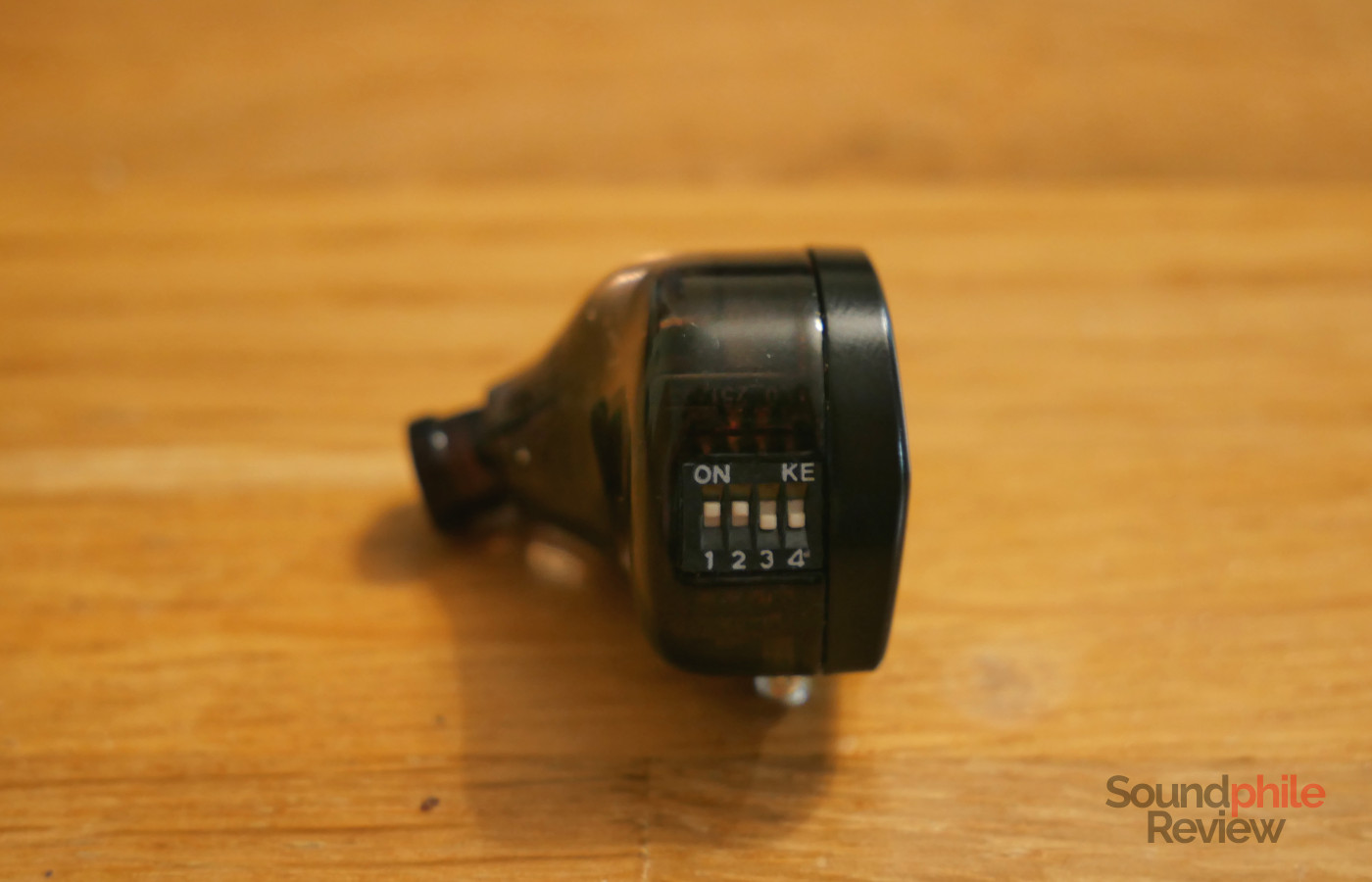
The four switches have the following effects:
- Switches 1 and 2 boost bass below 250 Hz, with emphasis increasing as the frequency decreases. They have the same effect, which is meant to be stacked to give you more control on how much bass you get;
- Switches 3 and 4 reduce treble presence above 5 kHz, again with a stacking effect that gives you control over how much reduction is effected.
Overall, both sets of switches have a limited effect which is not always easy to hear, as it is limited to just a couple of decibels in some areas. This means that the adjustments available are overall a way to impart smaller changes rather than bigger alterations to the nature of the tuning; you can think of it as minor refinements to what’s already a finished product rather than major variations. I personally find that enabling switches 1 and 2 gives the best results.
Final Thoughts
The KZ Sonata X is one of the most surprising earphone models I have tested in recent years. It is very well balanced in all its components, which makes it suitable for a wide variety of genres, from jazz to electronica. They’re a significant departure from the traditional KZ V-shaped sound, and a very welcome one: the Sonata X are true all-rounders that offer a very carefully balanced signature that comes with good technical ability as well. The slight emphasis in the 3 kHz region gives the sound a slight brightness which works really well and gives the earphones some personality. The switches allow you to change that slightly, so that you can add a touch of bass or remove some treble.
The only aspect that could be improved from my perspective is comfort, although that’s deeply subjective and you may find that the Sonata X are perfectly comfortable. That said, I can’t help but praise these earphones as they are very competent without breaking the bank. They’re a great option under $200, especially if you are looking for earphones featuring neutral tuning.


