Twistura is a new brand that targets the affordable range of the market, with a few products below $200. The Twistura D Minor sits at the very entry level of the company’s offer, with a sub-$40 price that is however not at all reflective of the earphones’ sound quality.
Disclaimer: this unit was provided by Aoshida Audio for the purpose of this review. They retail for $31.90. Additional information on the official website.
TL;DR: recap
| Pros |
Cons |
| + Unique design
+ Great build quality + Great technicalities + Superb speed and detail + Relatively balanced signature |
– Very weird fit
– Almost no passive isolation |
Rating: 7.5/10
Packaging & Accessories
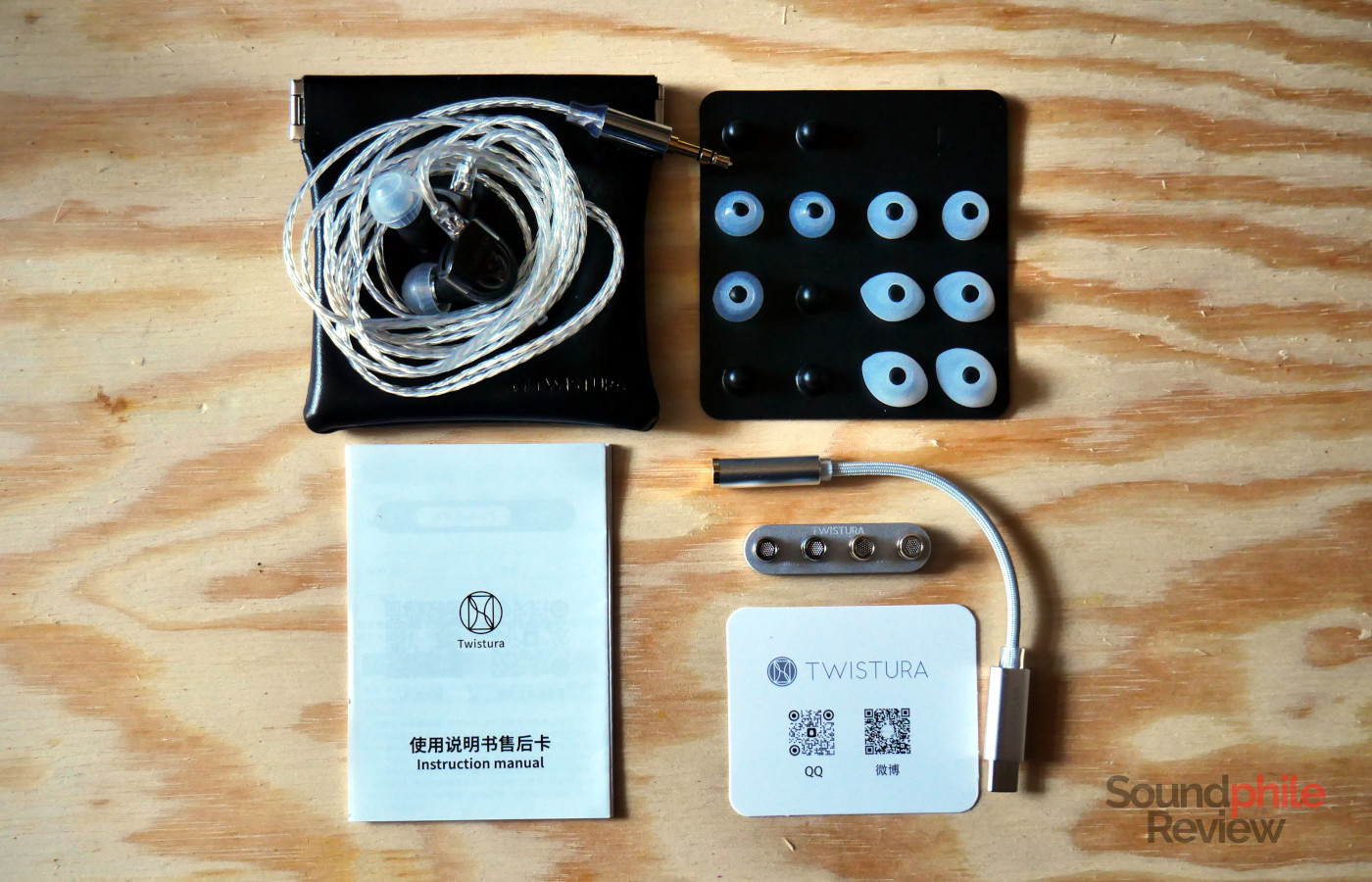
Despite the low price, the Twistura D Minor include a significant amount of accessories. On top of the usual silicone eartips (in S/M/L sizes, and in “liquid” silicone and harder silicone), there are a pouch and a neat USB-C to 3.5 mm DAC cable (which is not just a USB-C to 3.5 mm adaptor, as some cables are, but it has a full DAC in it).
Design & Comfort
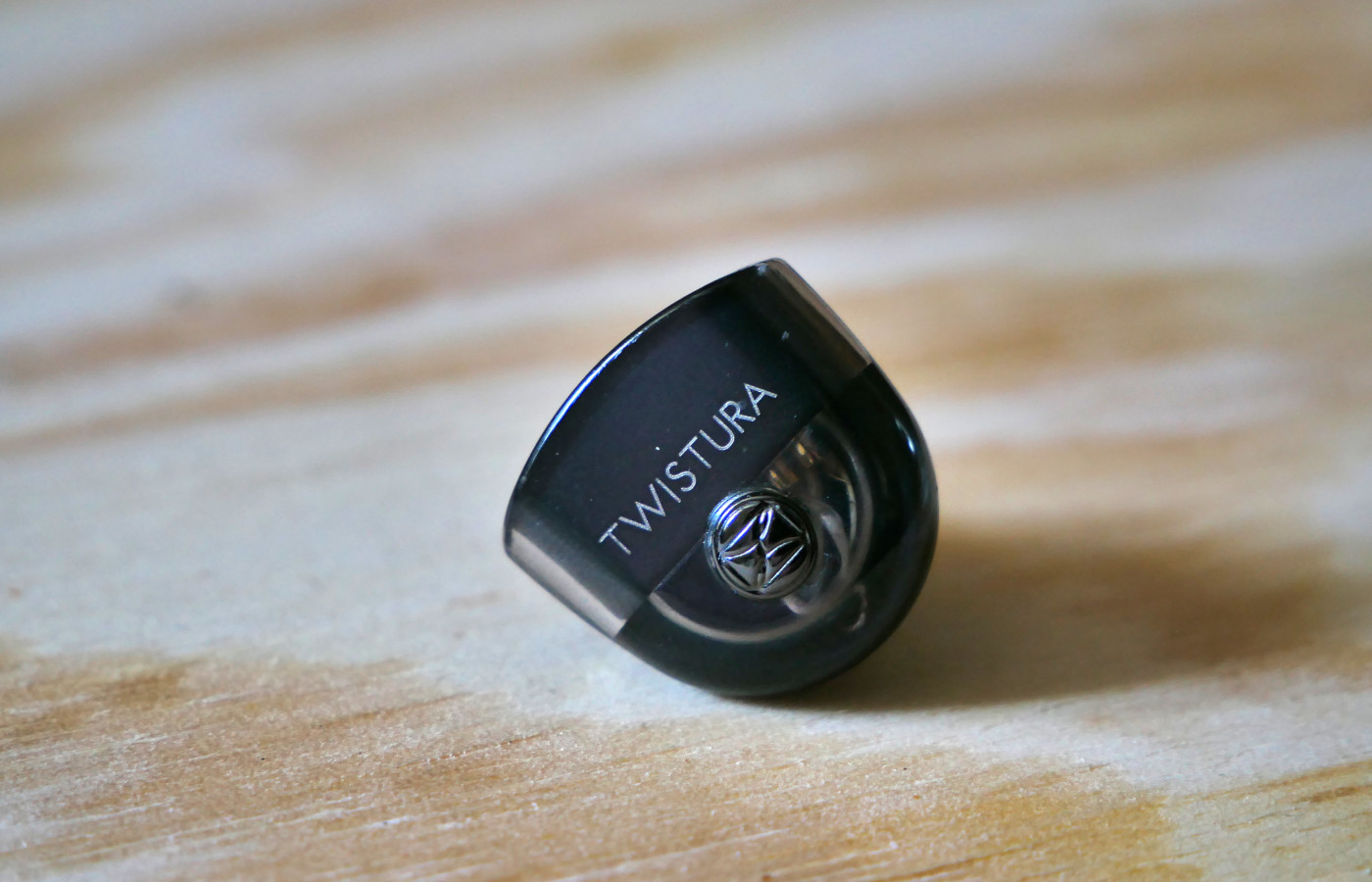
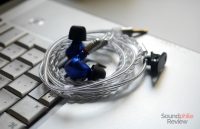
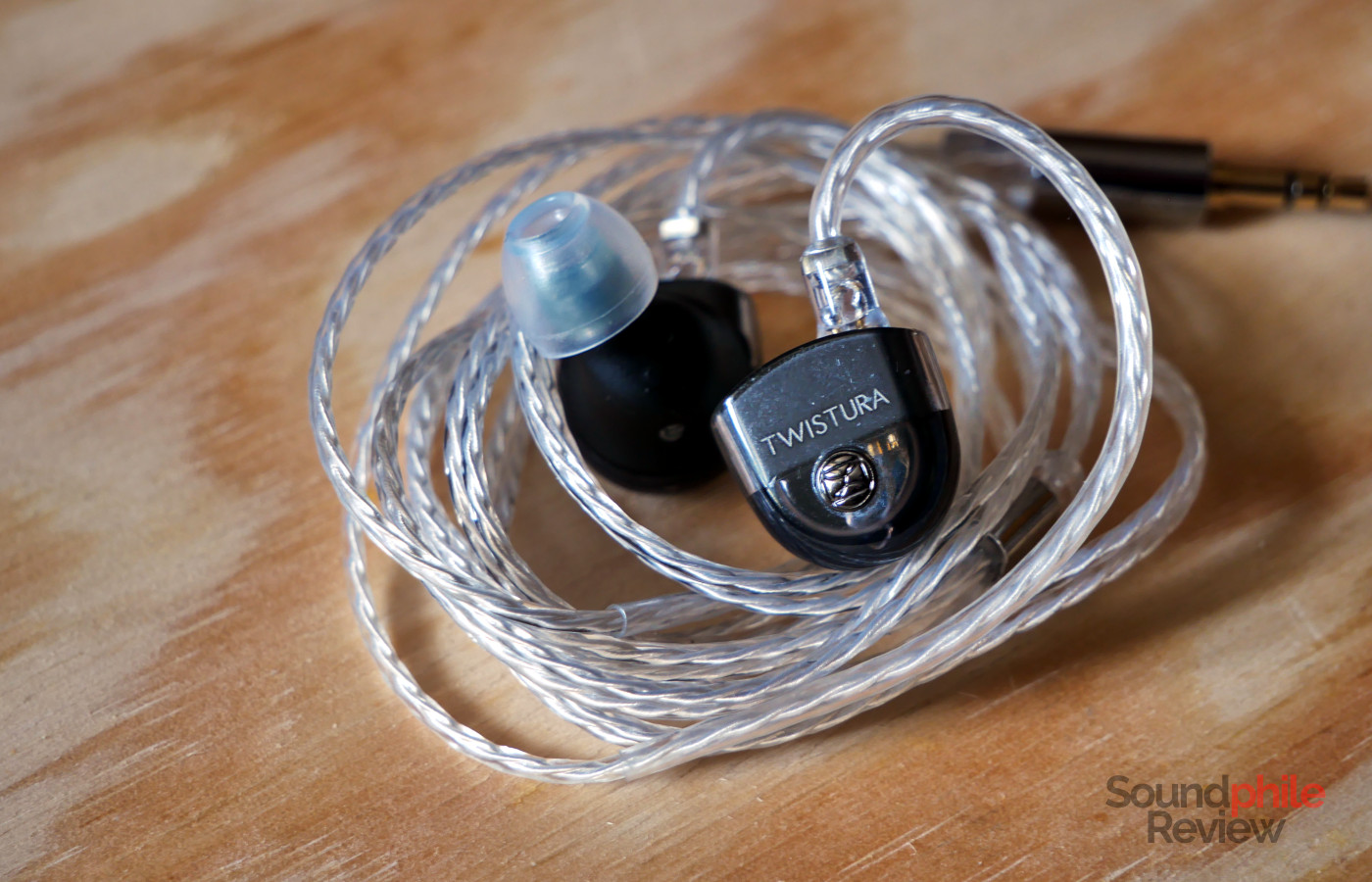
The Twistura D Minor have a rather unique design: the shells are D-shaped with a zinc alloy main body and a semi-transparent plastic faceplate. The main section of the body, which is basically the section that actually goes into your ear, is metal; the whole “front” section is made of semi-transparent black plastic which seems to “hug” the metal and wraps around it. The Twistura name is printed on (or incised onto) the metal inside the plastic and this creates a nice two-level depth. Right next to it there is a metal bit with the company’s logo, this time on the outside. It is a design that sets the D Minor apart from the masses of IEM-like earphones on the market.
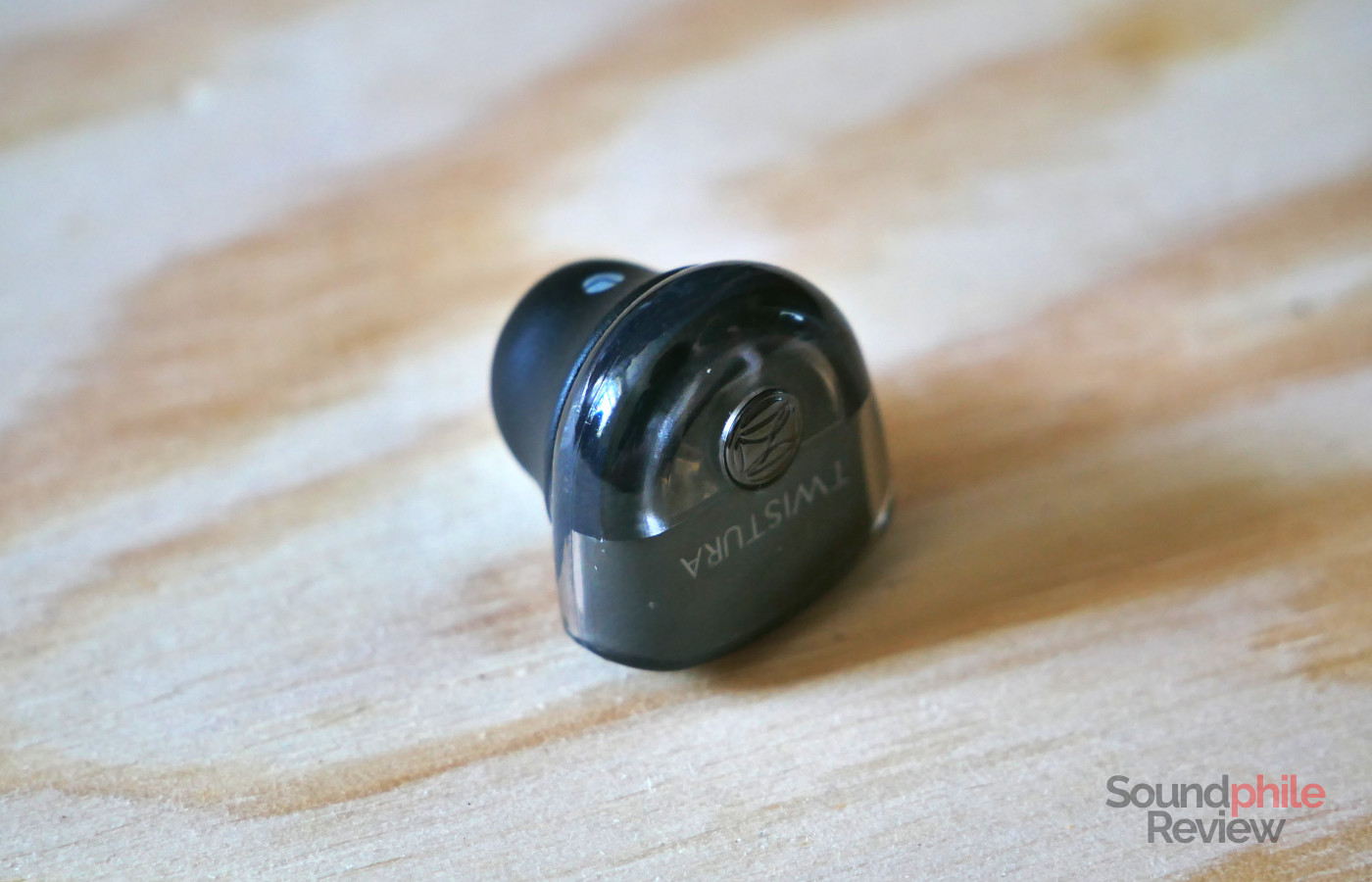
Build quality is exceptional for a sub-$50 model, so much so that I wouldn’t be able to tell that the D Minor are so affordable just by looking at them. Twistura has done a great job in this regard.
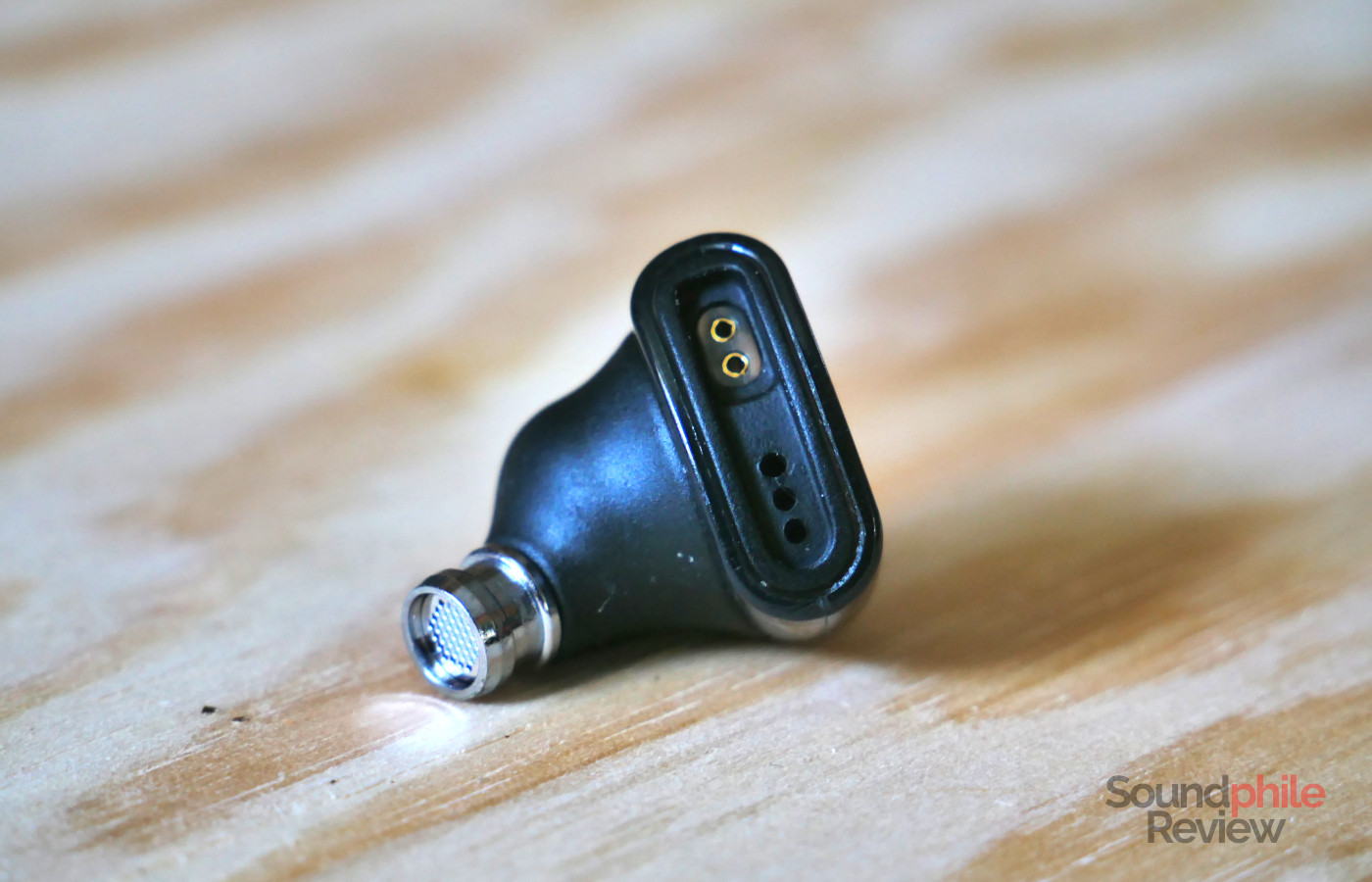
The way you wear the Twistura D Minor is quite different that what you would expect; the nozzle is shaped in such a way that the faceplate is completely outside of the ear. This makes for a very unusual insertion, as I am used to the nozzle being towards the front, whereas in this case it is in the middle. I also found that I need to insert the earphones and then twist them backwards, so that the nozzle points slightly upwards and fits inside my ears. Once I found the correct pair of eartips (the largest one) and I got used to how unusual it felt to insert the earphones that way, the fit was actually really comfortable. In fact, I could barely tell that the earphones were there! Still, finding the right position was very difficult and required a lot of adjusting.
One thing I also experimented with is switching the two channels, so using the left hand side earpiece with the right hand side cable and vice-versa. This actually works really well and I find it even more comfortable than when using the correct pairing, although it’s still not perfect. I found that the “liquid” silicone tips (which obviously isn’t liquid at all, but it’s thin and very soft) were the best choice, although I had to choose the largest size in order for the earphones to fit well (and a larger size would probably be even better, considering how the shape of the earphones itself does not allow for deep insertion).
In terms of passive isolation, the Twistura D Minor only removes very low-intensity noises with good effectiveness, while it is overall very limited and won’t shield you from other noises; in fact, most of the time it feels like I am not wearing the earphones at all, as the isolation they provide is severely limited.
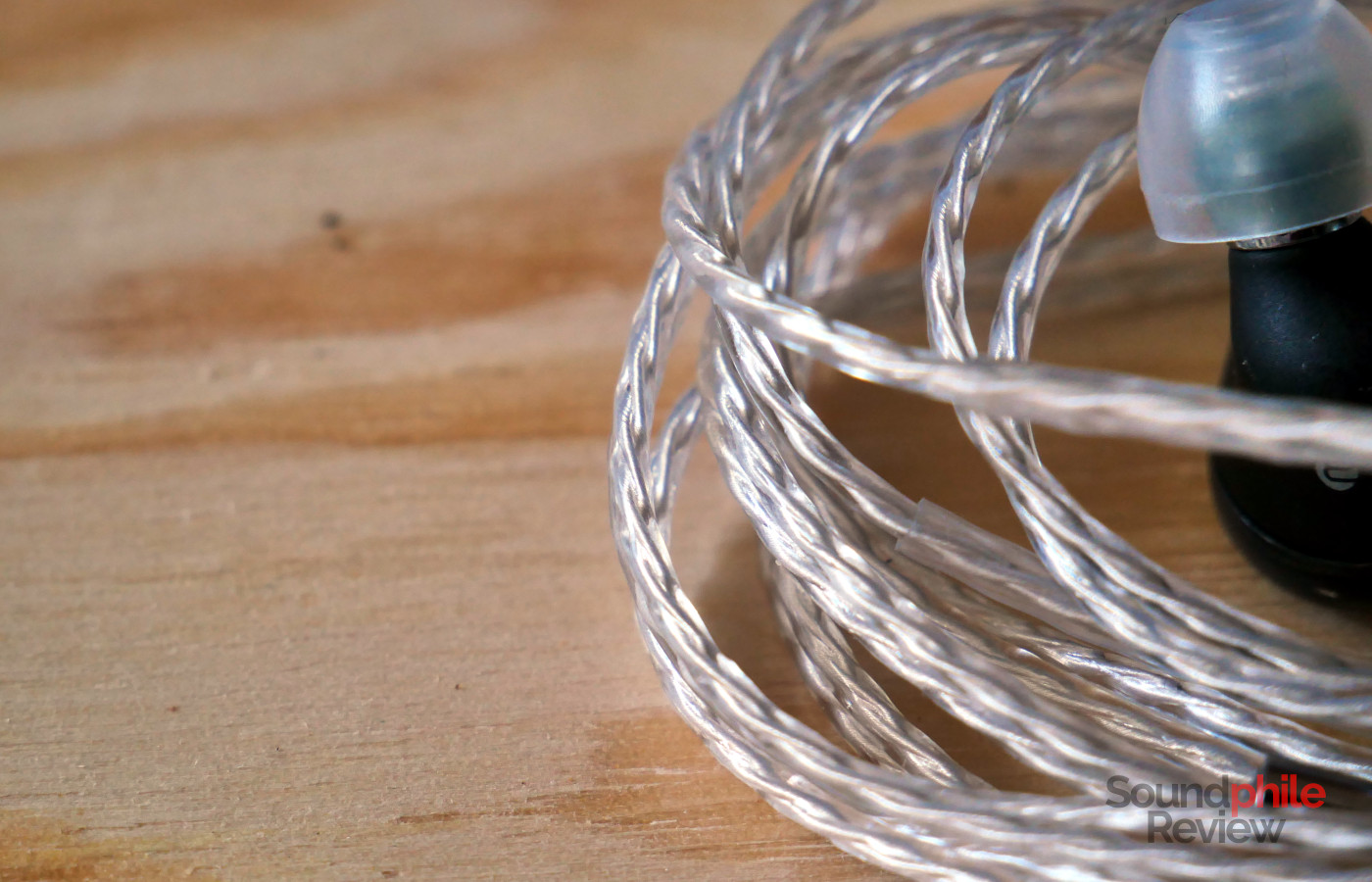
The cable uses four thin silver-plated oxygen-free copper cores divided in two couples, in which the cables are individually sleeved and then twisted around each other; each couple is enclosed in a larger plastic sleeve. The bigger sleeves run side by side between the jack and the Y-split, and then separate into a cable for each channel. Although pairing the two sleeves between the jack and the Y-split should reduce tangling and coiling, in actuality the cable does tend to coil up quite a bit.
Sound & Specs
I tested the Twistura D Minor using its own DAC cable as well as with an xDuoo XD-05 Bal.
Twistura D Minor |
| Frequency response | 15 – 37,000 Hz |
| Impedance | 30 Ω |
| Sensitivity | 108 dB |
The soundstage is quite wide: it feels like I am in a relatively large space, like a conference room, with the instruments around me and the sound reverberating throughout the space; it feels spacious and wide, even with some depth. Imaging is a mixed bag: it is very good when it comes to assigning a place to an instrument, but at the same time it is lacking when it comes to creating the illusion that instruments are placed around you; there is not really a central position, as an example, and instruments sound like they’re either coming from both left and right or they’re inside your head. Instrument separation is nothing short of excellent, with each instrument clearly detached from the others in a way that allows you to follow it individually, even in complex and layered tracks.
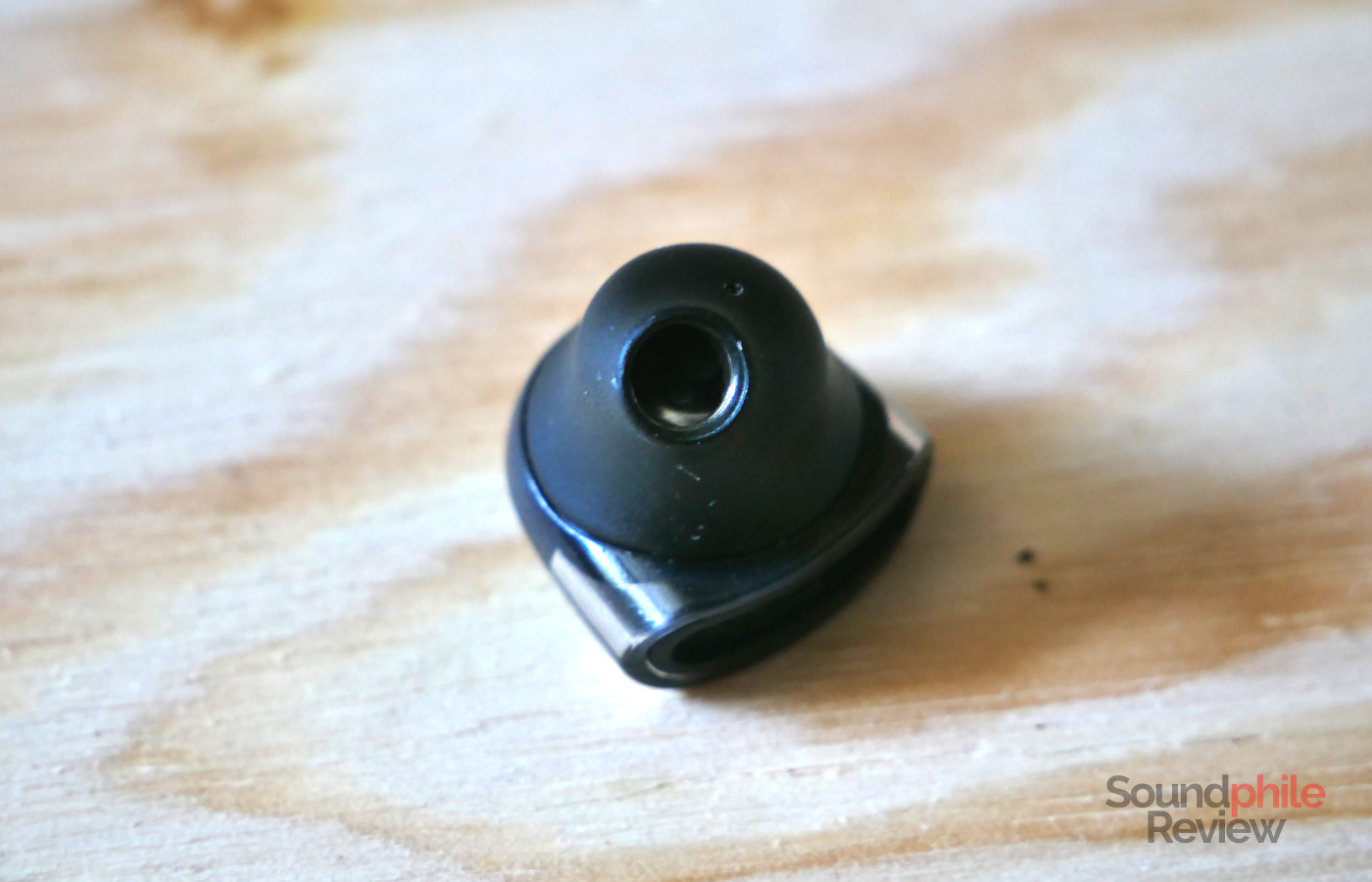
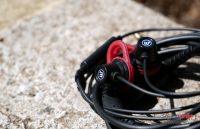
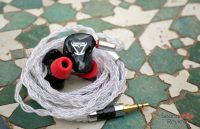
The Twistura D Minor comes with a set of replaceable nozzles which you can use to alter the tuning; the labels for the nozzles are unfortunately only in Chinese, but thankfully modern technology makes this a non-issue as it is easy to translate the labels. It turns then out that the blue nozzles are those meant for pop music, and the red ones for classical. The blue filter makes the signature more V-shaped by boosting both bass and treble, while the red filter takes mids and treble down a notch (which, interestingly enough, makes things sound very hollowed out and boxy, and makes treble more apparent in many ways!).
The following is based on the “reference” (black) tuning nozzle.
Bass is present enough to emerge clearly in the mix, although it sits behind the mids and especially treble. Still, it is appreciable in its depth, which extends to the lowest notes, although the very bottom of the curve sees a slight reduction in presence. Not by much, but this makes mid-bass the dominant area, which overall counterbalances the treble and makes for a U-shaped tuning. What I really liked about bass is the fact that speed is very high, which in turns makes details pop out, so that it has a palpable texture (and I say “palpable” in the sense that there is good physicality to it, too).
Midrange is quite V-shaped, in the sense that the lower area is emphasised and followed by an almost-recessed middle one, topped by a relatively emphasised upper region. The latter makes plosive and sibilants in voices as well as high-pitched instruments stand out from the mix. Although it is not what I would call “neutral”, this tuning is still balanced and it does not hide nor excessively emphasise any instruments. The lower area is prominent enough that it is quite evident in the opening to The Sword’s The Sundering, just like the lead electric guitar in the solo immediately afterwards shines without becoming aggressive. The level of detail is genuinely impressive at this price range, as you can hear very minute details, and transients are surprisingly fast.
Treble is quite emphasised in the signature and is often in the front row: cymbals are nearly always the predominant instrument in the signature, ahead of everything else, although they’re never harsh nor aggressive. After the dip in the middle of the midrange, there is a constant climb which continues in treble territory until about 5 kHz, where there is the top of the bump; there are then a couple of peaks, around 9 kHz and 13 kHz, which add a lot of energy and air without becoming aggressive. As with the other areas, there are a lot of details here, too, with very minute bits emerging quite clearly.
Final Thoughts
In many ways I am impressed by the Twistura D Minor. They offer fantastic sound quality, at the level I would expect around the $100 mark or even higher up, while also costing less than $50. They are genuinely impressive: transients are fast and immediate, the soundstage is wide and spacious, instrument separation is great, the sound signature is well balanced. What more can you ask?
Well, there is one thing, and that’s a better design that makes finding the proper fit less awkward. That genuinely is the only serious drawback of the D Minor. Come on now: they even come with a USB-C DAC! I heartily recommend them as they are a seriously impressive product for just a bit more than $30. Whether you are looking to kickstart your collection or to add a super entertaining unit to your stable, the Twistura D Minor is a great option to consider.