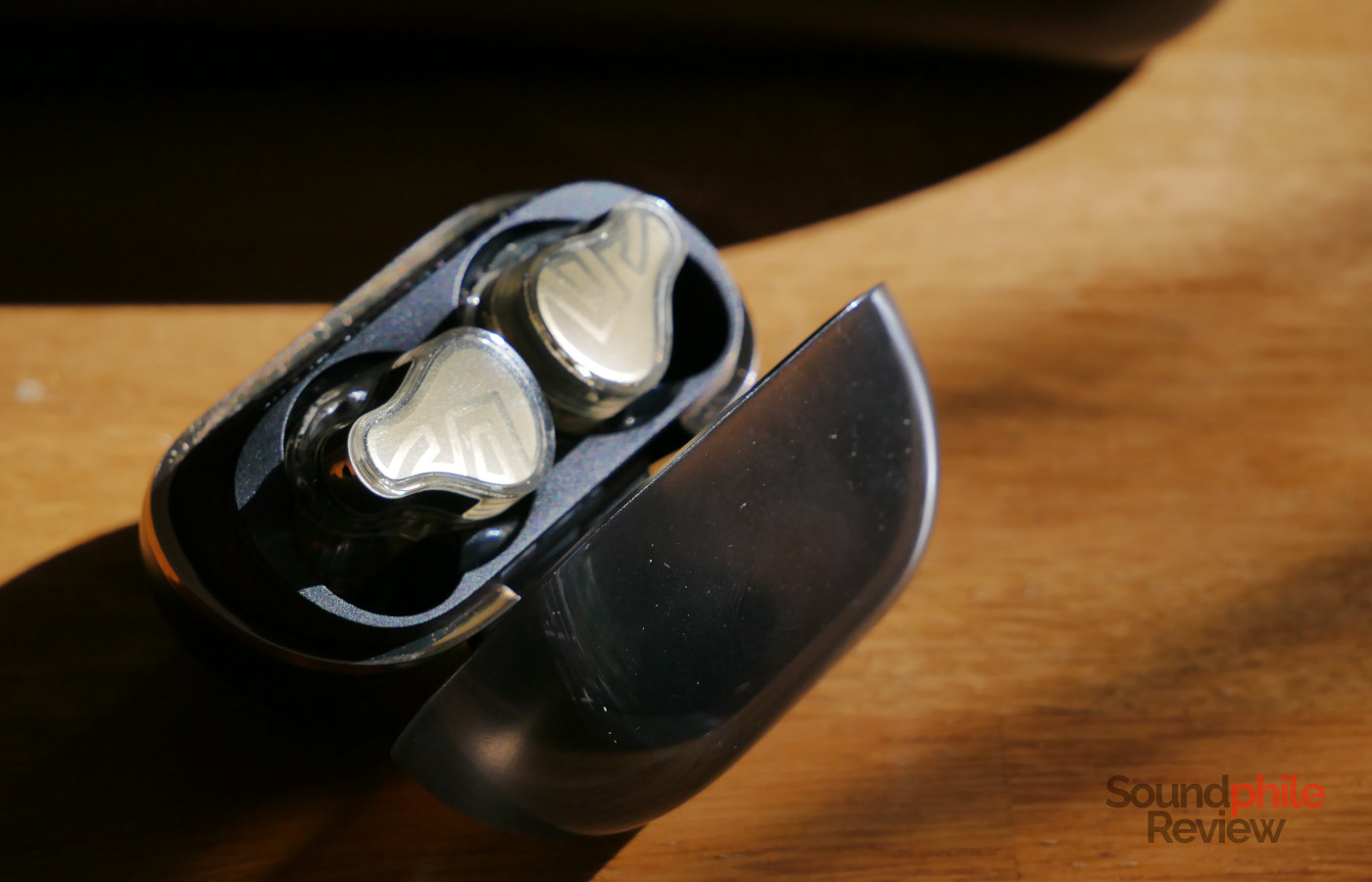
“High fidelity” and “Bluetooth earbuds” are almost invariably depicted as opposites, due to limits in the way earphones are built if not for Bluetooth limitations. Soundpeats has been trying to change this with their H-series earphones, which in their intentions are meant to offer higher sound quality especially for audiophiles. The Soundpeats H3 are the latest in the family and offer a large amount of high-quality codecs, together with ANC that rivals market leaders. They also present several issues which make them less attractive than they could be, especially at the price they are offered at.
Disclaimer: Soundpeats kindly provided a free unit for this review. The H3 retail for $149.99. Additional information on the official website. You can get 10% off until 23 April 2026 using the code SOUNDPHILEH3.
TL;DR: recap
| Pros |
Cons |
| + Nice transparent design
+ Very physical sound + Super-effective ANC + High-quality codecs + The case supports full-size eartips |
– Poor passive isolation limits ANC effectiveness
– Not too comfortable – Poor signal range – Limited battery life with both ANC and LDAC enabled – High minimum volume – Registration is mandatory to use apps – Apps do not work offline |
Rating: 6/10
Packaging & Accessories
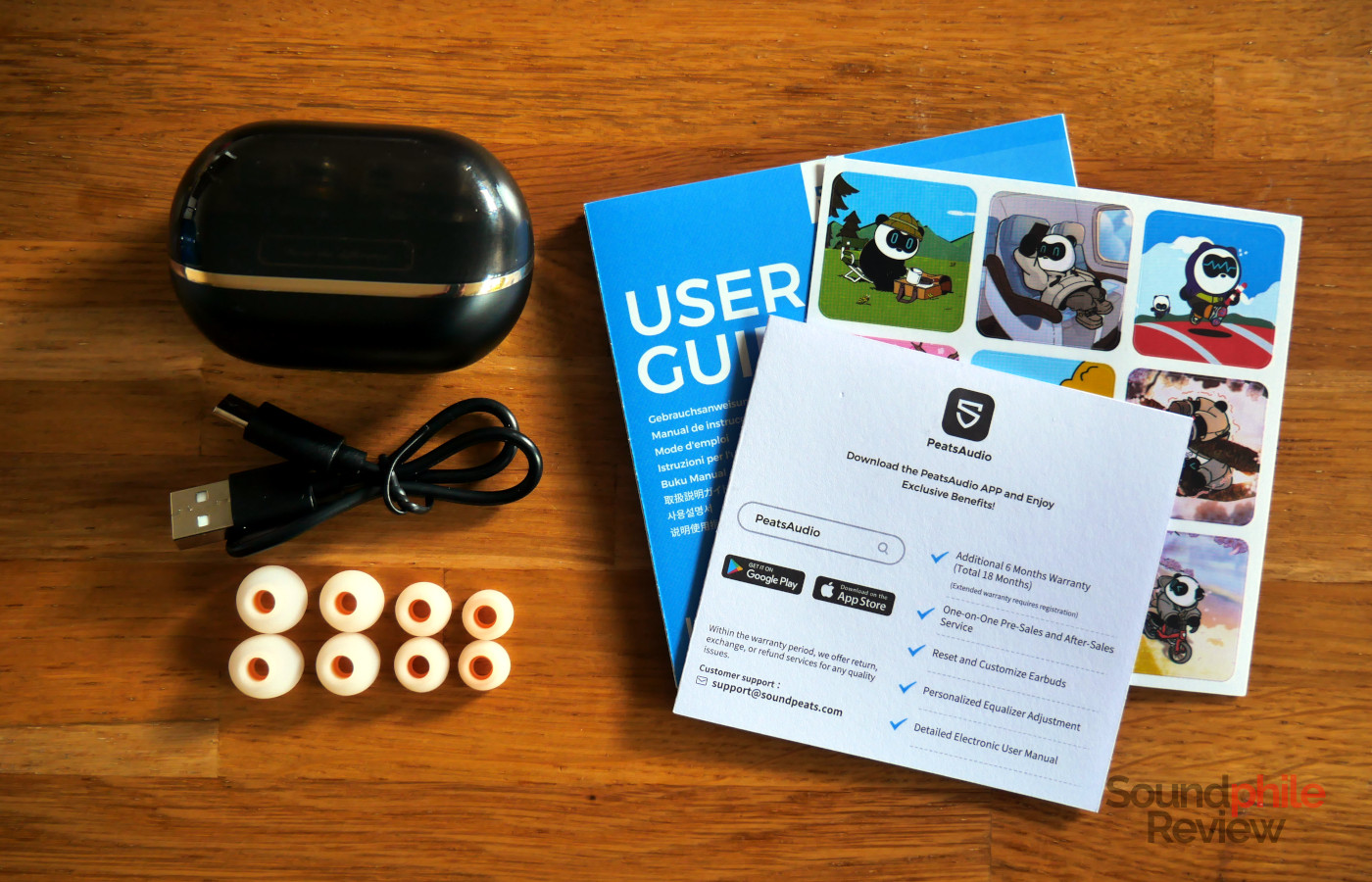
The Soundpeats H3 comes with a set of five eartip sizes, a USB to USB-C cable, a manual and a set of stickers.
Design & Comfort
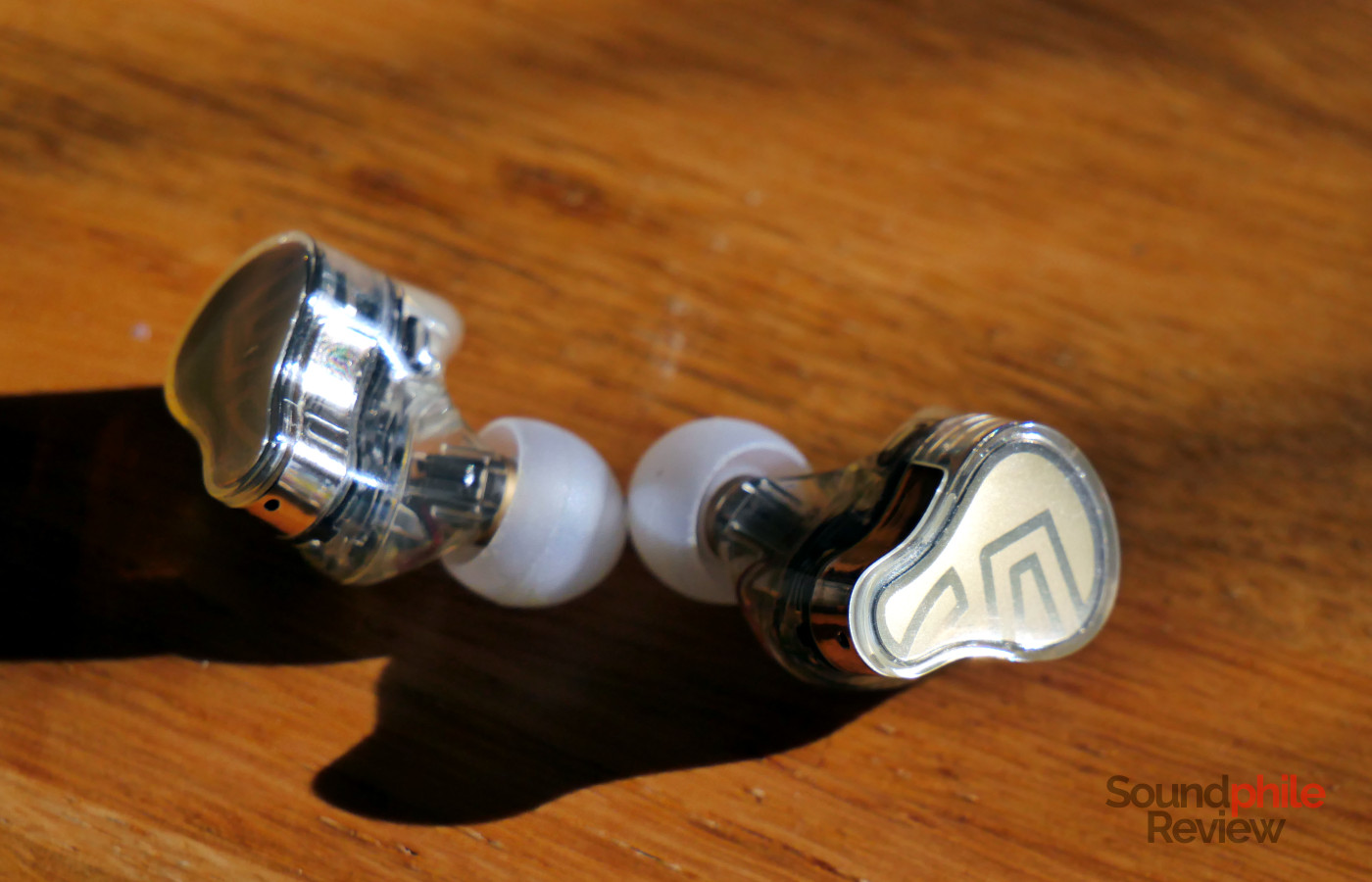
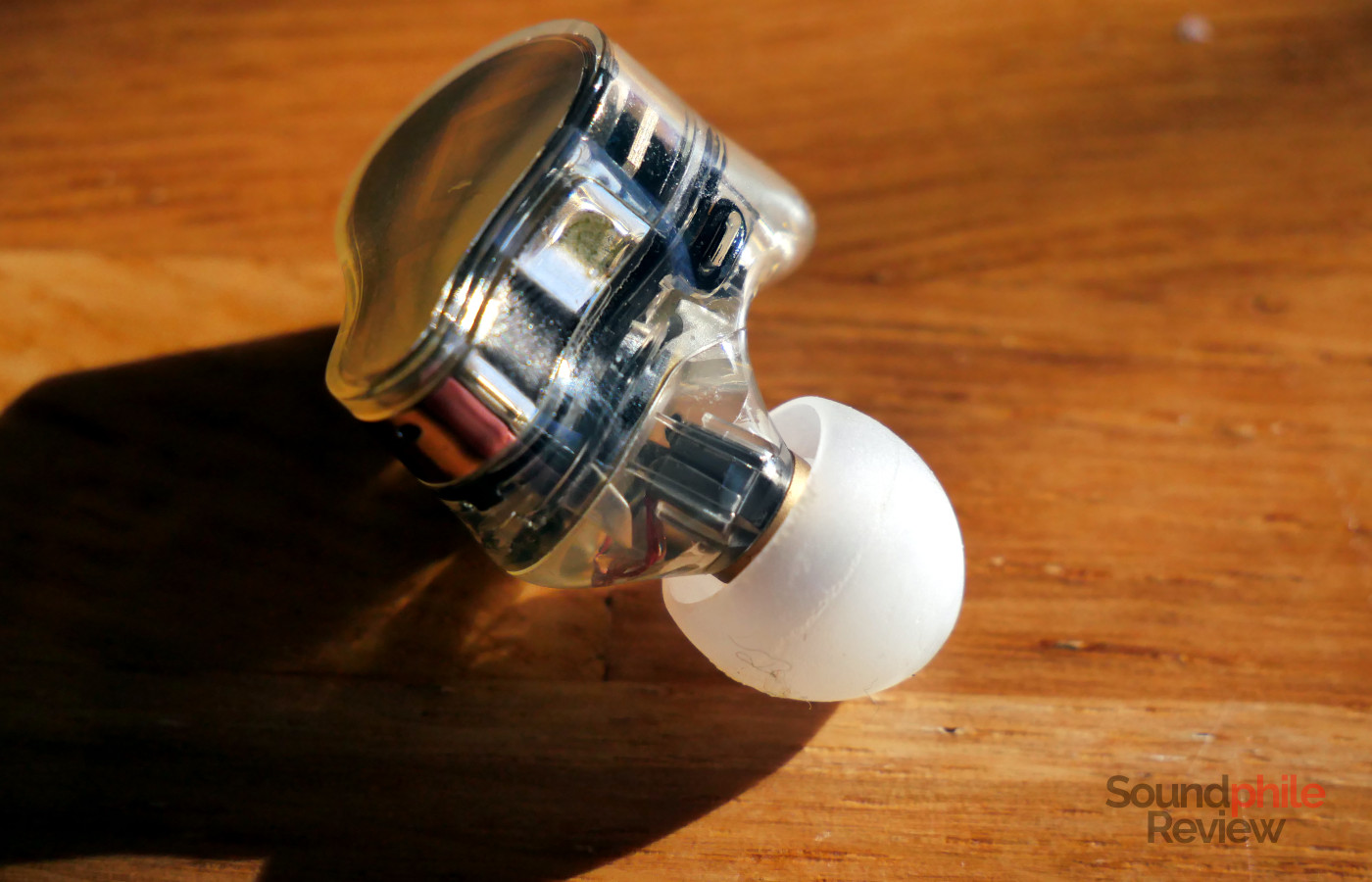
I love the so-called Y2K aesthetics, which features semi-transparent and transparent plastic showcasing the insides of electronic devices, so I appreciate Soundpeats’ choice to use transparent plastic for the earpieces. The faceplate has a gold-coloured background with Soundpeats’ “S” logo on it, and the lower section is covered by a silver cover, but the rest of the shell is made of completely transparent plastic that shows the entire inside of the earphone. The nozzle is made of metal.
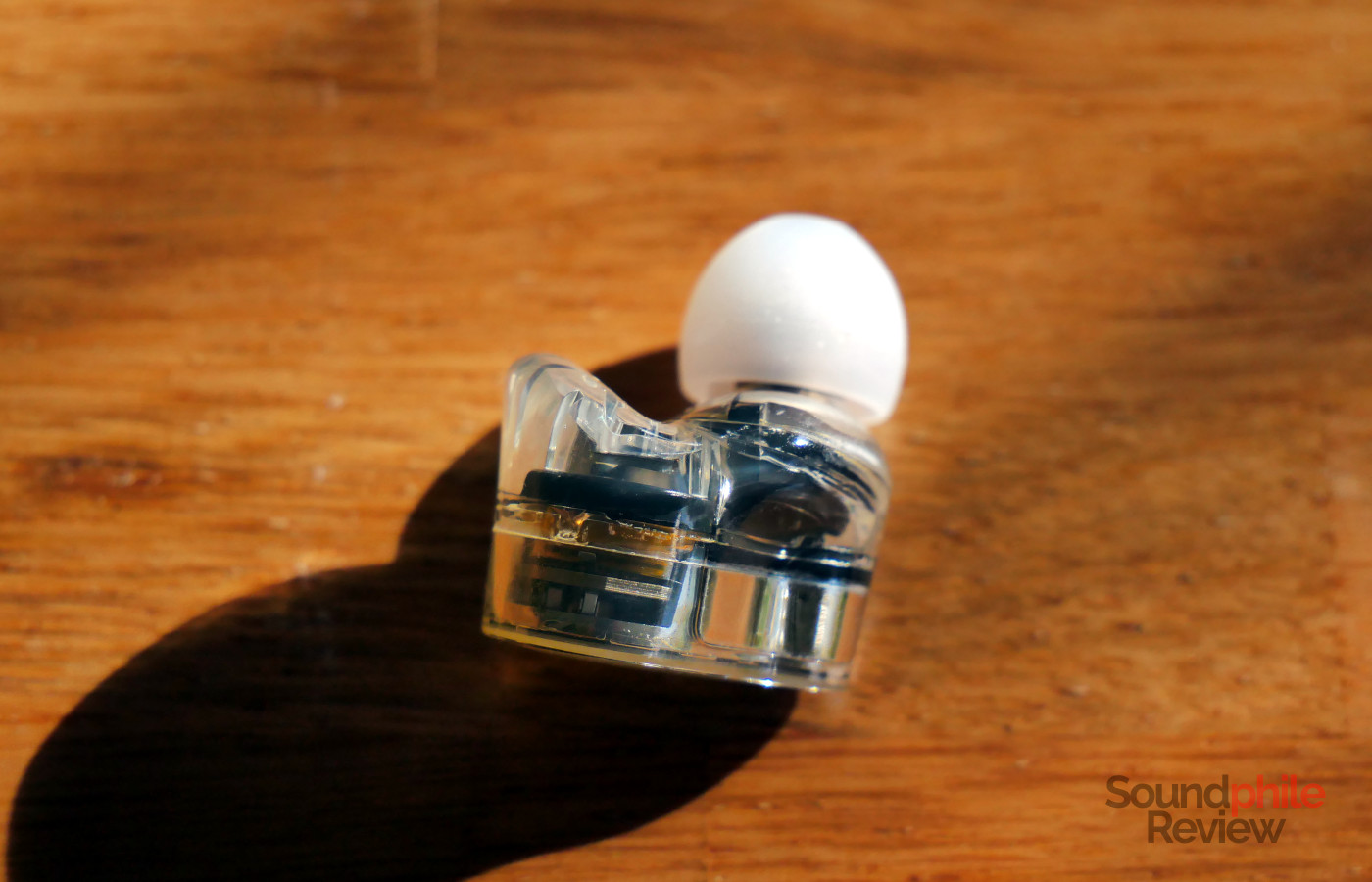
Although there are holes for the microphones and the venting (one on the bottom, one of the top, and one on the front-facing side), the Soundpeats H3 are IPX5-certified, which means that they will resist splashes of water and liquids, but won’t survive immersion.
The shells are rounded and shaped so that they fit neatly inside the ear, but I found comfort to be only average: after less than an hour wearing them, they started feel uncomfortable as they were pressing against the antihelix – despite me having relatively large ears. I would therefore say that the H3 will prove comfortable only if you have large ears, especially if you plan to use them for extended periods of time.
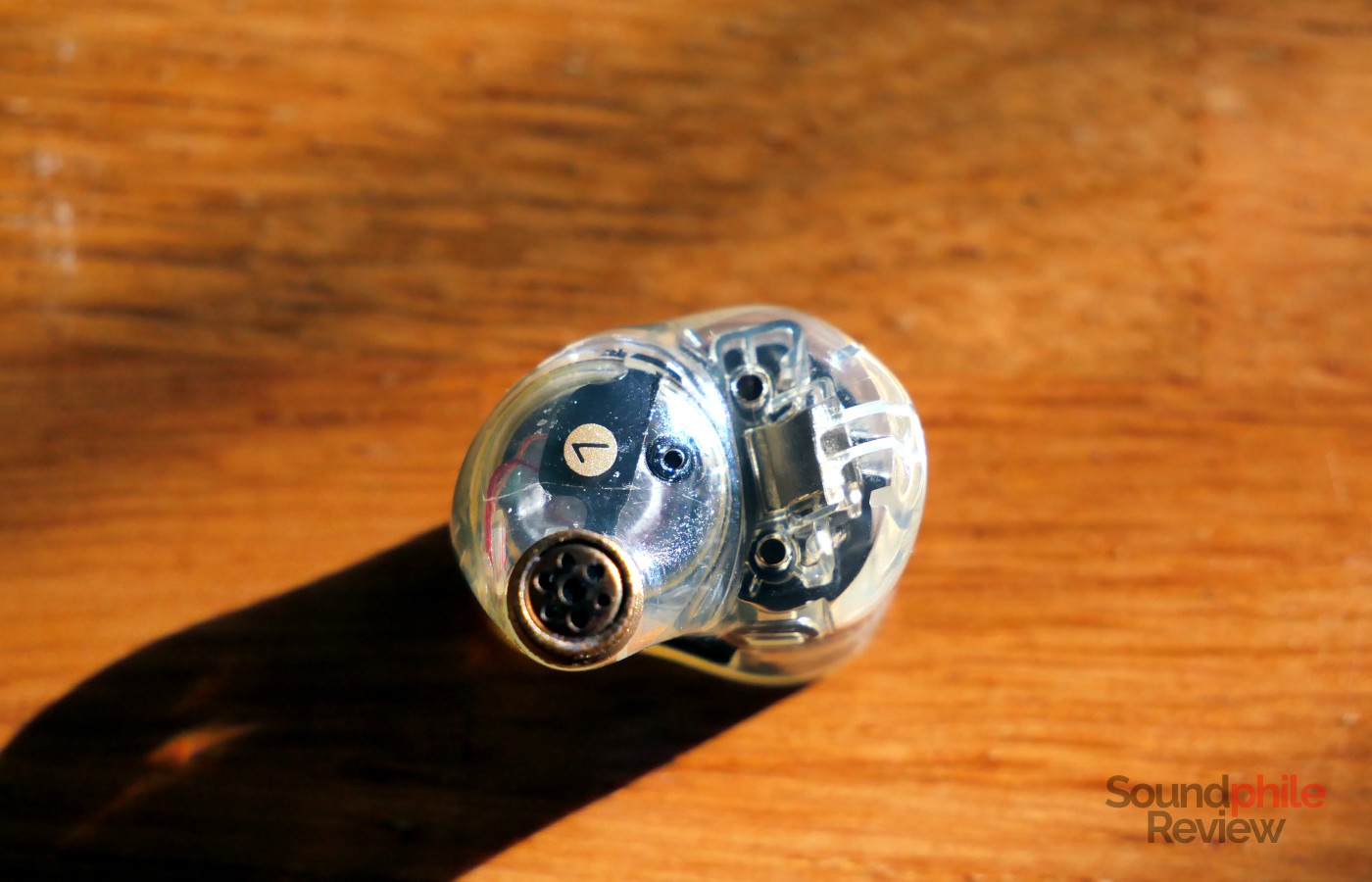
Surprisingly, there is no difference at all between wearing the H3 and not. Whether they are in your ears or not, you will hear the same amount of noise from around you. Passive isolation is basically non-existent. This happens despite having a correct fit with the eartips, as proven by ANC working correctly. While ANC does a great job, it doesn’t filter out all frequencies and this is where passive isolation should step in, but it doesn’t, and as a consequence you will hear a lot of noise. This is probably the result of using lightweight plastic together with a mostly empty shell.
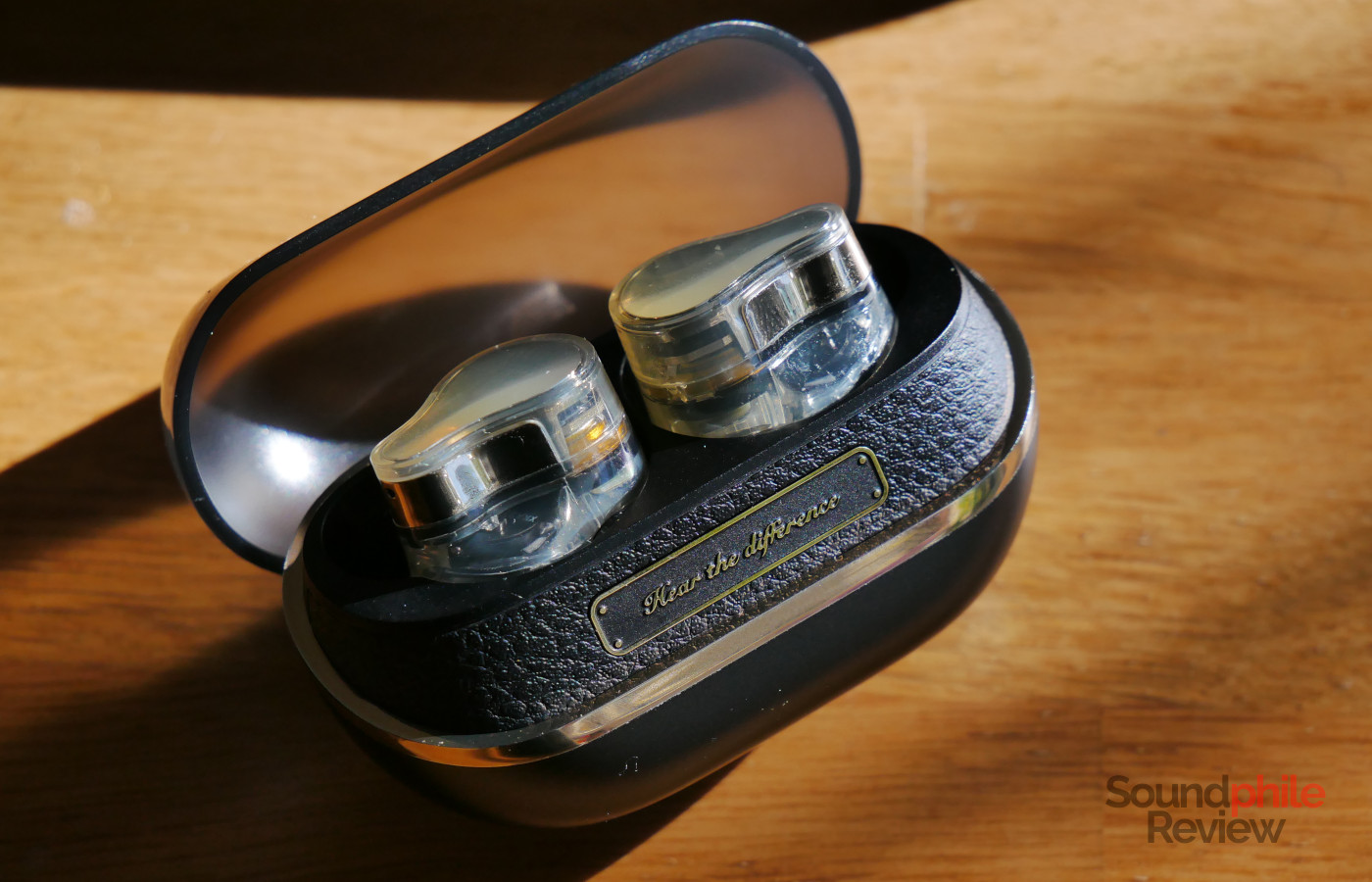
In keeping with the aforementioned Y2K aesthetics, the case has a semi-transparent black lid which I find great. It is made so that the front is larger than the back (in other words, if you look at the case from the side, the lid is diagonal), which gives the case a more refined look, as if it were a jewel case. This feeling is further enhanced by the faux leather insert on the front once you open the lid, with a small plaque which reads “Hear the difference” in gold applied to it. Interestingly, the lid’s plastic is smooth and glossy on the outside, but matte on the inside. The rest of the case is made of matte black plastic, with a silver rim, and there are a status LED right underneath the rim and a USB-C port on the bottom.
One really good thing about the case is that it has enough space to support standard eartips, such as the SpinFit CP100. This makes it possible to use your preferred tips so that you get the best possible fit.
Extra Features & Battery Life
The Soundpeats H3 operate over Bluetooth 5.4 and offer a wide variety of codecs which includes SBC, AAC, aptX, LDAC and aptX Lossless. THe H3 support multi-point connectivity and can connect to two devices simultaneously, but you have to enable this option in the settings of the Soundpeats app (more on this in the next section). Unfortunately range and stability are very limited: a single thin wall between the earphones and the source, at just a couple of metres of distance, is enough to block the signal entirely.
The Soundpeats H3 are a good example of how far we’ve come in terms of ANC on earphones: it is surprisingly effective, and it removes almost all low-frequency noise. I am sat on a plane in a wing seat while writing this section, and I can’t hear the low rumble of the engines. Despite all this effectiveness, though, ANC can only do so much and it does stop as soon as midrange kicks in: all the noises that are normal on a passenger flight, from people’s voices to the metallic cling of seatbelts, are perfectly audible, together with a waterfall-like noise from the engines. The result is that you don’t hear the engines, but you still hear everything else and you will have to raise the volume to counter this, which makes ANC way less useful than it would otherwise be.
Speaking of volume, it is very high even at its minimum level, to the point where I had to reduce it using the music players because it was otherwise too high.
Battery life depends entirely on what features you enable: the 7 hours promised by Soundpeats can possibly be achieved if you disable ANC and use SBC as the codec; when using ANC, it drops to around 4 hours (slightly less, in my testing). With ANC and LDAC enabled, the Soundpeats H3 are able to provide less than 3 hours of battery life. As I am writing this, the earphones have notified me of low battery level (10% remaining) after just two hours and a half of usage. Volume was not a consideration at all, as I was listening at 10%. The H3’s performance in this regard is average with SBC and disabling ANC, it is sufficient with ANC enabled, and it becomes subpar when using the earphones to their full potential with LDAC enabled as well. The case offers 4 full recharges, and you can get two hours of playback with 10 minutes of charging – though again, it becomes less than an hour unless you disable ANC and use the SBC codec.
Software
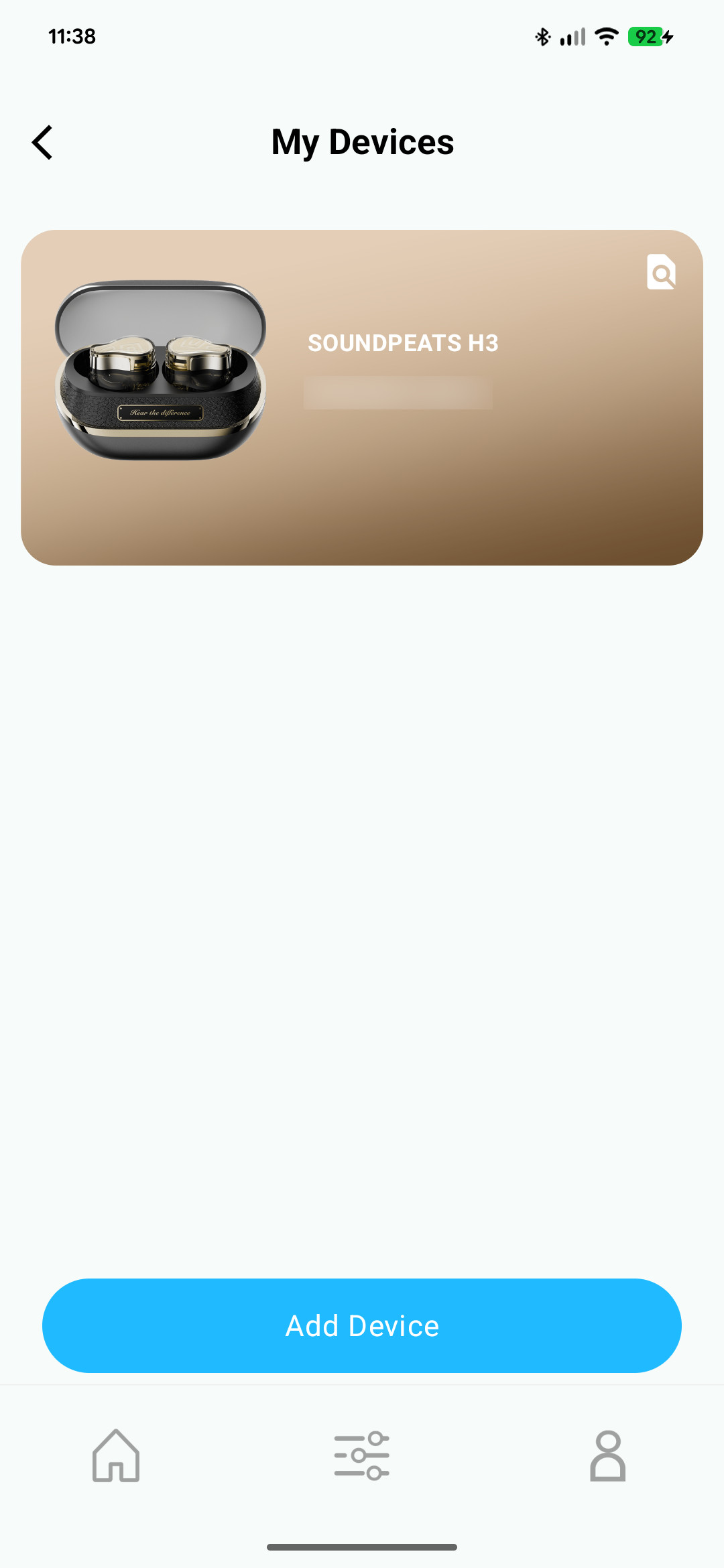
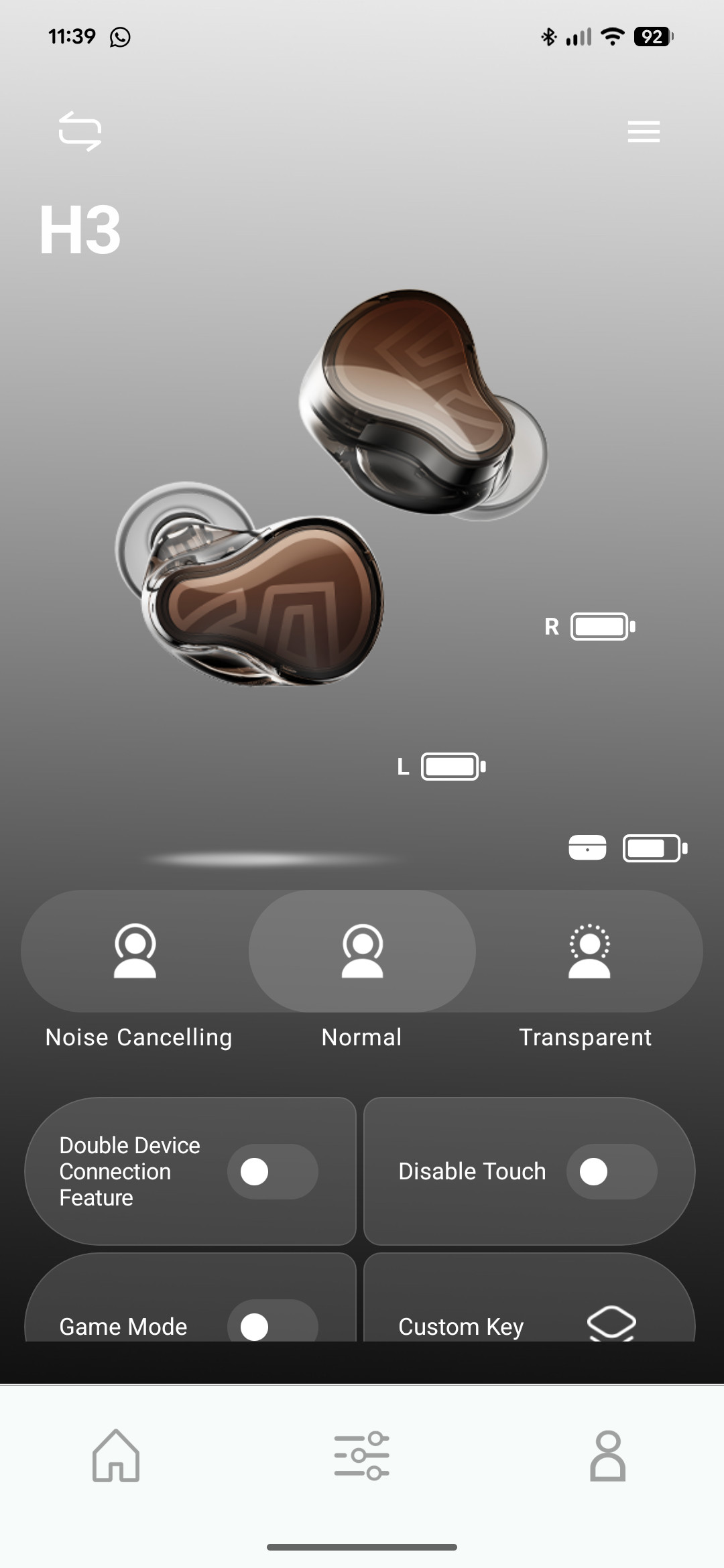
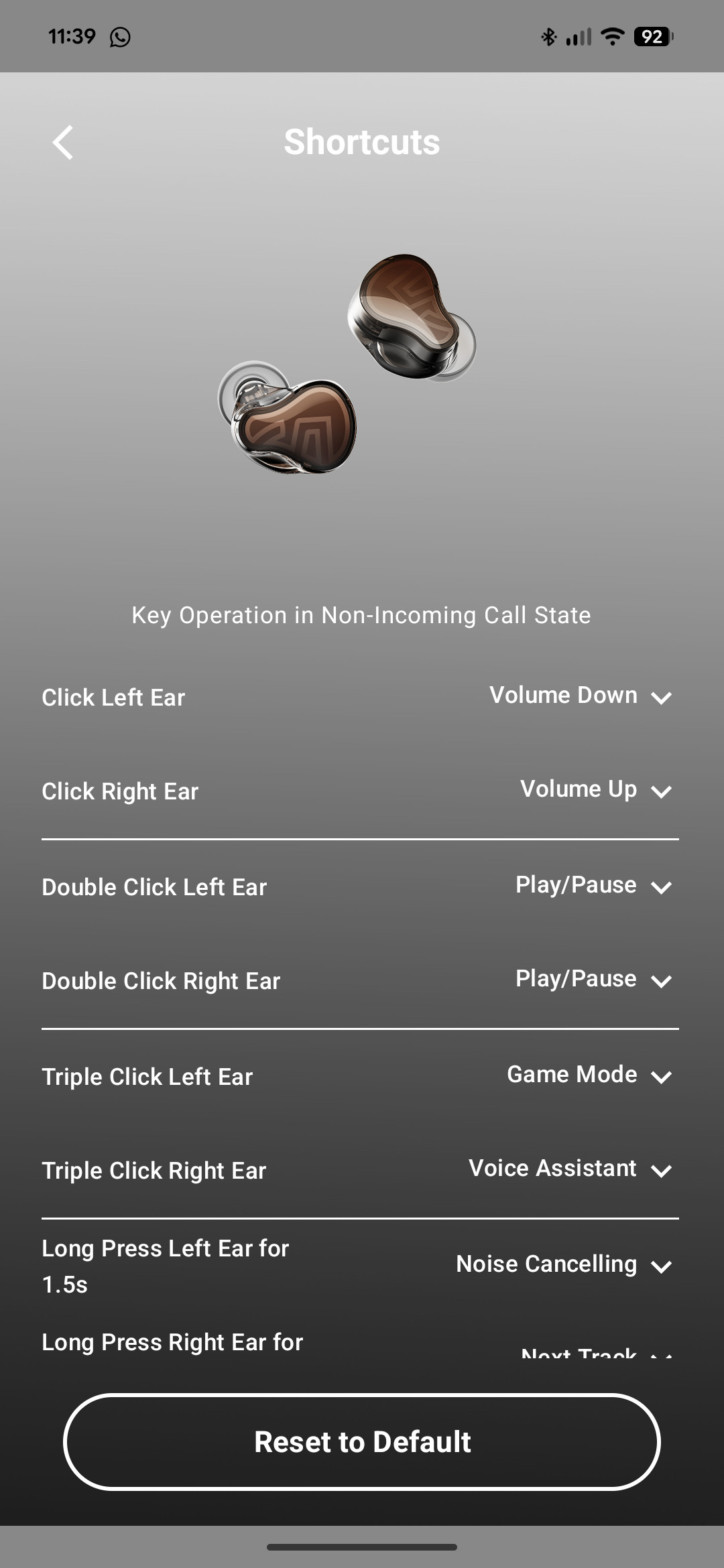
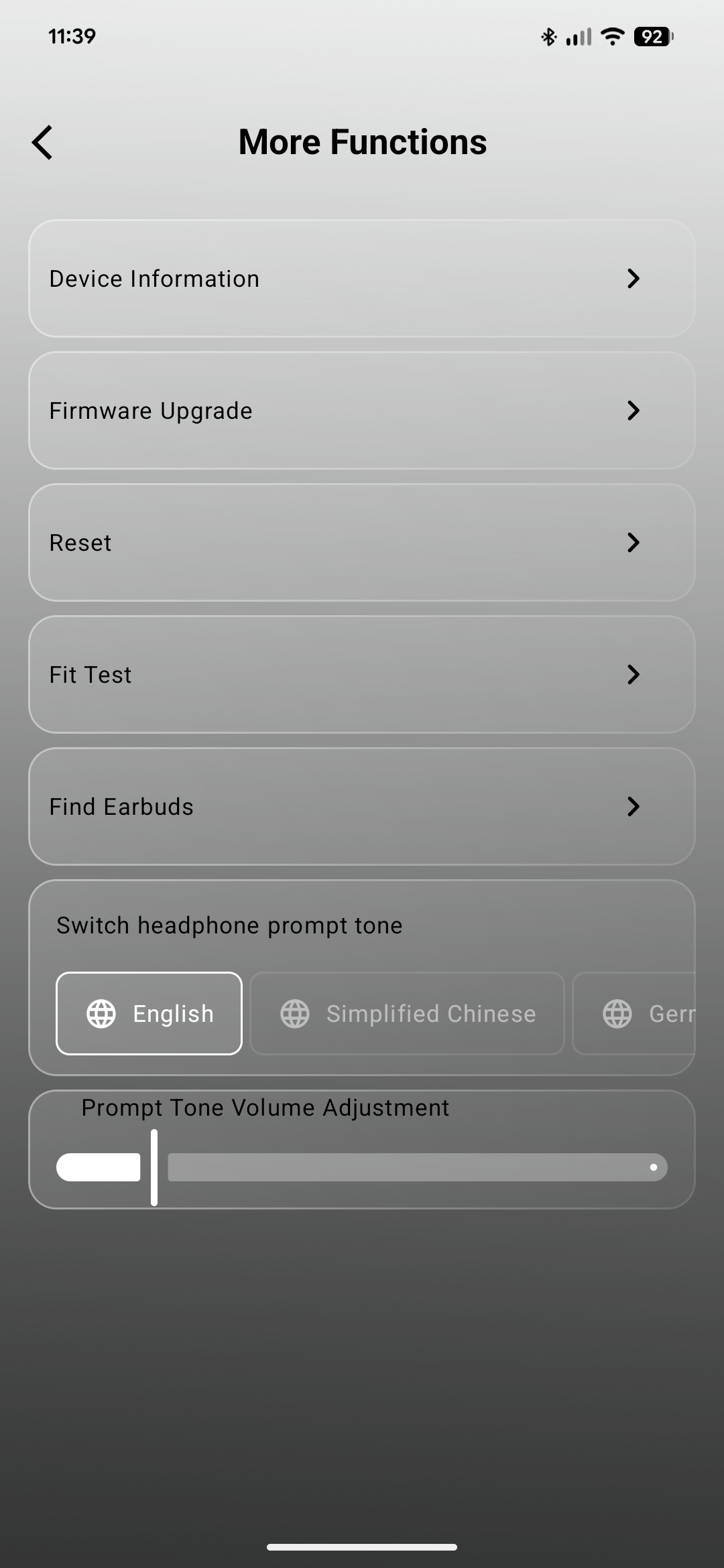
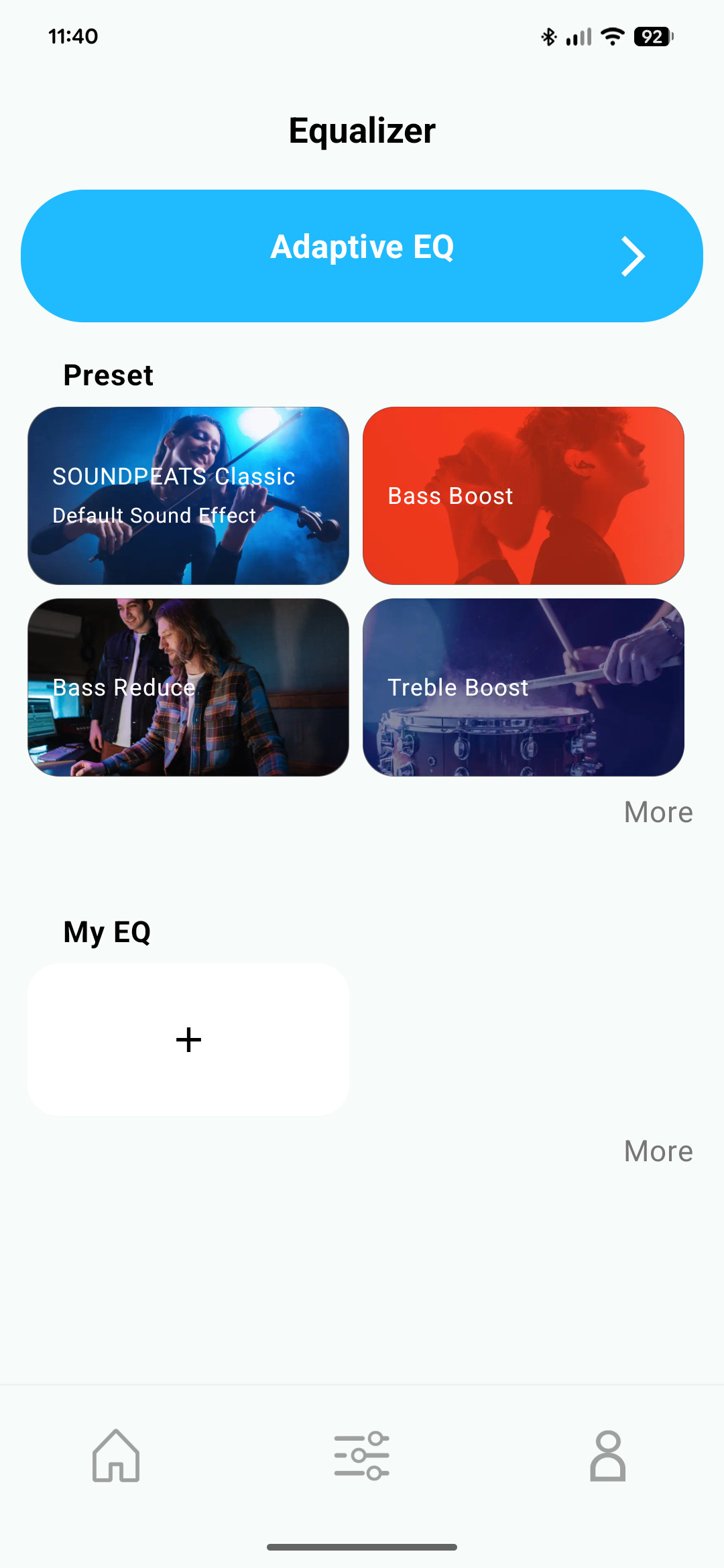
Soundpeats offers the ability to change the settings on the earphones using an application. On Android at least, you can actually find two such applications: Soundpeats, which is the older app, and PeatsAudio, which is the newer one. The company recommends using the latter. In both cases, the application allows you to see the charge level of both earphones and case, as well as edit a variety of settings which includes ANC, equaliser, disabling and editing touch controls, enabling multi-point connection, enabling game mode, changing the prompt language as well as updating the firmware. PeatsAudio also allows you to enable a feature to find your earphones even when they are not connected to your device, and to adjust the volume of the voice prompts.
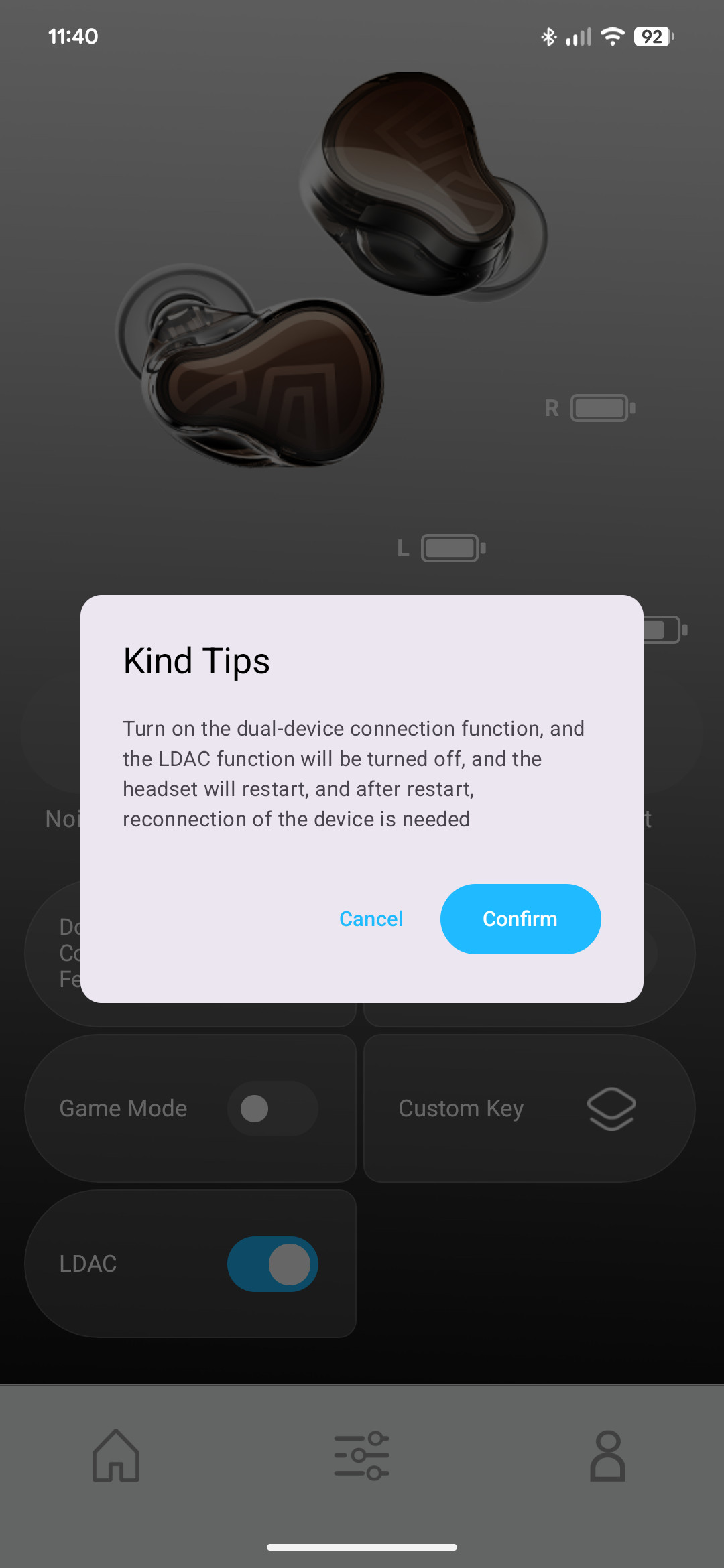
Through both applications you can enable multi-point connections, although doing this disables the LDAC codec. There is no warning that this is the case in the Soundpeats app, whereas PeatsAudio does explicitly mentions this limitation.
One element that I did not appreciate about both applications is that you need to register in order to access the features. Not only that, but you will need two separate accounts: if you register with the Soundpeats app, you won’t be able to use those credentials to log in to the PeatsAudio app. It is not clear why you should need to register in order to access basic functionality, although admittedly you need to only provide your email and a password.
Another negative point is that both apps only work if the phone is connected to the Internet. If you are on a plane, as an example, and you want to alter your ANC settings, or you want to play with EQ to better suit your environment, you can’t. This feels like a big missed opportunity and a huge oversight on Soundpeats’ part, as there are countless situations where there is no or poor Internet connectivity and you might want to alter the settings of the earbuds. I have asked the company what the reason is for this, and they said that it is due to the app needing to fetch information on what features the earphones have available from Soundpeats’ servers. This should be very easy to correct as a database with the features of all models would weigh a few kilobytes, or a few megabytes at best, but the company did not commit so far to making the app work offline as well; they said that they would consider my feedback.
Sound & Specs
I tested the Soundpeats H3 by connecting them to both my laptop and my Google Pixel 7 Pro smartphone, using the LDAC codec for maximum sound quality.
Soundpeats H3 |
| Frequency response | N/A |
| Impedance | N/A |
| Sensitivity | N/A |
| Bluetooth version | 5.34 |
| Codecs | SBC, AAC, aptX, aptX Adaptive, aptX Lossless, LDAC |
The Soundpeats H3 use one dynamic driver for the lower frequencies and two Bellsing balanced armatures for midrange and highs. Unfortunately Soundpeats does not divulge any information on the specifications.
The H3 offer a relatively small soundstage, in terms of both width and depth. It sounds like the instruments are either inside your head or inside your ears, with no in-between. This is also related to imaging being very limited; it only offers the three basic positions (left, centre, right) and that’s it. Instrument separation is decent, on the other hand, and it holds its own in relatively complex tracks.
Bass is abundant and surprisingly deep, especially for midrange TWS earphones. It easily reaches sub-bass territory and, in fact, the lowest area is the most prominent one: in a track like Snarky Puppy’s Tarova, the bass line in the first half is very prominent and sounds like the lower component is almost overdone. Although we’re not in basshead territory, the H3 surely will sound satisfying if you are looking for that extra bass punch. This emphasis on bass is large, but it does not result in excesses and bass does not become suffocating, as it quickly decreases in volume as the frequency goes up, leading to a clear separation between bass and mids. Detail is sufficient but, possibly due to the sheer quantity, bass sounds a bit monotone and lacking fine details. One thing to be said in its favour is that it is very physical and engaging, thanks also to good transient speed: thanks to this, it is a lot of fun.
Midrange is overall recessed, as you would expect in a V-shaped signature, but it is still well-positioned in the mix and some areas can appear quite prominent. Although the lower area is overshadowed by bass and is somewhat distant, and the middle area is similarly recessed, the upper one is positioned quite forward. This prevalence of the upper mids is evident in tracks such as Tamerlan’s Where No Man Walked Before, where the ringing of the guitar strings is the predominant sound, leaving the actual main note produced by the strings in the background. Vice-versa, the recession of lower and mid areas is evident in Snarky Puppy’s Gemini, where the trumpet around the 2:30 mark sounds too distant, while the keyboard immediately after is less audible than it should be. Overall, detail is sufficient and, just like with bass, speed is high, so that instruments like drums and pizzicato string instruments have quite a punch.
Treble is both very prominent and almost absent. While this claim can sound contradictory, it depends on the frequency. Listening to Friedrich Gulda’s I Only Have Eyes For You you can’t hear the cymbals at all, if not sporadically when they’re especially loud, whereas in a track like Azymuth’s Jazz Carnival they’re very prominent to the point of becoming fatiguing. In general, treble is really pronounced and it is front and centre, so much so that it often steals the show from the other instruments. This is due to a couple of peaks, one around 8 kHz and another one much further up, around 13 kHz, which are sizeable enough to project treble to the fore. This very uneven presentation can work in some cases, but in others it becomes fatiguing. On the positive side, however, treble offers a decent level of detail.
Final Thoughts
At $149, the Soundpeats H3 need to impress to compete with very aggressive competitors, especially from major brands. There are many elements where the H3 can actually hold their own: they offer fantastic ANC as well as an impressive selection of high-quality codecs, together with a refined design for both the earphones and the case. A closer inspection reveals, however, that there are also some things which require attention. Battery life is certainly one of the biggest issues, as less than four hours without ANC is way too short for earphones launched in 2025 and many people will find this a problem. While ANC is fantastic and removes most noise, it is severely hampered by an almost total lack of passive isolation. Poor signal range can become problematic. On top of that, software is quite powerful and allows extensive customisation, but there are aspects which could be managed better: there are two different applications that basically do the same things; both require registration, but you have to register individually for each; they don’t work if you are offline, which can happen often. Sound-wise, the Soundpeats H3 are perfectly average both in terms of tuning (V-shaped with lots of bass) and of general quality – which, just to be clear, is not a negative thing, quite the opposite; it just means that the H3 will not cater to everyone and won’t appeal to audiophiles.
Although they are an overall decent product with great potential, the problem is that there are more well-rounded alternatives at a similar price point. If their price was lower than $100, my opinion would be quite different; at nearly $150, I feel like they cater to a very small niche and cannot be recommended to everyone.
As a last note, I would like to thank Christine and the team at Soundpeats for the great discussion we’ve had on the product and on my criticism about it. It is rare to find a company that is ready to listen to criticism and I am very happy to sing their praise in this regard.