Not everyone likes to use headphones because they cover their ears and isolate from the outside, and some don’t like earphones because they don’t want to put things inside their ear canals. The solution is earphones which don’t actually go inside the ears at all – they’re “open wireless earphones” or “OWS” (open wireless stereo) earbuds. The Kiwi Ears Spark belong to this category, which is mainly targeted at people who do sports and other physical activity. They’re part of the second wave of devices, refined and improved compared to the first one: let’s see how they fare.
Disclaimer: I received a free unit directly from Kiwi Ears. Additional info on their website. The MSRP is $99.
TL;DR: recap
| Pros |
Cons |
| + Very well built
+ Good sound quality despite being open + Good battery life |
– Bass is thin
– The case closes too forcefully |
Rating: 7.5/10
Packaging & Accessories
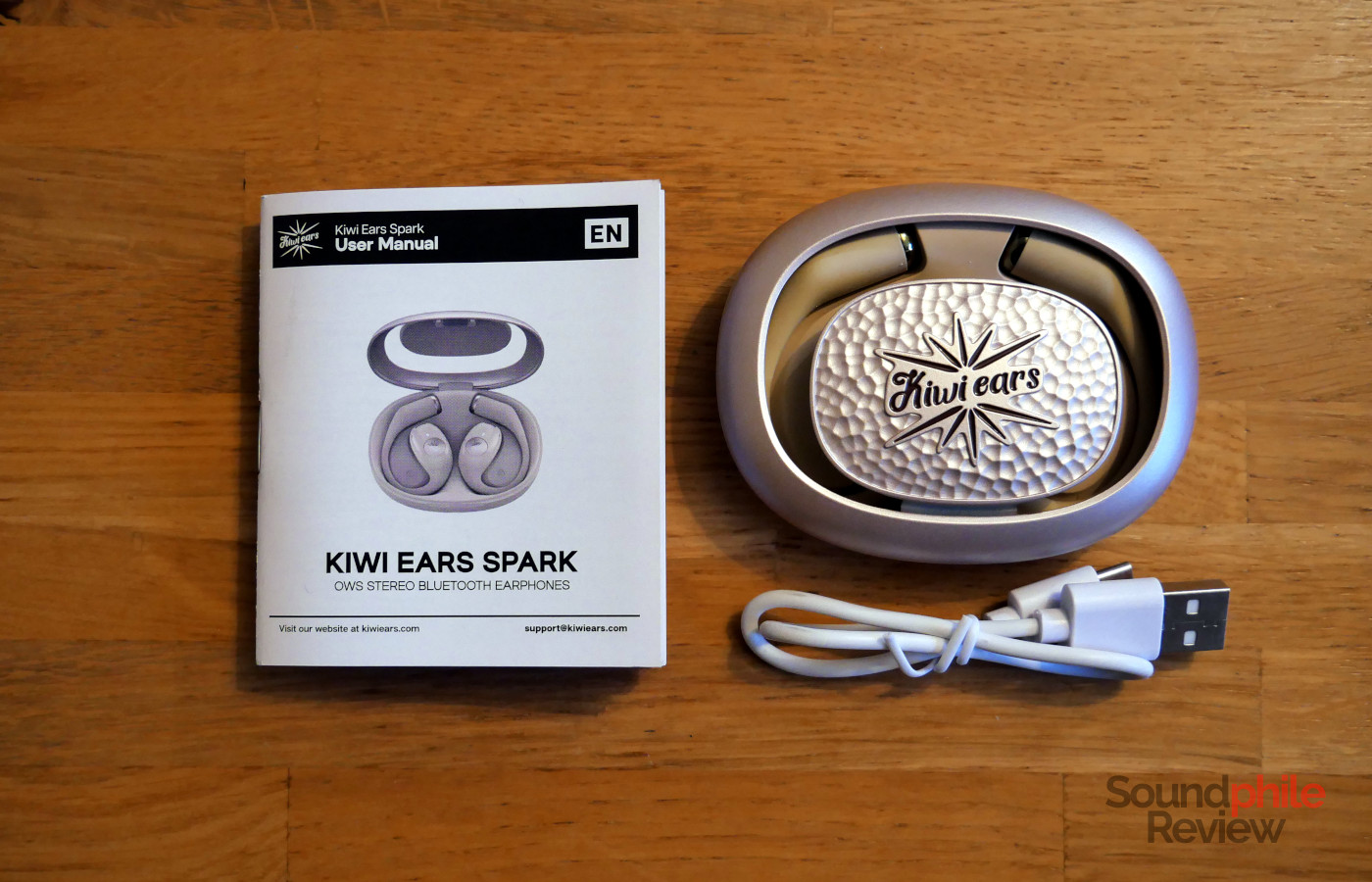
The package only contains the earphones in their case, a drawstring pouch, a USB to USB-C cable and a manual.
Design & Comfort
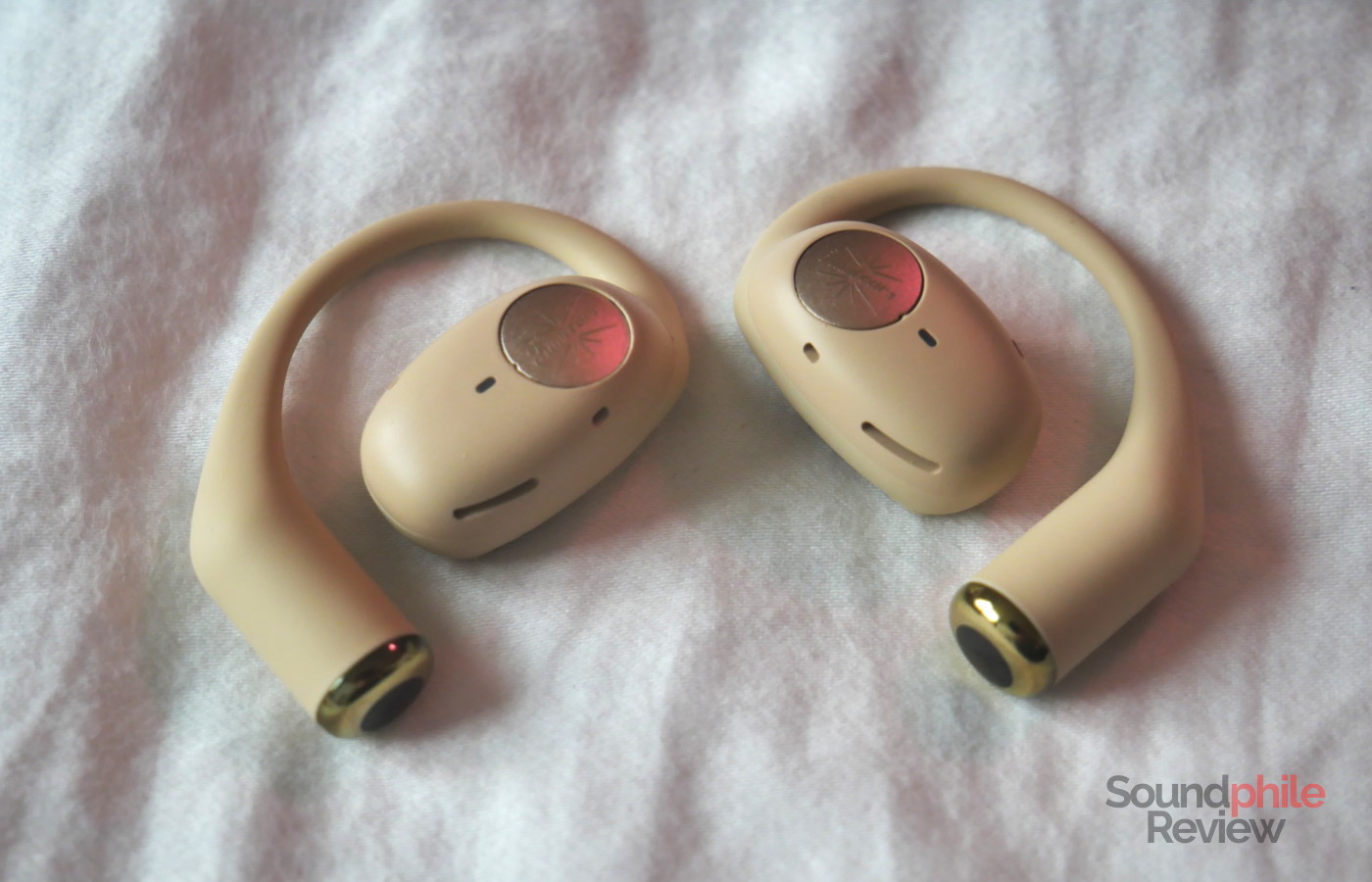
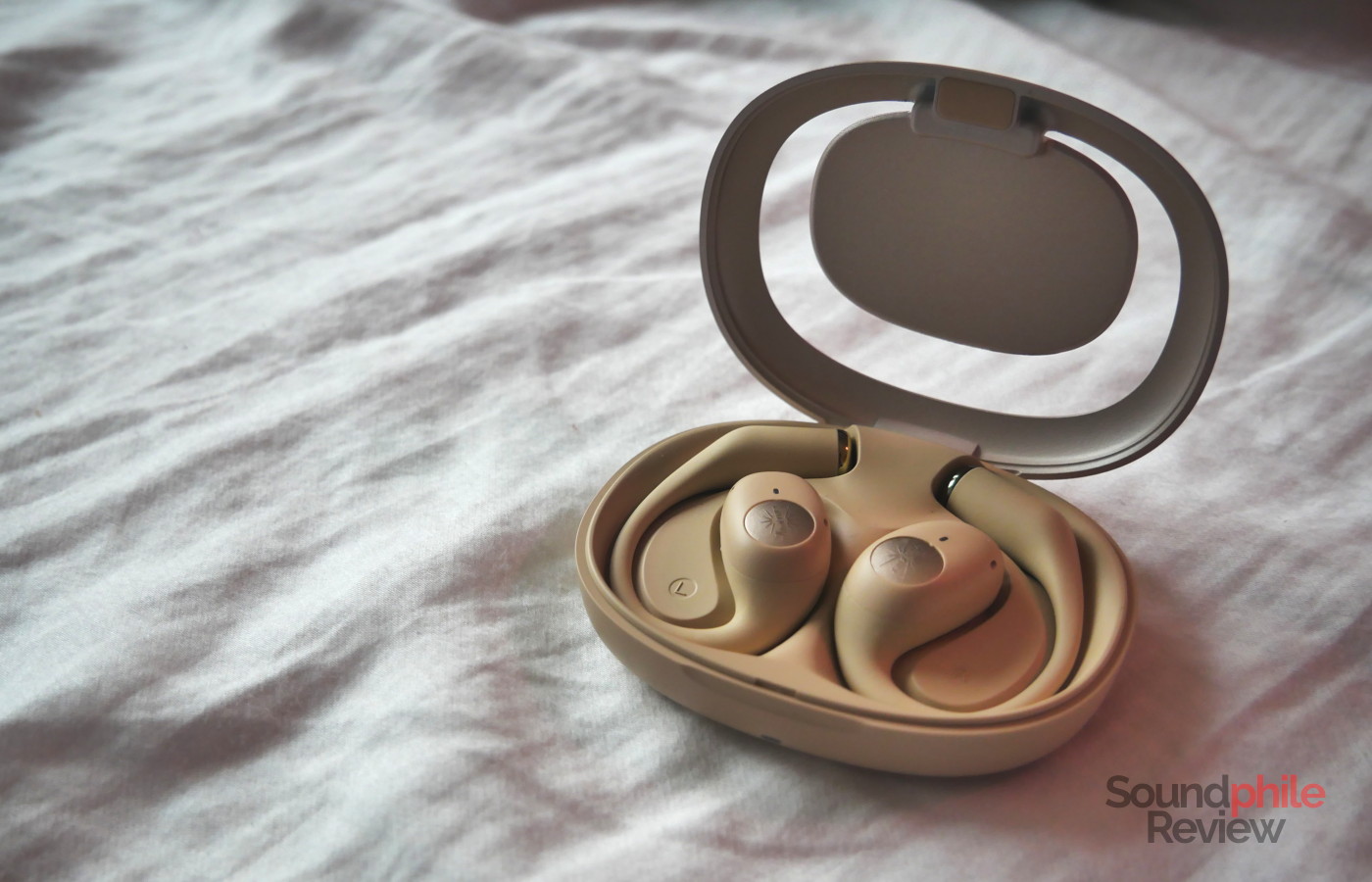
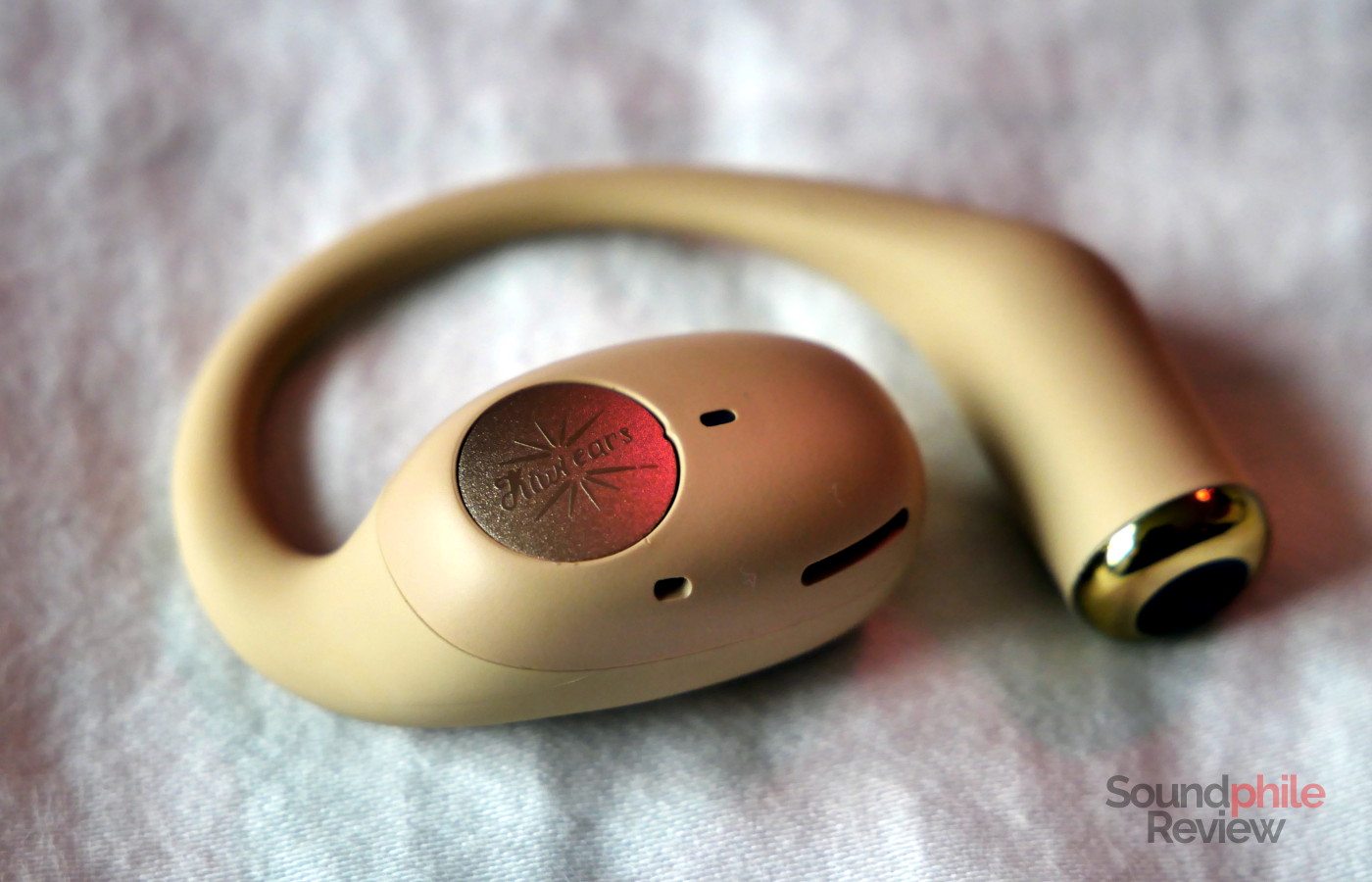
The Kiwi Ears Spark sport a traditional over-the-ear hook design: the main earpiece is pill-shaped and has a metal plate (which is touch-sensitive and is used for controls), while the hook gets bulkier near the end as this part probably contains the battery. They are covered in soft-touch plastic, except for the very end of the hooks which is hard plastic. There is also a status LED next to the metal faceplate.
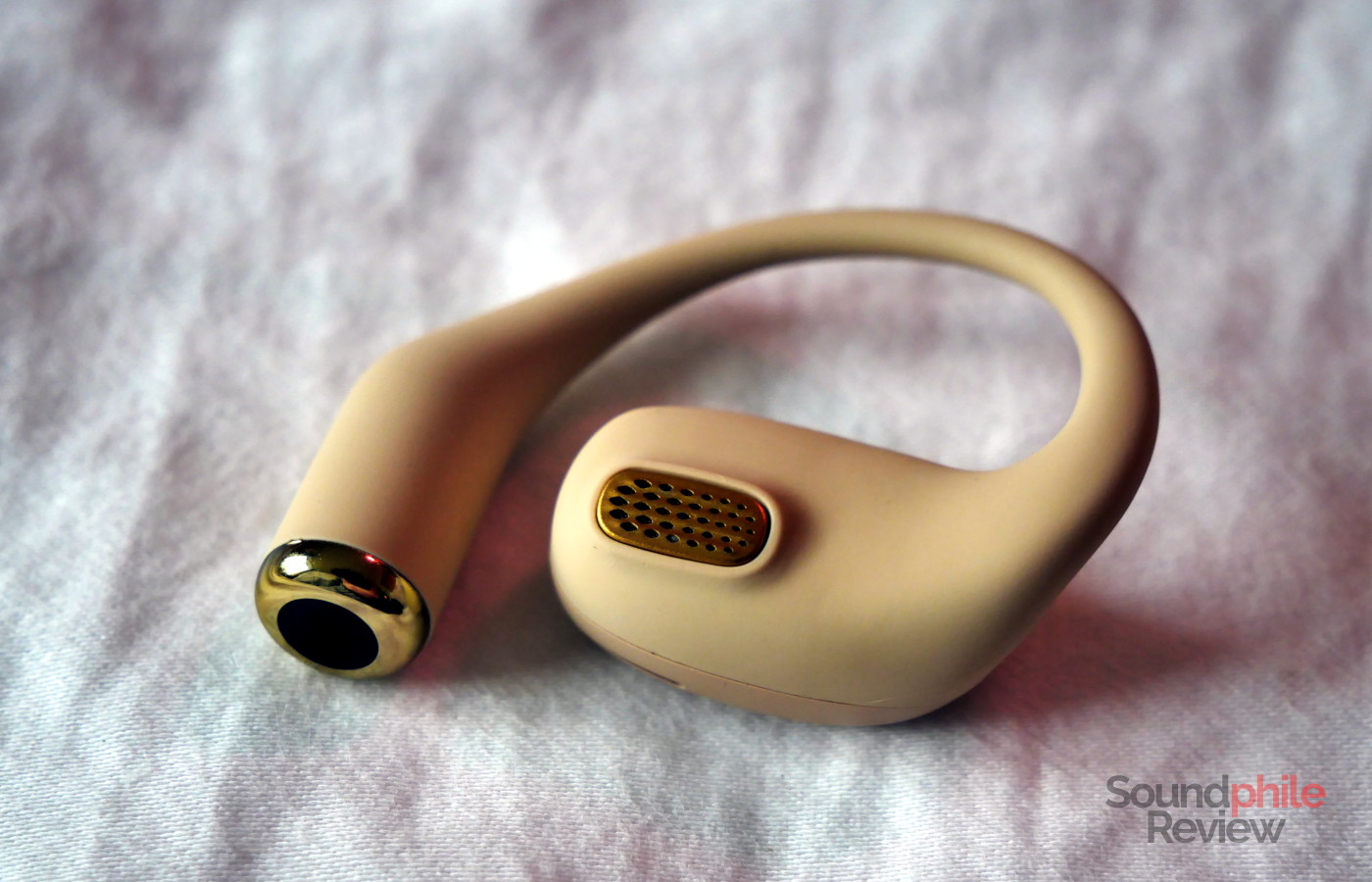
Build quality is very high and the Spark feel like a premium product, rather than earbuds which retail for less than $100. This is especially true when talking about the case (more on that in a moment).
In terms of comfort, I find that the Spark are reasonably comfortable, but my ears tend to become fatigued after about an hour as the band which goes around the ear tends to press against the top of the pinna, causing some discomfort – which I found weird: as someone who wears eyeglasses, I am used to things being on the top of my ears.
As the Spark are entirely open-back, they offer no isolation whatsoever, which is also the point of this type of earbuds as they allow you to remain completely aware of your surroundings.
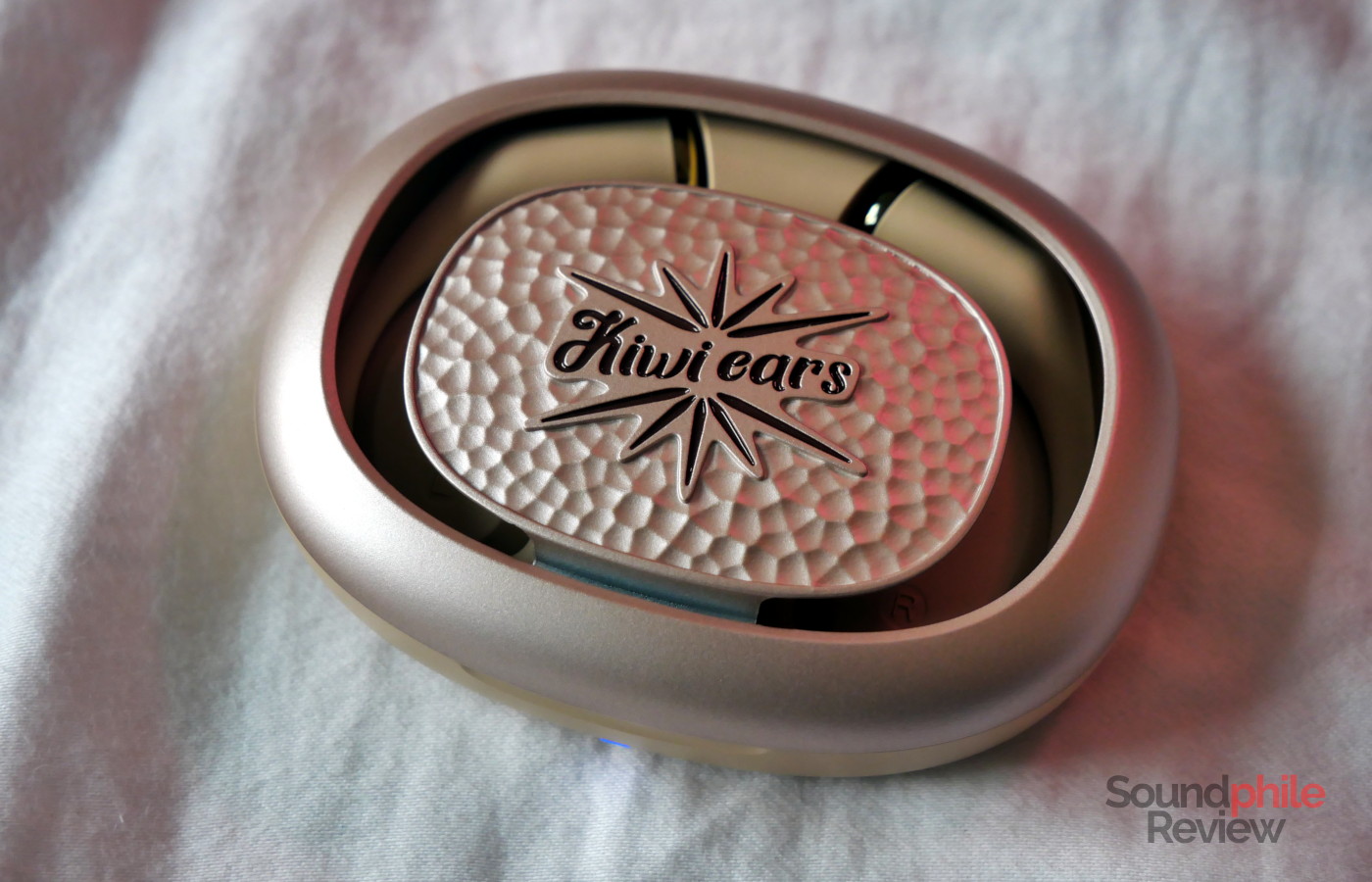
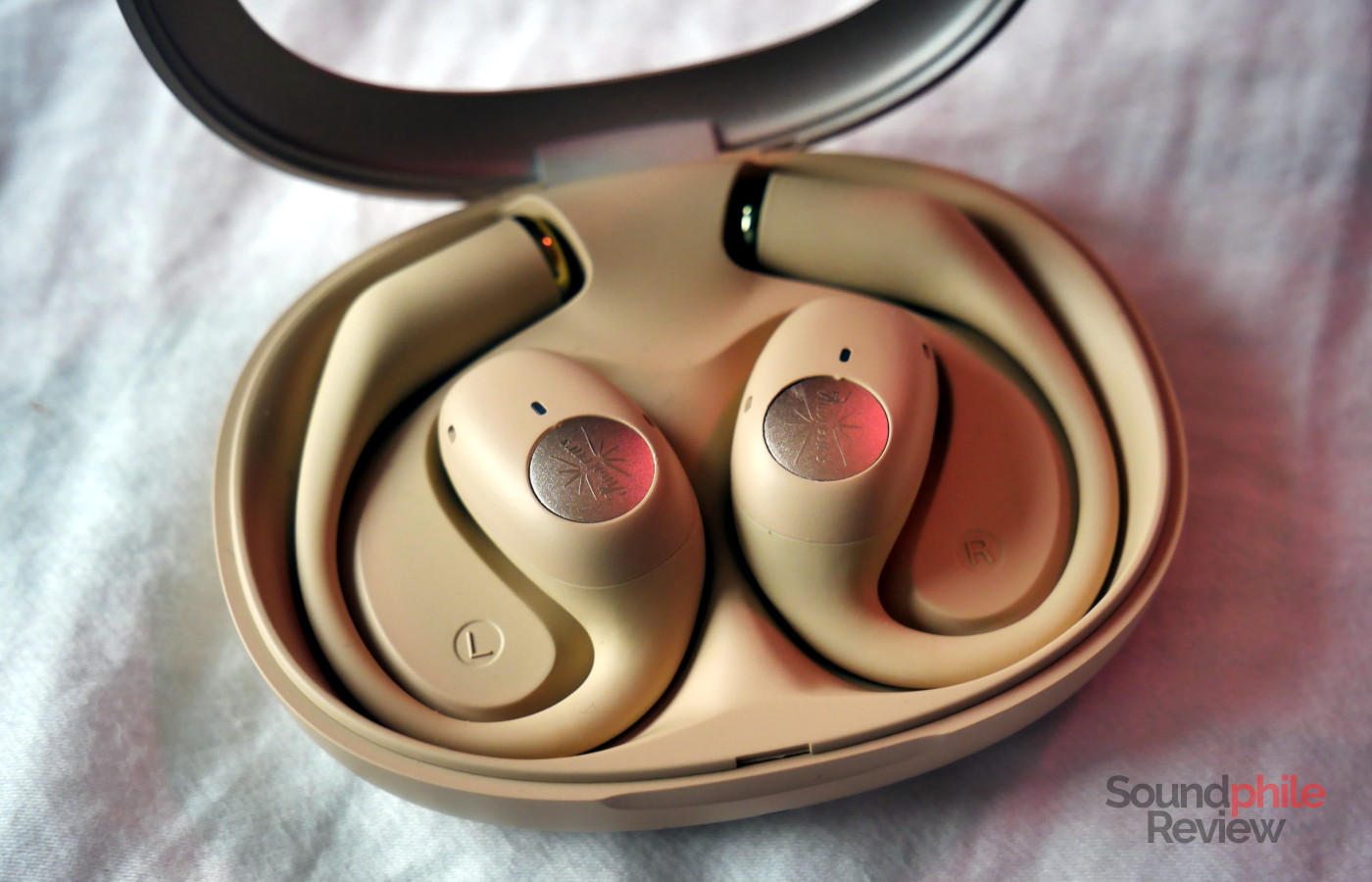
The case is very simple: the bottom is made of soft-touch plastic, while the lid is made of metal. The front has a status LED and the back has a USB-C port; inside there are no metal contacts at all, as the earphones are charged wirelessly. There are magnets where the ends of the ear hooks are which keep the earpieces in place. A peculiarity of the case is that the lid is open: the window you see is actually empty. There is a magnet which keeps the lid shut, which is very convenient. Its strength, combined with the mechanism in the hinge, is however very high, to the point where you need to be careful as the lid can pinch your fingers.
Extra Features & Battery Life
The Kiwi Ears Spark offer Bluetooth 5.2 connectivity with ABC, AAC and aptX codecs, which allow for high-quality audio. The range is good, as I can walk around my tiny flat with no issues and no interruptions or drops in signal.
The touch controls are fairly intuitive, though it took me some time to understand where I had to press on the earphones (it’s on the metal plate).
At around 7 hours of playback, battery life is very long, especially for this type of earbuds.
Sound & Specs
I tested the Kiwi Ears Spark using a variety of sources, though I mostly used my Google Pixel 7 Pro smartphone.
Kiwi Ears Spark |
| Frequency response | N/A |
| Impedance | N/A |
| Sensitivity | N/A |
| Bluetooth version | 5.2 |
| Codecs | SBC, AAC, aptX |
My previous experiences with these open-ear earphones were not positive from the perspective of sound quality: I always found them to be less than ideal in terms of frequency response, detail and so on. So I was very surprised when I tried out the Spark and found that they actually offer decent sound quality, much closer to in-ear earhpones than in the past. While they are not there yet, they are better than previous products by leaps and bounds.
Soundstage is both relatively small, as it has little lateral extension and no depth, and quite large, as it sounds like it extends in a large room; it really depends on the specific track and even on instruments. Voices sound very close, while other instruments sound farther away. It is smaller than I would have expected from open earphones! Imaging is quite limited by this, and it tends to only offer three positions: left, centre and right. Instrument separation is surprisingly good and almost on par with what you can fine in in-ear earphones: you will be able to distinguish the various instruments with good clarity, although the most complex and layered tracks are still going to be challenging.
Bass is quite light, but it is there. There is only mid-bass, with frequencies below 100 Hz seeing a very rapid drop into inaudibility, but that’s enough to give you some presence in the bass area and, in turn, a more rounded and balanced listening experience that’s easier on your ears. Let’s be clear: even with tracks that have a large bass presence, what you get is still little bass, but it’s enough that it is a relevant part of the mix. It is light enough that it makes little sense to discuss speed, level of detail and layering.
Midrange is quite variegated, with lots of peaks and troughs; it is generally V-shaped, with an emphasised lower and upper region and a recessed middle one. There is a bit of a sharp divide, but voices rarely sound distant: the most apparent effect is some sibilance and a stronger presence of both male and especially female voices. This is because the upper midrange is the most emphasised area, and it makes the sound bright as a whole. There is a very good level of detail overall, transients are decently fast and they even have a touch of physicality.
Treble is, by far, the most emphasised area, with cymbals and other similarly high-pitched instruments being the most audible in the mix. The emphasis is concentrated in the lower area, and then treble quickly recedes into inaudibility – in other words, it doesn’t have much extension. What’s there is very good quality, though, as the level of detail is very high and in many ways sounds more like speakers than it does like earphones.
Final Thoughts
The Kiwi Ears Spark are the first open earbuds I’ve tried which sound convincing. The steps forward in sound quality compared to the first generation of these earbuds are evident: music sounds almost like it’s coming from traditional earphones or headphones, rather than from OWS earbuds. There are still limits, however, as bass and upper treble are simply not there. All in all, I find that the Kiwi Ears Spark reach a reasonable compromise between having completely open-back earbuds, which is useful when you run or do other sports, and sound quality. Good battery life and a very nice case complete the picture and given the sub-$100 price, I feel like I can recommend the Spark if you’re looking for OWS earbuds which allow you to enjoy good sound quality.