
2025 is the year when Fosi Audio went from being a manufacturer of amplifiers to an all-round audio manufacturers that offers DACs, amplifiers, and even headphones and earphones. The company launched their first headphones, the Fosi Audio i5, in August, and they have now launched their first in-ear monitors too. Just like the i5, the Fosi Audio IM4 are a different take on earphones as they are open-back, and they are designed with the same tuning philosophy as their bigger siblings.
Disclaimer: I received a free unit directly from Fosi Audio for the purpose of this review. The IM4 retail for $135.99.
TL;DR: recap
| Pros |
Cons |
| + Good build quality
+ Quite comfortable + Very good speed + Excellent instrument separation |
– Somewhat over-emphasised upper mids and treble
– Tuning may not appeal to everyone – Weird presentation |
Rating: 7.5/10
Packaging & Accessories
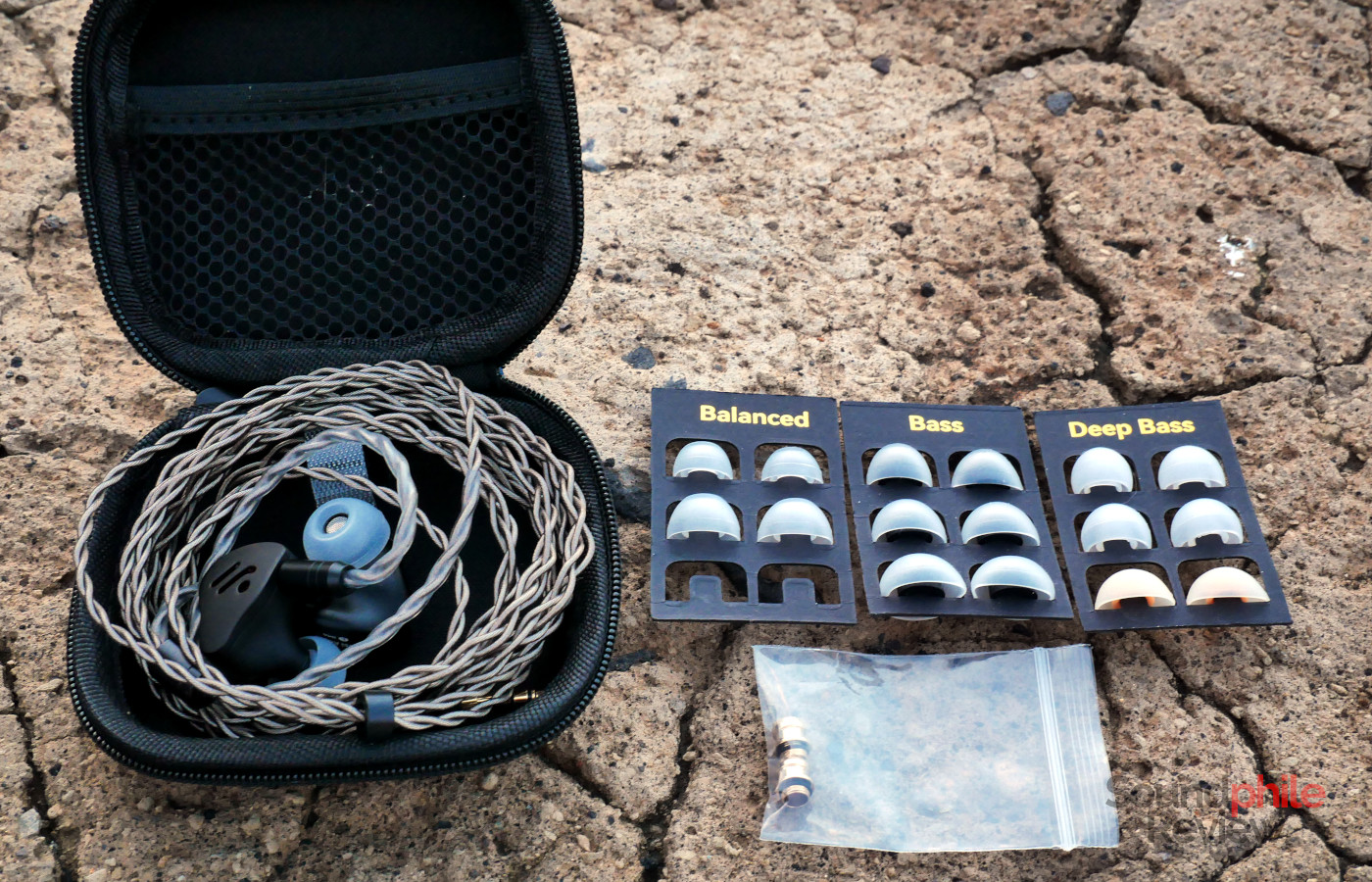
The Fosi Audio IM4 come with three sets of eartips, a second set of nozzles, a rigid carrying case, a manual and an earphone wearing guide.
Design & Comfort

Looking at the Fosi Audio IM4, they’re rather normal: the metal shells have a triangular shape with curves meant to improve comfort and adapt to the shape of the pinna. They’re small enough that they should fit in anyone’s ears. The one distinctive feature is the three slits in the faceplate: these give you a peek onto a bright orange grille which protects the driver and are a giveaway of the main distinctive feature of the earphones, the fact that they’re actually open-back.
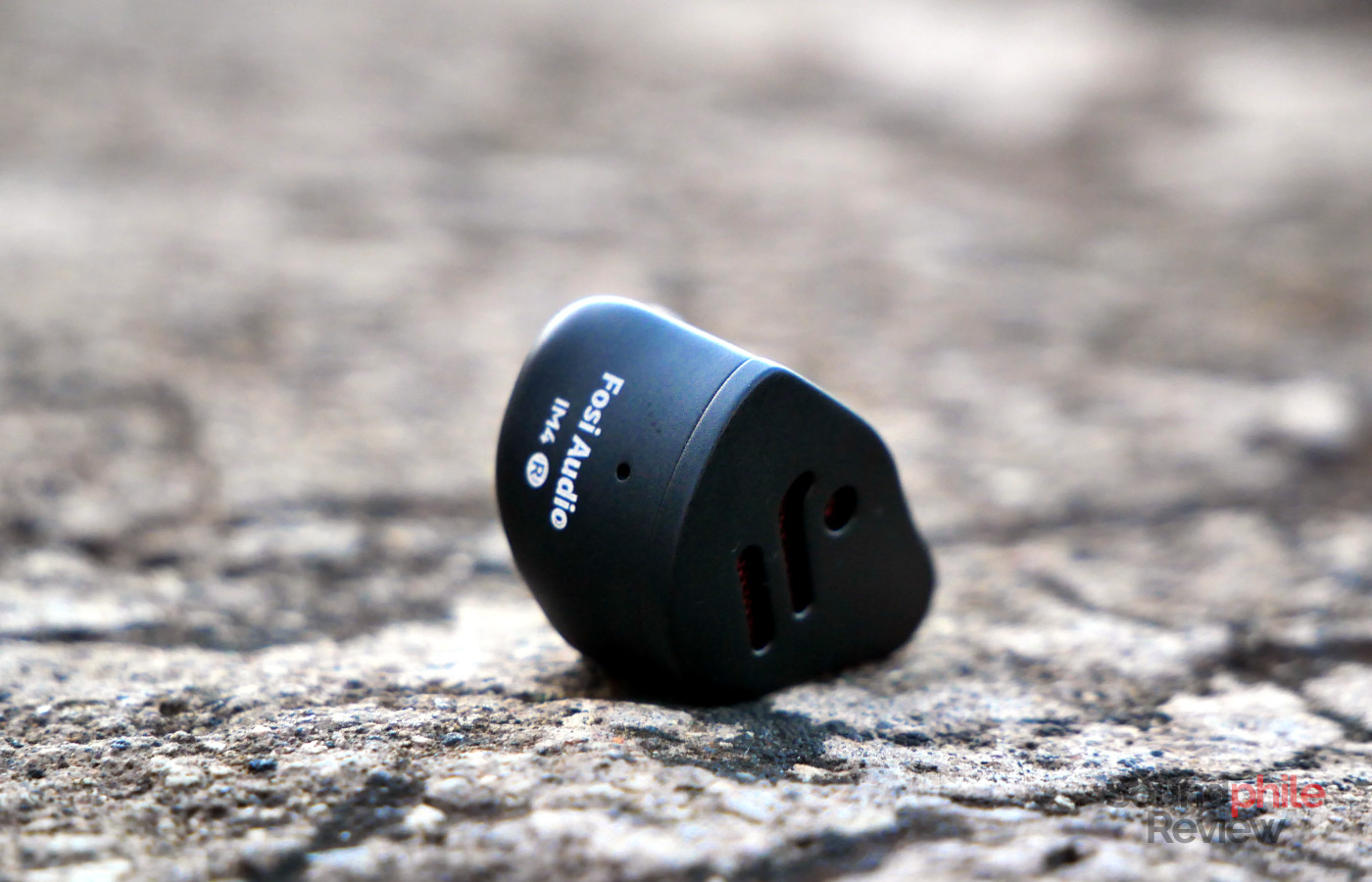
The shells are made of CNC’d 6063 aluminium alloy which comes in either natural silver (which the company calls “galaxy”) or jet black (“obsidian”). The finish is entirely matte and smooth, which makes the IM4 look like premium earphones. They’re also very well built, with pieces that fit together almost seamlessly.
Comfort-wise, the IM4 are great as they are small enough that they should fit in anyone’s ears, and they should prove comfortable thanks to the shells being gently curved so that they fit well. As always, though, comfort is an even more personal matter than sound, so your experience may be different from mine.

As we’ve said, the distinctive feature of the Fosi Audio IM4 is that they are open-back, a rarity among in-ear headphones. This means that they offer no isolation whatsoever and you will hear everything that’s around you when using them.
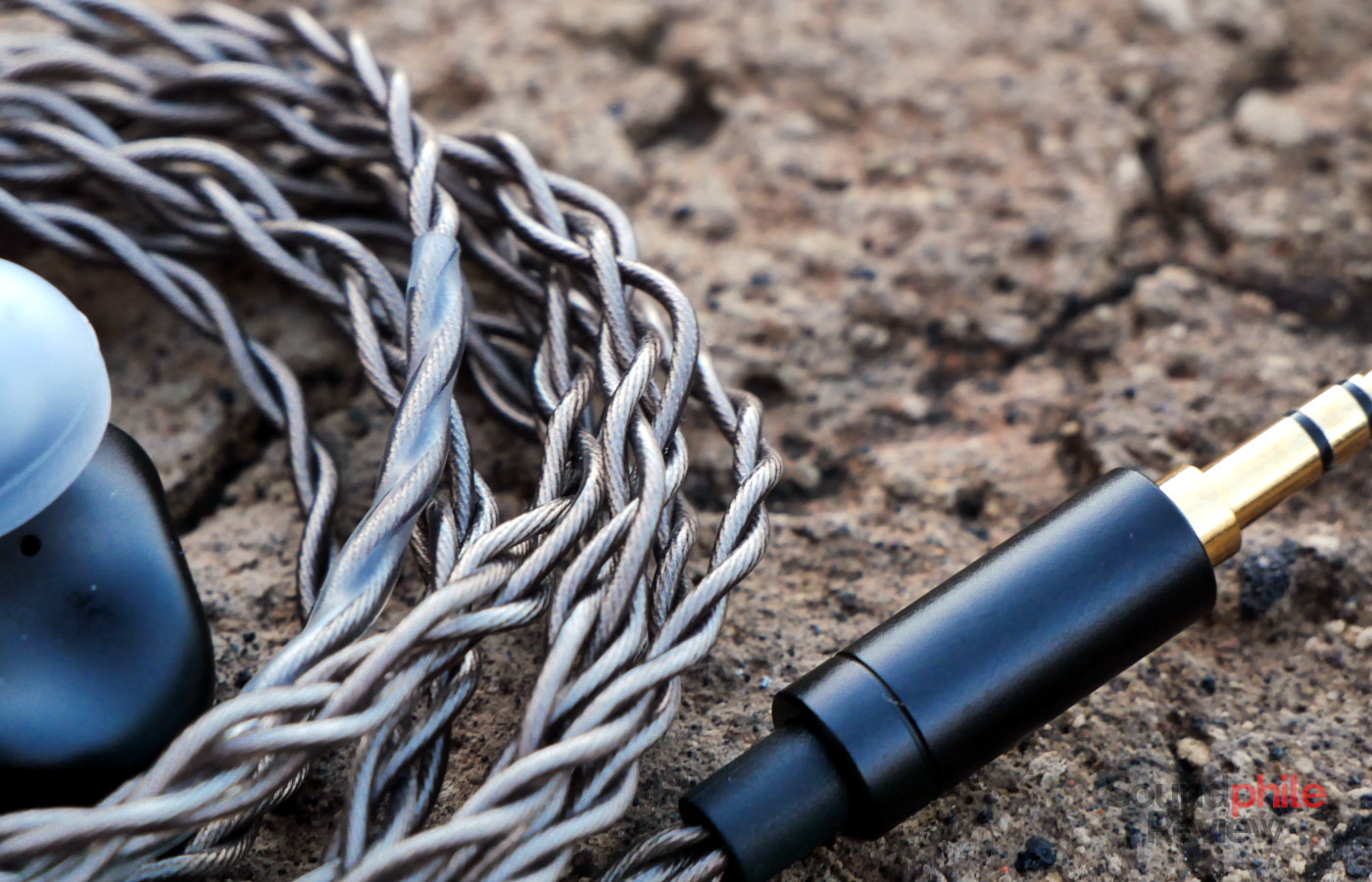
The cable has four cores, braided between the 3.5 mm jack and the Y-split, and then twisted in pairs between the Y-split and the 0.78 mm connectors. It is very soft and malleable, and it’s very lightweight too. The Y-split features a movable part which acts as a chin slider, which stays in place, contrary to so many others I have tried.
Sound & Specs
I tested the Fosi Audio IM4 with a Fosi Audio ZH3, among others.
Fosi Audio IM4 |
| Frequency response | 20 – 20,000 Hz |
| Impedance | 21 Ω |
| Sensitivity | 109 dB |
The driver is made of polyurethane (PU) coated in beryllium, which gives it rigidity without being stiff. It is 10 mm in diameter, which is quite large for an IEM.
Ironically, the eartips seem to work in the opposite direction than what Fosi Audio states: the “deep bass” ones emphasise treble a lot more than the “balanced” ones. “Bass” tips do actually increase bass a bit, but they still emphasise treble as well.
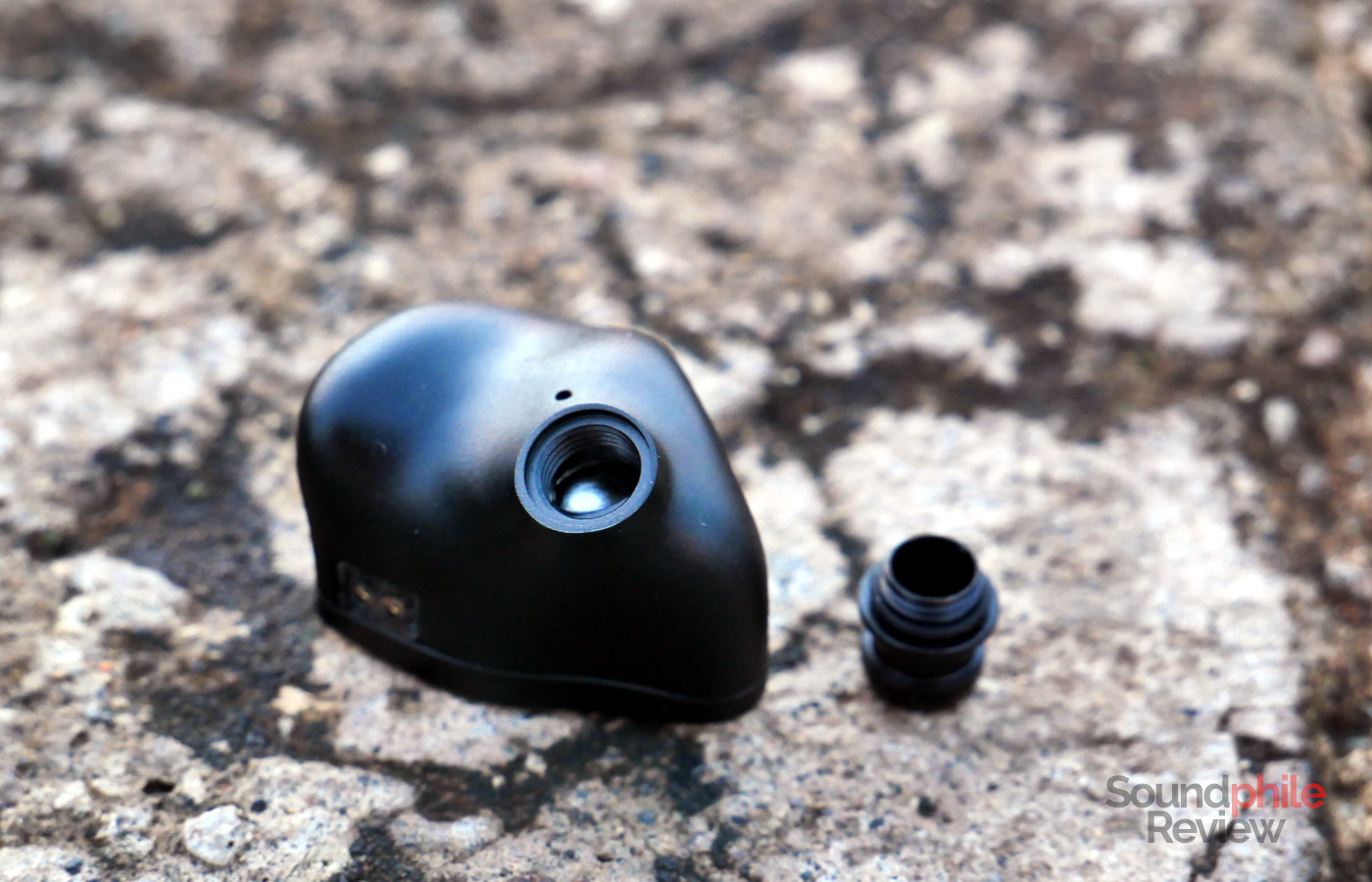
Fosi Audio provides two different nozzles: the stock one and a brass one, which further elevates the upper midrange and the treble.
The following comment is based on the balanced tips and the stock nozzle.
The soundstage on the IM4 is not quite what I would define as “wide”: instruments sound quite close to the listener and, in fact, often you wouldn’t even think that you are listening to open-back earphones as they don’t sound that open. Where the open-back design shows is in the overall space: it sounds like instruments are close to you, but in a relatively large environment, which gives a different ambiance to the sound. Imaging is decent, although it often sounds like there is a left channel and a right channel, with nothing actually coming from the middle but rather from a sum of the two. Instrument separation is where the IM4 really shine, as they are really able to reproduce the instruments as if they were being played individually.
Bass is relatively reserved, at least in relative terms. Listening to Snarky Puppy’s White Cap, bass often takes the back seat and is hardly audible behind everything else, even when it should be evident in the mix. Even in the intro to The Good Man Deliver and the Best Man is Blessed, which has a strong bass line, you can barely hear the bass – which is immediately put in the background by the piano and the violins. The good thing is that the IM4 reach down to 20 Hz with ease, although it’s hard to hear that behind everything else. Another good thing is that bass is very fast and nimble, with good speed that makes transients pleasantly snappy.
Midrange is really the star of the show here, with special focus and emphasis on the upper area. In fact, the area above 2 kHz is the most audible in the whole mix and often comes forcefully to the front, obliterating everything else. This is also due to the fact that Fosi tuned the IM4 so that the lower midrange sounds quite recessed and, as a result, distant; female vocals sound emphasised and forward, while male ones sound almost empty. This can work, but on a limited number of tracks. Detail is excellent as, like with bass, there is plenty of speed; transients sound fast while still keeping the organic feeling of a dynamic driver.
Treble is quite elevated and prominent in the lower area, as well as in the middle one. There are two spikes, one around 5 kHz and one around 8 kHz, which give treble a large boost in the mix and, in turn, the sound as a whole a lighter, brighter colouration. Overall, treble is elevated, but not overdone and therefore it is never aggressive nor piercing; this makes cymbals present and quite forward in the mix, without making them the stars of the show. As an example, in Snarky Puppy’s White Cap the cymbals are always clearly audible, but they never end up covering the other instruments. The upmost region is also quite recessed, which takes a bit of air away. There is a great level of detail, with lots of micro-details emerging from the cymbals (e.g. the drumsticks hitting the cymbals in White Cap, around the middle of the track).
Final Thoughts
Much like the i5, the Fosi Audio IM4 target a very specific curve which emphasises the upper mids and treble, and pairs this with lots of details and excellent instrument separation. This tuning is ideal for certain tracks, as it makes instruments like trumpets and electric guitars really shine, but it is hardly an all-rounder. In fact, I would say that the IM4 are good for acoustic and vocal tracks where you want to focus on the voice of the singer and you don’t have much else going on. Tracks where the spotlight is on other areas, like bass or lower midrange, will sound very bright as bass is left in the background even when it should be front and centre.
I might be wrong on this, but I think that the not-that-open staging and heightened upper midrange and treble are due to the choice by Fosi Audio to completely close the back of the driver, which leaving the actual back of the shell open does not compensate. As the actual back of the driver is not open, this makes all the reflections and refractions come right back. This would explain the weird behaviour with the soundstage and imaging, too.
Overall, I think that Fosi Audio’s experiment has resulted in a decent product, but there are several drawbacks which make the overall performance very uneven. This is why I can recommend the IM4 as a solid product if you are looking for in-ear headphones that specifically target acoustic and vocal recordings; if you want something that reproduces everything equally well, however, there are better choices out there.