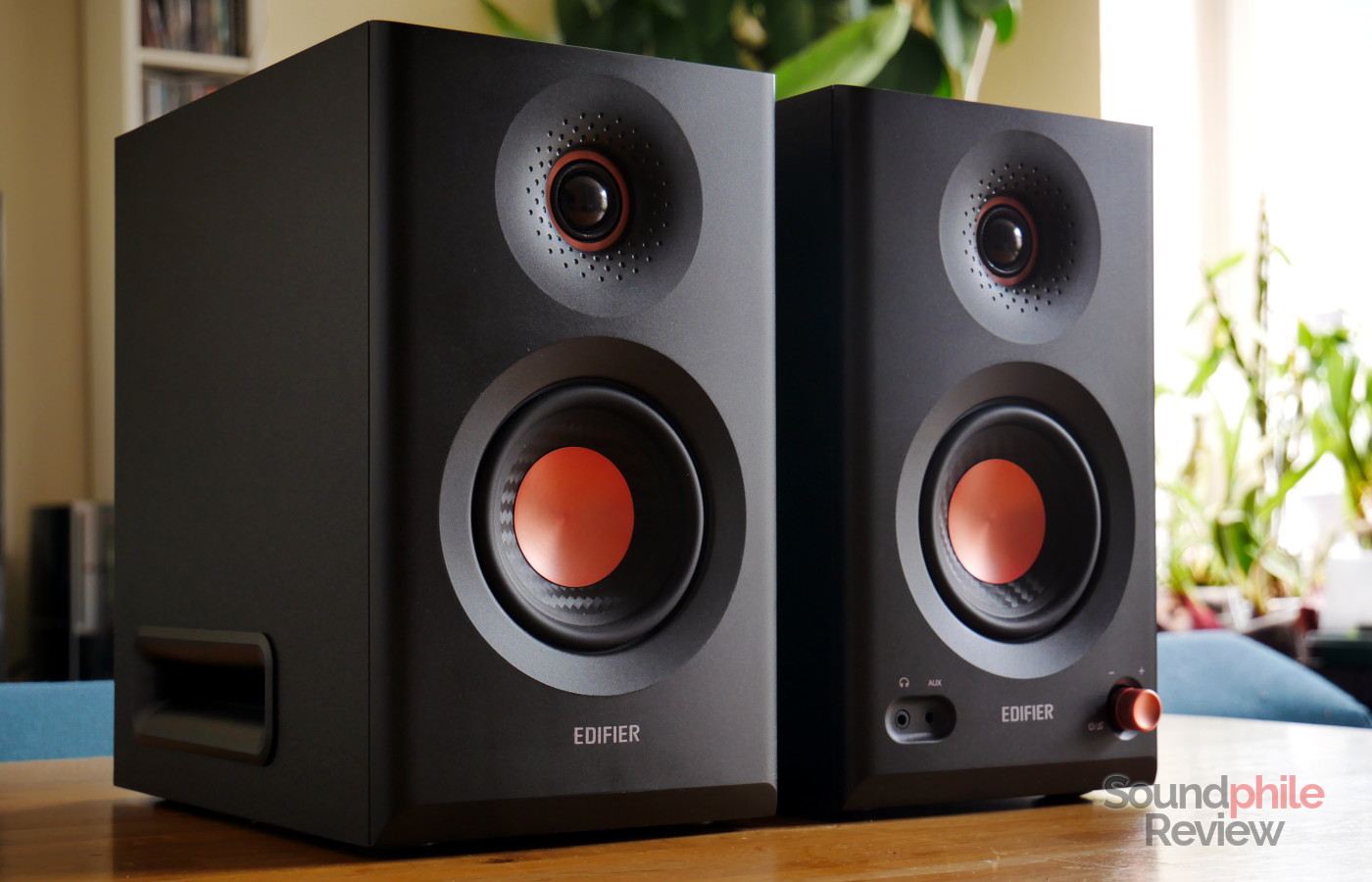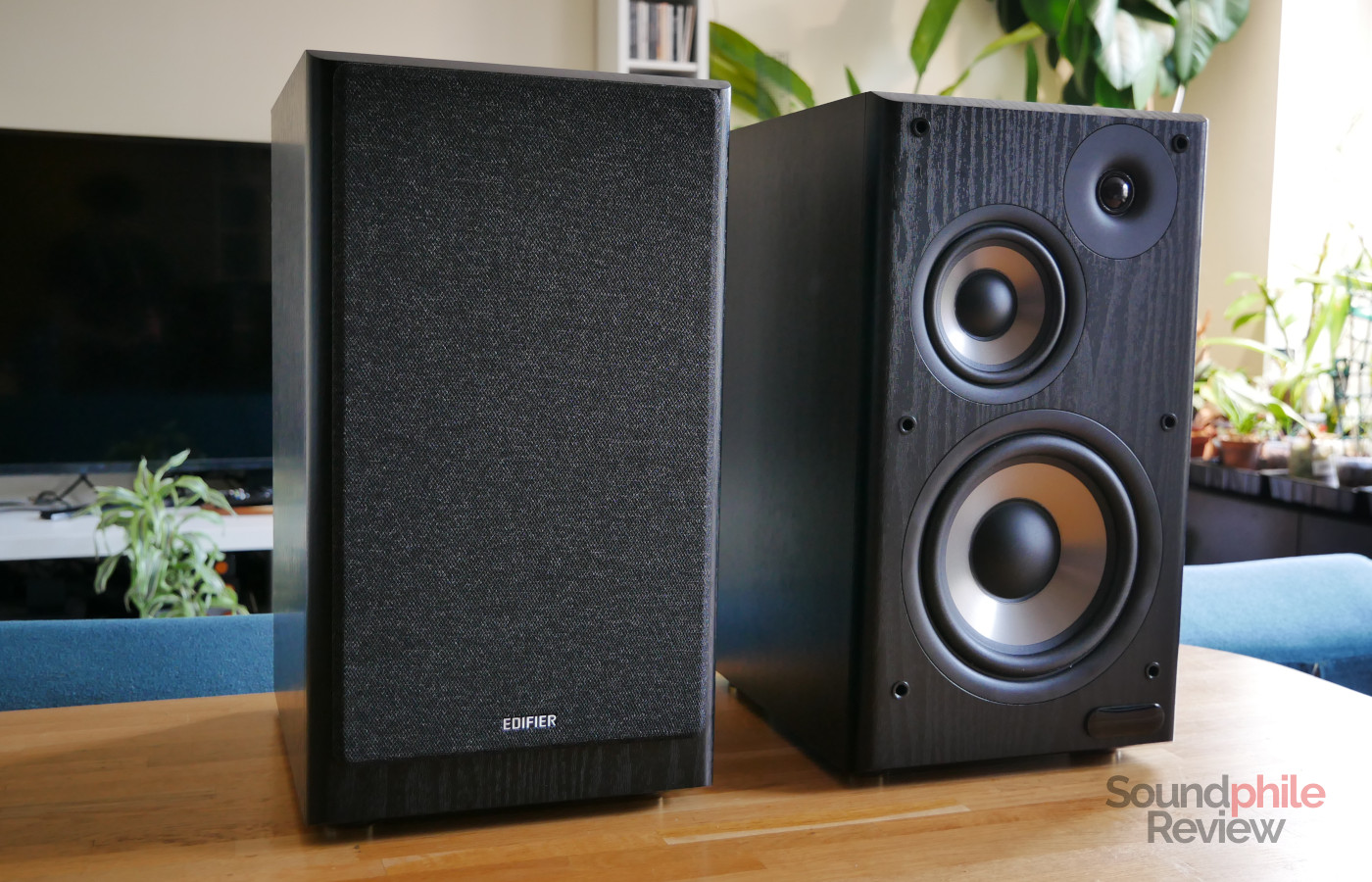
Bigger isn’t always better, but the Edifier R2750DB MKII show that sometimes that is indeed the case. These large bookshelf speakers sport massive 7″ woofers that make them very large, but also very capable. A subwoofer isn’t a necessity and this, together with the incredibly pleasant tuning, makes the R2750DB MKII great speakers whether you’d like to listen to some music or to include them in your home theatre setup.
Disclaimer: I received a free unit directly from Edifier, whom I thank. The R2750DB MKII retails for $499.99, £349.99 or €349.99. Additional information on Edifier’s official product page.
TL;DR: recap
| Pros |
Cons |
| + Elegant design
+ Lots of connectivity options + Amazing technicalities + Great detail + No hiss + Incredible value |
– Volume is reset after power cycling |
Rating: 9/10
Packaging & Accessories
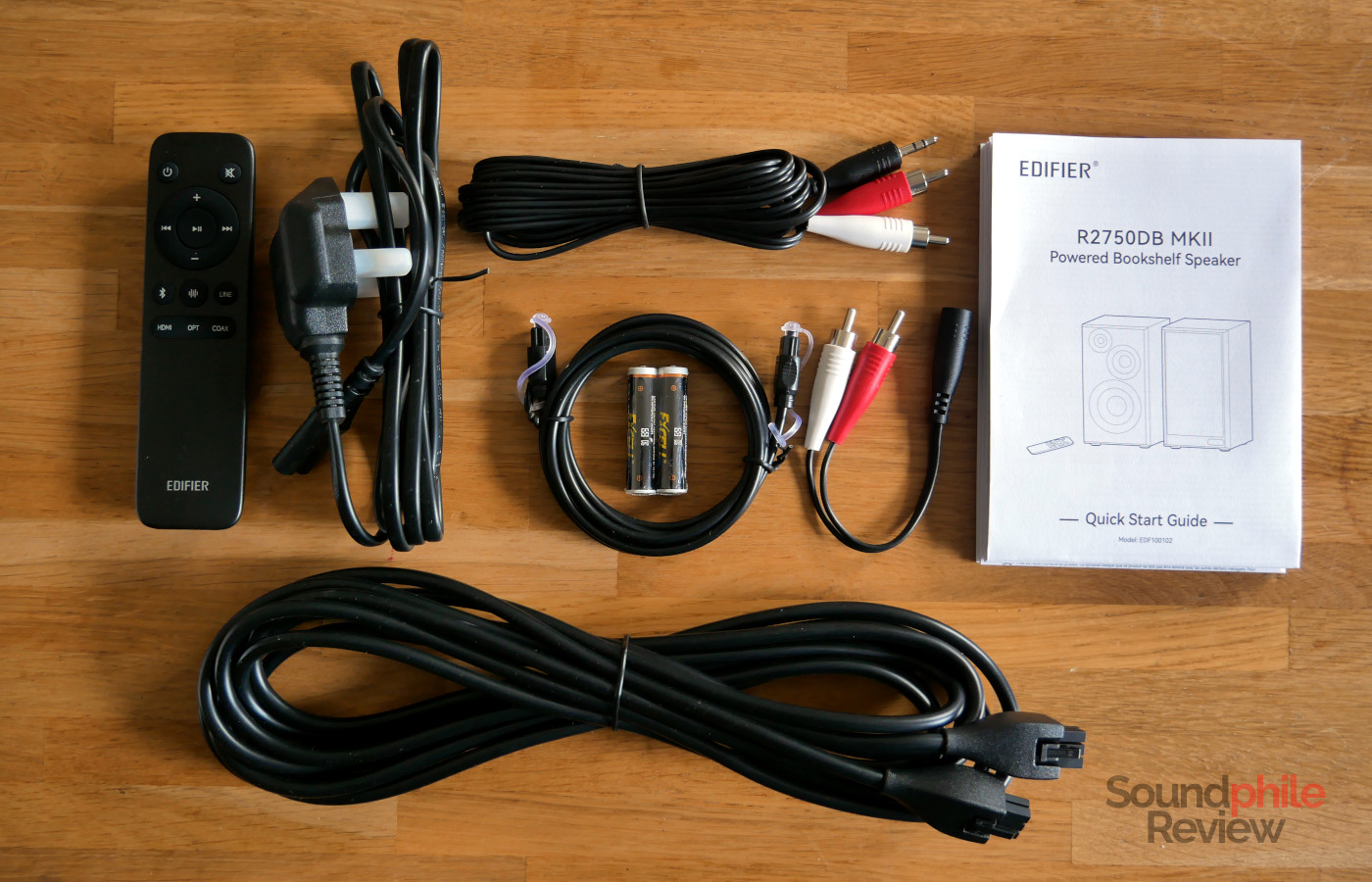
The Edifier R2750DB MKII come in a massive double box padded with abundant polystyrene. Inside the box we can find the speakers themselves as well as a rich set of accessories: a long (5 m) cable to connect the two speakers, a power cable, a male 3.5 mm to RCA cable, a female 3.5 mm to RCA cable, an optical cable, as well as a remote (which includes batteries) and a manual.
Design & Build
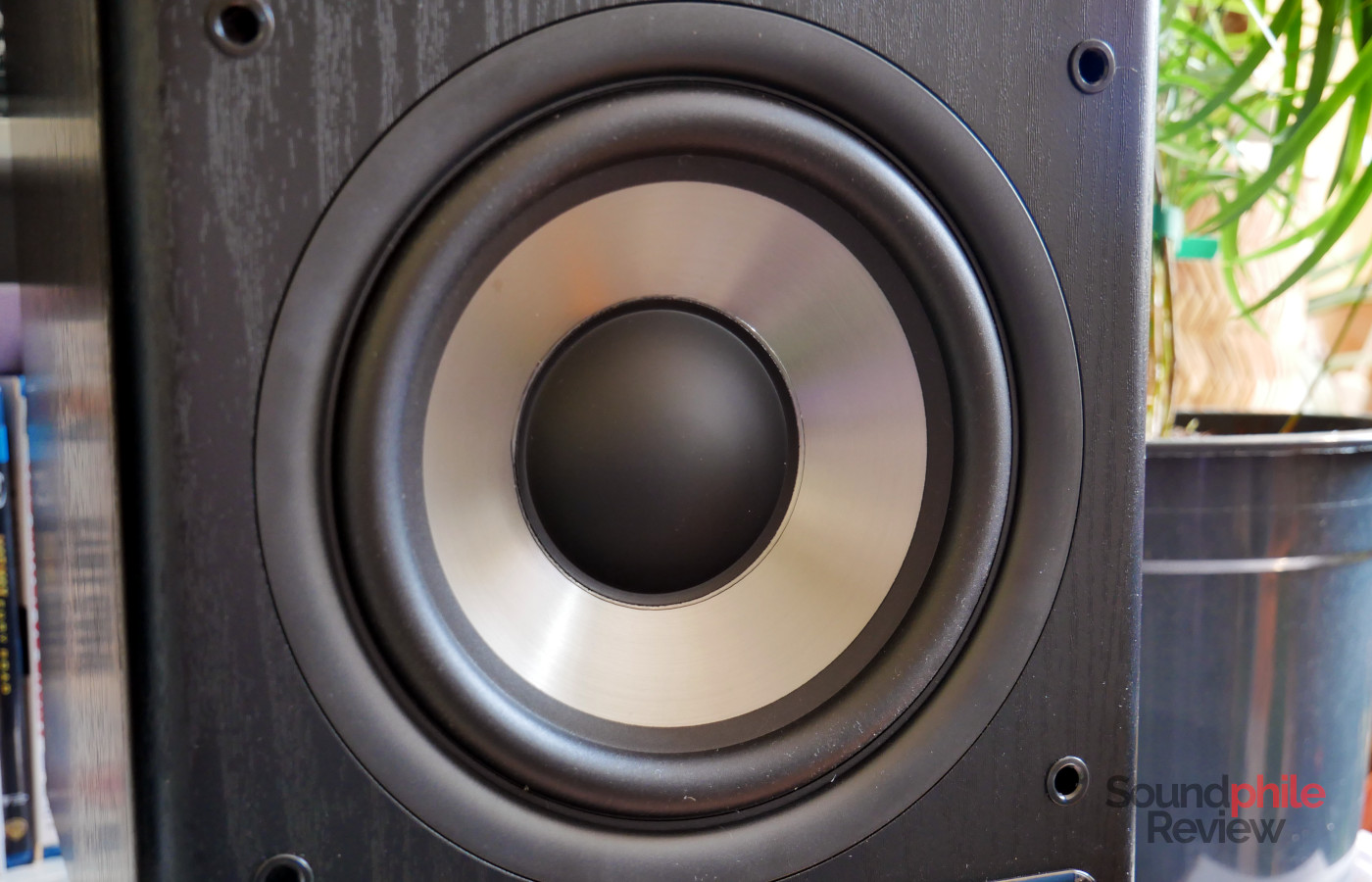
The first thing I noticed about the R2750DB MKII is how large they are. At 22.3 x 39.5 x 28 cm (W x H x D), they’re larger than your usual bookshelf speakers, especially in the sort of multimedia/home theatre segment that the R2750DB MKII are in. The size is due to the 7-inch woofer that takes a large portion of the front, and which is accompanied by a 4.5″ midrange driver and by a 1″ silk dome tweeter (so almost the same size as the drivers of the Edifier MR5). The cabinet is fairly larger than the size of the woofer, and it is made of wood covered with vinyl in either dark walnut or black. Either option is very classy and elegant; it should be noted that in both cases the front panel is coloured black.
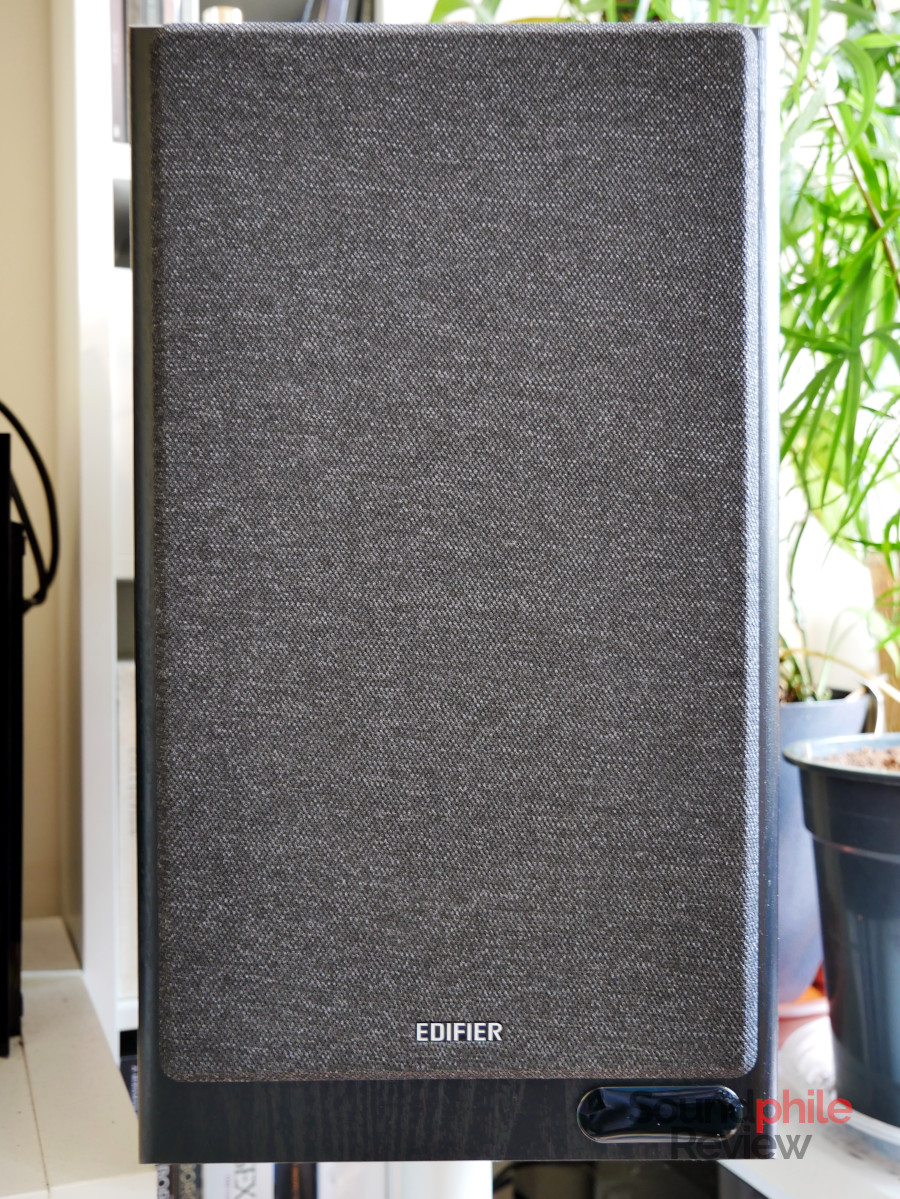
The drivers can be covered with a pair of dark grey fabric grilles which completely hide them; these are mounted by pushing them into corresponding mounting holes. It takes quite a bit of force to convince them to go in and, conversely, a lot of force to remove them, so much so that I couldn’t do it with my bare hands and I had to use a plastic tool to pry them away.
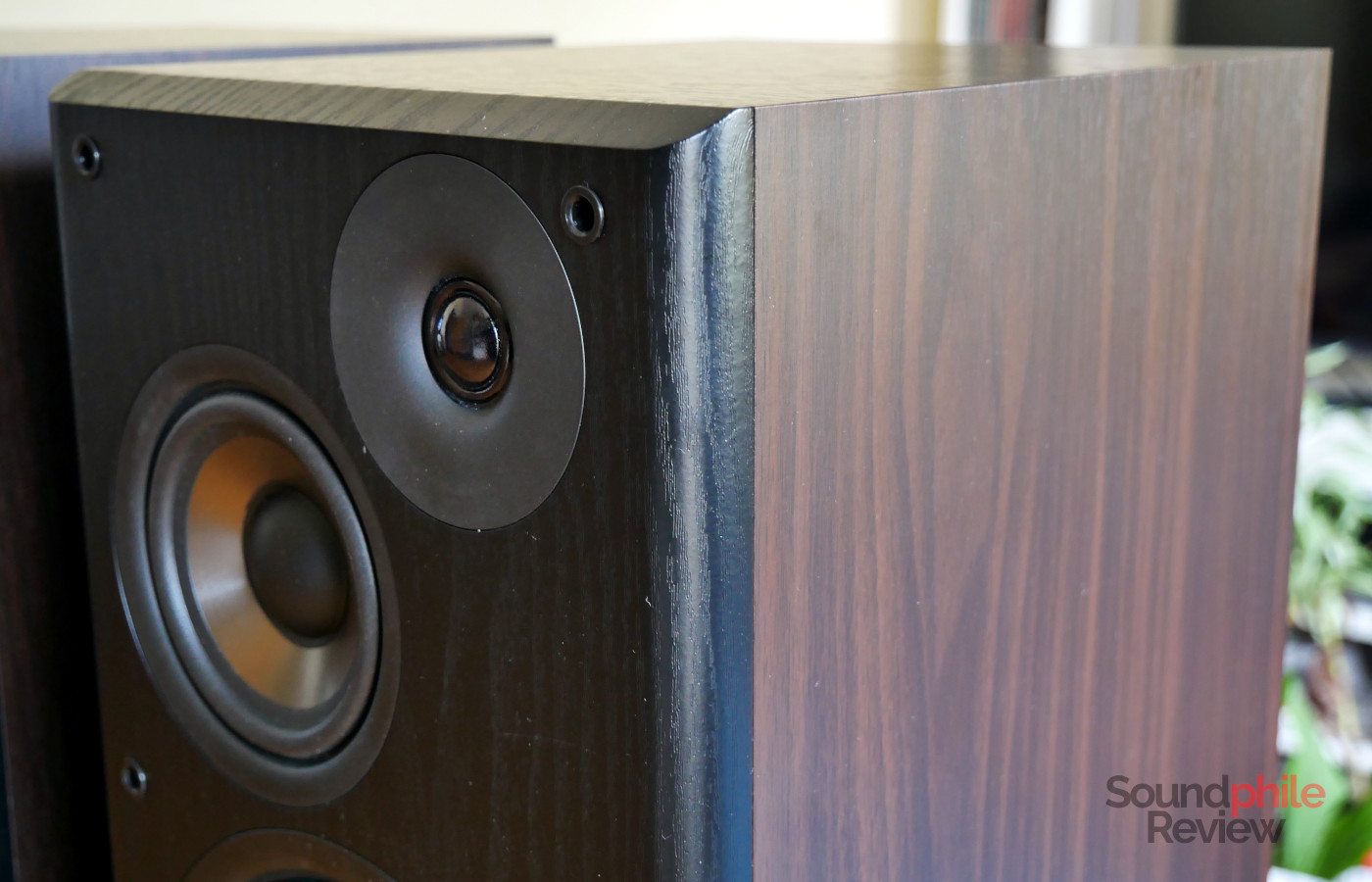
The cabinets are made of MDF covered in vinyl, while the front appears to be solid wood. Build quality is excellent and the speakers are very well assembled, with no apparent imperfections.
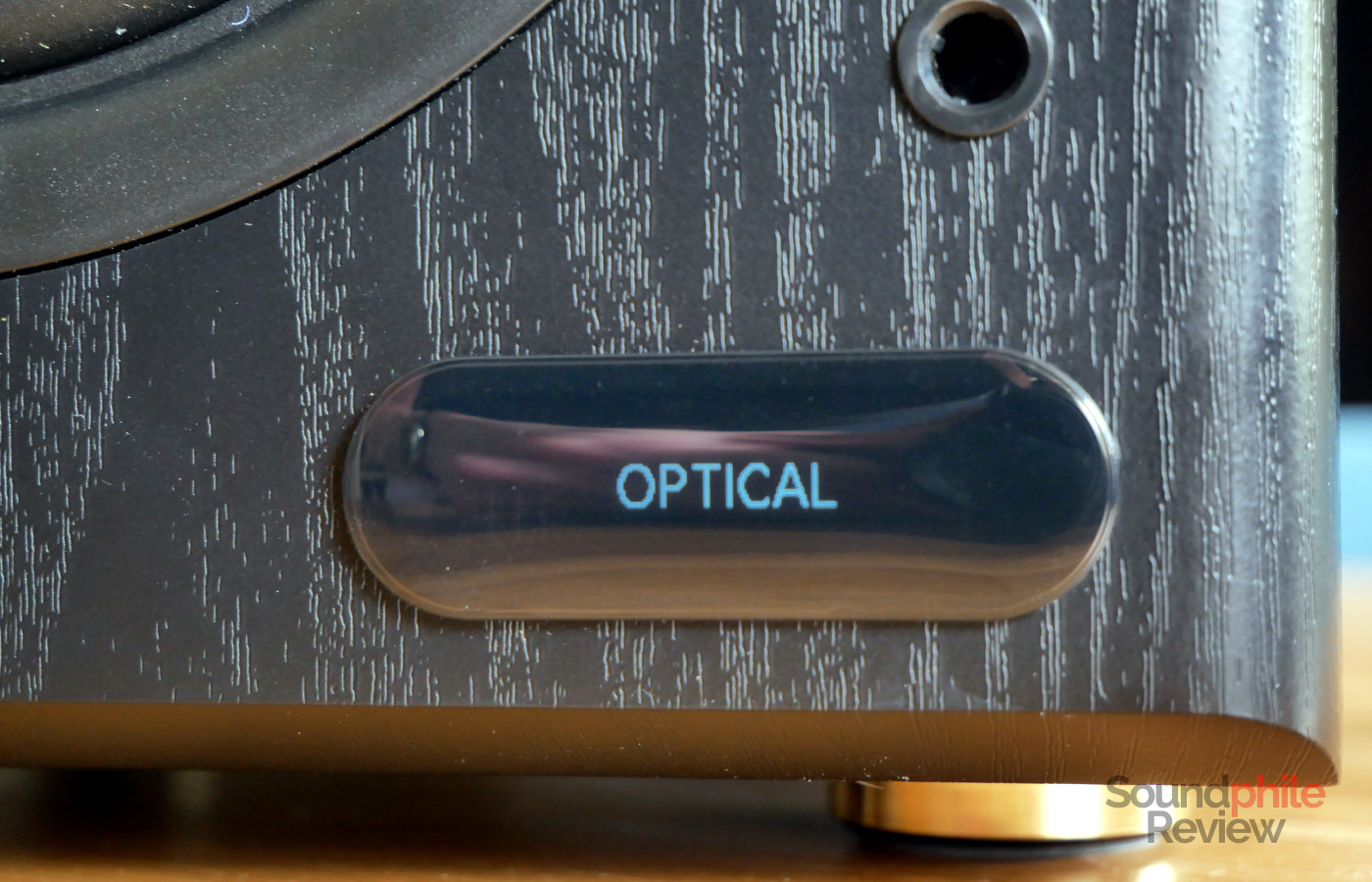
The front of the active speaker hosts a small OLED screen which tells you the status of the system: it normally displays the connection in use, but it can also display the volume, as well as the equalisation profile in use. The brightness is enough that it is visible even in a very bright room, and it lowers after a few seconds of inactivity.
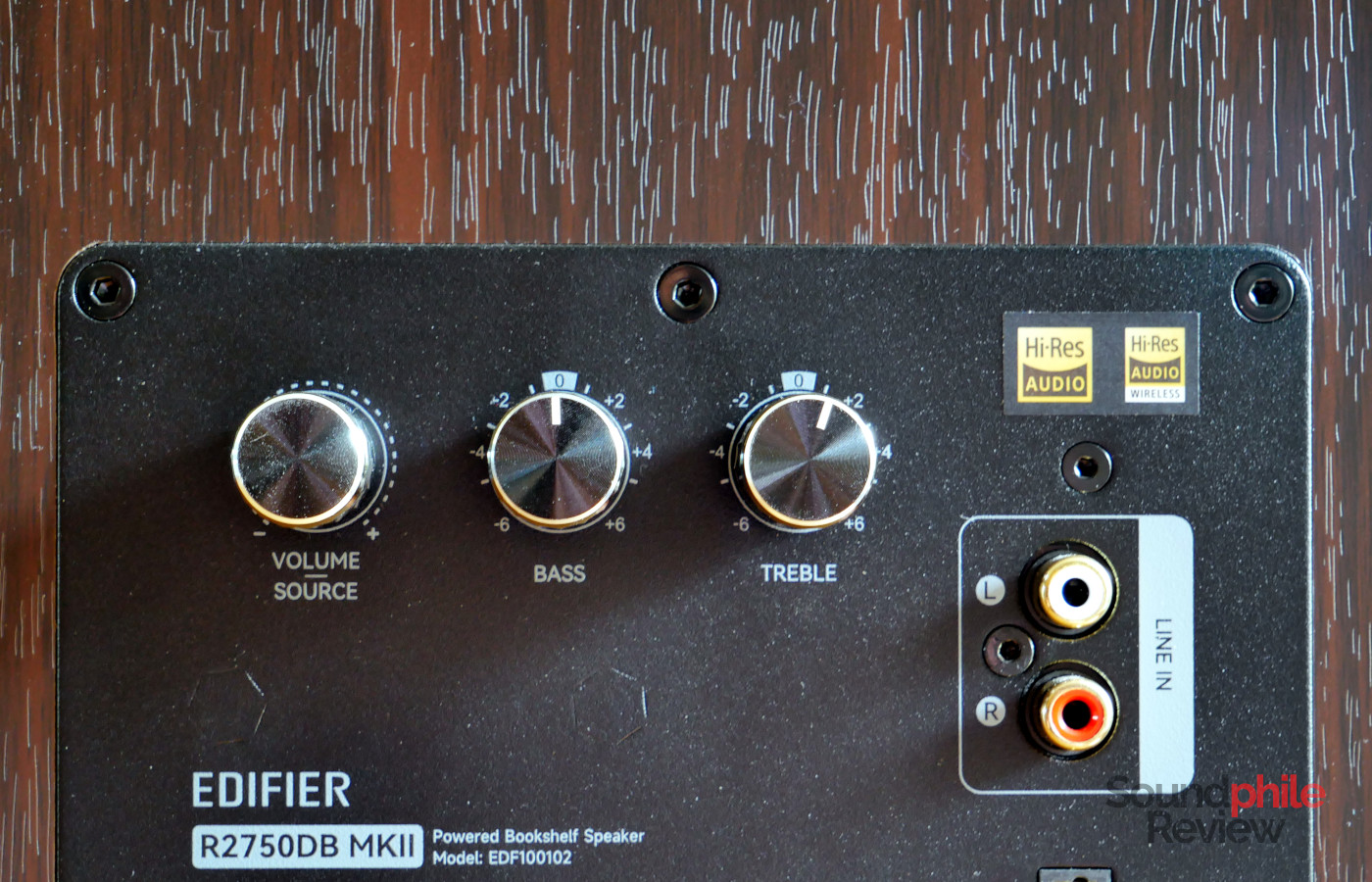
The back hosts a volume knob, as well as two knobs to adjust bass and treble. There are then various inputs: RCA, optical, coaxial and HDMI ARC, together with a 3.5 mm jack. A power switch and the power input complete the picture.
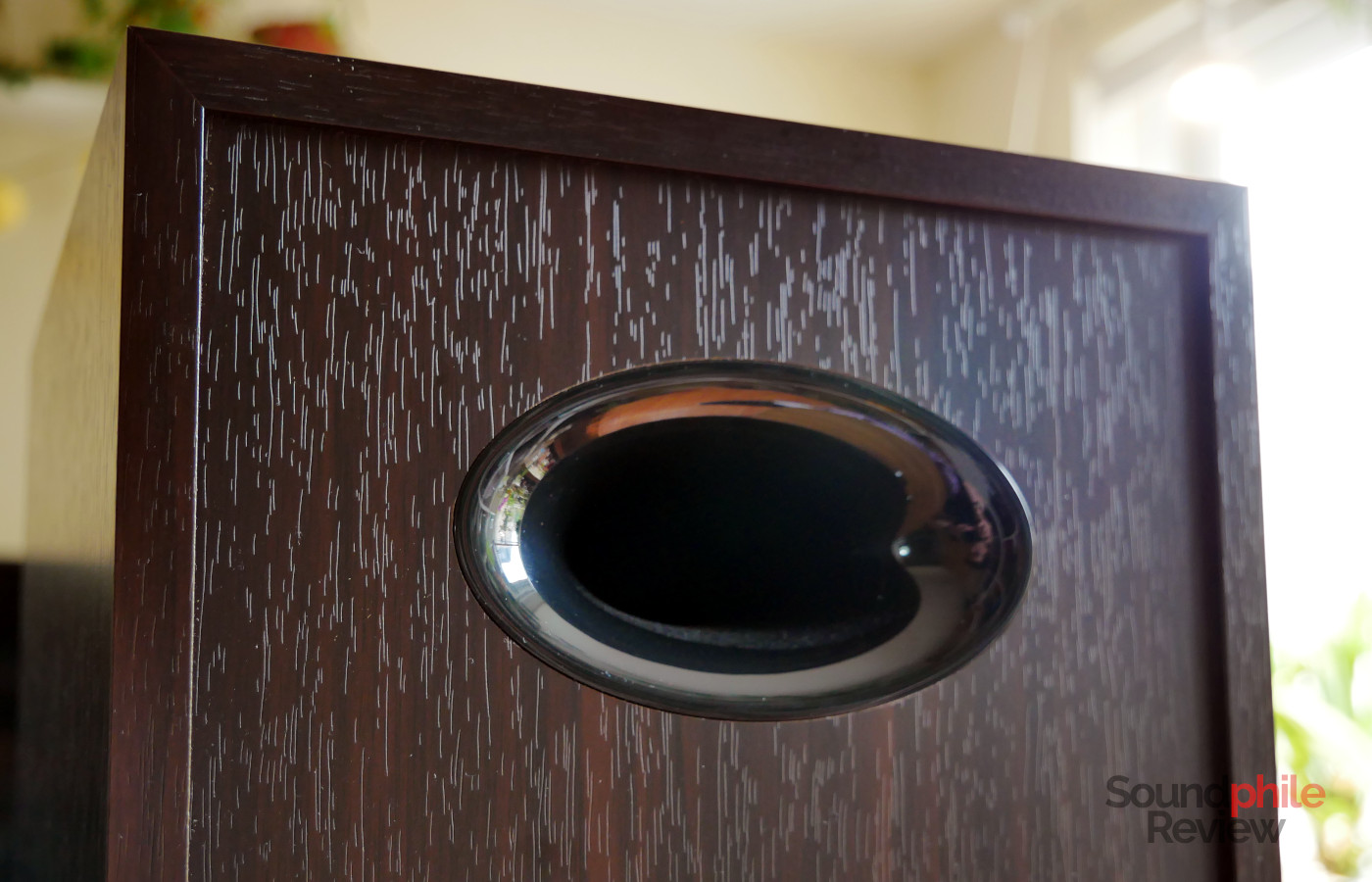
Contrary to the first generation, the R2750DB MKII has a backward-facing bass reflex, which could limit its positioning, though I found that the speakers actually don’t mind being close to a wall behind them as bass stays fairly controlled and contained.
Features & Specs
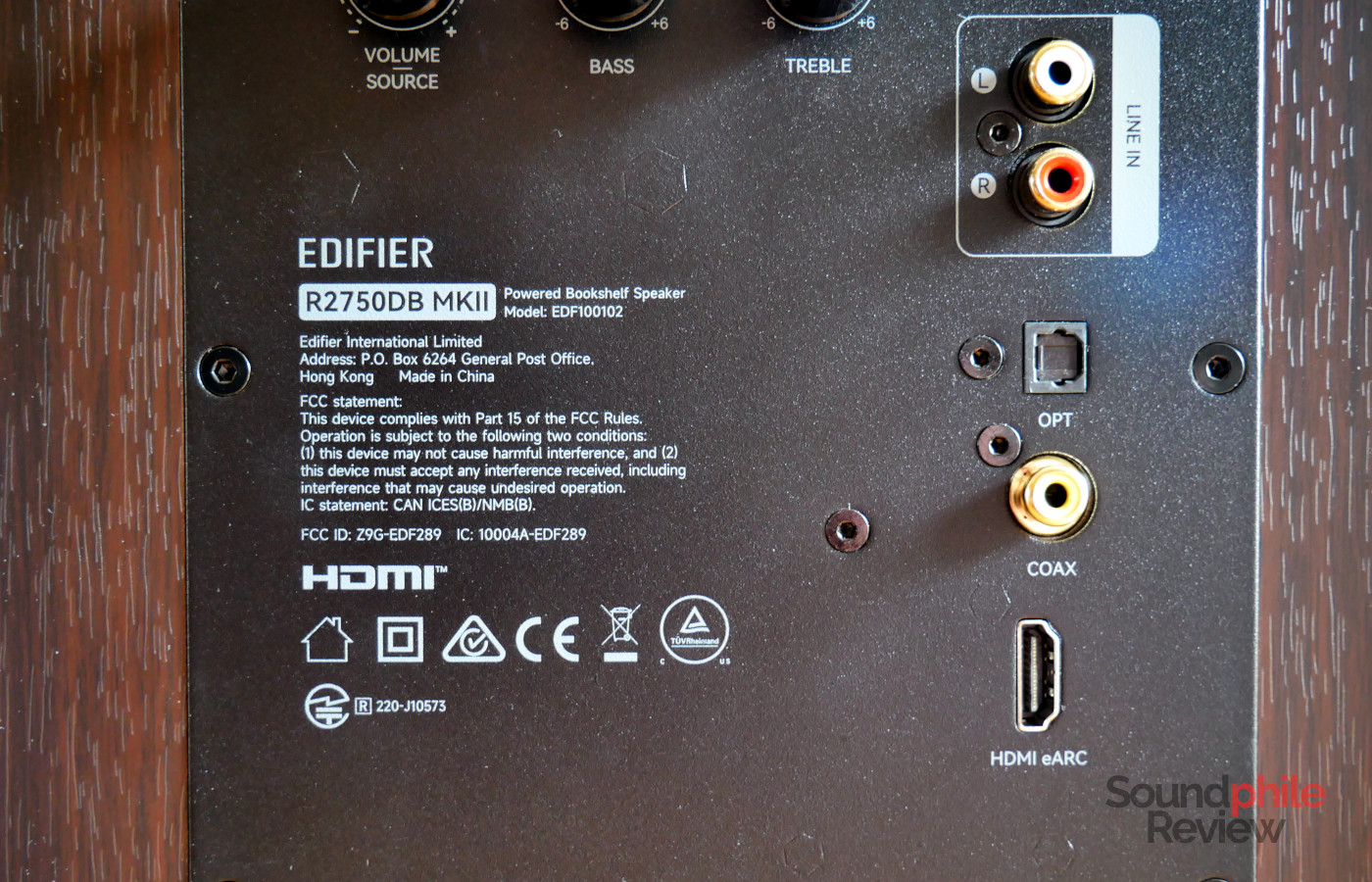
The Edifier R2750DB MKII offer a rich set of input connections, both analogue and digital: there are RCA, optical, coaxial and HDMI ARC, as well as Bluetooth. In terms of connectivity, the only thing that’s missing is a USB port to connect the speakers directly to a computer. There is also a subwoofer output port. The HDMI ARC input is a great option if you want to use the speakers as part of a home theatre system, as it gives you very easy means to connect to a TV; with compatible TVs, the speakers also automatically turn on and off with the television.
The Bluetooth connection (which uses Bluetooth 6.0) supports the SBC and LDAC codecs.
Edifier R2750DB MKII |
| Frequency response | 45 – 40,000 Hz |
| Inputs | RCA, optical, coaxial, HDMI, Bluetooth |
| Power output | 12 W p.c. (tweeter) 20 W p.c. (midrange) 40 W p.c. (bass) |
Each of the three drivers has its own separate amplification, with a total of 72 W per channel (or 144 W combined). This theoretically ensures that there is no interaction between the drivers and that the sound is cleaner.
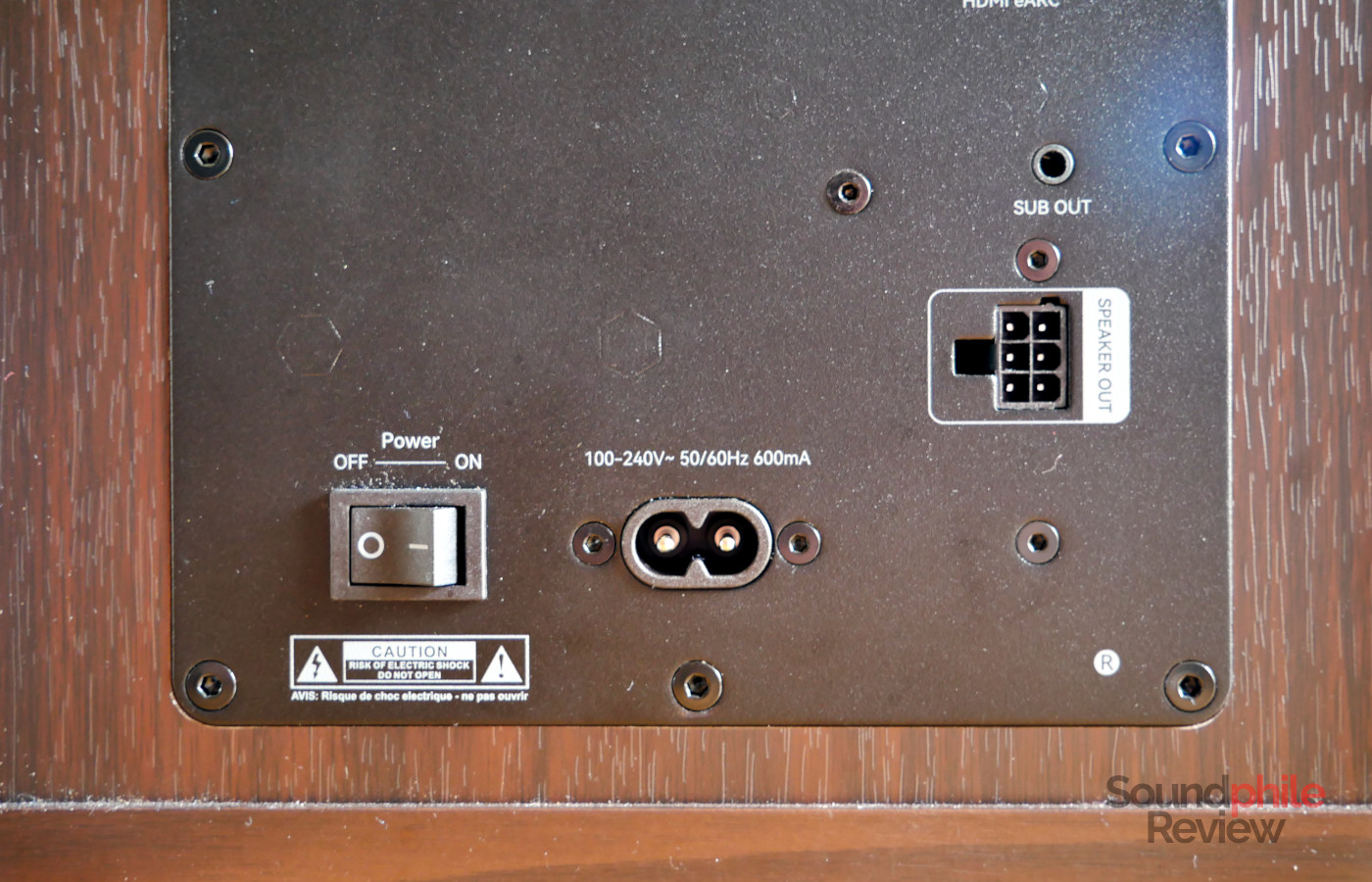
When the speakers power up, it takes a few seconds before they’re ready to play, and if you start reproducing sounds before they’re read, they will start playing them with a fade-in effect.
Like the MR3 and MR5, the R2750DB MKII resets its volume when you turn it off and on again: it is re-set to 10 if it is below that threshold, while there is no such measure if it is too high – if you set it to the maximum level of 50, it stays that way. This can be annoying if, like me, you only need a lower volume for audio to be audible and find 10 too high.
The R2750DB MKII come with their own remote which you can use to power the speakers on and off, mute them, adjust the volume, start or pause the playback, select the input (with each input having its own dedicated button) as well as select the EQ profile.
Software
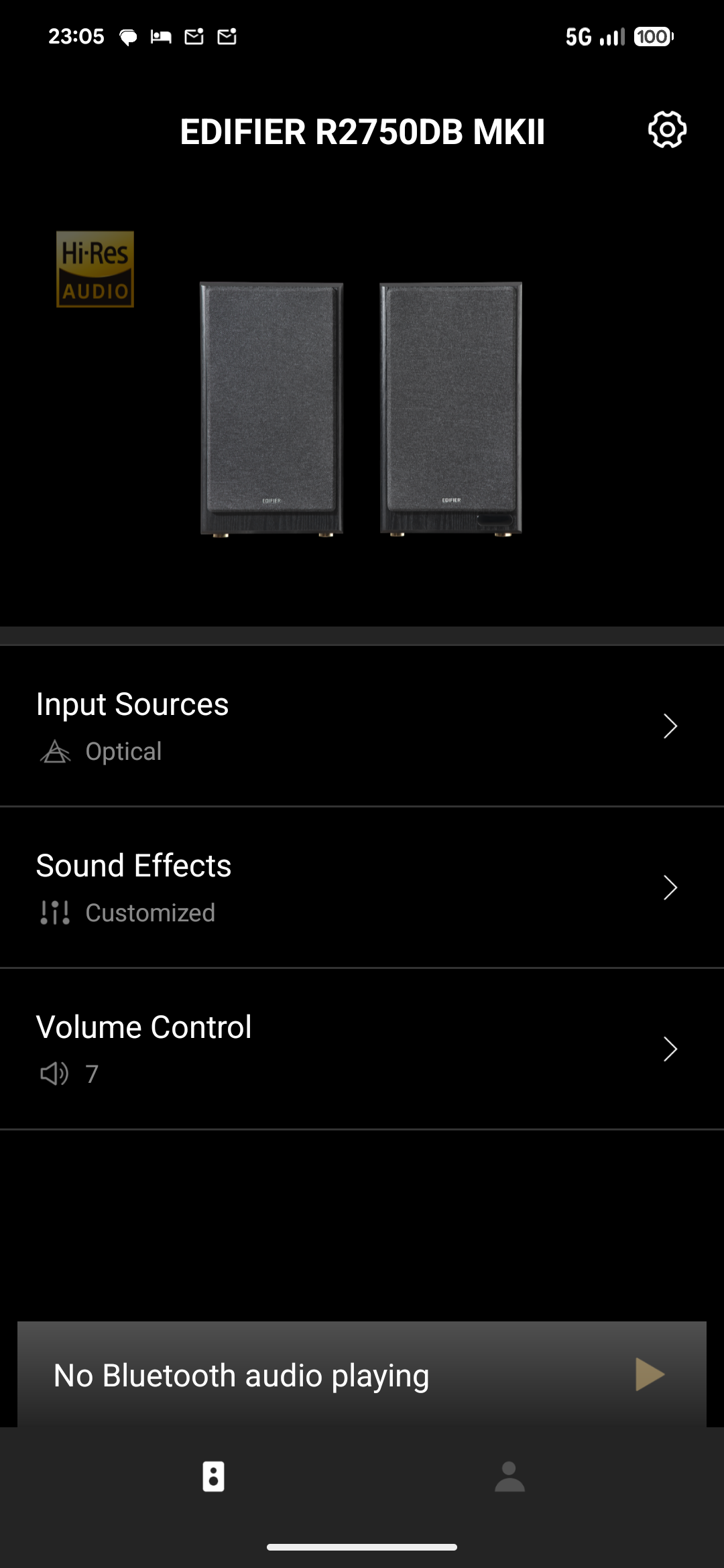
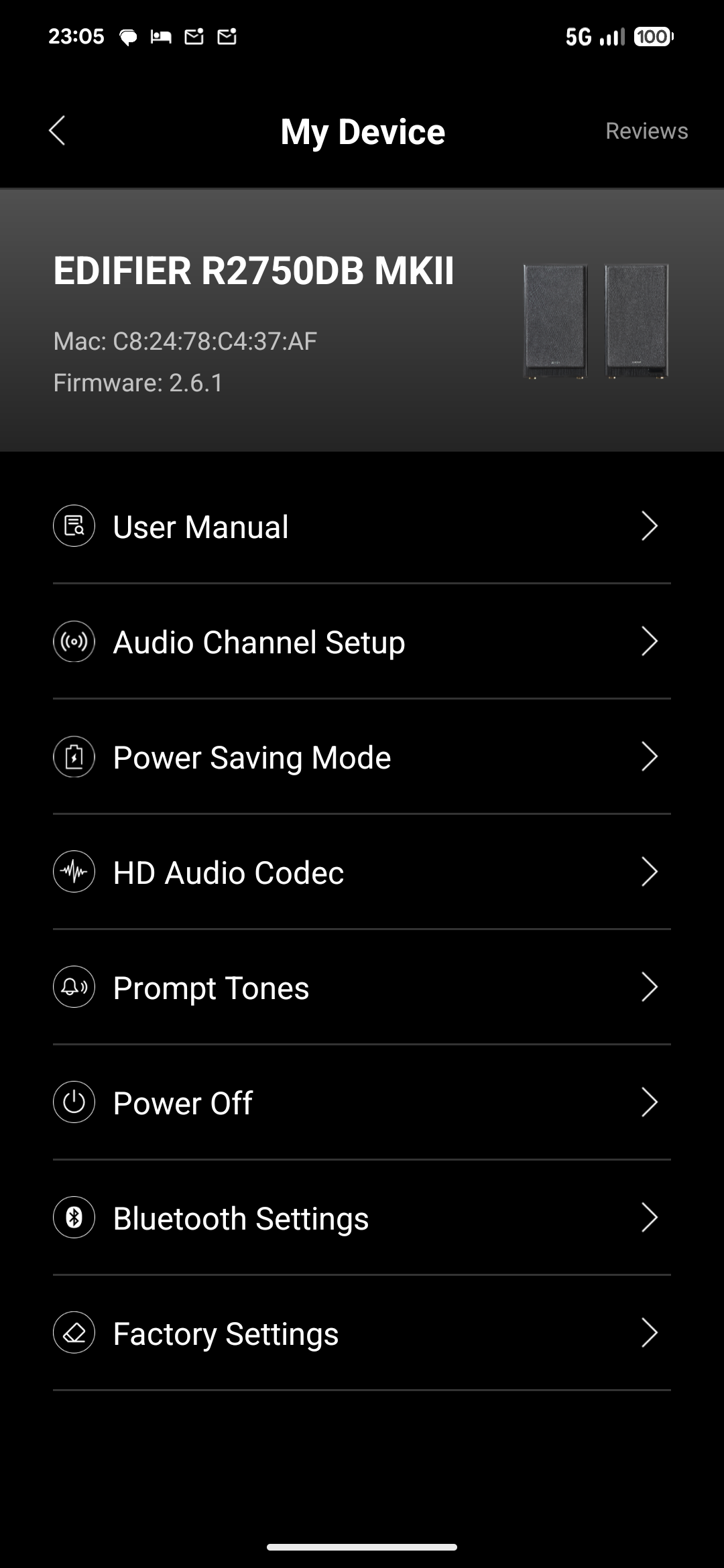
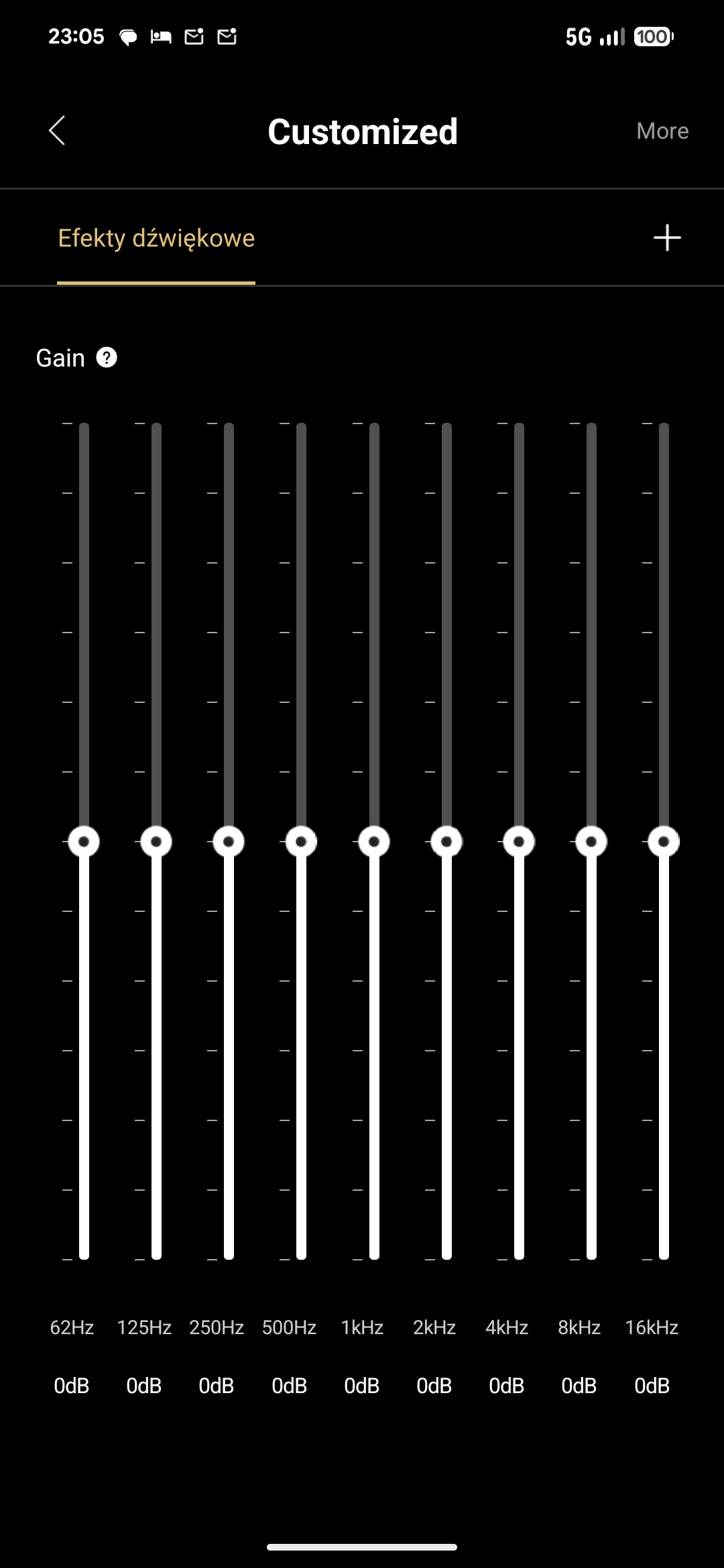
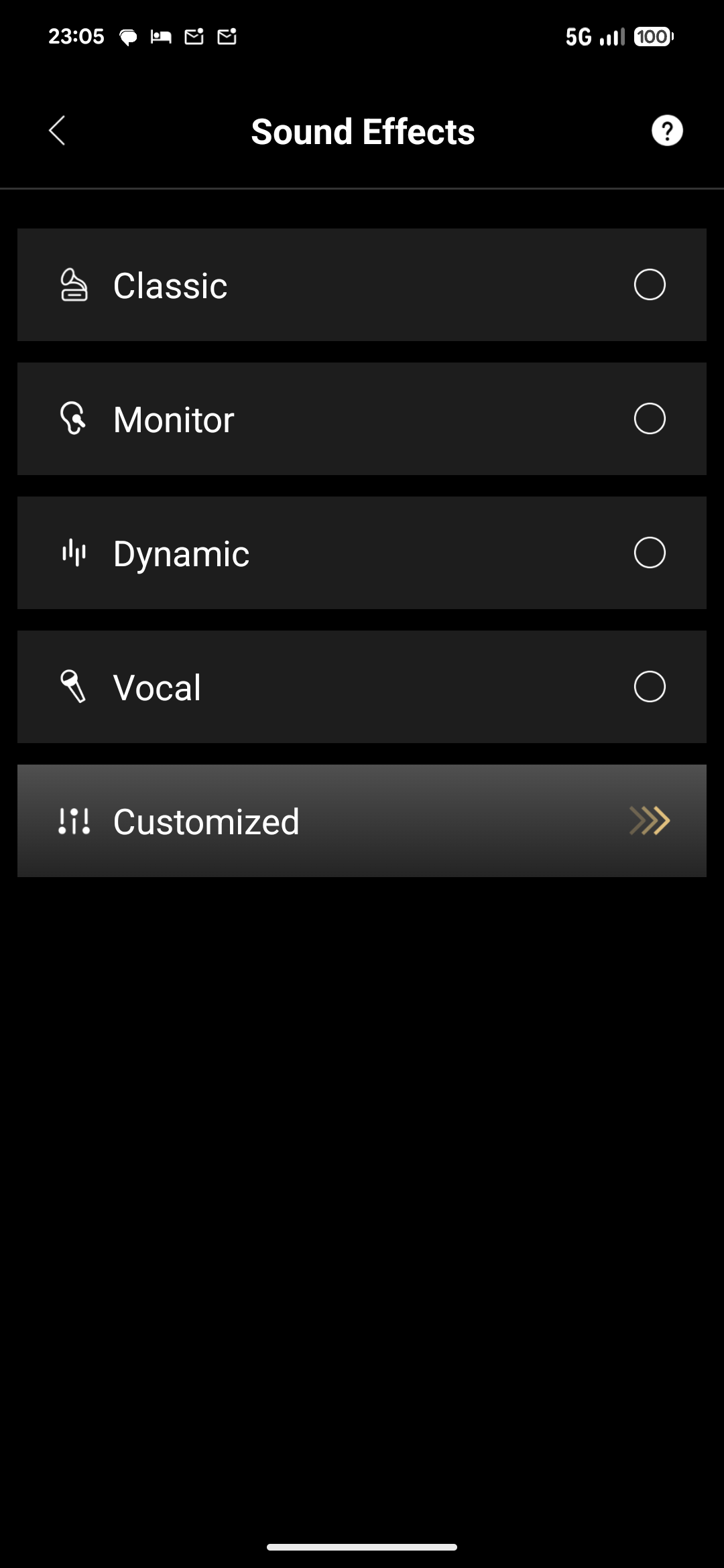
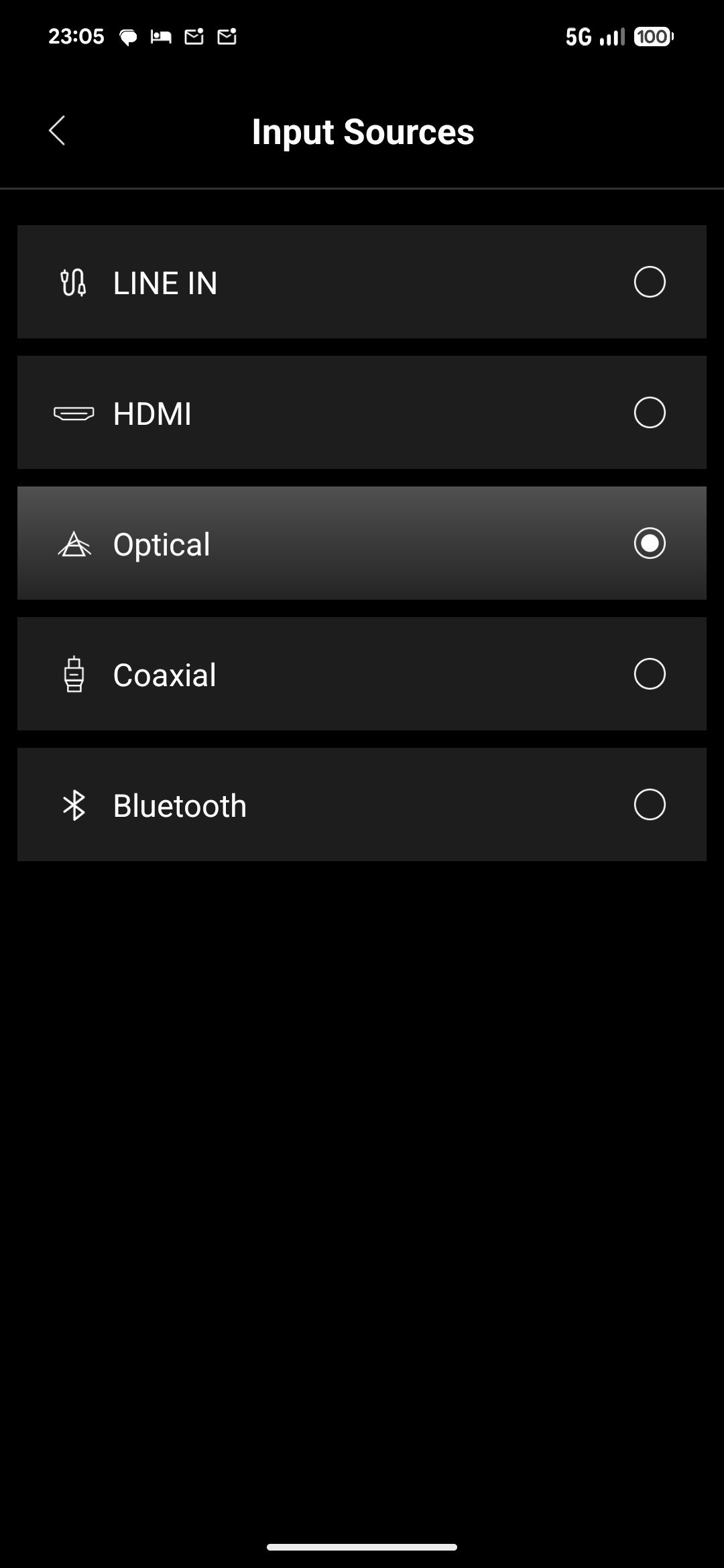
The Edifier ConneX application, available for both Android and iOS, allows you to alter many settings on the R2750DB MKII. It allows you to choose the desired input and set the equalisation profile and the volume. It also allows you to access the instructions manual, to select which channel corresponds to the active speaker, whether the speakers turn themselves off after 15 minutes of inactivity, the LDAC mode (standard resolution or hi-res, but you can also turn it off entirely) and whether to reproduce a sound when a Bluetooth device connects. You can also turn off the Bluetooth connection as well as the speakers themselves from the app, and you can factory resets them as well.
The equaliser offers nine bands (62, 125, 250, 500 Hz; 1, 2, 4, 8 and 16 kHz) which can be adjusted between ±3 dB, which isn’t much but is sufficient for basic tuning.
Although there is no specific button for it in the settings, the app automatically notifies you of available firmware updates.
Sound
I tested the Edifier R2750DB MKII with a variety of sources and connections, including a Google Pixel 7 Pro smartphone connected via Bluetooth and my computer connected via optical cable.
The soundstage on the R2750DB MKII is reasonably wide, although it rarely feels like it extends beyond the physical position of the speakers themselves – only in few occasions it gives you the illusion that instruments are further to the right or to the left of the two speakers. It does, however, offer the illusion that there is quite a lot of space further behind your speakers and that sounds comes from a point that’s further in the distance than it actually is, which is quite remarkable. Imaging offers amazingly accurate positioning of instruments on the scene, and you can easily point at the exact place of each instrument not just in width, but in depth too. The instruments are always well-separated, even in highly layered tracks.
The Edifier R2750DB MKII are incredibly versatile and can seemingly do everything effortlessly, which is a feat in and of itself. By this I mean that I can listen to metal or classical music, as well as watch an action movie or play a game, all with the same great results. The R2750DB MKII have a frequency response that’s flat enough to manage anything and everything that you throw at it. I find these speakers to be especially suited for home theatre setups, as they offer great bass depth and slam out of the box. While they would certainly benefit from a subwoofer to get that “thump” in the deepest bass area, these speakers do very well with bass even on their own. Interestingly, they’re not too picky when it comes to directionality and the sweet spot they offer is relatively wide on the horizontal plane (while they are fussier with vertical alignment, and you should try to maintain the tweeters at ear level).
Bass is impressive, especially in terms of depth and in how effortlessly it displays that depth even at low volume. As a practical example, Snarky Puppy’s Sintra showcases this well as the rumbling of the skin on a bass drum at the very beginning of the track is very clearly audible. The 7-inch woofer shows what it can do by offering quite a bit of sub-bass which slowly declines below the 50 Hz mark – and the key here is “slowly”, as there is still some audible presence at 30 Hz and below. This makes the sound feel full, rich and well-rounded. Zooming out, bass is well balanced with the rest and sits just in the right spot, as it is clearly present without overstepping its boundaries. Speed is such that transients are immediate and hard-hitting, with a clearly physical sensation; drums hit hard and fast and you can feel the hit on the skin.
What I especially love about the R2750DB MKII is the texture they offer in the midrange. In Snarky Puppy’s Atchafalaya, the brass instruments are lively and pop out of the mix with an almost physical presence – especially the horns. More generally, the level of detail, control and speed is very high, which helps instruments feel like they’re coming alive – as an example, in The Far Side of the World from the Master and Commander soundtracks, the plucked violins near the end of the track feel almost physical. The same happens in the following track, Violin Concerto No. 3 “Strassburg” K216, 3rd Movement by Mozart, where the plucking of the strings is immediate and sudden, or in Rodrigo y Gabriela’s Diablo Rojo with the hitting on the body of the guitars. This level of detail and physicality is kept even in crowded, layered tracks, which seems to support Edifier’s choice of using three drivers.
Treble is well balanced with the rest and has decent extension. It is relatively relaxed and laid-back, with no fatiguing peaks or bumps; in fact, smoothness is its best quality. Even tracks with a lot of cymbals are never aggressive, which is going to be welcome by the treble-sensitive folks. This comes, however, at some expense: compared to the rest of the range, treble sits in a weird spot, as it lacks some feeling of air and lightness. While it offers a very good level of detail and quite a bit of micro-details (see the classic Blue Rondo à la Turk by the Dave Brubeck Quartet as a good example of this), cymbals and crashes sound less incisive than they could. Treble sounds like it’s too immediate, like there was a damper applied to it that makes it stop too soon.
The stock EQ presets alter the sound quite significantly: while the difference between the “Classic” and “Monitor” presets is overall minor, the “Dynamic” preset dramatically boosts bass (especially in the sub-bass area) and treble so that the speakers have more of a U-shaped tuning, while the “Vocal” preset reduces bass very significantly so that midrange emerges clearly from the mix.
Final Thoughts
If I didn’t know that the Edifier R2750DB MKII cost $499, and even less in Europe, I would not believe it. At this price it is really hard to find faults with them. In fact, they sound better than they have any right to at this price point, even considering the premium you pay in the US. Although this might sound like the usual hyperbole from a reviewer, I am not one to cede to hyperbole easily, as long-term readers can attest. In this case, enthusiasm is simply justified by how great these speakers are.
The relatively flat frequency response, the good amount of details, the amazing technicalities and the fact that the R2750DB MKII simply sound good all contribute to making these speakers a fantastic option. They are awesome as speakers to listen to music, and they are fantastic for home theatre setups, too, especially if you want a stereo setup that doesn’t take too much space and doesn’t strictly require a subwoofer. This is actually what’s fantastic about the Edifier R2750DB MKII: they are self-sufficient. While that might sound weird as a form of praise, it means that you can set them and forget about your setup. They just work and they work well, and they can easily be the kind of speaker that you get and then simply keep on using indefinitely – no reason to upgrade when they sound this good.
I therefore fully recommend the Edifier R2750DB MKII. They’re impressive speakers that deserve all the praise they can get. Just buy them already.