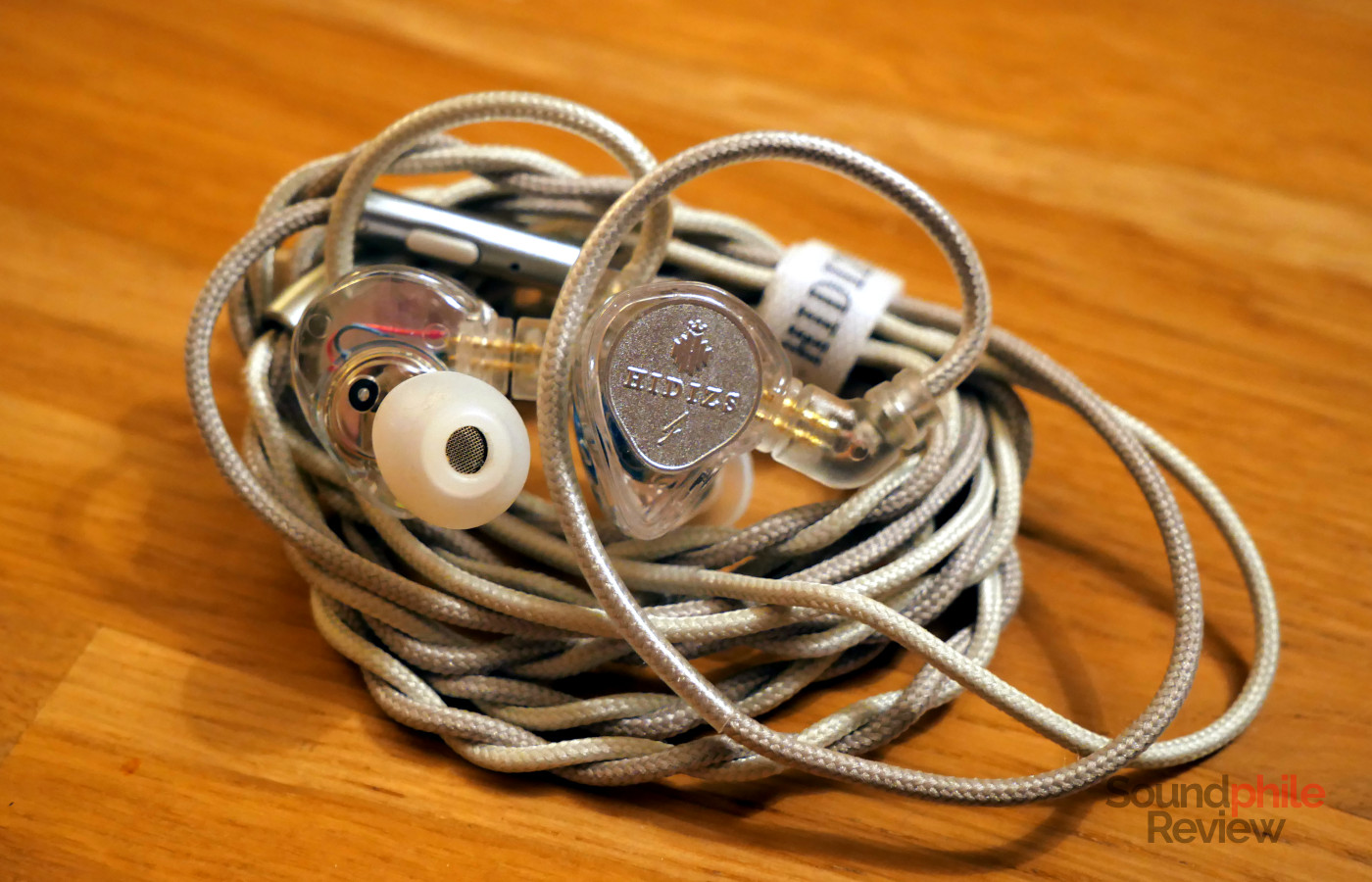
Different materials have different acoustic properties. That’s been known for a while, and it’s the reason why luthiers have, for centuries, used different woods to impart different characteristics to the sound of their instruments. It is therefore no wonder that headphone manufacturers do the same. The Hidizs MK10 ArcSonics are an example of this, as they are built using a silicon carbide diaphragm. Let’s see how it behaves.
Disclaimer: I received a free unit directly from Hidizs. The MK10 ArcSonics retail for $69. Additional information on the manufacturer’s website.
TL;DR: recap
| Pros |
Cons |
| + Very high build quality
+ Comfortable + Great level of detail + Superb transient speed |
– Virtually no passive isolation
– Weird imaging |
Rating: 8/10
Packaging & Accessories
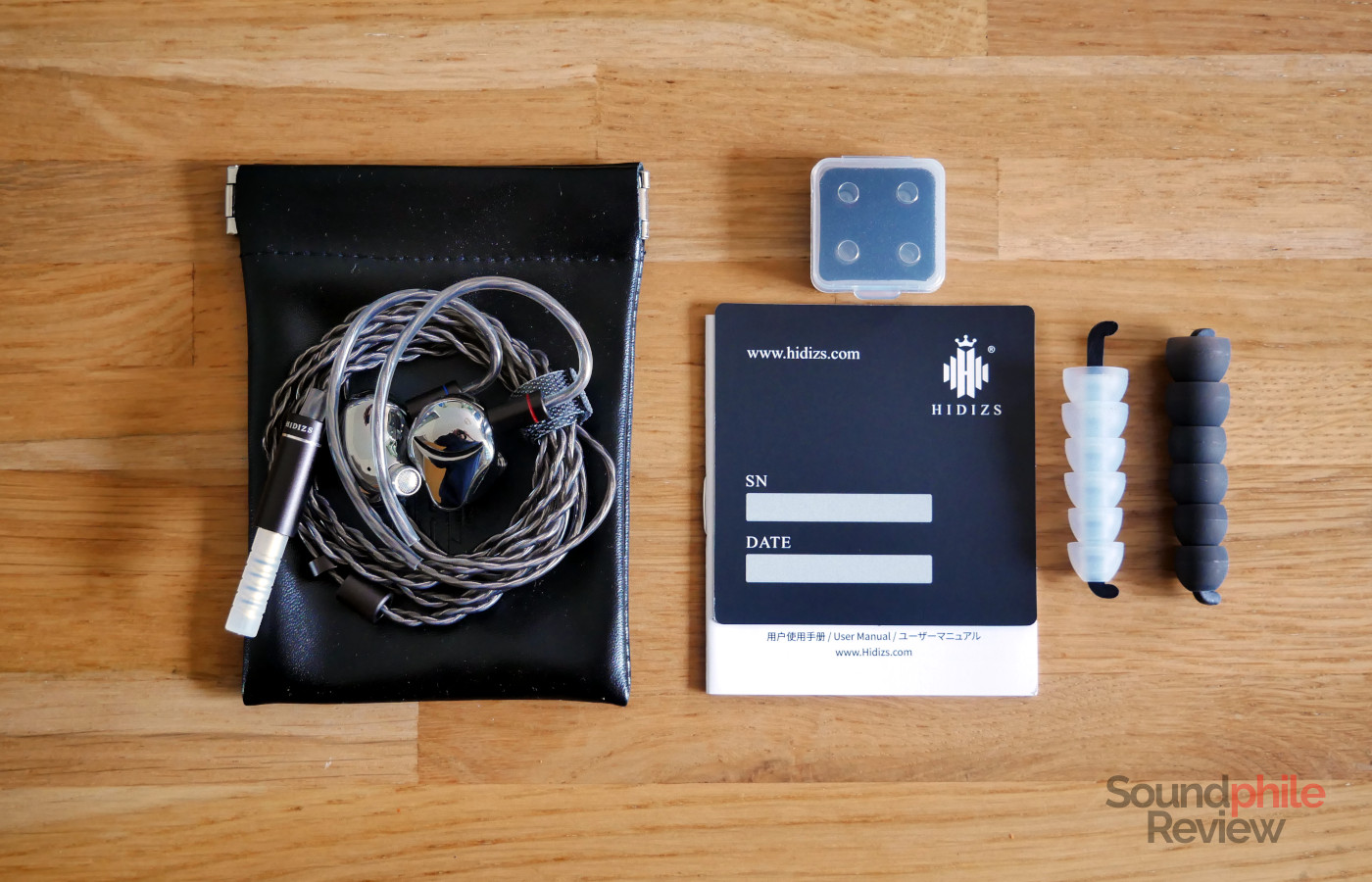
The MK10 ArcSonics come with a full set of accessories which includes the detachable cable, two sets of eartips in three sizes (S/M/L) and three nozzles with different acoustic filters applied.
Design & Comfort
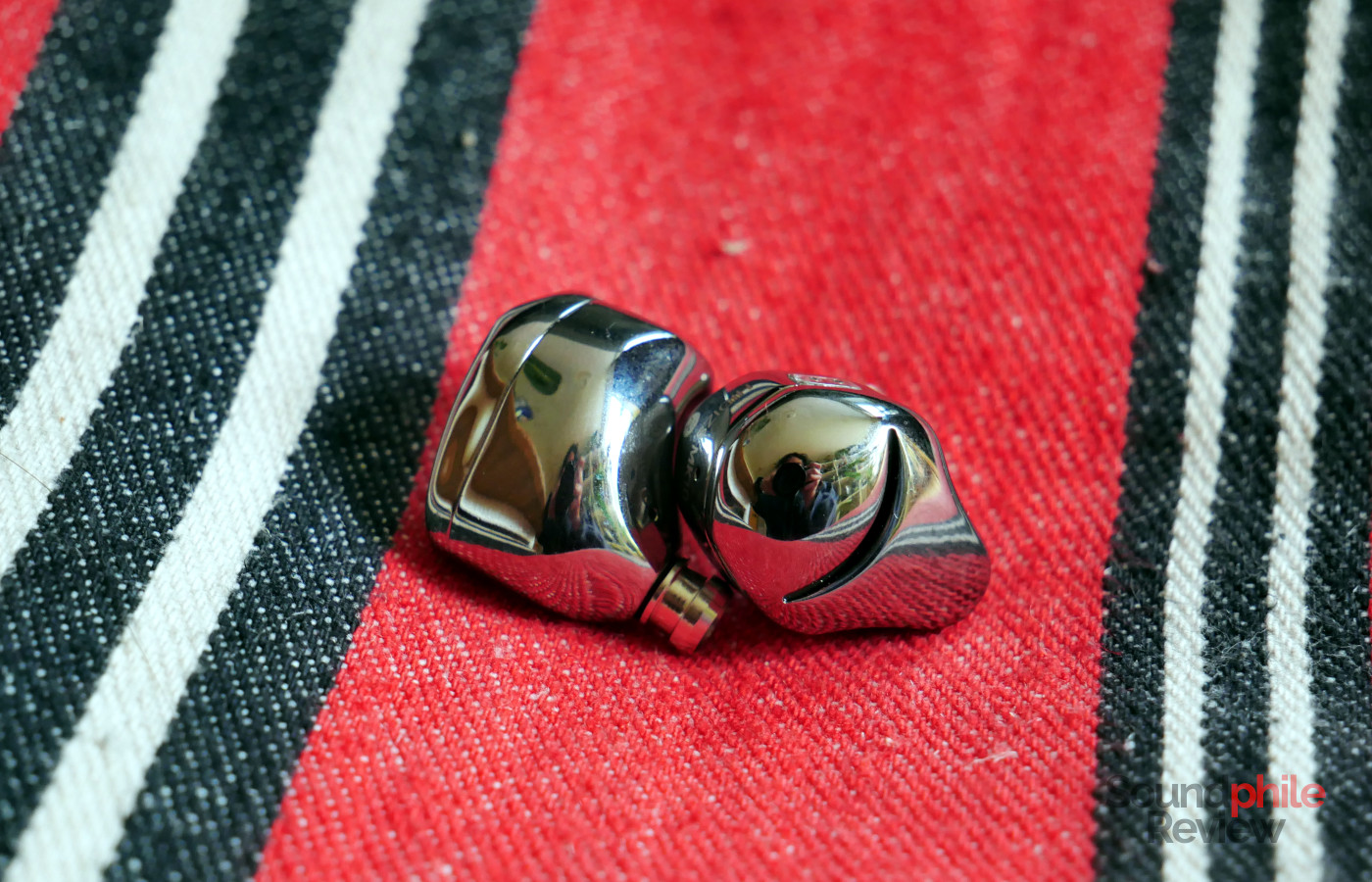
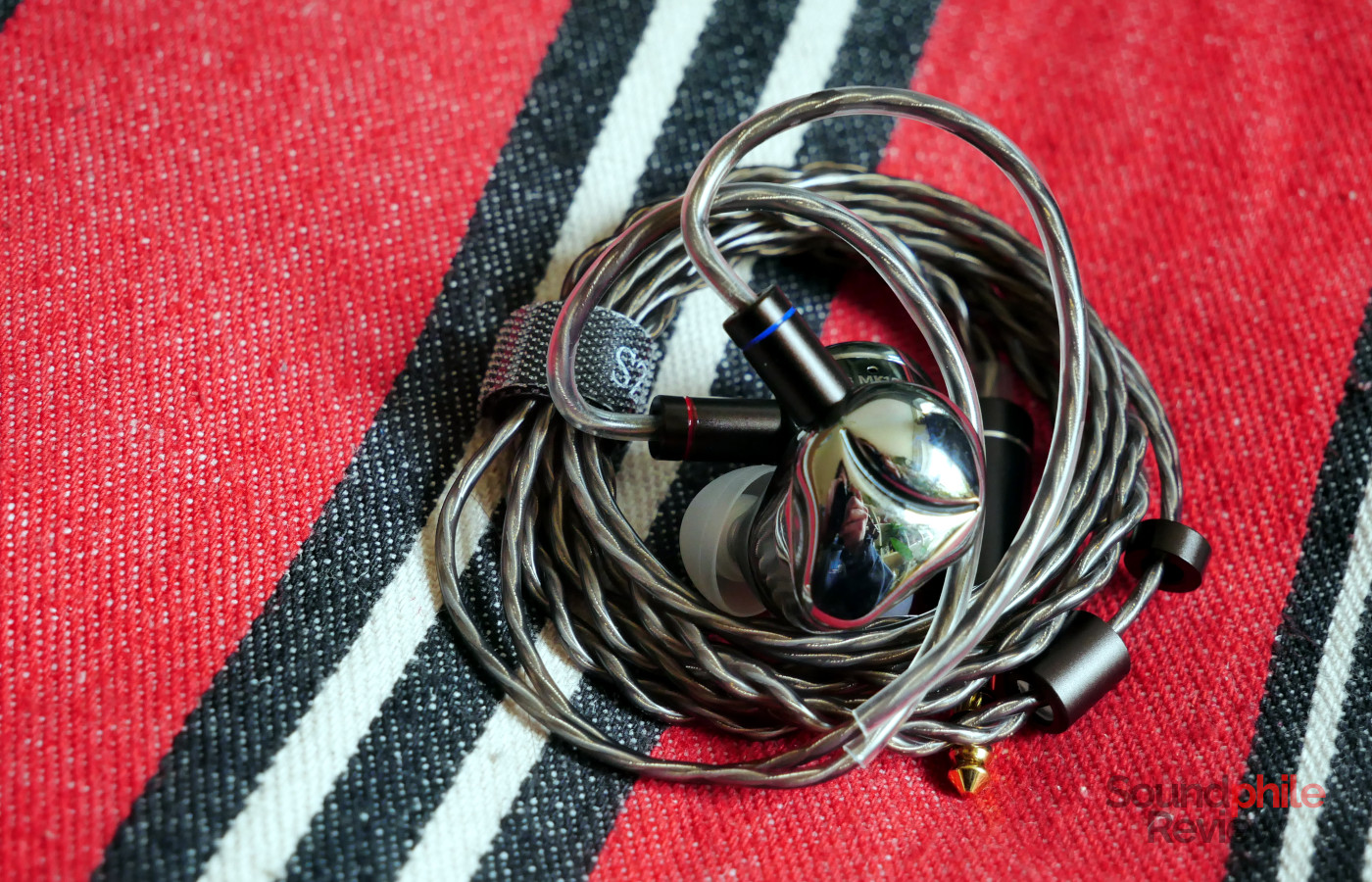
The design of the Hidizs MK10 ArcSonics is very simple and quite striking at the same time: the shells are entirely made of polished, chrome metal, with a curved triangular shape, but they also feature a curved cut on the faceplate that looks a bit like an open parenthesis (or a smile, if you like to see the positive side of things!).
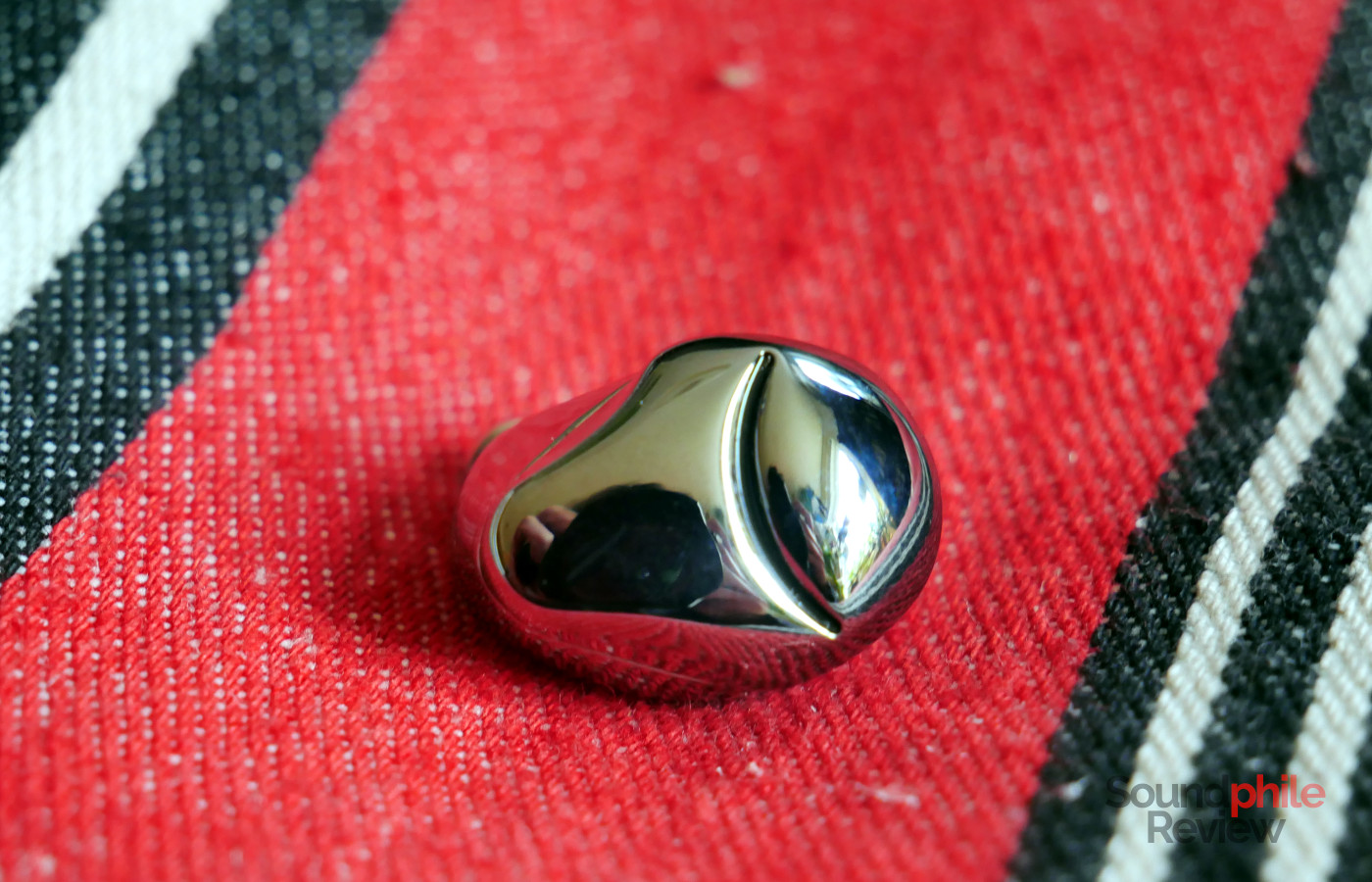
The shells are made of ZA12 zinc alloy, which includes aluminium and is normally used to make bearings. The quality that makes it suitable for making earphones is that it is easy to cast and it keeps the mirror finish easily. That said, Hidizs also offers a version in black as well. Build quality is very high, with components fitting together perfectly.
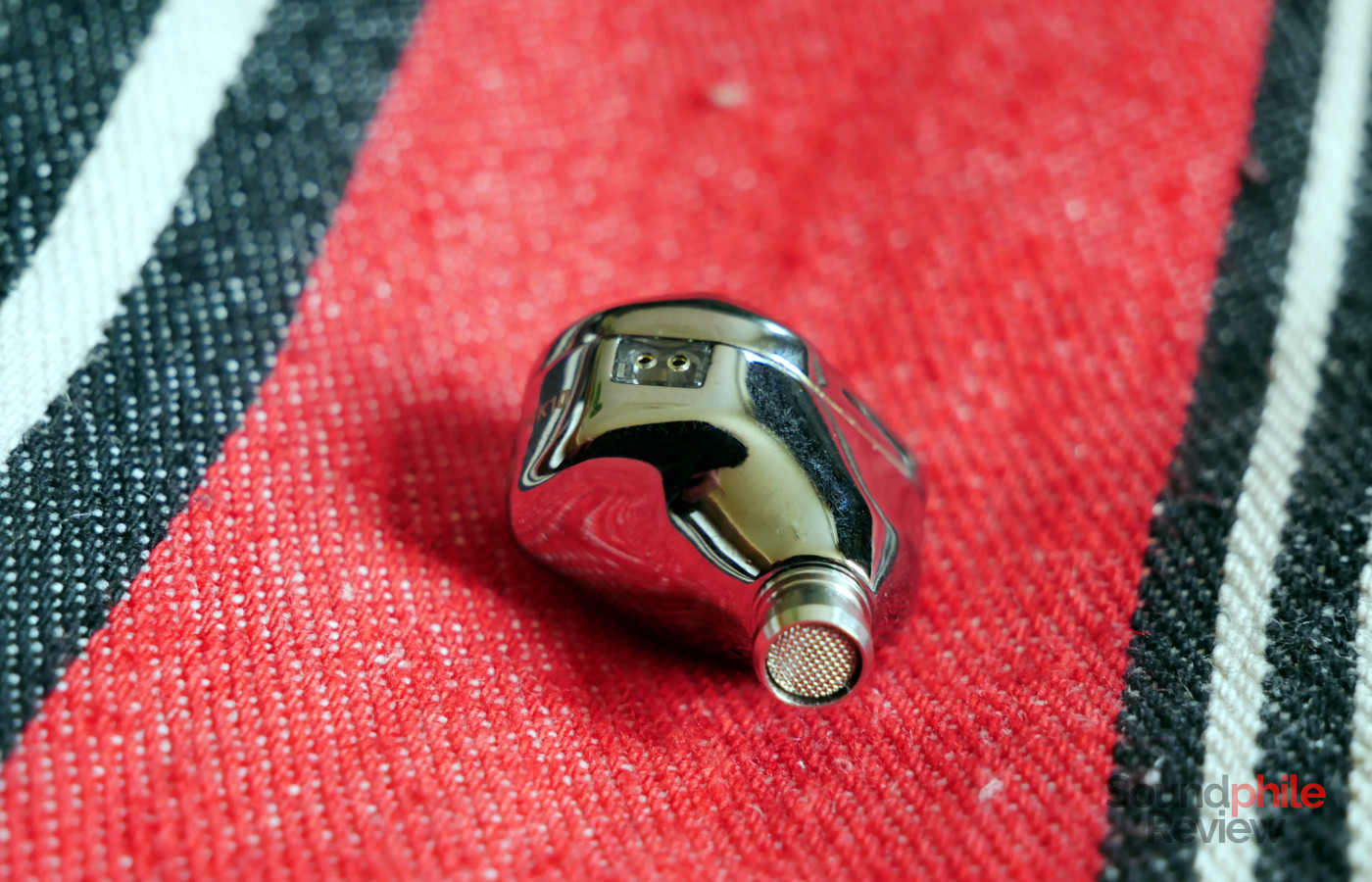
I find the MK10 ArcSonics very comfortable despite being relatively large: the way the shells are shaped makes it so that they sit in my ears without pushing against any single part, thus avoiding any irritation or discomfort. I can wear the earphones for a couple of hours and barely realise that I have been wearing them. This is deeply personal, however, so your experience may vary.
Passive isolation is almost non-existent; I am using a laptop with a rather silent keyboard while typing this and I can still hear it even though I am playing music. Any noise just comes in undisturbed, which is why I would advise using the MK10 ArcSonics only in silent places and not in noisy situations like public transport or aeroplanes.
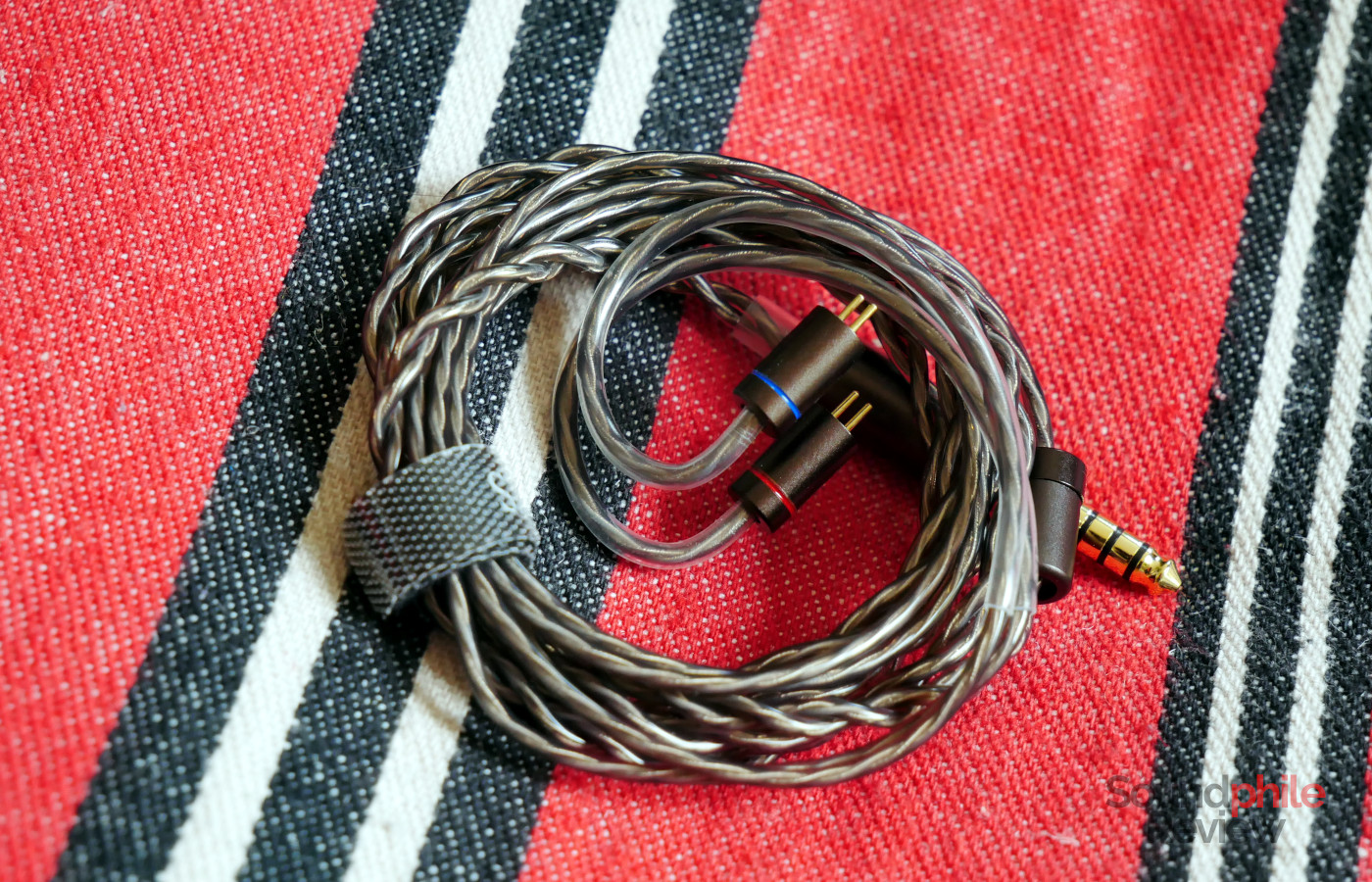
The cable comes with either an unbalanced 3.5 mm or a balanced 4.4 mm jack connector. In both cases, it is made of four cores, sleeved in twisted couples; the larger sleeves are themselves twisted between the jack housing and the Y-split (which also features a rather ineffective chin slider). There is also an ear hook made with thermoforming plastic. Overall, the cable feels well-made, and it’s light enough that it doesn’t weigh on your pinnae.
Sound & Specs
I tested the Hidizs MK10 ArcSonics using a Fosi Audio ZH3 as well as a Moondrop Echo B connected to my laptop.
Hidizs MK10 ArcSonics |
| Frequency response | 20 – 40,000 Hz |
| Impedance | 32 Ω |
| Sensitivity | 113 dB |
The main distinguishing feature of the MK10 ArcSonics is the silicon carbide diaphragm, which should offer far more rigidity than traditional plastic ones without being as difficult (and dangerous) to work with as beryllium, while also being lightweight. The effect of this should be faster transients and more details. Another distinguishing element of the MK10 ArcSonics is the dual magnetic circuit: there are an external as well as an internal magnet which increase the magnetic flux significantly, which should have a compounding effect of making transients faster.
Hidizs advertises the silicon carbide diaphragm as being able to offer fantastic detail and speed, and I can confirm that that is actually the case. When listening to the MK10 ArcSonics I do not have the impression of listening to a sub-$100 pair of earphones, as the level of detail is typical of earphones several times that price. In AES DANA’s Period 02: Transverse Axis, from the fantastic album “(a) period”, the details of the rain splashing on the surface and of the water running are rendered masterfully, with a great level of realism. The static discharge-like sound at 5:57 on that same track is startling in its vividness.
Where the MK10 ArcSonics are less fantastic is in the imaging, which is only sufficient: often there isn’t the perception of sounds coming from the centre, but rather from both the left and right hand side at the same time. On the other hand, though, the actual placement of instruments is fantastic: in Rodrigo y Gabriela’s Diablo Rojo every instrument has its own clear placement and you can pinpoint exactly where each is. The soundstage is quite wide, with great lateral extension, but almost non-existent depth; it feels like music extends in a large space.
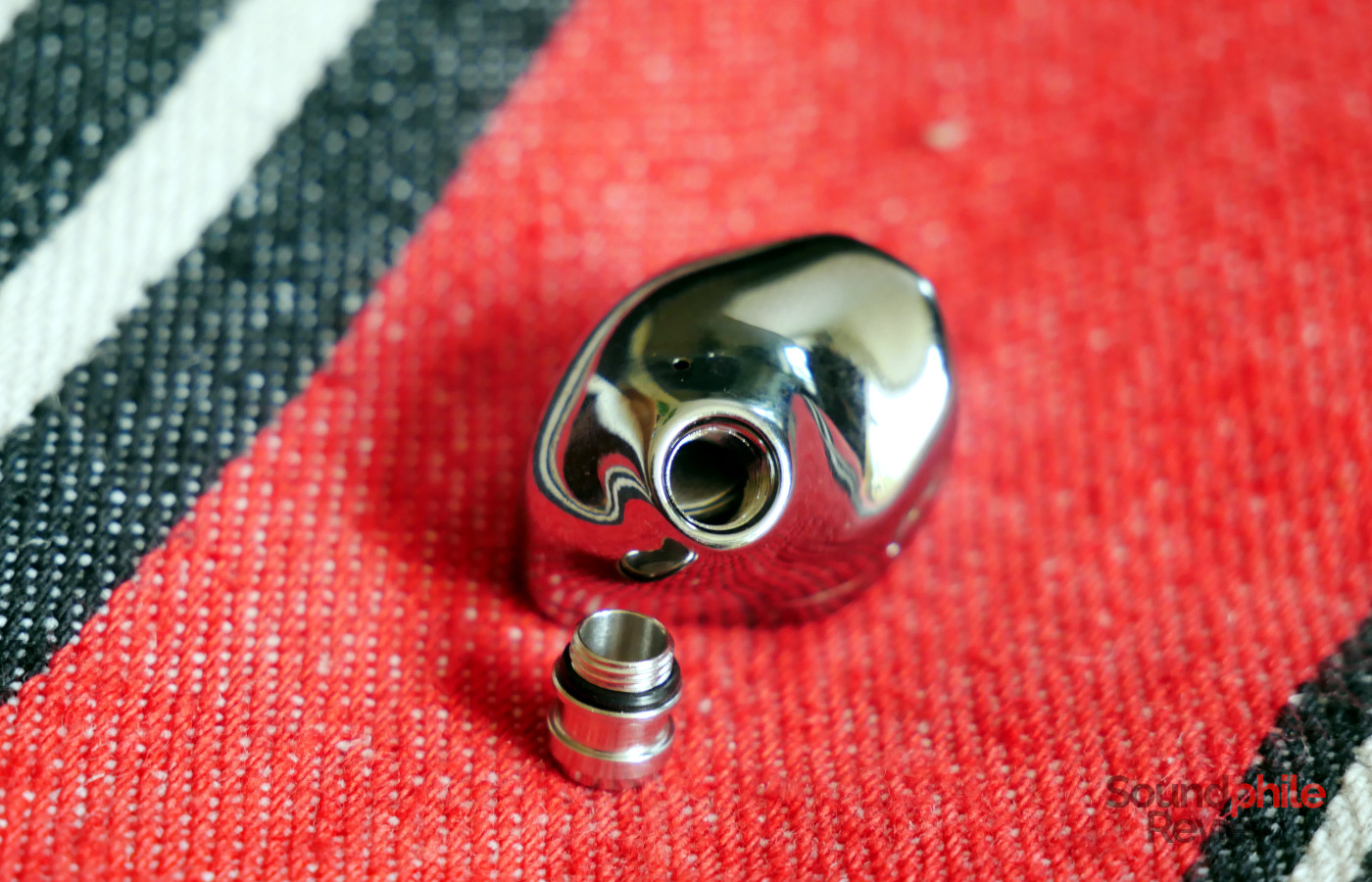
The three nozzles provide different tunings, which differ slightly between each other: one boosts bass, one is the reference (which comes as default) and the third bosts treble.
Bass is convincingly deep: it reaches down below the usual mid-bass region to go decidedly into sub-bass, reproducing the lowest notes with enough power that they’re actually felt. Mid-bass dominates, but sub-bass is not far behind; if we look at the wider picture, bass sits behind both midrange and treble, although it does so without being distant. When you need bass, it’s there; if we take Massive Attack’s classic Angel, bass is as powerful as you’d expect. It’s also fast and very detailed, with the vibrations of the bass string clearly audible. Another great example to showcase the speed the driver is capable of is Everywhen from 100th Window: the bass beat is punchy and immediate.
Midrange is slightly bright, with some emphasis added to the top region right at the border with treble, which gives voices a slight sibilance and makes female vocals a bit of an edge. Electric guitars, trumpets, violins and other similarly high-pitched instruments are emphasised as well and emerge from the mix with good clarity. On the other hand, instruments which operate in the lower part of the spectrum are more reserved and are sometimes a bit more difficult to reach. Overall, though, this emphasis of the upper region (and, conversely, de-emphasis of the lower one) is still quite balanced. There is fast speed that makes percussions and other transients very convincing, to a point I would not expect in sub-$100 earphones. As a side effect, there is also a great level of detail, with small particulars which emerge quite clearly in the mix.
The real start of the show, however, is treble. There are multiple peaks above 5 kHz which probably correspond to the resonance frequencies of the driver, and which make treble jump in front of everything else. It very often is the most audible element in the mix. It’s not aggressive, but it is definitely noticeable and it sometimes becomes a bit invasive: as an example, in Meniscus’ Doom the cymbals are prominent enough to jump nearly in front of everything else. Having said that, treble offers a very high level of detail, which is not normally found in this price range: the aforementioned cymbals are very finely detailed, in a way that I would expect in $200+ earphones.
Final Thoughts
Hidizs’ experimentation with new building techniques and material is commendable as it pushes the technological envelope of earphone manufacturing. Their experiments have so far been very successful and the MK10 ArcSonics are indeed a good example of that success, as they are very technically accomplished earphones. They offer great sound quality at an entry-level price. It is incredible to think how stark the difference is between nowadays’ products and those from ten years ago, when I founded Soundphile Review! And the Hidizs MK10 ArcSonics are among those products that keep on pushing towards improving what “affordable” means.
The tuning of the MK10 ArcSonics is close enough to what I’d call an all-rounder, with a U-shaped signature that will probably please most people. It adds fun, without making it too much fun. And it pairs that fun with decent technical ability and a high level of detail, which make the sound even more interesting. Overall, I highly recommend the Hidizs MK10 ArcSonics if you are looking for a good all-rounder, especially if you are starting out in the audiophile hobby or if you are looking for something affordable.